Fascinating People

I wanted to title this post “How to Be Fascinating,” but there isn’t enough space on the sidebar for a title that long.

I’ve been very lucky, as a writer and scholar, to be able to meet so many fascinating people. (And it really has been a function of being a writer and scholar: when I was a lawyer, I met people who made for interesting stories, but who were not fascinating in and of themselves. Like the Swedish media mogul Jan Stenbeck, who turns up in The Girl with the Dragon Tattoo by Stieg Larsson. He makes for a good story — he once threw a pen at me. But he was not an interesting person to talk to.) I’ve been thinking about what makes them so fascinating.

By fascinating, I mean that these are the people you want to meet, and then talk to for hours, because they have so much to say, and what they have to say is so interesting, so engaging. Before you meet them, you think they’re going to be fascinating, and then you meet them and they are. (These are also the people whose interviews you want to read, because you care about their opinions, their interpretation of the world.) So, here’s what I’ve come up with: this is a primer on how to be fascinating.

1. Be fascinated. The fascinating people I know are always fascinated — by books, art, places. They are continually experiencing things. It’s as though their brains are sponges, continually soaking things up. They are constantly looking outward, experiencing the world. That doesn’t necessarily mean traveling a lot, although many of them do travel. They can get interested in the history of roses, or how to raise goats, or the differences between the folk and literary versions of “Little Red Riding Hood.” It’s so easy to become comfortable or complacent, to do the same things in the same ways. To, at some point, stop learning. But the fascinating people I know never do.

OLYMPUS DIGITAL CAMERA

2. Think deeply about what fascinates you. The people I know who are fascinating have also thought deeply about what they have encountered in life and the world. They have opinions, but those opinions are informed and considered. When I’m with them, I feel as though I’m learning, as though my own understanding is becoming deeper. And it may be an understanding of something as superficial as knitting patterns. But the fascinating people I know think deeply even about knitting patterns. And through that deep understanding, something happens: they change. They are not merely collections of information: it’s not fascinating to have someone tell you the history of roses, for example. To talk information at you. Fascinating people seem to be able to integrate that information: it becomes part of them, part of a larger narrative, a deeper comprehension.
OLYMPUS DIGITAL CAMERA

3. Share your understanding with the world. The people I know who are fascinating share the insights they’ve gained, the understanding their experiences have given them. They communicate to an audience in some way. I should say here that I find people interesting in general: I like talking to people, finding out about their lives and thoughts. But what I’m talking about in this blog post are the truly fascinating people, the ones whose thoughts get passed around. The ones whose words or images or choreography or research change us. The ones who make me say, I wish I could meet her. I’d love to hear what he has to say. And I don’t mean people who are famous. It can be as simple as seeing a blog post that makes me go, “Wow, that’s fascinating. I wonder what the writer is like.”

I feel as though I’ve only touched on this topic imperfectly and in a preliminary way. But I’ve been lucky to know such people, and it’s interesting to think about what makes them who they are. I don’t think they ever set out to be fascinating. They get fascinated, and then they start trying to develop a deeper understanding, and then they feel impelled to communicate with the world. So I guess the message is, if you want to be fascinating? Don’t think about it too much. Just start thinking about what fascinates you . . .

OLYMPUS DIGITAL CAMERA

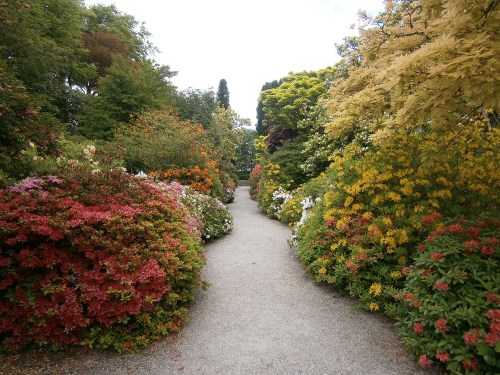
The photographs in this blog post are from the gardens of Castle Drogo. They are all from the Rhododendron Garden, which was planted in the 1940s. (I was interested in the garden design because I think many of the plants are probably original, and for me the colors are rather garish. But I think that was the height of garden design in the
1940s? The history of plants and gardens is one of my personal fascinations . . .)
Posted in Uncategorized | 4 Comments

Writing the Novel

I’m writing the novel. Not a novel, but this particular novel.

Or should I say that I’m learning how to write a novel? This novel.

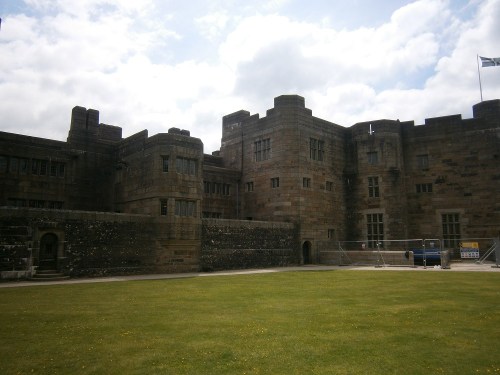
I find it very difficult to talk, or write, about writing the novel. So why don’t I show you some pictures? These are pictures of Castle Drogo, which I visited while I was in Chagford, Devon. (Two weeks ago, but honestly, it’s starting to feel like a lifetime ago.) Here’s a bit of the castle, which is actually too large to photograph in its entirety:

OLYMPUS DIGITAL CAMERA

And here is the front entrance to the castle:

OLYMPUS DIGITAL CAMERA

Castle Drogo was built in the 1910s and 20s, which means that everyone in Devon who mentioned it did so a little scornfully. It was not a real castle. But of course that was exactly why I wanted to visit. The turn of the century is my era, the era I studied as a PhD student and the era in which my novel is set. I wanted to see the building repeatedly described as the last castle built in England.

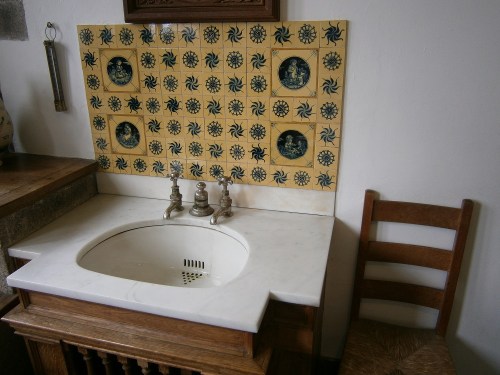
The castle itself was undergoing renovation, which was unfortunate. You can see the fences around it in the photographs above. I’ll have to go back once it’s been renovated and see the castle with all its original furniture. But I did take pictures of one particular room. Don’t laugh: it’s the bathroom.

OLYMPUS DIGITAL CAMERA

You see, in order to write this novel, I need to know how people lived their daily lives. I need to know about things like bathrooms. In London, I saw some turn of the century bathrooms in ordinary houses. Here is a bathroom in a castle. I don’t know about you, but I want to know what sort of bathroom a turn of the century castle would have.

OLYMPUS DIGITAL CAMERA

Since I’ve been in Budapest, I’ve been focusing on the novel, and it’s actually going well. At least I think it’s going well: this is the first draft, and it’s inevitably going to have a lot of problems, a lot of things I’m going to have to go back and revise. But if I can get the plot right, if I can describe the basic action of the book, I’ll be doing well. Then will come the difficult process of making sure it all works. That happens in revision.  (I’m daunted by the prospect of going back and revising — there will be so much to revise! But I’m trying not to think about it.)

OLYMPUS DIGITAL CAMERA

This is so different from writing a short story. I’ve written enough of those that I rarely spend much time revising anymore. When the story comes to me, it comes to me as a whole. I know the arc, I know where it will end. I can just sit down and write it, focusing on the writing itself, on how I will tell the story I already know. But I’m discovering this novel as I write it: it’s only recently that I’ve known how it will end. (Although I already know what the sequel will be about.)  I’m not even sure where the ending will take place, although I think this is a London novel.  I’m glad I spent so much time walking around London, figuring out how much time it takes to get from one place to another!

OLYMPUS DIGITAL CAMERA

One of the things I’ve had to deal with is that it’s difficult for me to believe I can actually write a novel. I seem to never believe I can do something until I actually do it — and then it seems intuitive, easy! Anyone can be a corporate lawyer! Anyone can finish a PhD! Anyone can write a novel! That’s that I will think when I’m done. But I try not to let my inability to believe in myself stop me. As Georgia O’Keefe once said, “I’ve been absolutely terrified every moment of my life and I’ve never let it keep me from doing a single thing that I wanted to do.”

OLYMPUS DIGITAL CAMERA

It’s difficult to write about the novel when I’m still in the middle of it, but I’m very glad to be in the middle of it, very glad that the writing is going well, that I’m finally focused. It’s taken me a long time to get here, a long time even to figure out how to write this novel. (I had a sort of false start. I was trying to write like someone else. That doesn’t work, in case you were wondering.)

Perhaps, really, it’s taken me a long time to become the person who could write this novel. I think we have to be certain people in order to write certain things. And then the process of writing changes us, and we become other people . . . So often, we talk about writing as a skill, as something that can be learned. And it is, in part. But it also integrally has to do with who we are. What we produce, what we can produce, has to do with who we are at any particular time. I think that I’m writing this novel now because I’m finally ready to write it. How will it come out? I’m not sure. I hope it will be good. No, I’m not going to think about that. If it’s not, I’m going to make it good in revision . . .

Posted in Uncategorized | 11 Comments

Dreaming and Writing

I’ve been writing down my dreams. Or trying to, because of course dreams start to slip away as soon as you wake up.

The reason I’ve been writing them down is that I’ve been reading books on myths and fairy tales, some from a psychoanalytic perspective, and they speak of dreams as emanating from the unconscious, of containing unconscious material that we can access and bring to light. And I’ve been wondering if this is true, if dreams contain important information rather than simply being random collections of images reprocessed from our conscious life. I’ve wanted to find out for myself.

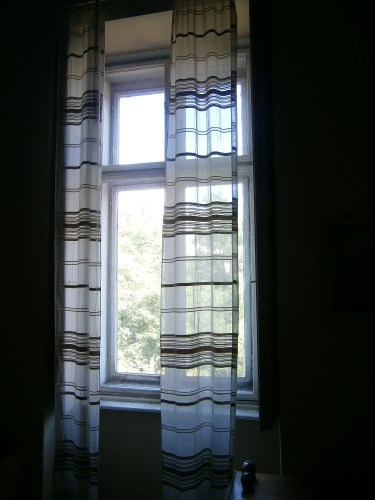
The images in this blog post are from my mornings in Budapest. The first is of morning light coming in through the very tall windows of my grandmother’s apartment. The apartment building was built in the 1840s, I’ve been told. The ceilings are very high, about twenty feet, I think. So these windows are much taller than they look in the photograph. The trees I see through the window are in the park around the Nemzeti Múzeum.

OLYMPUS DIGITAL CAMERA

For a long time, I avoided paying attention to my dreams, because what I remembered were the unpleasant ones. And I dream vividly, in intense detail, so the unpleasant ones were very unpleasant. I didn’t want to remember them.

But since I arrived in Budapest, I’ve kept a notebook next to my bed, and when I wake up, I jot down whatever I remember. Not in detail, since my dreams are too detailed to capture in their entirety. But jotting down enough information that I remember what the dream was about.

This is my breakfast: muesli, peach juice, and theorizing the literary fairy tale. The view is out the kitchen window into the courtyard, which I think used to be where the carriages drove in.

OLYMPUS DIGITAL CAMERA

So far, I’ve learned a couple of things. One is that without an alarm, I naturally sleep nine hours a night. So sleeping five hours, which is the most I got some night during the semester, is probably not a good idea, is it? I think I need sleep, need a significant amount of sleep, and when I don’t get what I need, I’m not healthy or even happy. So that’s a useful lesson in itself.

The other thing I’ve learned is that I dream many times a night, many dreams: each time I wake up, I remember a different one. (Since the daylight comes in, I wake up several times in the morning, and if I’m still tired, I go back to sleep. I love the daylight coming in. I hate drawn curtains, hate to wake in darkness. When that happens, I always feel groggy.)

I can usually only remember the last dream or two, but I know there have been many, that I’ve dreamed many dream lives in the course of a night.

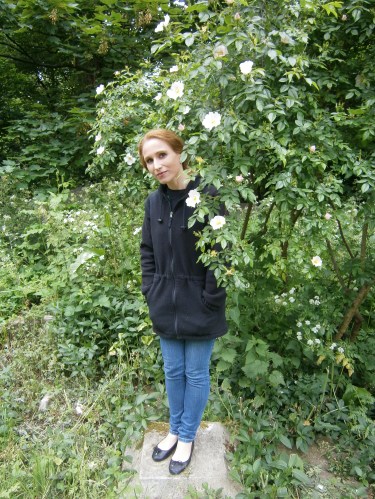
This is me in the distorting hall mirror, ready to go out for the day. The weather here in Budapest has been wonderful: warm, sunny. It’s definitely summer skirt weather, whereas in London a week ago I was wearing a fleece jacket and boots.

OLYMPUS DIGITAL CAMERA

And as I expected, my dreams are intense, detailed. While I’m in the dream, I don’t remember that I’m dreaming, that I have another life, a life I call “real.” For the time I’m in the dream, the dream is my life, my reality. This is disconcerting when I wake, because I have to adjust and remember that I’m now in my “real” life. I have to remember what day it is, where I am in the world.

This is where I want to make a connection with writing (after all, I called this blog post Dreaming and Writing). I don’t know if it’s like this for other writers, but when I write, it’s as though I’m having a waking dream. I’m observing the story I’m telling as though it were reality, as though I were in it (although not participating in it). It’s happening all around me. I’m immersed in the story.

This is my writing desk. It’s not exactly ergonomic! I have to put a pillow on the chair to raise me up enough so I can type comfortably. I don’t think that television has been on since the 1970s.

OLYMPUS DIGITAL CAMERA

When I emerge from writing, it’s an experience as disconcerting as waking up, as emerging from a dream. I have to try and remember what day it is, where I am in the world. It’s as though I’ve spent several hours in a version of sleep.

So what does all this tell me? Well, I’m going to keep trying to write down my dreams. I want to see what else I can learn about them. But what it suggests to me is that there is something profoundly complicated about the creative process. When I’m being creative, I’m putting myself into a certain mental state, changing what my brain is doing and how it’s relating to the world in a profound way. That seems important.

It also suggests that writers are very strange people. I suspect that artists, dancers, musicians all go through a version of the same thing: that they change mental states while creating and performing. What does it mean to be that sort of person? What does it mean to live with that sort of person? It must be difficult . . . (Writers can be difficult people to live with. I know that I am never entirely there, wherever I am. Part of me is always somewhere else, particularly when I’m working on a project, as I am now.)

And here is my table in the internet cafe down the street. This is where I am now, typing this blog post. That is a small latte, and it is genuinely small: about half the size of a latte in London or Boston. But in London, I can drink several small lattes throughout the day. In Boston, I can drink two at most, because the coffee there is so much stronger. And here in Budapest? This is my limit! Even the caffeine in this small latte is almost too much for me. But it’s the best coffee I’ve ever had, anywhere, ever.

OLYMPUS DIGITAL CAMERA

The truth is, and I don’t know whether this is a good truth or not, that I don’t write to produce stories. Or for any of the superficial reasons: fame, fortune (neither of which are guaranteed anyway). No, the reason I write is that it’s always been my way of getting there, to that particular mental place where I’m living in a dream. Where my brain is functioning in a particular way. My desire to go there is like an addiction, and I suspect if I didn’t write, I would start going all wrong, the way people go wrong if they don’t dream.

Ray Bradbury said, “You must stay drunk on writing so reality cannot destroy you.” I think that’s sort of what I’m talking about . . .

Posted in Uncategorized | 15 Comments

Meeting Artists

I love meeting artists. I love meeting writers too, of course. I travel a lot, and everywhere I go, I try to meet other writers. Whatever our backgrounds, we immediately have a common language: of wordcount, royalty payments, and more important things such as the stories we want to tell. What we want to do, where we want to go, with the worlds we’re creating. We talk about our art and the technicalities of its production.

But I love meeting artists because they’re doing something so different from what I do, yet related to it. Particularly artists who are working with the mythic, with fairy tales and fantasy.

While I was in Chagford, Devon (just a week ago, although it feels strange to think of it now, sitting as I am in a café in Budapest — the thing about traveling is that after a while, all the places you’ve been start to seem like dreams, like places in stories you’ve told or read), I met three wonderful artists. I thought I would write about them, in case you haven’t heard of them or seen their art.

The first was Terri Windling. If you’re reading this blog, I’m sure you’ve heard of Terri, but perhaps as a writer or editor rather than an artist. However, she’s a wonderful artist. I had the privilege of wandering around the hillsides with her, seeing the magical landscape she calls home. I even spent time in her studio, doing some research in her collection of books on fairy tales. She has a website for her writing called Myth & Moor, but also a website devoted specifically to her art called Bumblehill. If you’re interested in her artwork, take a look at her Etsy shop, also called Bumblehill. I thought I would include a link to one of the prints she has posted there right now, “Mother Nature“:

Mother Nature by Terri Windling

(Funnily enough, since I’m in Budapest, all the Etsy prices are in Hungarian Forints!)

The second artist I met was Virginia Lee. I’ve known about Virginia’s art for years: I’d actually asked for a painting of hers to be the illustration for my first short story collection. But I’d never met her in person, and it was lovely to spend some time with her, looking through her work. (Artists! They take you to their studios, where they have stacks of original paintings, just lying on top of each other. And you gasp as you look through a stack of treasures . . .) Virginia also has an Etsy shop called Virginia Lee Art, but it’s empty at the moment, so I’ll post the cover of the poetry collection I’m currently working on, which will feature a painting of hers:

Songs for Ophelia-Tangerine-lilac.indd

Here is a link to the original, called Moorland Melodies.

(Yes, I know, I’ve been working on the poetry collection and promising it for a while. I’ll get it done soon, I promise!)

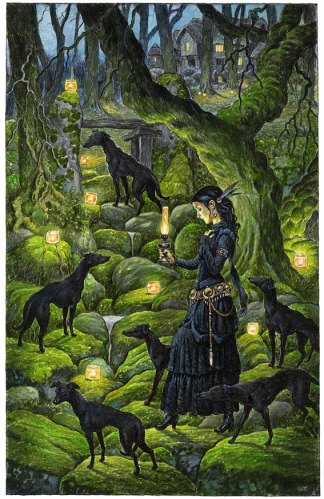
The third artist I met was David Wyatt, whom I learned about through Terri’s blog. David is an accomplished illustrator, with many books to his credit, but my favorite paintings of his were the ones he’d done for himself, simply because he had wanted to. Many of them are available as prints in his Etsy shop, David Wyatt Illustrations. My favorite of them all is this one, Mariana and the Black Whippets:

Mariana and the Black Whippets by David Wyatt

There are several reasons writers should keep in touch with artists. The most practical is that we always need illustrations, whether for covers or the interiors of books. And although we often don’t have control over who does the illustrating, sometimes we can make suggestions. But the deeper reasons have to do with inspiration, with getting ideas for our own work, or from the way artists work and think about their art. One of the most valuable things I do as a writer is keep in touch with artists who inspire me. It was so nice to meet three of those inspirations!

Posted in Uncategorized | 4 Comments

The Graveyard

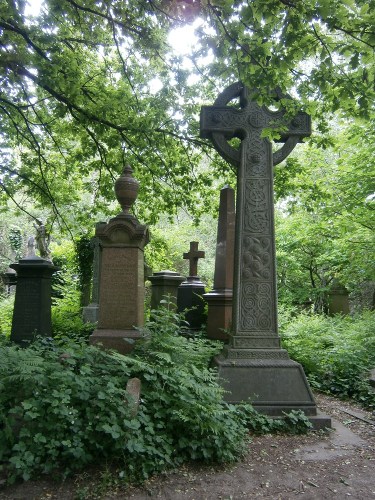
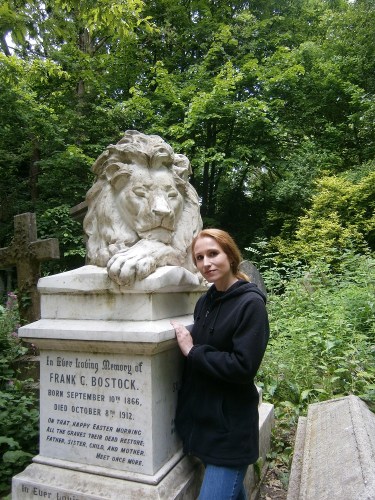
On my last day in London, I went to a lecture on graveyards and then walked around the Abney Park Cemetery in Stoke Newington. Here is me in the cemetery:

OLYMPUS DIGITAL CAMERA

(Is there a difference between cemeteries and graveyards? I’m guessing it’s another one of those instances in which the English language has two ways of expressing the same concept: one from a Latin root, one from Anglo-Saxon.)

The lecture was by a journalist who had researched and written a book on graveyards. He made the point that most of the people in large, elaborate tombs were now forgotten. They had wanted to be remembered, perhaps expected to be remembered, but a generation later, no one knew who they were. Their graves were no longer visited.

OLYMPUS DIGITAL CAMERA

And then he talked about the people who were remembered, whose graves were still visited. John Keats. Oscar Wilde, whose grave was once covered with lipstick stains from where people had kissed it. (It has since been cleaned and a glass barrier put up, but I think the kisses are now left on the glass?) Keats was so certain he would be forgotten that all he wanted on his tomb were the words Here lies One Whose Name was writ in Water. His friends added, This Grave contains all that was mortal, of a YOUNG ENGLISH POET, who on his Death Bed, in the Bitterness of his heart, at the Malicious Power of his enemies, desired these words to be Engraven on his Tomb Stone.

OLYMPUS DIGITAL CAMERA

Last year, I visited the graves of Louisa May Alcott, Henry David Thoreau, Nathaniel Hawthorne, and Ralph Waldo Emerson. (They are all in the same graveyard in Concord, Massachusetts). On each of them, admirers had left letters, flowers, small artifacts. When I visited the grave of J.R.R. Tolkien on this trip to England, I saw the same thing. Why do we remember certain people? Because they have given us something, and we care about them even in death. They live on for us through their words, their paintings. Their influence lives on, so for us they have never really died.

OLYMPUS DIGITAL CAMERA

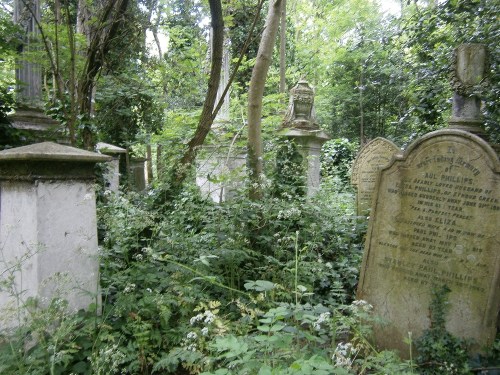
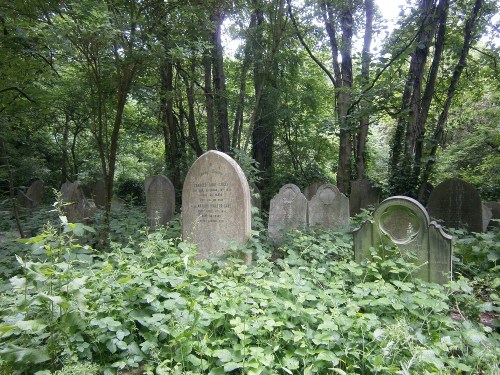
I loved walking around Abney Park Cemetery. As you can see, it’s almost a wild space in London: the vegetation has grown up so. I was with friends, and we rambled along the paths, looking at the gravestones. My favorite was a tomb with a lion on top: I’ve included a picture of me with the lion at the end of this post.

OLYMPUS DIGITAL CAMERA

The lecture and walk really made me think about what I want to accomplish in my life, how I eventually want to be buried. Because, you see, I want to be one of the people who are remembered for having contributed something. I don’t care so much about a gravestone. It can be as plain as plain (although I’ve always liked the idea of an angel, because in a book I read as a child, two friends meet beneath a tomb with an angel on it). What I care about is the work, doing something meaningful.

We never know whether our work will be meaningful, of course. It could be forgotten. So much art, of heart and skill, is forgotten. What is remembered is the art that changes something, that touches us in a deep way, and who knows whether a particular piece of art will do that? All we can do is produce, keep producing, do our best.

OLYMPUS DIGITAL CAMERA

Not everyone cares whether or not they will be remembered after their deaths — quite a few people have explicitly told me that they don’t. But I would like my work to have that sort of impact.

Which means that it’s time to get back to work. I’m in Budapest, I have two weeks before I need to be somewhere else. And I have a novel to write.

OLYMPUS DIGITAL CAMERA

Posted in Uncategorized | 11 Comments

On Bluebeard

This blog post is really about how differently men and women can perceive certain things, but I didn’t think that would make a very good title. And Bluebeard does come into it, as you’ll see.

Some time ago, a friend of mine whom I will call Nathan, because his name is Nathan, and I were having a conversation. Nathan is a big, strong guy, about twice my size. He told me that when he lived in New Orleans, he had loved walking around the city alone, late at night. I said to him, “Nathan, I’ve never walked around a city alone late at night.” There was a moment of silence, and then he said something like, “Oh, right. Sometimes I forget how different it must be for a woman.”

I’m writing this post in part because there have been conversations recently, in the media and on the internet, that have made clear how differently men and women can perceive certain words and actions. Some of those conversations have been about the literary world I live in, particularly the fantasy and science fiction corner of it. And the point I want to make, centrally in this blog post, is that something that may not seem threatening to a man may seem profoundly threatening to a woman. I’ll give you an example.

Scenario: A woman passes a man on the street. He says, “Hello, beautiful.”
How the man perceives this: “I paid her a compliment.”
How the woman perceives this: “Is he going to attack me?”

I don’t know if this is true for all women, in all circumstances, but if I’m the woman in that scenario, particularly if I’ve been walking down that street absorbed in my own thoughts, as soon as I’m spoken to I will immediately check my surroundings. What time of day is it? Is there anyone else on the street? How threatening does the man seem? (Although I have to add, if I’m completely honest, that I never walk down a street lost in thought. I used to when I was younger. I’m smarter now.)

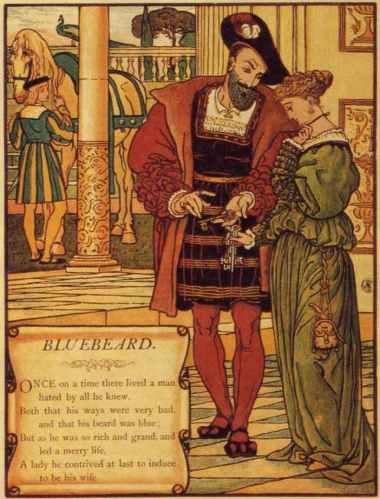
Bluebeard

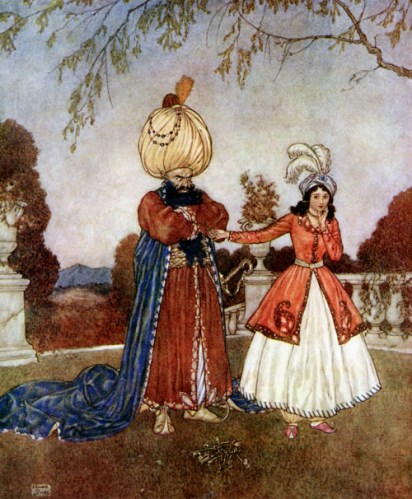
When I teach my class on fairy tales, I ask students about the moral of “Bluebeard.” Charles Perrault gives us a moral, clearly marked “moral,” at the end of the tale: “Curiosity, in spite of its appeal, often leads to deep regret. To the displeasure of many a maiden, its enjoyment is short lived. Once satisfied, it ceases to exist, and always costs dearly.” I ask my students, is that really what we learned from the story?

No, they tell me. That moral doesn’t make sense. If Bluebeard’s wife hadn’t been curious, she would never have known that he had killed his previous wives. And although he tells her he’s going to kill her because of her curiosity, and we can infer that he killed most of his other wives for the same reason, what about the first wife? Why did he kill her? Clearly this is a man who simply likes killing his wives, and will eventually think of a reason to kill again. So, I ask them, what is the moral? And eventually we come up with something like this:

“Make sure you know whom you’re marrying, because your husband may be a serial killer.”

Bluebeard 2

If you’re a woman, and you’ve lived for a while in the world, you’ve learned to be cautious. You’ve learned that you don’t know who people are, or what they’re capable of, until you’ve known them for a long time, and sometimes not even then. If a man is bothering a woman, it’s easy for another man to say “Ignore him. He’s just a creep.” Or “He lacks social skills.” But the woman in that situation has to approach it by thinking, what is the worst case scenario? What is the worst that could happen? And then she has to act based on that supposition. Often that means acting swiftly, decisively, with maximum effect. Because you have to establish, definitively, that you are not to be messed with.

She will be told, “You’re overreacting.” But she will also know that if something does happen, if there is a worst case scenario, she will be told, “You should have paid attention to the warning signs.” Either way, she faces the possibility of being blamed.

Bluebeard 3

Let’s go back to that first scenario, with the woman walking down the street. If the man who thought he had paid her a compliment knew she was assessing him as a potential attacker, he might blame her: he might say, why didn’t she realize I was trying to be nice? What he wouldn’t know is how many times she had been approached on a street by a man who said, “Hello, beautiful,” and then continued with a sexual proposition. For an average woman, it would be a least once, but probably more than once. After a while, if you’ve been living while female, you get a sort of PTSD. Most women have been through assaults of various kinds. (I once looked up from reading a book in the public library to see a man masturbating on the seat across from me. I think I must have been about fourteen?) Most women have dealt with some sort of silencing or discrimination. (When I was at Harvard Law School, there were male students who argued that women who were going to take time off to have and care for children were taking up space that should go to qualified men.) This history conditions how they respond, whether to a compliment on a street or to male writers who talk about them with a lack of respect (see the latest SFWA scandal). (It’s also worth knowing that women talk to one another: we know when a male writer regularly hits on young female writers at conventions.)

“Bluebeard” has been interpreted in a variety of ways, but its simplest meaning is a cautionary one, to women. What it really says is, be curious, be bold, protect yourself. Considering the things women have to deal with, it’s scarcely surprising that they have learned this particular lesson.

I know I’ve put a lot into this blog post, and parts of it may not fit together with perfect logic. But it represents a series of things I’ve been thinking recently about differences in perception. If you’re a man and want to work or socialize with women, it’s probably worth considering how their perception may be different from yours, and what may lie behind that difference.

Posted in Uncategorized | 45 Comments

The Journey

I haven’t posted for a long time.

In the Preface to Lyrical Ballads, Wordsworth famously writes,

“I have said that poetry is the spontaneous overflow of powerful feelings: it takes its origin from emotion recollected in tranquility: the emotion is contemplated till, by a species of reaction, the tranquility gradually disappears, and an emotion, kindred to that which was before the subject of contemplation, is gradually produced, and does itself actually exist in the mind. In this mood successful composition generally begins, and in a mood similar to this it is carried on; but the emotion, of whatever kind, and in whatever degree, from various causes, is qualified by various pleasures, so that in describing any passions whatsoever, which are voluntarily described, the mind will, upon the whole, be in a state of enjoyment.”

I think that describes blog posts rather well, actually. When I write a blog post, it’s often because at some point in the past, usually the recent past, I felt something. And now I want to do something with that feeling: I remember it, and I write about it. It’s usually something I feel strongly about, or rather felt strongly about. If I’m still feeling it strongly, if the experience of it is too recent, I can’t write about it. I can’t turn it into coherent thought, cohesive narrative.

Hillside 1

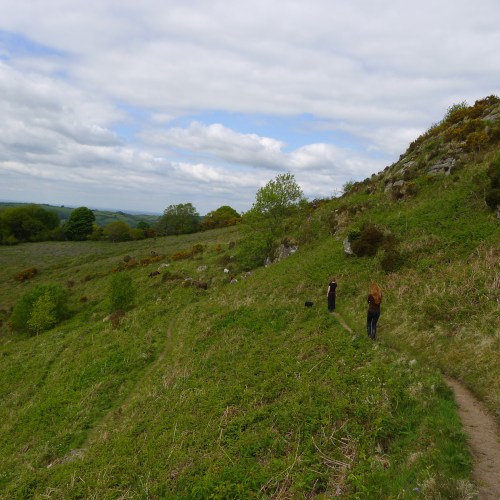
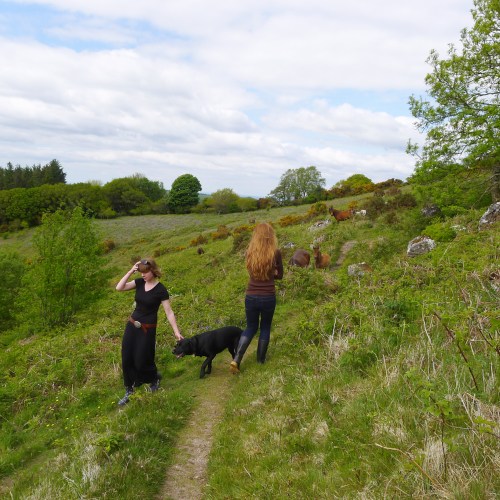
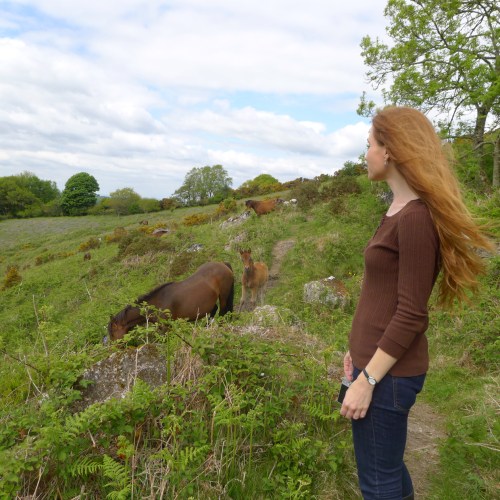
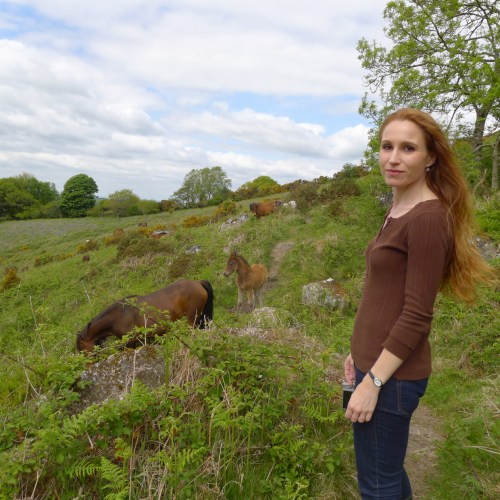
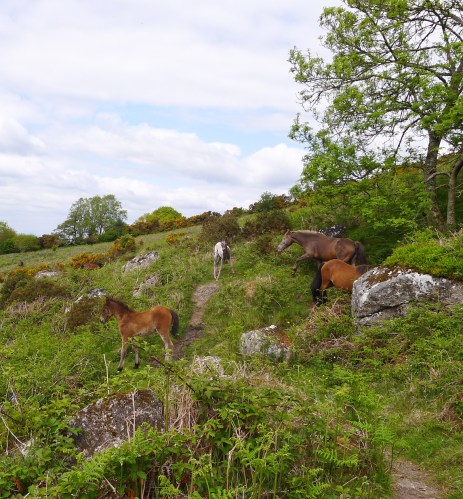
(The pictures I’m including in this blog post were taken by Terri Windling, on a day when she and her daughter Victoria and I walked along the hills behind her house, accompanied by her dog Tilly. As you can see, we met some Dartmoor ponies.)

The reason I haven’t been writing is that I’ve been living too much. There has been so much going on in my life, both internally and externally, that I haven’t wanted to sit down and write about it — I haven’t been able to achieve enough distance from it to turn it into a blog post, or a series of blog posts. So why am I writing tonight? Because I’m in London, all alone in a large Victorian house, late at night. I spent the entire day alone, the first time I’ve done so in I don’t know how long. And you know, it was heavenly. I’m enough of an introvert that I need regular breaks from people. Yesterday, I spent an entire train journey through the English countryside entirely silent, which was blissful. And today restored some of the tranquility I had lost on my travels.

Hillside 2

What I wanted to write about tonight, just a bit, is the strange journey I’ve been on. I left Boston three weeks ago, flew directly to Budapest, and then three days later flew to London. I spent some time here, mostly with friends although I did walk around alone for a day and see Sir John Soane’s Museum. Then I visited Oxford and the surrounding area, spending some time in Kelmscott Manor. I headed down to Glastonbury, seeing famous sights along the way: the White Horse of Uffington, Avebury, and Stonehenge.

Hillside 3

In Glastonbury, Liz Williams read tarot cards for me. The reading was all about transformation, about the strange liminal place I was in my life, my attempt to figure out what was to come. And it gave me a message: you have to let go of the old before you can accept the new. Then I went down to the village of Chagford, to visit Terri Windling. There, I had several conversations with some very wise women (including Terri, of course). And on my last day there, something strange happened: I met a spiritual teacher named Ocean WhiteHawk, who just happened to be staying in the same Bed and Breakfast. We ate breakfast together and started talking, and she offered to embed a sentence in my subconscious that would help me in the transition I’m going through. Which she did, just before I left. So the entire journey down to Chagford, my stay in that village, turned out to be a spiritual journey as well as a physical one. The whole thing, from start to finish, taught me.

Hillside 4

Those are the best kind of journeys, I think. There’s no point to going somewhere if, when you get there, you’re just going to be you, there. You go on a physical journey to be transformed internally, spiritually. At least, I do. The great lessons of this journey, for me, were twofold: (1) trust the transformation, and (2) complete the old so that the new can begin properly. Those are the things I’m going to be working on. And I’ll try to post more: whether or not I do will depend on my tranquility, on whether I can find it again. I am, at least, going to try.

Hillside 6

Posted in Uncategorized | 8 Comments