Friday at Wiscon

Last night, I was up late again finishing my critiques for the writing workshops. I finished them around 4:00 a.m., then slept a few hours, got ready, and workshopped. It went well. It always does when you have a group of talented writers and critiquers.

Afterward, I was so tired that I had to rest, so I actually got some sleep. I’ve never been quite so tired at Wiscon before. I think it’s because this has been such a tiring year in general. I haven’t had time to recover yet. When I get home, I’m going to spend a couple of days sleeping. After finishing my revisions, I mean.

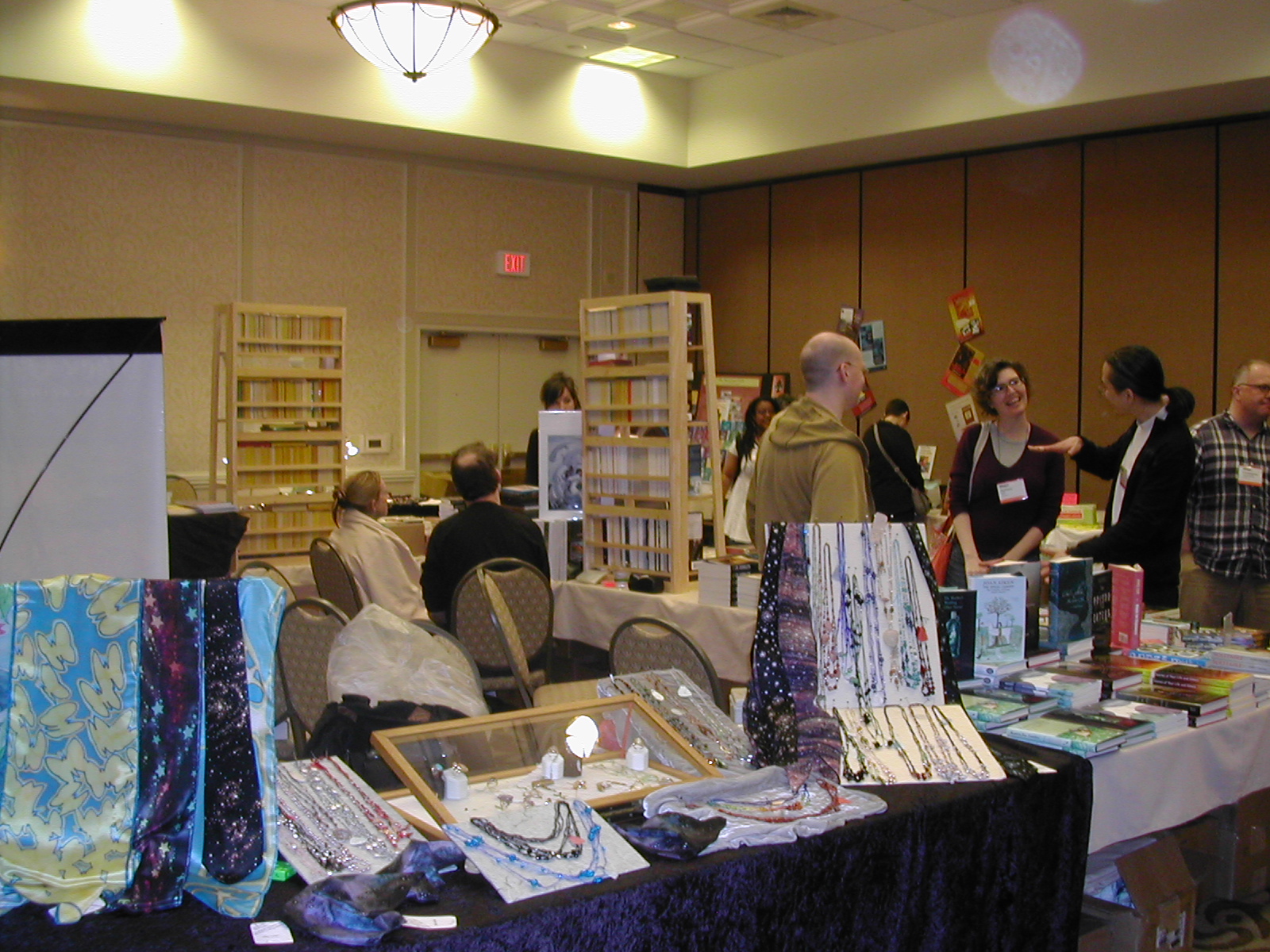
When I woke up, I went down and walked around the book room, and took a few pictures.

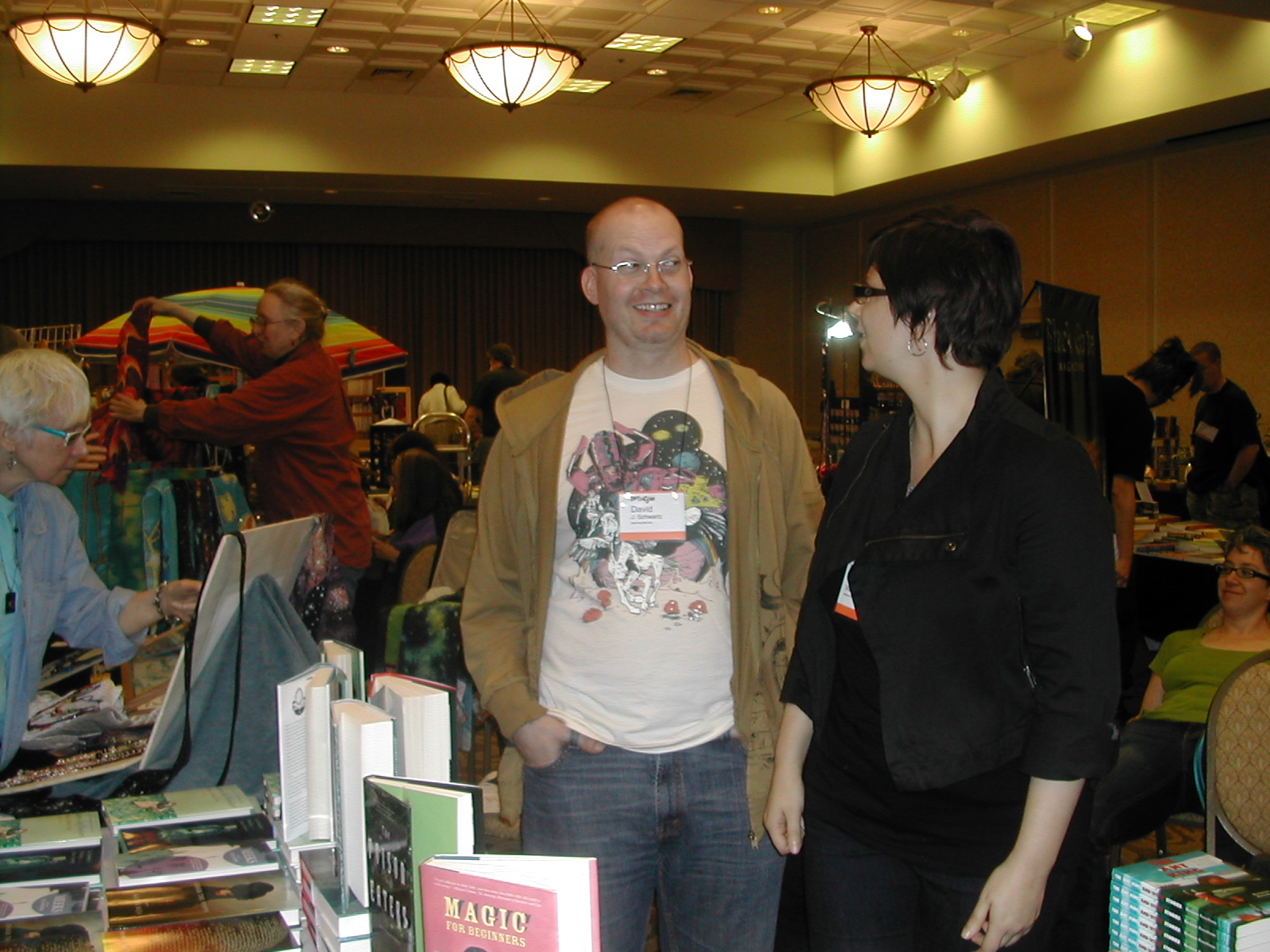
At the Small Beer Press table, I saw David Schwartz and Genevieve Valentine.

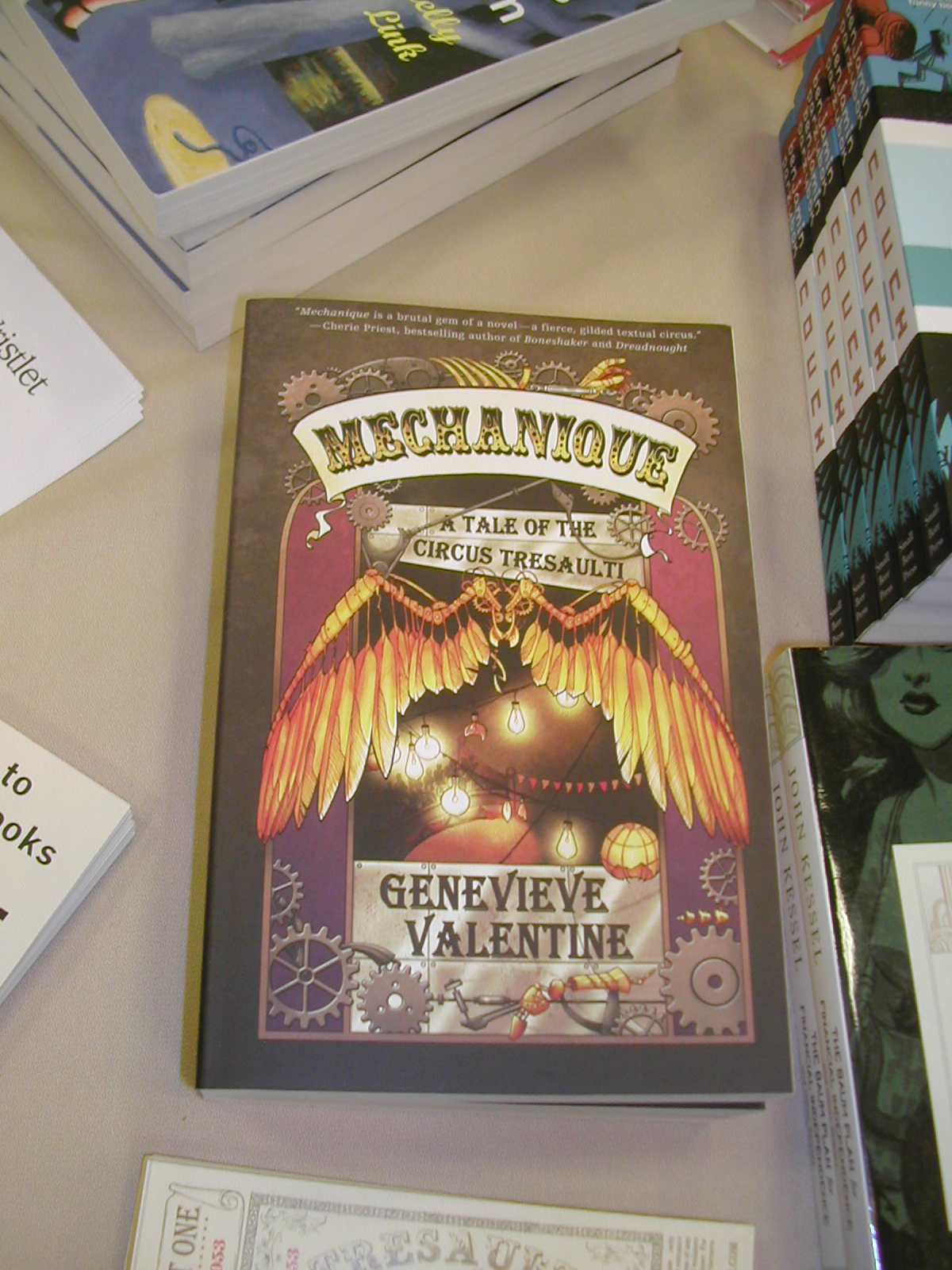
And here is Genevieve’s book, which just came out.

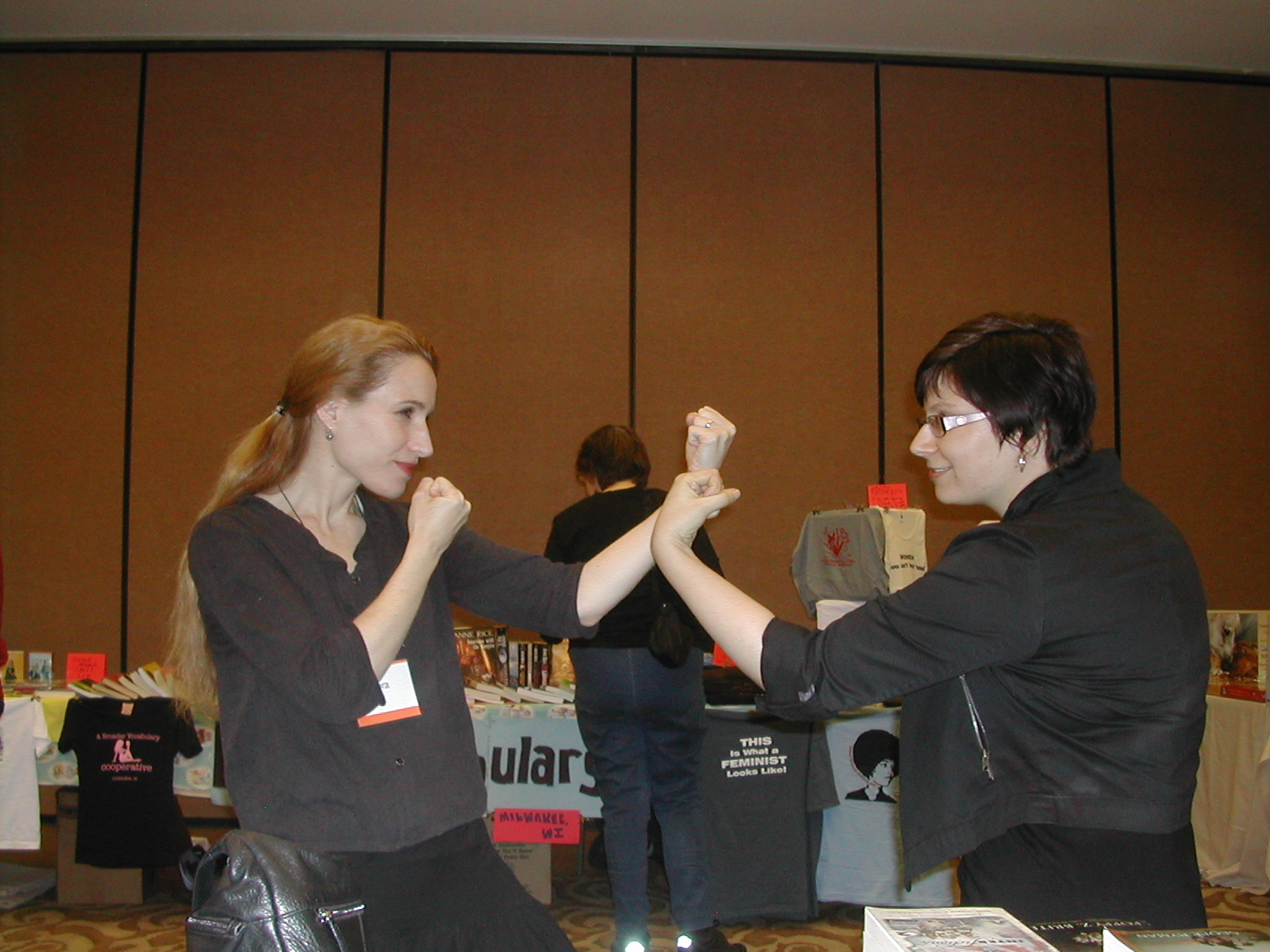
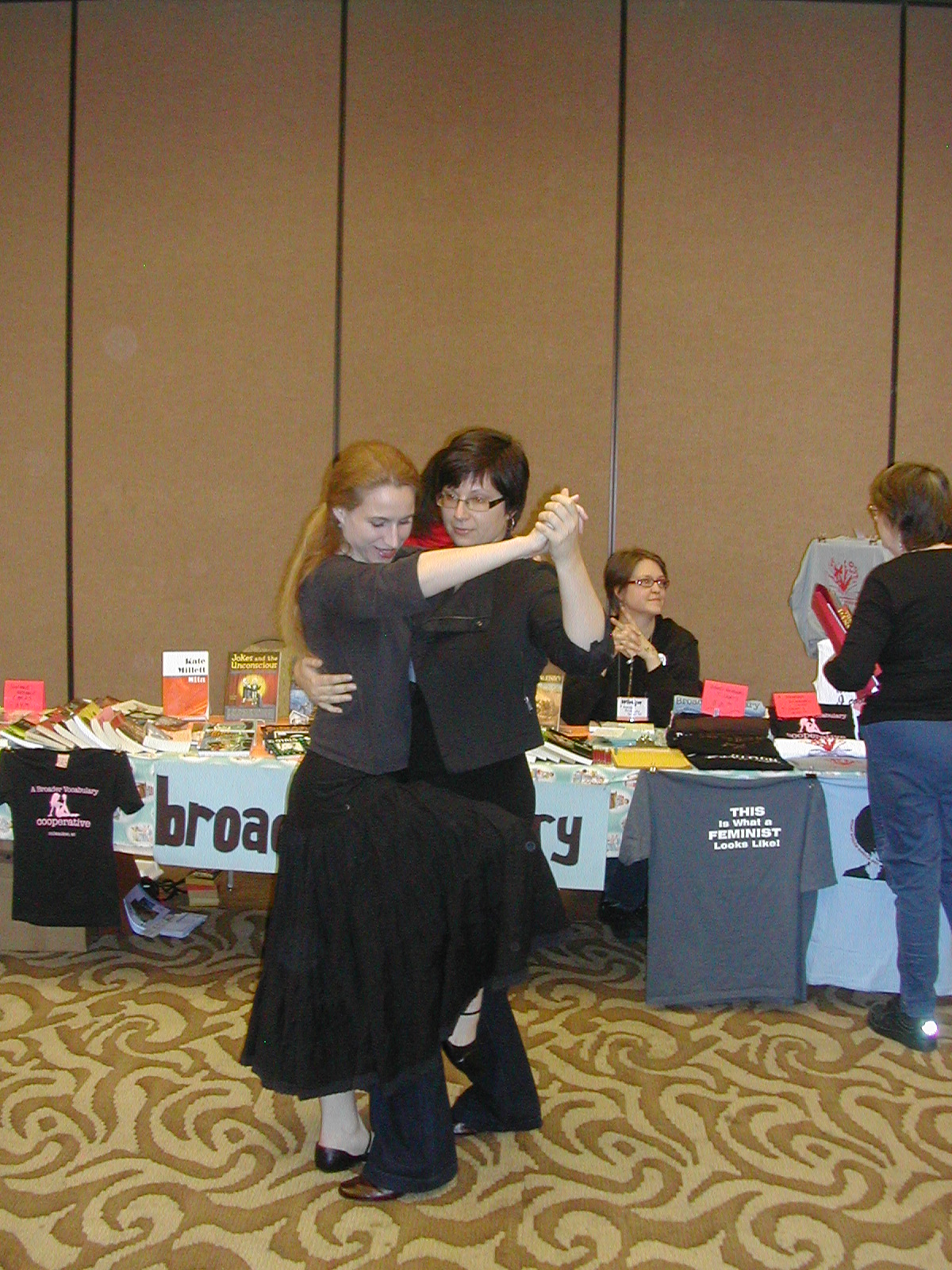
Genevieve and I got into a fight. Yes, right there among the books.

But then we made up and started to tango.

Afterward, I went to dinner with Catherynne Valente, and Annalee Newitz and Charlie Jane Anders from io9. We ate Nepalese. And then, I skipped all the parties. I know, it’s Wiscon. But I’m tired, and I’ve been to enough conventions now to know that when I want to rest and be by myself, I should.

So tonight I’m going to rest.  There are plenty of parties tomorrow.

Posted in Uncategorized | Leave a comment

My Tribe

This is what a writing life looks like.

Last night, I was up until 4:30 a.m., finishing what will probably be a next-to-final round of revisions to the Secret Project. The final round of revisions will probably take place as soon as I get back from Wiscon. I slept for three hours, then got up and packed.

Then I got on a plane, flew to Milwaukee, and then to Madison. And here I am, at Wiscon. By baggage claim, I ran into one of my roommates, Catherynne Valente. My other roommate, Seanan McGuire, will arrive tomorrow.

After we had checked in and brought our bags up to the room, with a larger group of people because that’s what happens in the Wiscon lobby, people just grab you and then you end up being part of a group, I took some time to go out by myself, walk along the main street that leads to the capitol building, remember how much I like Madison. And get a bowl of spicy noodles, which I’m eating as I write this.

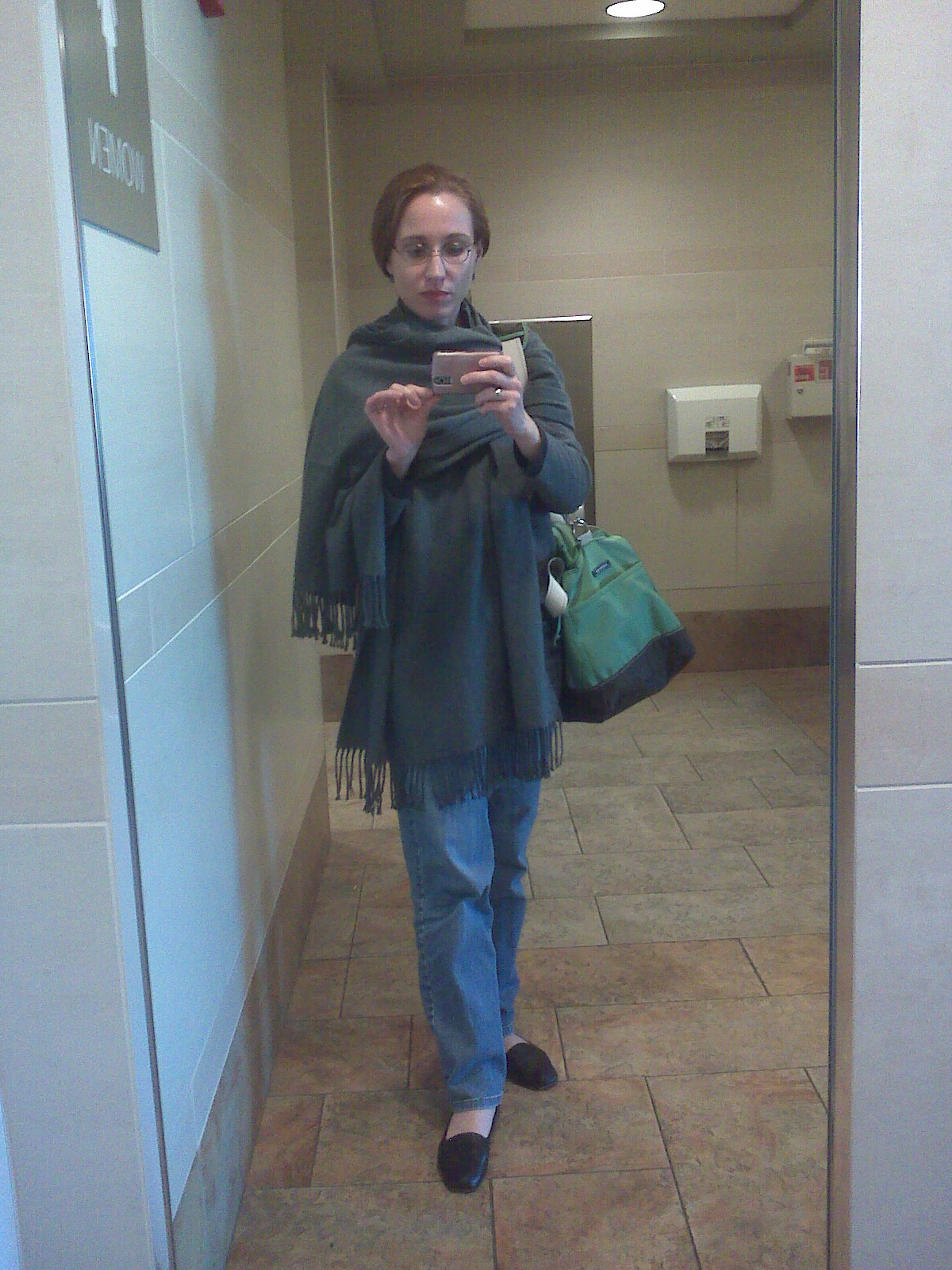
Here, by the way, is a picture of Traveling Dora. Looking tired but sensible, as though she could handle a train through Siberia or elephants in Indonesia. With the gray shawl that kept her warm on the cold, cold planes.

In the airports and on the planes, I finished reading the stories I need to critique in the writing workshop tomorrow. I still have to write up my comments for the workshop itself. Conventions are fun, but when you’re a writer, they’re also work. So tonight I’ll be staying in, writing up my comments, doing the work I’m supposed to do.

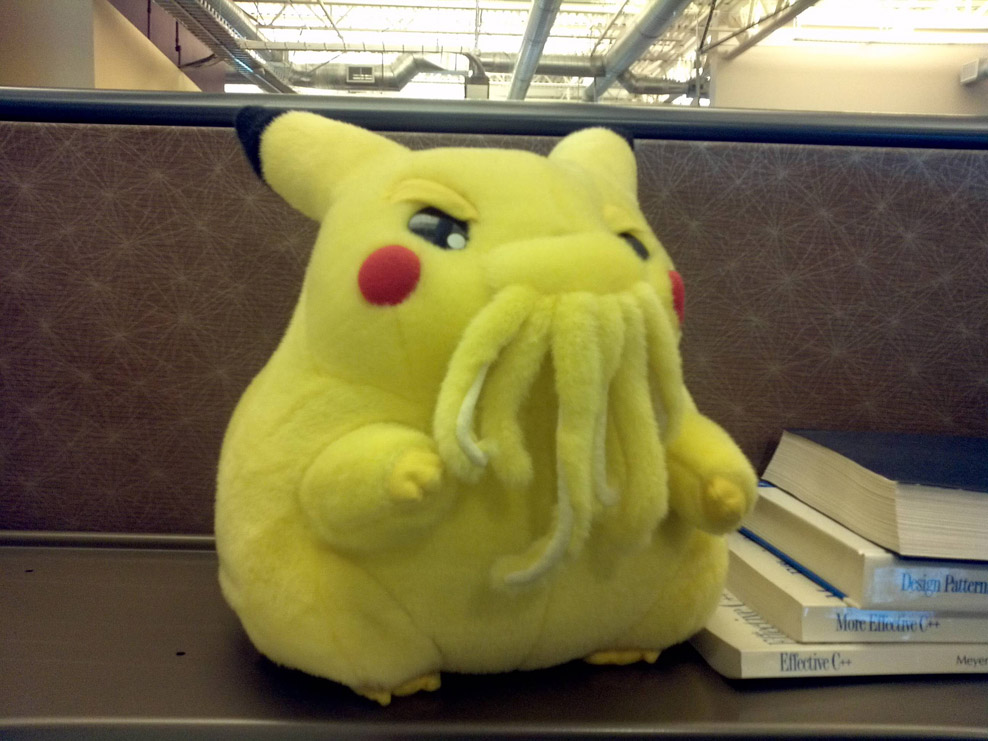
And then I’ll be spending tomorrow with my tribe, the tribe of writers and editors and publishers and illustrators. The people who make stories happen. I think of it as a very special tribe. These are the people who will laugh when I post a picture of Cthulhu Pikachu.
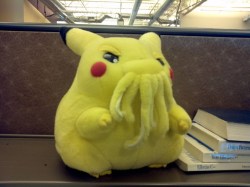
Or get this joke with peer reviews, which I will include at the end of this post for those of you who don’t like to click links. This one is for the academics, and there’s one academic I’d like to share it with in particular, because I know it would make him laugh. If you read this, you know who you are, professor.

Being here makes me think about what I want in my life, now. Love and friendship, first. There are so many people I lost touch with because I was focused on the work. It always came first. But I’ve missed my tribe, my people. It’s time to start reconnecting. Second, writing and creative work. I’m already working on that, already writing stories, essays, poems. But there are so many projects I have planned, so many I want to undertake. And finally, a place where I can make all of these things happen, where there is beauty and comfort and peace. Some of these things might take me a while to find, but I’ll get there. I have – not always confidence, but a kind of faith.

All right, here’s the joke. Go ahead, laugh at me for thinking this is one of the funniest things I have ever read. Especially the peer reviews.

Q: How many historians does it take to change a light bulb?

A (by Dr. L): There is a great deal of debate on this issue. Up until the mid-20th century, the accepted answer was “one”: and this Whiggish narrative underpinned a number of works that celebrated electrification and the march of progress in light-bulb changing. Beginning in the 1960s, however, social historians increasingly rejected the “Great Man” school and produced revisionist narratives that stressed the contributions of research assistants and custodial staff. This new consensus was challenged, in turn, by women’s historians, who criticized the social interpretation for marginalizing women, and who argued that light bulbs are actually changed by department secretaries. Since the 1980s, however, postmodernist scholars have deconstructed what they characterize as a repressive hegemonic discourse of light-bulb changing, with its implicit binary opposition between “light” and “darkness,” and its phallogocentric privileging of the bulb over the socket, which they see as colonialist, sexist, and racist. Finally, a new generation of neo-conservative historians have concluded that the light never needed changing in the first place, and have praised political leaders like Ronald Reagan and Margaret Thatcher for bringing back the old bulb. Clearly, much additional research remains to be done.

– Response by peer reviewers

Dear Dr. L,

We regret that we cannot accept your historian joke in its present form . . . . However, a panel of anonymous reviewers (well, anonymous to YOU, anyway) have reviewed it and made dozens of mutually contradictory suggestions for its . . . improvement. Please consider them carefully, except for the ones made by a man we all consider to be a dangerous crackpot but who is the only one who actually returns comments in a timely fashion.

1. This joke is unnecessarily narrow. Why not consider other sources of light? The sun lights department offices; so too do lights that aren’t bulbs (e.g. fluorescents). These are rarely “changed” and never by historians. Consider moving beyond your internalist approach.

2. The joke is funny, but fails to demonstrate familiarity with the most important works on the topic. I would go so far as to say that Leeson’s omission is either an unprofessional snub, or reveals troubling lacunae in his basic knowledge of the field. The works in question are Brown (1988), Brown (1992), Brown (1994a), Brown (1994b), Brown and Smith (1999), Brown (2001), Brown et al. (2003), and Brown (2006).

3. Inestimably excellent and scarcely in need of revision. I have only two minor suggestions: instead of a joke, make it a haiku, and instead of light bulbs, make the subject daffodils.

4. This is a promising start, but the joke fails to address important aspects of the topic, like (a) the standard Whig answer of “one,” current through the 1950s; (b) the rejection of this “Great Man” approach by the subsequent generation of social historians; (c) the approach favored by women’s historians; (d) postmodernism’s critique of the light bulb as discursive object which obscured the contributions of subaltern actors, and (e) the neoconservative reaction to the above. When these are included, the joke should work, but it’s unacceptable in its present form.

5. I cannot find any serious fault with this joke. Leeson is fully qualified to make it, and has done so carefully and thoroughly. The joke is funny and of comparable quality to jokes found in peer journals. I score it 3/10 and recommend rejection.

I know, I’m a nerd.  But I sat there in the airport, laughing and laughing.

Posted in Uncategorized | 6 Comments

Your Favorites

I’m sorry, I really will start posting longer, more serious posts again soon. I’m so tired this week that it’s difficult for me to focus on writing posts like those. And later this week I will have something to announce, so watch for a post to be called YA Novel Challenge. I leave for Wiscon on Thursday, so I’ve been trying to get a lot of things done that I need to get done before I leave. That’s why it’s been difficult for me to post. And as I said, I’m tired.

Today, I’m going to tell you about something you may have noticed above: I’m working on a new page for this website. It’s called Favorites (see the menu bar), and it’s a page on which I’m listing the twenty posts that readers seem to have liked the most since I started blogging here. In case you’re interested in what those posts are, here you go:

Value Yourself
Wicked and Lovely
Write Every Day
On Blogging
Mythpunk
Finding the Joy
Go Tonight
Thoughts on Love
Vampires!
Becoming Yourself
Thoughts on Writing
Choices and Consequences
Being a Snail
How to Revise
Why Go to Conventions?
Being a Brand
Writing Tired
What Terri Said
Love and Squalor
Incorporating Failure

On the actual page, you will see short excerpts from each post. I think there’s a reason these particular posts are the favorites. Most of them are posts that offer something to the reader, something the reader can take away and apply to his or her own life. Which makes me think that we’re all searching – trying to figure out better ways to live, to work, to write. Ways to make ourselves more fulfilled. Ways to find more joy.

That makes me both sad and happy – happy in that we’re all searching for that I believe to be important things, sad in that we’re all still searching. Is life a constant search? Or will we find a place where we can sit down, say yes, I have found the place, I have found home? The place where I can be creative, at peace with myself? I think perhaps the answer is, yes, both. There are places we can find, there are homes we can make for ourselves. At the same time, the search also continues. We are always seeking, always becoming. And I suppose that is what makes us what we are – human beings. The universe’s way of thinking about and understanding itself. At least, that’s one way I like to think about it.

Posted in Uncategorized | 1 Comment

A Train of Thought

I sat up late last night, watching a documentary on Christopher McCandless. I think it was a documentary called The Call of the Wild. There’s also a movie called Into the Wild, but I don’t think I want to see it. I don’t want the romanticization of McCandless’ life, which is what I assume the movie would be. It can scarcely avoid being anything else.

If you haven’t heard of McCandless, he’s the college graduate who spent two years traveling around the country, sometimes working, sometimes living off the land. He had read a lot of Thoreau and Tolstoy. Finally, he traveled up to Alaska, hiked into the wilderness, survived for 113 days, then died of starvation. His story was told in a book called Into the Wild, which was made into the movie.

There were several things that interested me about the documentary. First, McCandless was born in the same year I was, 1968. He came from my generation. Second, he came from the same place I did. He went to high school in Annandale, Virginia. I went to high school farther out, in Loudon. But we both came from the wealthy suburbs of Washington D.C. And I think in some ways we had the same response to it. He strikes me as someone who was looking, almost desperately, for the authentic. I remember feeling that way as well, and I think the area had something to do with it. We were all supposed to wear the right clothes. Go to the right schools. He went to Emory, I went to the University of Virginia (which was a state school, and therefore much less expensive, although one of the best schools in the country). He gave away the money set aside for law school. I had no money set aside for law school, and got through Harvard on grants and loans – mostly loans. (I repaid them in three years. That’s how much money I was making as a corporate lawyer.)

I think it took a great deal of courage to live the way he lived, traveling around the country. And a great deal of stupidity to go out into the wilderness unprepared. You can fight other men and win. You can’t fight nature.

But I understand and admire the search.

I was a girl, and obedient, and I did what I was supposed to do. He declined membership in Phi Beta Kappa. Of course I accepted. I went on to law school. And continued to do what I was supposed to do for a long time. And now I find myself at an age that is a mirror image of the age at which McCandless died: 42 rather than 24. Thinking about authenticity, about what life is, really, underneath everything we pretend it is. But I think my particular journey isn’t out there, but in here. It’s into my self, trying to figure out what is inside. Instead of driving, I write.

McCandless had with him a memoir by Louise L’Amour called Education of a Wandering Man, which contains an excerpt from a poem by Robinson Jeffers called “Wise Men in Their Bad Hours.” Here is the poem:

Wise men in their bad hours have envied
The little people making merry like grasshoppers
In spots of sunlight, hardly thinking
Backward but never forward, and if they somehow
Take hold upon the future they do it
Half asleep, with the tools of generation
Foolishly reduplicating
Folly in thirty-year periods; they eat and laugh too,
Groan against labors, wars and partings,
Dance, talk, dress and undress; wise men have pretended
The summer insects enviable;
One must indulge the wise in moments of mockery.
Strength and desire possess the future,
The breed of the grasshopper shrills, “What does the future
Matter, we shall be dead?” Ah, grasshoppers,
Death’s a fierce meadowlark: but to die having made
Something more equal to the centuries
Than muscle and bone, is mostly to shed weakness.
The mountains are dead stone, the people
Admire or hate their stature, their insolent quietness,
The mountains are not softened nor troubled
And a few dead men’s thoughts have the same temper.

And here is Jeffers reading it:

This is the sort of poem that poets write, assuming they are among the wise men. And we can criticize it for that, for being in a sense elitist and consolatory. And yet – it does not tell us that we are grasshoppers. We can choose to be among the wise men, or attempt to be wise men. We can approach life with strength and desire, at least attempt to make something more equal to the centuries than muscle and bone. And hope that our thoughts will endure, as the mountains endure.

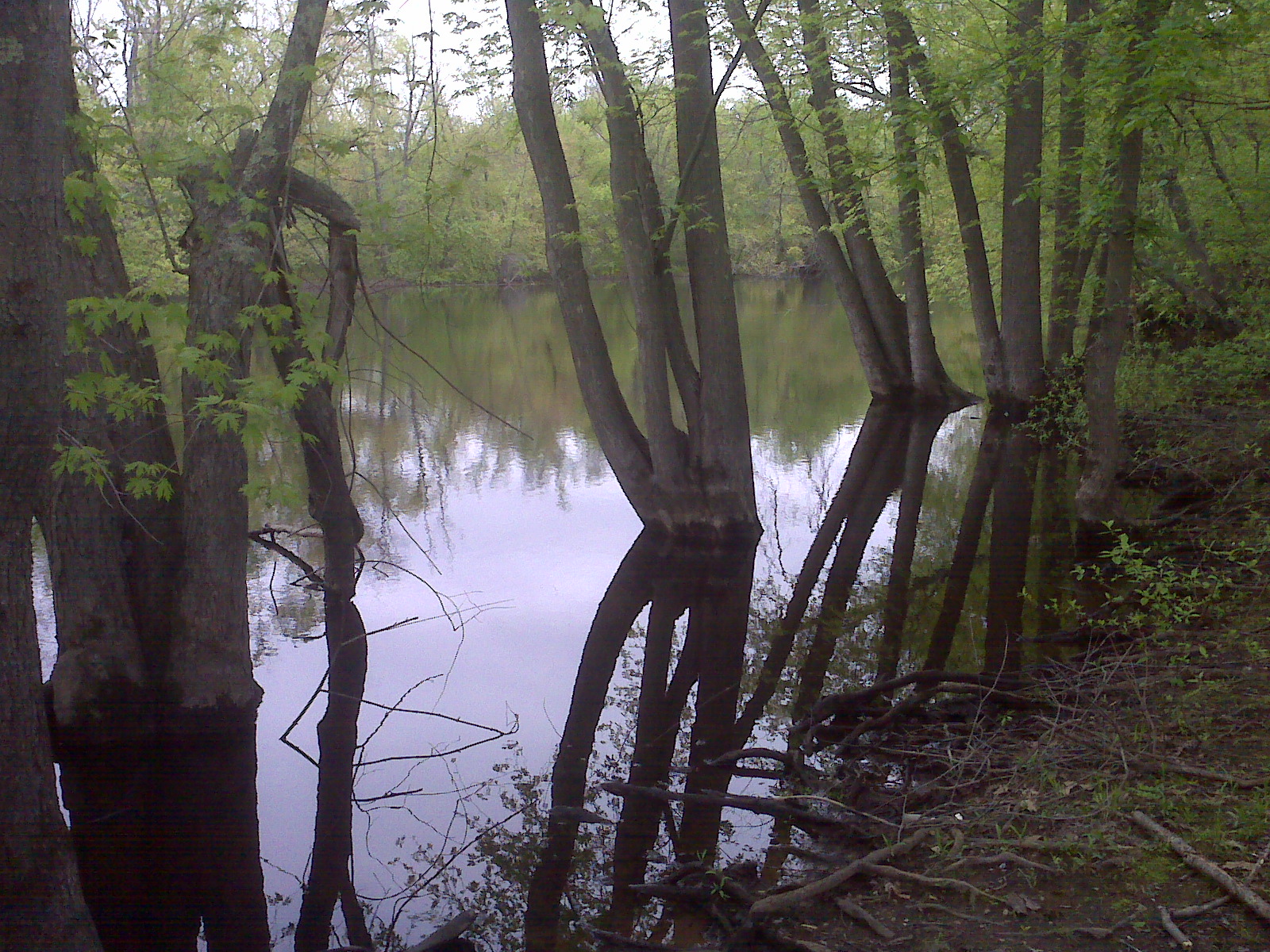
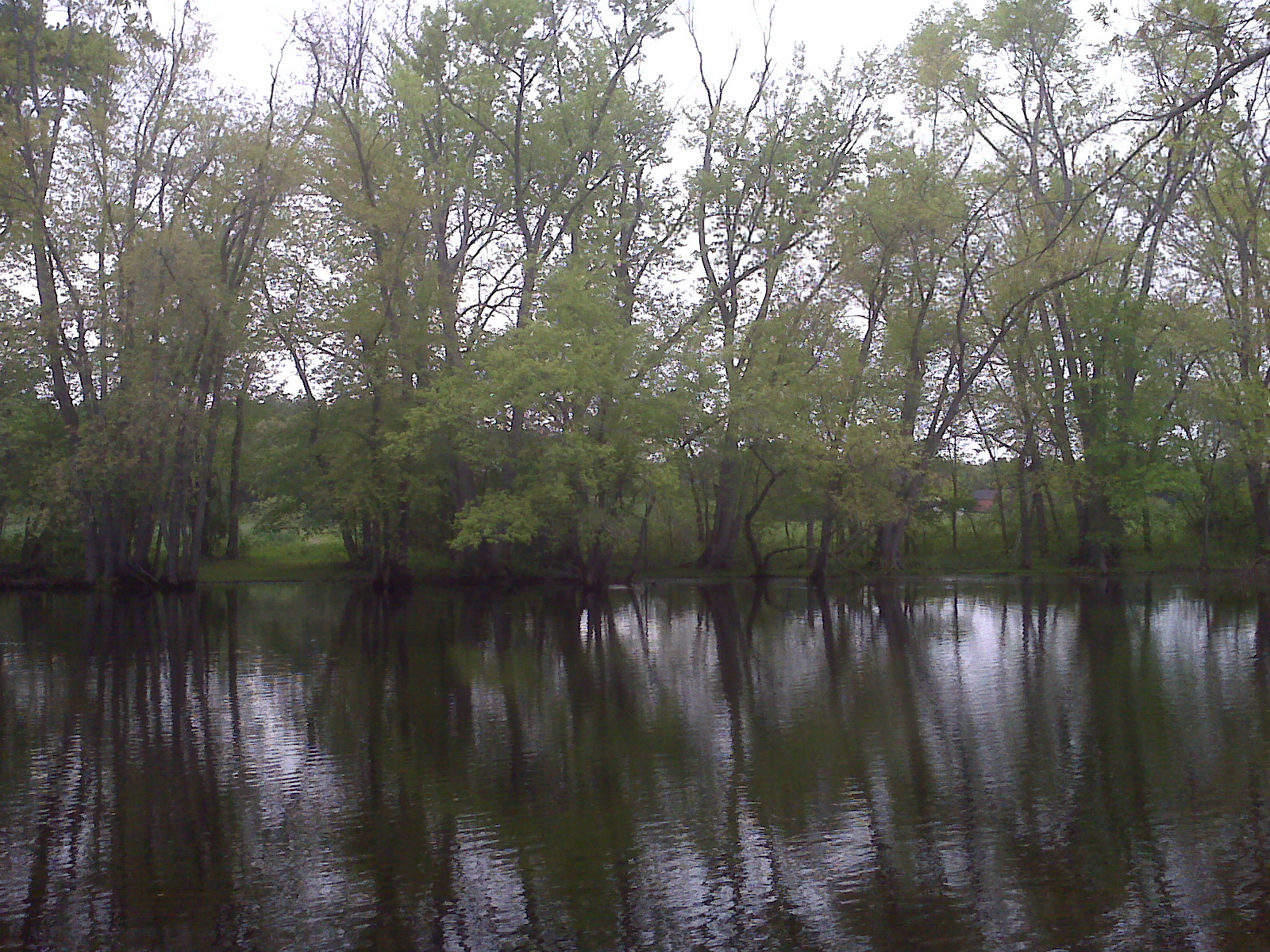
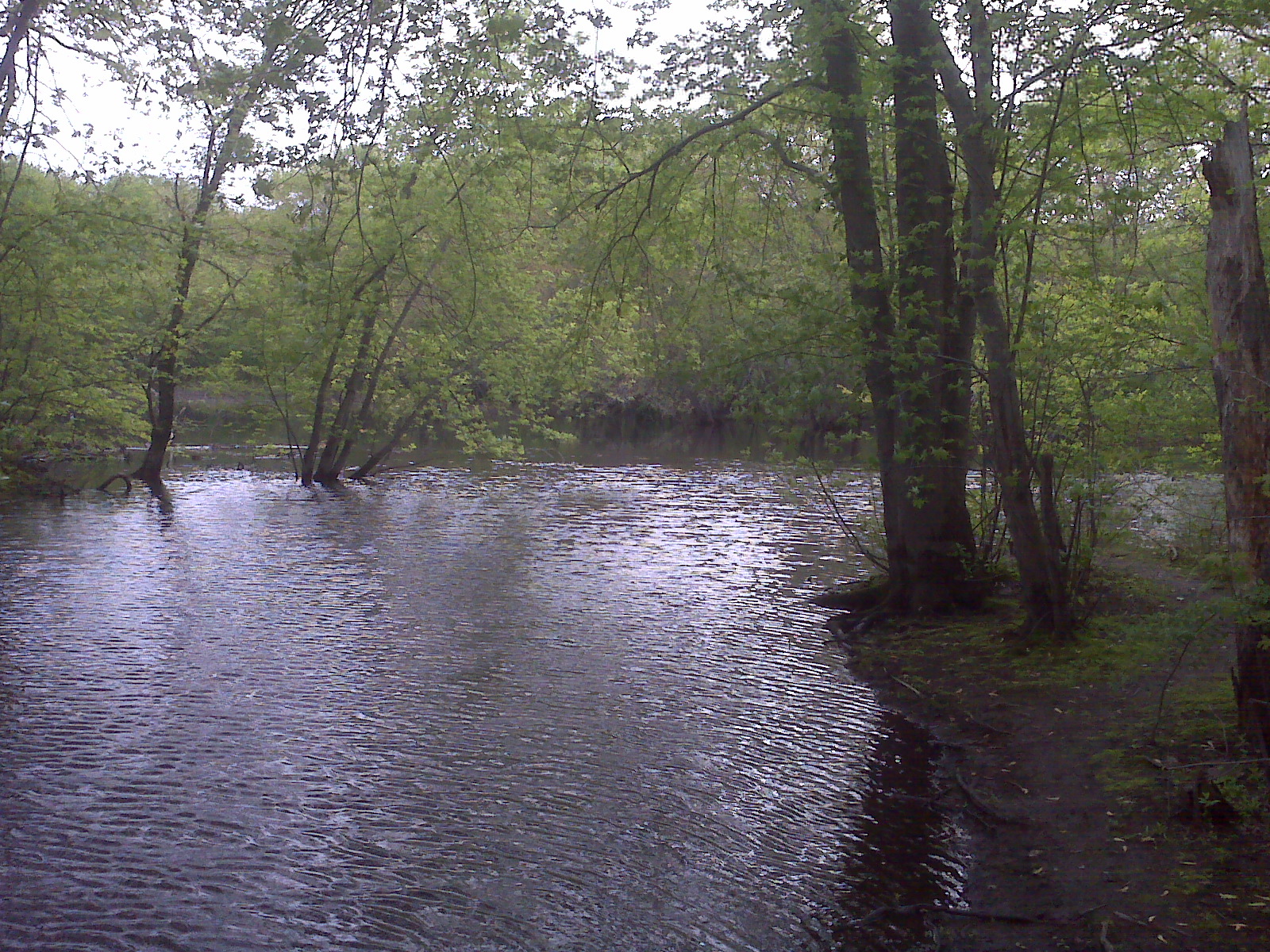
I went into my own small patch of wilderness today, the Great Meadows Wildlife Refuge. I took these pictures:

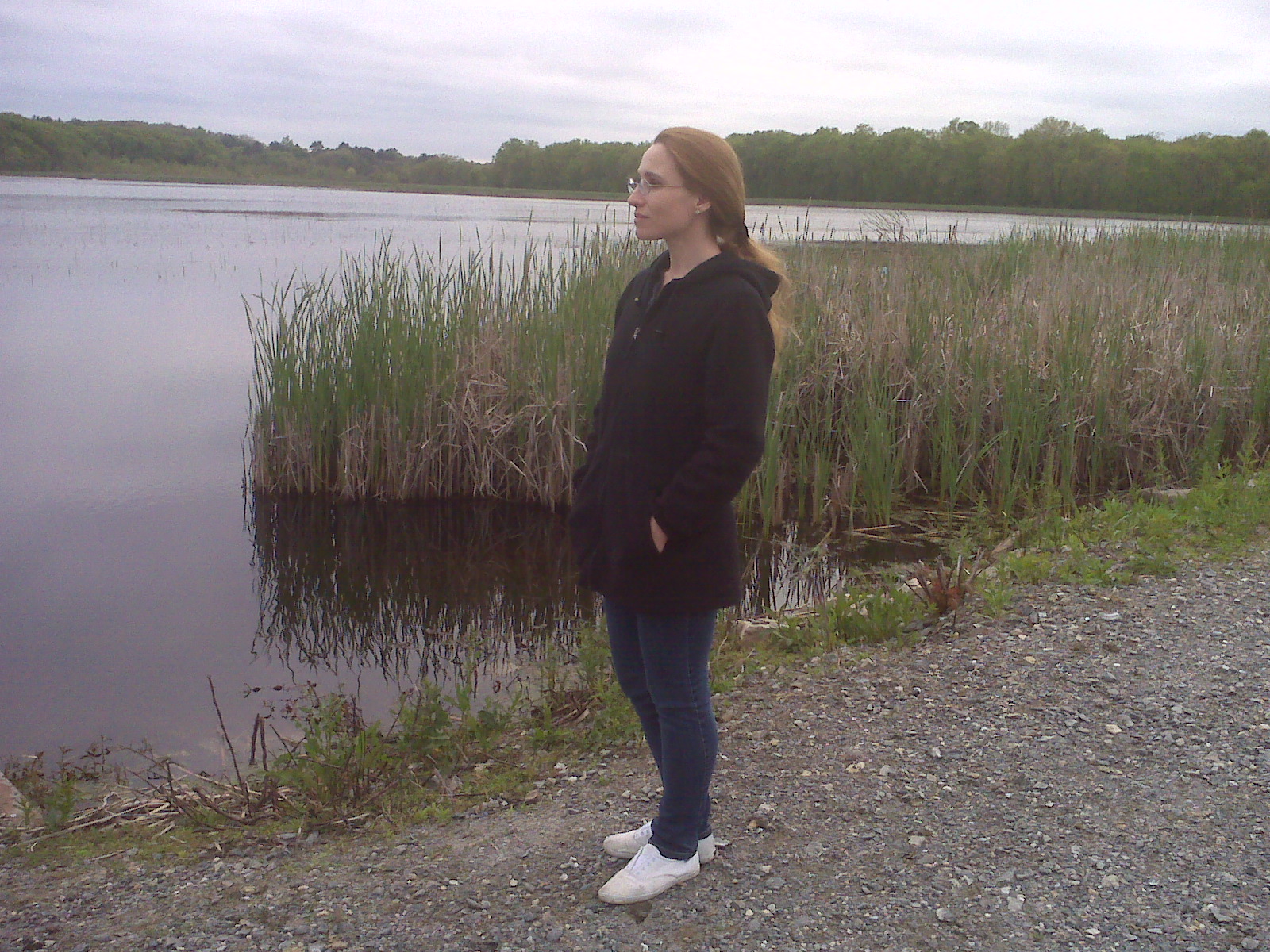
And here I am, in my small patch of wilderness, with the water and reeds all around.

This train of thought isn’t really going anywhere, to any great conclusion. It’s just what I was thinking as I walked along those trails, with the Purple Martins wheeling overhead.

Posted in Uncategorized | 1 Comment

The Chihuly Exhibit

Confession: Objectively, I’m doing well.  Yesterday, at 3:00 a.m., I finished and submitted the revised first chapter of my dissertation.  That means all three chapters have been revised and submitted. This should allow me to plan for the fall, and for a dissertation defense. I hope. I need to spend the rest of the summer putting the final manuscript together, making final edits and most importantly, writing an introduction. But it means that things are happening.

Subjectively, not so well. I’m exhausted, on some sort of edge most days. I think the last two months have been too much. Too much work, too much loss, too much sorrow.

Yesterday, I couldn’t work anymore, so I went to the Museum of Fine Arts to see the Dale Chihuly exhibit. If you’re not familiar with him, he’s probably the most famous glass artist working now. I will also confess that his art isn’t quite to my taste. While walking through the exhibit, I thought, This is the Las Vegas version of Fairyland. I went to Las Vegas once, for a conference on the eighteenth-century American writer Charles Brockden Brown. I was giving a paper. I think the conference organizers had selected Las Vegas because the hotel was inexpensive (as long as you didn’t gamble). To get to the rooms where we were presenting papers, we had to walk through a casino. It was interesting and surreal to see academics, in their gray and black clothes, walking among the slot machines.

But back to the Chihuly exhibit. I took pictures, so I’ll show you some of it, more or less in the order I walked through it.

Upstairs, by the courtyard, there were cases of jars (I can’t quite call them vases) with designs based on Native American blankets. (I know this because I saw a PBS special on Chihuly’s techniques and latest projects.) That’s me, in one of the pictures.  I look so dark because flash is not allowed in the museum.

In the courtyard there was a green glass tower and outside, orange curls of glass. You can see me taking a picture in one of the windows.

But the real show was downstairs. I hope you’ll see what I mean by a Las Vegas version of Fairyland.

What I did like were the smaller jars based on Native American baskets, displayed with Chihuly’s basket collection. And the large jars displayed here on a slab of wood. They were quite delicate, and looked almost like natural objects.

Here it is, the Las Vegas Fairyland. This was not my favorite room. And yet, I liked some of the individual pieces. It was just them all together, the lack of restraint. To my eyes, they ended up being garish. Yet I liked the large glass balls. If you could put one into a garden, surrounded by grass or plants, it would be lovely. Chihuly sometimes sends glass balls floating down streams, and then they look magical.

The next room had a ceiling with glass shapes. It was rather interesting, looking up. But again, too much for me.

And finally, there was a room filled with chandeliers, which are some of his trademark pieces. I only photographed two because my battery ran out, right at the end of the exhibit. But I think you get a pretty good idea of what it was like?

So that’s what I did yesterday. Today I am back to work, making it through. But feeling on edge, as though something might break. Like glass.

Posted in Uncategorized | 2 Comments

The Barsoom Anthology

I promised that I would tell you who murdered Amelia Price today, but it’s been a long day for me, and I’m very tired. I hope you won’t mind if I tell you tomorrow. I want to write about reading protocols in that post as well, and right now I can’t think all that clearly – not clearly enough to write about something so complex. (In case you can’t tell, I’ve been working on revising a dissertation chapter. There are days when I’m not sure how I’m going to make it through this summer.)

Instead, I’m going to repost an announcement that came out today from Simon & Schuster. This was the press release:

SIMON AND SCHUSTER BOOKS FOR YOUNG READERS TO PUBLISH NEW ANTHOLOGY BASED ON THE CLASSIC JOHN CARTER OF MARS SERIES BY EDGAR RICE BURROUGHS

New York, NY, May 19, 2011

Simon & Schuster Children’s Publishing announced today it will publish a new original anthology called The New Adventures of John Carter of Mars, edited by John Joseph Adams and based on the characters created by Edgar Rice Burroughs. Publication will be in the spring of 2012 and will coincide with the 100th anniversary of A Princess of Mars, the first book to feature John Carter. The anthology envisions all-new adventures set in Edgar Rice Burroughs’ fantastical version of Mars (known in the series as “Barsoom.”) This anthology not only imagines new or the lost adventures of John Carter, but also explores the other characters and niches not fully explored by Burroughs. David Gale is the acquiring editor, and Joe Monti of Barry Goldblatt Literary Agency brokered the deal. Simon & Schuster holds World English rights.

Celebrated fantasy writer Tamora Pierce will write the foreword to the anthology, and John Joseph Adams will write the introduction and header notes. The collection will include stories by Joe R. Lansdale; Jonathan Maberry; David Barr Kirtley; Peter S. Beagle; Tobias S. Buckell; Robin Wasserman; Theodora Goss; Genevieve Valentine; L. E. Modesitt, Jr.; Garth Nix; Chris Claremont; S. M. Stirling; Catherynne M. Valente; and Austin Grossman. There will also be a “Barsoomian Gazetteer,” a who’s who and what’s what on Barsoom, written by science fiction author and noted Barsoom expert Richard A. Lupoff. In addition, each story will feature an original illustration by noted artists such as Charles Vess, John Picacio, Michael Kaluta, and Misako Rocks.

At the same time, Simon & Schuster Books for Young Readers will publish John Carter of Mars, a bind-up of the first three John Carter books: A Princess of Mars, The Warlord of Mars, and The Gods of Mars, with all-new illustrations by Mark Zug, Scott Fischer, and Scott Gustafson.

“I still vividly recall the summer as a teenager that I read all eleven of Edgar Rice Burroughs’ Mars novels in one enthusiastic gulp,” said Jon Anderson, Executive Vice President and Publisher of Books for Young Readers. “The opportunity to revisit that experience with new stories from this stellar roster of authors was too much to resist!”

Doesn’t that sound like fun? I saw the announcement on IO9, and then I saw a blog post about it on Cinerati. In that blog post, Christian Lindke wondered what sorts of stories this specific lineup of writers would come up with, since they (we) are such a diverse bunch, and specifically said, “I have no idea what Theodora Goss’ version of planetary romance is.”

Well, I’m not going to tell you anything about my story yet, other than the title: “Woola’s Song.” But it’s an interesting question, isn’t it? I think that I am, actually, becoming known for a certain type of story, for a certain sort of literary fantasy. And so you would wonder what I could come up with in a John Carter universe. I will say that John Joseph Adams asked me to participate in this anthology after reading my story “Child-Empress of Mars” in Interfictions, and this story is absolutely nothing like that one. Nevertheless, it’s very much the sort of story I would write. I can’t wait for people to read it and tell me what they think.

I’ll tell you more about it when the book comes out, but you know, I’m interested myself: what did Peter Beagle, Genevieve Valentine, and Catherynne Valente come up with? They are not at all the sorts of people I would associate with planetary romance either. I can’t wait to see . . .

Posted in Uncategorized | 2 Comments

Finding the Joy

I smell like lilacs.

The reason I smell like lilacs is that, as you may know, I’ve been trying out new perfumes. At first I thought the right one for me might be one of the classic perfumes, a Chanel or Dior, for example. But you know, they smell too complicated, too – honestly, too old. They don’t smell modern to me. What I want is something clean, fresh.

Today I discovered that the company that makes my favorite candles, Pacifica, also makes perfumes. So I tried the French Lilac, and you know, it actually smells like lilacs? Which most lilac perfumes don’t. But the scent took me back to walking among the lilacs at the Arnold Arboretum. I hope I can find time to visit the lilacs next weekend. My favorite Pacifica scent, Persian Rose, was not available, so I’ll have to order that online. But this blog post is not actually about perfume. It’s about a different kind of joy.

Earlier today, I read Nick Mamatas’ Booklife blog post “Against Professionalism,” and it reminded me of something I’ve been noticing among certain writers. It’s a joylessness. They tend to be writers who are starting out, trying to get their work published. They encourage each other, tell each other that they need to accept rejection, keep writing, keep submitting. Keep keeping on.

And you know, they’re right. Sort of.

Because I think that writing is not about accepting rejection. It’s about embracing failure. What’s the difference? One is passive, the other is active. Most writers are given a certain model of writing: finish a story, send it out, if it comes back then send it elsewhere. Same with a novel. But the writers I know personally have had much more complicated paths. I know my own path has been much more complicated. Our paths, and I’m including friends of mine here, have included starting literary movements, online magazines, reading series. Proposing and editing anthologies. Putting on events of various sorts. And writing not just stories, not just novels, but poems, articles. Doing whatever they thought would be interesting, fun.

What you want, in your writing career, is a creative flowering. You want to do things not simply because they’re the things you’re supposed to do or that everyone does, or simply because they make money (although I will never, ever tell you not to make money, since we all need to keep ourselves in stockings and fans – and perfume). You want to do things because you think they’ll be fun and interesting to do. Because you think it would be fabulous if someone did them, but it doesn’t look as though anyone else will.

You want to create beautiful, fascinating things.

And you know what? If you do that, you will have a writing career. Not necessarily an easy one, but honestly, I can’t think of a single friend of mine who’s had an easy writing career. There’s no such thing. People will come to you. Even people who are editors and agents. They will ask you what you are writing, whether you would send them something. I know, you don’t believe me. But I tell you, it’s true. It doesn’t mean you won’t get rejected, because even a story that is commissioned can be rejected. But that’s all right, that’s part of embracing failure, right? Embracing failure means creating beautiful, fascinating things – knowing that some of them won’t work. Because when you’re being that creative, that inventive, failure is inevitable. But the successes are all the more wonderful.

Last night, although I’d been so sick during the day, I proofed my Folkroots column for the 100th issue of Realms of Fantasy. That column will be called “Fairies and Fairylands,” and I can’t wait for you to see it. I can’t wait for you to see the entire issue. It’s absolutely gorgeous!

Today, I talked to my editor for several hours about final revisions on another project. No, I’m not going to tell you anything about it. You’ll just have to wait! But the suspense won’t last much longer.

And then I printed out the stories for the workshop I’ll be leading at Wiscon.

That’s what my life looks like. There’s a lot to it, and sometimes it’s overwhelming. But it can also be incredibly joyful, because I know that I’m creating beautiful things, things that will interest and perhaps even inspire. So I would say to writers who are starting out – don’t wait for rejection or acceptance. Go and create, in any way you can. Know that because you’re creative, you’re powerful. Your career is in your hands.

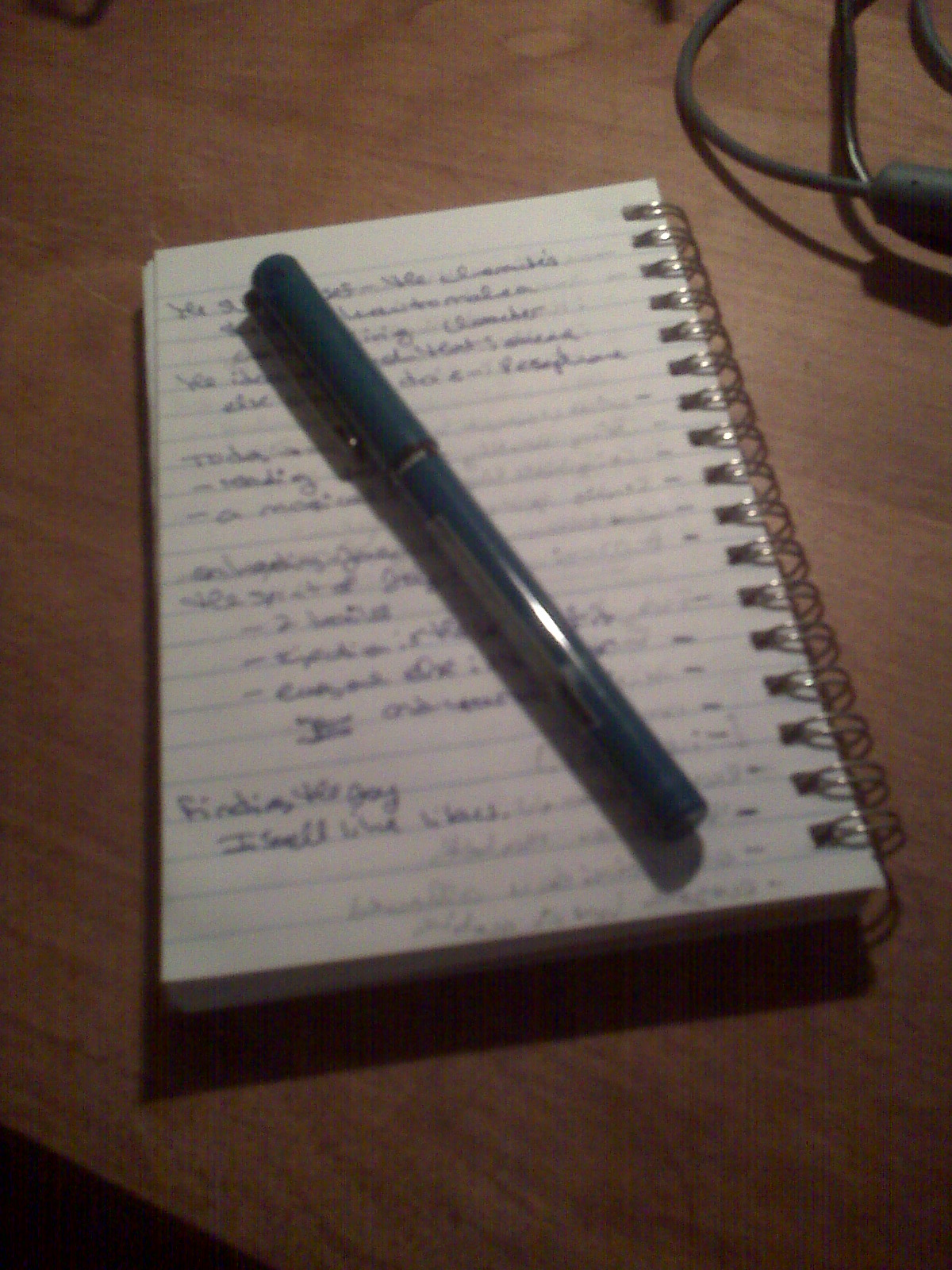
Earlier today, I sat down in front of my computer to write the blog post on “Reading Protocols.” To my left, I had my small notebook, with a list of the blog posts I want to write in it.

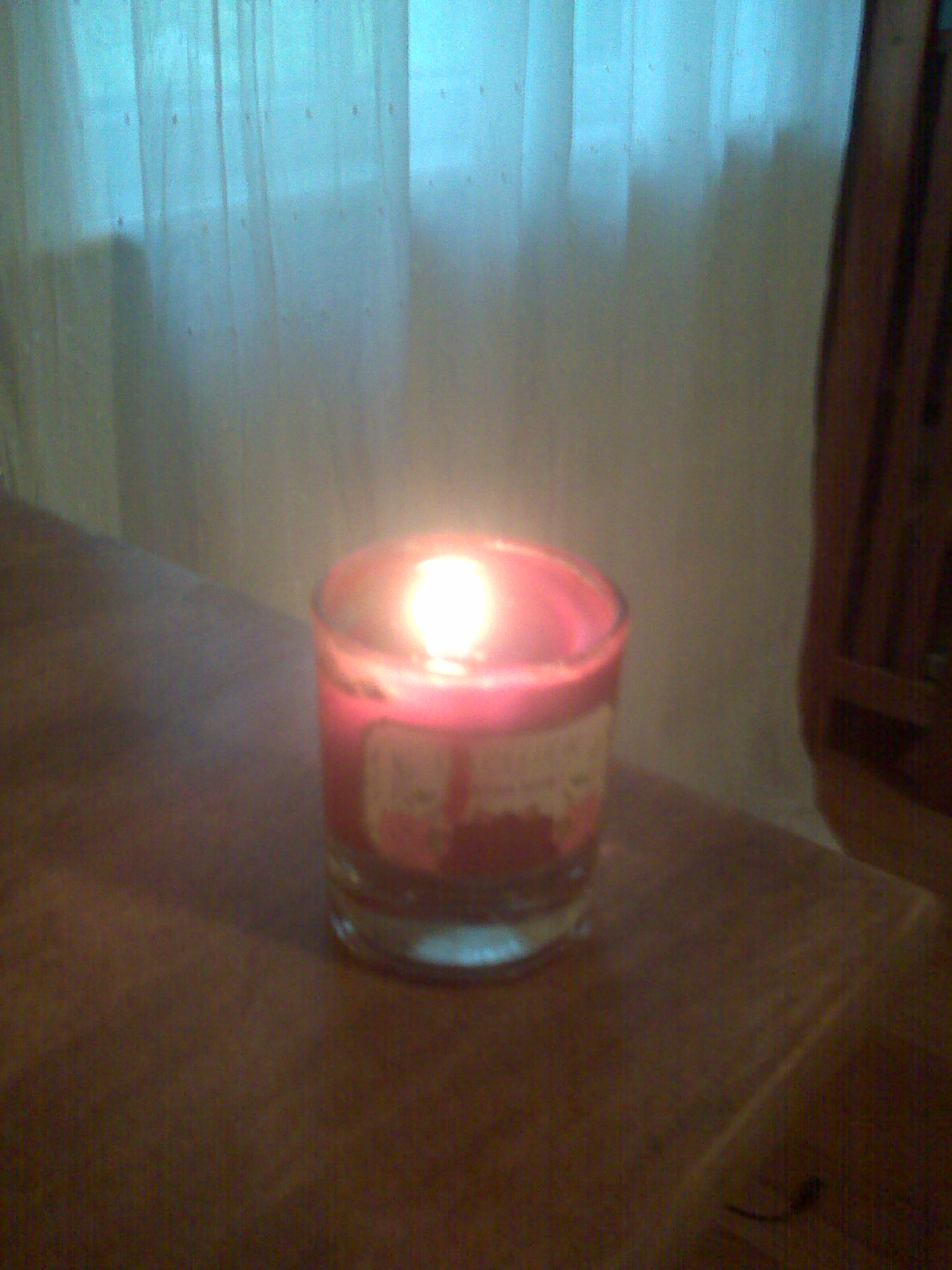
To my right, I had a Persian Rose candle. Even when it’s not lit, it perfumes the entire room. When it’s lit, the perfume is deeper, stronger.

I was finding my joy.

Posted in Uncategorized | 7 Comments