Museum Trip Concluded

And here, finally, are five paintings I’ve included specifically because I want to display them in Mother Night’s house. Of course, her house contains all the paintings that have ever been painted, but there is a sort of rotating display, and these are five that I would definitely include (were I ever chosen as one of her curators).

Don’t be surprised at this final selection after my first four. I’ve loved Lee Bontecou since I saw an exhibit of her work at MOMA. I think she’s far and away one of the most interesting of the Modernists. It’s because I like a dose of fantasy in my art (without that fantastic element, art tends to bore me). And Bontecou’s paintings (can they be called paintings? rather, her sculptures and wall-sculptures) look like detritus from after the apocalypse, like the outsides of rusted spaceships or robot factories. There is an engaging Mad Max quality to them. I suppose, really, I like art that makes me think of stories – and her art does. It eminently belongs in Mother Night’s house.

Posted in Uncategorized | 2 Comments

Museum Trip Continued

It was difficult selecting the images to include in these posts. There were so many magnificent items in the collection, room after room of English Aestheticism, French Art Nouveau, German Jungenstil. There were Stickley chairs and bureaus, and Tiffany lamps, and Zsolnay vases, that did not photograph well. But hopefully what I’ve included will give you a sense of how rich this particular collection is, and inspire you to visit it yourself. Here are five more photos:

(You see? They didn’t photograph well. But as I was editing this post, I decided to include them anyway. How could I omit the Tiffany lamps?)

Posted in Uncategorized | Leave a comment

The Museum Trip

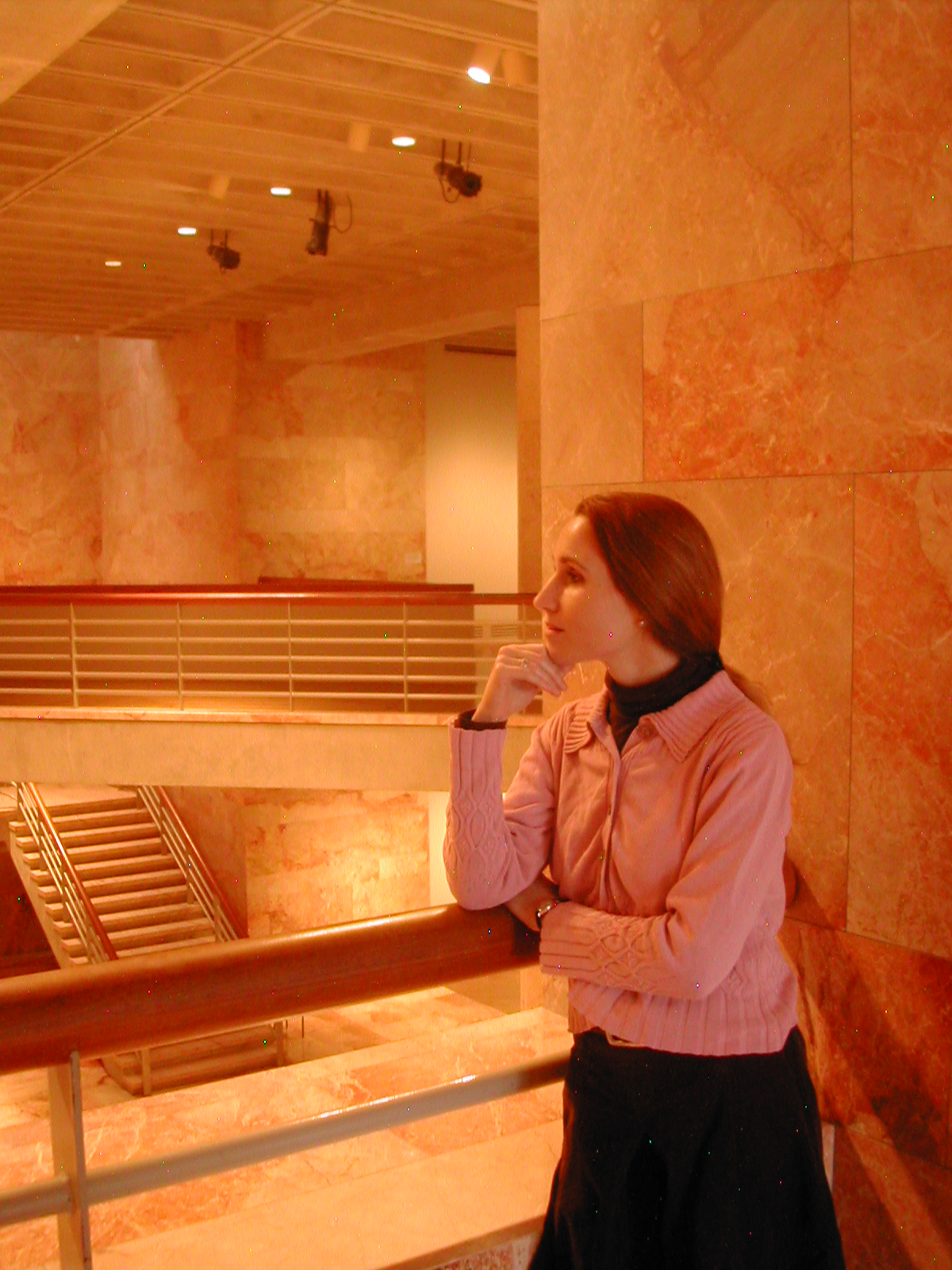
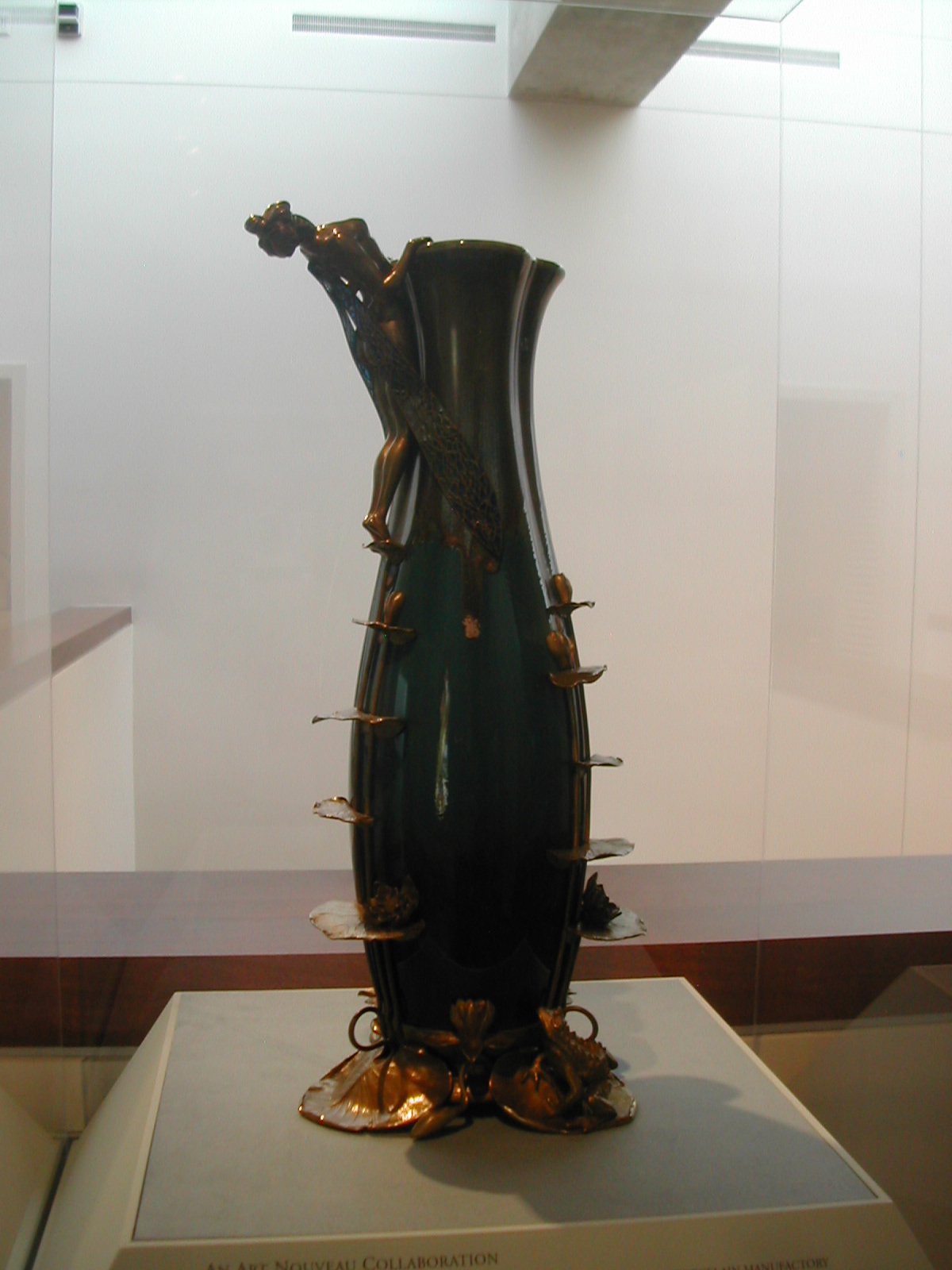
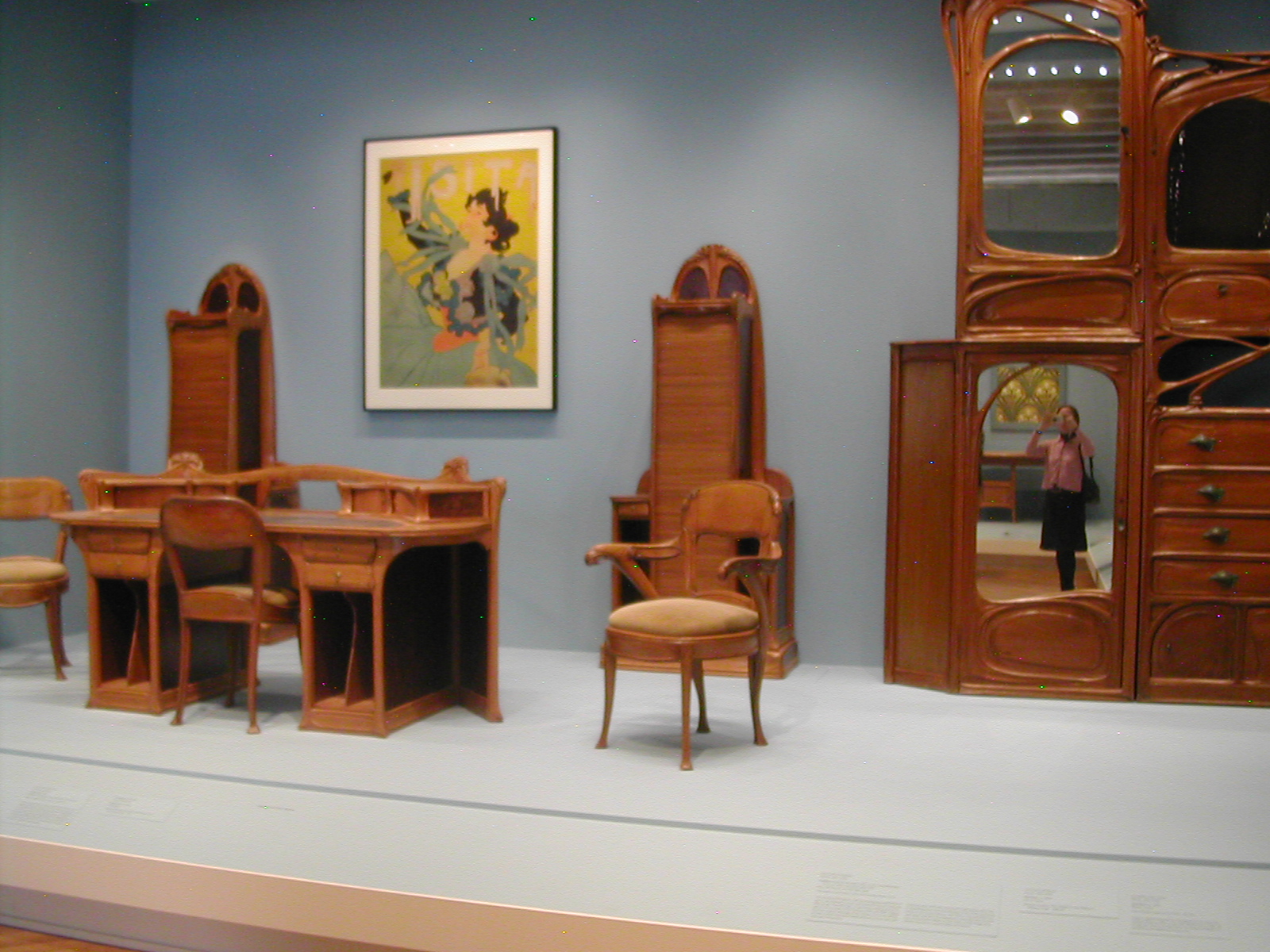
The Virginia Museum of Fine Arts is located in Richmond, Virginia. Regional museums like the VMFA are even better places to learn about art, I think, than the large national museums like the Met, the Boston MFA, or the National Galleries (which I grew up roaming). They can’t compete with the national museums, so they tend to acquire second-rate art by first-rate artists, or first-rate art by second-rate artists, or whatever is not currently in artistic fashion. The VMFA has all of those: several mediocre Picassos, excellent paintings by painters I’ve never heard of, and one of the best collections of Art Nouveau and Art Deco furniture and decorative arts I’ve ever seen.

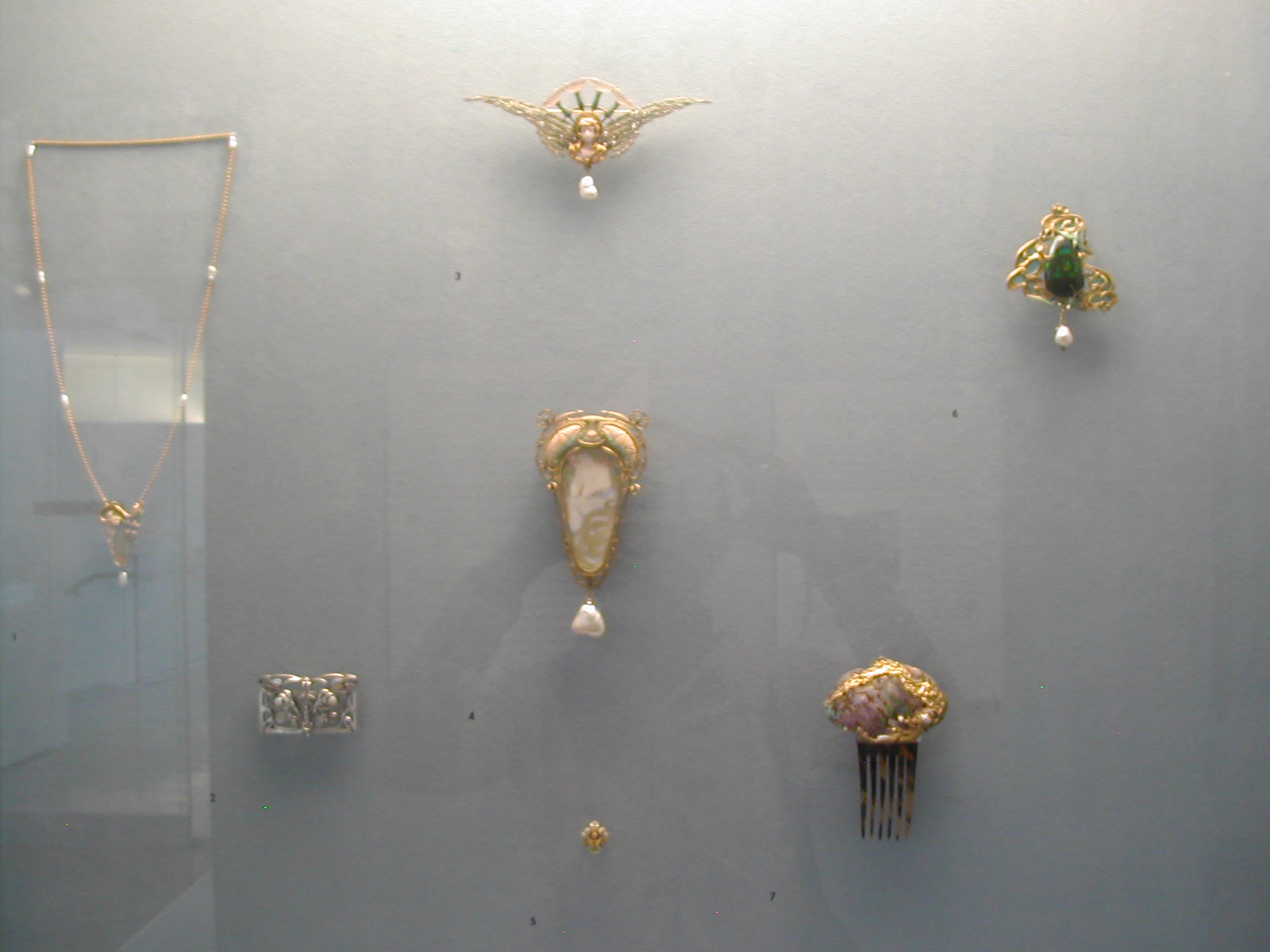
We didn’t spend enough time there, but saw plenty, include that entire collection (of course). I can’t show you the entire collection, or even most of the pictures I took, but here are just enough to give you a sense of what the collection contains. (I’m afraid these reveal my own bias; they are Art Nouveau rather than Art Deco, which I consider cold and, except in the case of jewelry, generally uninteresting.)

I think five images are enough for one post. I’ll include more in the next. (What does this have to do with writing, you ask? Well, obviously, these are the sorts of items I would use to furnish Mother Night’s house, and as for the jewelry, that’s what we wear to the ball.  If you were in Mother Night’s house, wouldn’t you wear dragonflies tremblant, and pearl combs to hold back your hair?)

Posted in Uncategorized | Leave a comment

The Influence of Art

Have I mentioned that I’m in Virginia? No, I know I haven’t, but here I am, surrounded by acres of forest and pasture: horse country. Today, I drove down to Richmond, to the Virginia Museum of Fine Arts. I’ll write more about that soon. But tonight, I wanted to write about the influence of art on my writing.

I was thinking about this subject because I did an interview recently for Clarkesworld Magazine. (I’ll let you know when that comes out.) And the interviewer asked me, as interviewers often do, which writers had influenced me. I’ve certainly been influenced by other writers, but I find that I’m just as influenced by other art forms, including the visual arts. There are things I learn from looking at works of art that I don’t think I would learn from reading novels or stories or poems. Let me try to explain by giving three examples. All of these are works by artists that I’ve learned of recently, and all of them have made me reflect on my own writing.

The first example is the post-it note art of of Don Kenn. His drawings remind me of Edward Gorey’s, but they’re more whimsical, not quite so dark despite the presence of monsters. They don’t have Gorey’s satirical edge, and one could even imagine them in a children’s book. Well, for rather advanced children.

The second example is the underwater sculptures of Jason de Caries Taylor. Watch how they evolve under the water: they begin as concrete casts of actual people, but then the underwater plants begin to grow and they become something quite different, sea creatures of sorts. They become both beautiful and grotesque.

The third and final example is the cardboard houses of Daniele Del Nero. After the artist allows mold to grow on them, they develop patterns, texture, character. They become both beautiful and horrifying.

What these works do for me is help me map the space where I want my writing to fall. It is a liminal space, a space between categories. That is why I often describe rather horrible things in beautiful, poetic prose. And beautiful things in straightforward, slangy, everyday speech. And in terms of genre, I want my stories to fall in between as well. Kenn’s post-it notes: how would you classify them? As illustration? They look like illustrations, yet they illustrate nothing. Taylor’s underwater art exists between two elements, belonging to both air and water. Del Nero’s houses remind me of the phrase “in the midst of life we are in death,” to which I would add, “in the midst of death we are in life,” which is the condition of all living beings. This is vague, I know. But sometimes what I need, when I write a story, is a feeling, a sense of where I need to go. And a visual image helps me.

It helps me find that space between beauty and darkness, life and decay, where I think my best and most meaningful writing lies. If some of the dancers in Mother Night’s house have butterflies’ wings on their heads, then some of the other dancers should have heads like skulls. That is, in part, my way of getting at a deep truth that I think Kenn’s, Taylor’s, and Del Nero’s works also get at: that we are all in that liminal space, that we exist between beauty and darkness, life and decay, all of us all the time. We don’t think about it much, until a work of art points it out to us. Until we see the concrete cast of a human head blossom with algae or sprout barnacles.

And then we realize where we are, the nature of the world we live in. I want my writing to convey that deep and fundamental truth – the truth of this strange and lovely, always temporary, continually transforming world of ours – as well.

Posted in Uncategorized | 1 Comment

Merlin’s Story

Hyacinth told me how Merlin broke his heart.

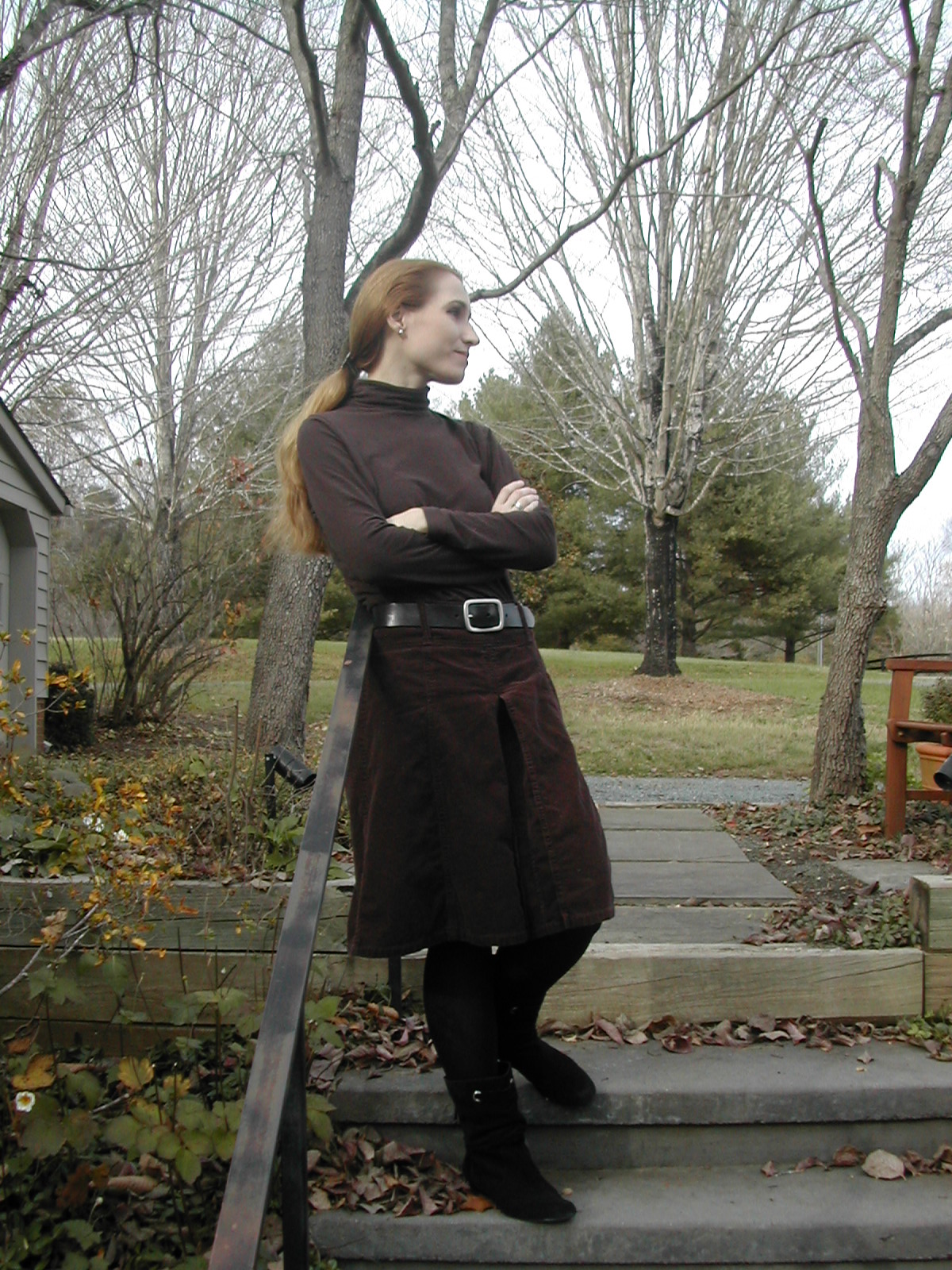
We were sitting in the tower room, on the first floor. (My bedroom was right above, on the second floor. I always stay in the tower room when I go to Mrs. Moth’s.) I was perched on the window seat. Hyacinth was curled up on the sofa. We were both still in pajamas, drinking our morning coffee out of mugs.

“It happened a long time, a very long time, ago,” she said. “More than a thousand years, but time doesn’t matter to Morgan and Merlin. You have to understand, they’re different, the children of Mother Night. You can’t expect them to think or act like us, although they do feel like us, as this story demonstrates.”

She sounded just as she had when I was at Miss Lavender’s School of Witchcraft. I had taken my Elementary Transformations class with her. Although she looked so young, like a student herself, she was over a hundred years old, an Advanced Transformation that – but no, I’ll tell you Hyacinth’s story later.

“For goodness’s sake, don’t lecture at me,” I said. “I know you don’t like him.”

“It’s not a matter of liking or not liking him, Thea. I just think you need to be careful. Did you hear what happened to Vivian Gaunt? I think she graduated from Miss Lavender’s before you started, but I’m sure Emma must have told you about her.” Hyacinth took a sip of her coffee.

“No, or at least I don’t remember. What happened?” I took a sip as well. It was strong and hot, with lots of cream and sugar.

“She just fell for him, that’s all. He’d been teaching for a semester at Miss Lavender’s. It wasn’t really his fault. He’d been her teacher, nothing more. I suppose I shouldn’t blame him. But she told him about it, and he told her it was an infatuation, that she would get over it.  He could at least have taken her seriously.  She took it seriously – went into the Other Country, wandered the forest for days, not eating. Eventually – she’d been through Advanced Transformations the previous semester – she turned herself into a tree. She’s still there, somewhere inside a wild cherry. We all tried talking to her. Emily and I sat for days beneath her branches, trying to convince her to turn back. The Gaunts were furious, but what could anyone do? She had graduated the month before. She was entitled to make her own choices. That’s what being a witch means, making choices and accepting the consequences.”

“You haven’t told me how he broke his heart,” I said. From where I was sitting, I could look out the window at the front garden, with its fountain and circular drive. Although it was still early, Mrs. Moth was already in the garden with a basket and what looked like a large fork, doing the sorts of things that gardeners do.

“Well, and again, this happened more than a thousand years ago, after the Roman occupation of Britain. You know that Miss Lavender’s school has been around at least since Roman days. I think she was Roman herself: Lavinia is a Roman name. She was originally trained to be a priestess of Mother Night, although the Romans called her Astarte or Cybele. But she thought teaching would be more interesting. She used to have one school in Rome and another in Londinium, when it was the administrative center of Gaul. After the Roman legions left, she decided to stay. She says she liked the weather! Can you imagine?

“Eventually, Mother Night sent Morgan there, to study with Miss Lavender, Miss Gray, and Mrs. Moth. They were already there, the three of them. And Morgan had a classmate, a girl named Gwen, the daughter of King Leodegrance of Cameliard. Merlin was studying with Paracelsus at the time, and whenever he was bored of his alchemical studies, he would come to visit. I know, Paracelsus lived much later, but times are nothing to Merlin. He just steps from year to year as though they were rocks in a stream.

“So he comes to visit and falls head over heels for Gwen. And she, of all people, doesn’t fall for him. She likes him, wants to be his friend, but she doesn’t want a boyfriend, at least not yet. She wants to be a witch like Morgan, and maybe a poet. She actually wrote very good poetry. Of course, her father has other ideas, and she ends up marrying Arthur, King of the Britons. Right after graduating, too. She wasn’t very happy about that. Arthur was a nice guy – I met him once at a party in the Other Country, long after his death, and we talked politics for a while. He was livid about Margaret Thatcher. He had fallen for Gwen too – just about everyone did, in those days. She was smart and funny and stunningly beautiful, with hair that was naturally red and freckles all over her nose. But what she really wanted was to go study in France with the Lady of the Lake.  Morgan was going to go with her.

“She didn’t have much choice about marrying – princesses didn’t, in those days. But she was stubborn – she and Morgan were planning to run away together, and Merlin was going to help them. He must have been thrilled! Imagine running away with the girl you love, even if you’re not sure whether she’s ever going to love you back. But the day they were supposed to leave, Merlin came and told Morgan that it was all off, they couldn’t do it. He had talked to Mother Night. Gwen was supposed to marry Arthur, it was in the tapestry. It was part of the pattern.

“He was devastated. Mother Night told me and Emily about it, after the whole Vivian incident. I think she didn’t want us to blame him. She told us how he had come to her, holding the pieces of his heart in his hand. He’d handed them over to her, asked her to put them back together, and then keep them. If that was going to happen again, he didn’t want a heart anymore.”

“That’s awful,” I said. “Did he ever see her again?”

“Gwen? Sure, he saw her every day. He stayed with Arthur, to be his adviser. It was one of those crucial times in history when everything needs to go right. Those are the times when Morgan and Merlin step in. He and Gwen stayed friends, and eventually she fell for someone else, some French knight. When Britain fell apart, she went to live in a convent, and Merlin would visit her there. He was with her when she died. I don’t think he could have done all that, with a heart. It would have hurt too badly.

“So he did what he had to do. I told you, the children of Mother Night are different from us. They do what they have to do, no matter what the consequences. That’s why I warned you about him. He’s always going to be who he is, Thea. He’ll never be human.”

I looked out the window again. Mrs. Moth must have gone in, because the garden was empty. I felt empty too, sort of hollow inside. It had been a strange story to hear, a story of other times and places, of people who were not like me, princesses and priestesses and a man who walked through time as easily as I walked from room to room.

“I’ll probably never even see him again,” I said. I was surprised by how bitter I sounded; I had not meant it to come out that way.

“What? Oh, you’ll see him again,” said Hyacinth. “If you were never going to see him again, I wouldn’t bother warning you. But now that you’ve danced together, he’s sure to show up.”

“Oh,” I said. I’m not sure whether I was more glad or apprehensive.

“If you’re finished, I’ll take your mug down to the kitchen.”

I handed her my mug, said “Thanks,” and stayed on the window seat for a while after she had left, just looking out the window with my arms wrapped around my knees, thinking about life and other random things.

Posted in Uncategorized | 2 Comments

Where Do Ideas Come From?

I get ideas for stories from all sorts of strange places.  Sometimes, perhaps usually, several things come together and connect in my mind.   Something like that happened today, and I thought I would document it.  So, just in case you were wondering, here’s how it happened.

I read an article in the New York Times about the French countertenor Philippe Jaroussky, whose voice is reminiscent of the eighteenth- and nineteenth-century castrati. I had been fascinated by the castrati since hearing about them in connection with the movie Farinelli, about one of the greatest opera singers who also happened to be a castrato. (The castrati were male singers who had been castrated at a young age so they could sing in the church, since women were not allowed to perform sacred music. They retained their high voices. Some of them became like 1960s rock stars, paid highly for their performances and adored by women who, according to the article, prized them as lovers because they could not have children.)

I read “Sarrasine,” the Balzac story mentioned in the article, several years ago, in Roland Barthe’s S/Z. This was after seeing portions of Farinelli, which I think had come on the television for some reason. I’ve never seen the whole movie, and I don’t remember reading the Isak Dinesen story mentioned in the article, “The Cardinal’s First Tale,” but I must have, because I’ve read all of Dinesen’s stories. But in Dinesen, if you encounter a castrato, you think nothing of it. Her fiction is populated by such liminal characters, such monsters.

I’m using the word monsters in a particular sense here: to me, a monster is a hybrid entity who is displayed, or is liable to be displayed, because of that hybridity (“monster” and “demonstrate” come from the same etymological root). The castrati were monsters in the same sense as Frankenstein’s monster, hybrid (male/female) entities who were also spectacles. Some of them highly paid, intensely desirable spectacles. Aesthetic objects as well as creators of great art.

In the article, Jaroussky mentions that the countertenor voice can sound repulsive. So I had to listen to him singing a Vivaldi aria on YouTube. And he was right. His voice is breathtakingly, incredibly pure. It’s one of the most beautiful voices I’ve ever heard, but it also sounds almost inhuman because it falls outside of our usual categories for human voices, certainly in opera. And that makes it, in a sense, repulsive as well as attractive. It’s the voice that an angel, which has no gender, might sing with. (And angels are frightening, if you really think about what they are, what they represent.) To me, it’s fascinating.

There you have it. All of that is sitting in my brain, waiting for the one thing that will complete it, a character who has a story to tell, or to be told about him. (I’m pretty sure it’s a him, although I can imagine writing the story of a woman in love with a castrato.)

And that’s where my story ideas come from. That tangle of sources.

Posted in Uncategorized | 7 Comments

What I Need to Write

I’ve been thinking a lot lately about what I need to write, because ever since World Fantasy Convention it’s been clear to me that this is the time, this is when I need to focus my life on writing. (If not now, when? This is it: I feel that very clearly, and I’m used to trusting and following my instincts.)

But what do I actually need to make that possible? Because there’s an idea out there that writers should be tough, should be able to write under any conditions – that being able to do so is, in fact, the mark of a serious writer. That’s just not true for me. I need time and silence, first of all. And in order to have true silence, I need to have silence not only around me, but in my head as well. All the voices that bother me, that tell me the bills need to be paid, or the laundry needs to be done, they have to be silent too.

So I need a certain kind of peace, a lack of other obligations that I feel the need to fulfill. And I need a place to write, a place that feels my own, that does not jar, that is not distracting. A place that is, if possible, actually pleasant to be in, not cold (as is the place I’m writing in tonight, despite the fact that I’ve put the space heater on high, right next to me).  Not disordered, or I will feel the need to organize. Preferably a place with books, where I can simply reach for the particular references I need at any time.

Those are three things: time, space, silence.

I don’t have those things now, there are too many tasks I need to get done, too many obligations crowding my head, too many voices speaking to me, saying “Listen to me now, you must hear this.” And so what I write feels – well, as though it’s not my best work, as though it’s the work I can do in this environment, under these circumstances. But it’s time to do my best work, now. And so sometimes I despair, sometimes I feel as though I’ll never be able to do what I need to, more than I need to do almost anything – tell the stories that are in me.

I don’t know, of course, if they’re worth telling, but they’re the stories I have, and if there’s anything I am on this earth for, if I am anything other than a temporary use of carbon, it’s to tell my stories. As is true for all writers, I think.

The next year, for me, will be an attempt to find or make that space, time, and silence for myself. I have some ideas, I’m formulating plans. And I’ll just have to see if they work out.

Posted in Uncategorized | 8 Comments