Winter’s End

I will get back to blogging, I promise I will. I expected to be tired this week, but not this tired.

Today was the sort of day when you come home, take care of your obligations, eat dinner, and then say: I’m just going to rest for a few minutes. And you wake up hours later from a deep sleep, feeling as though you haven’t really rested at all.

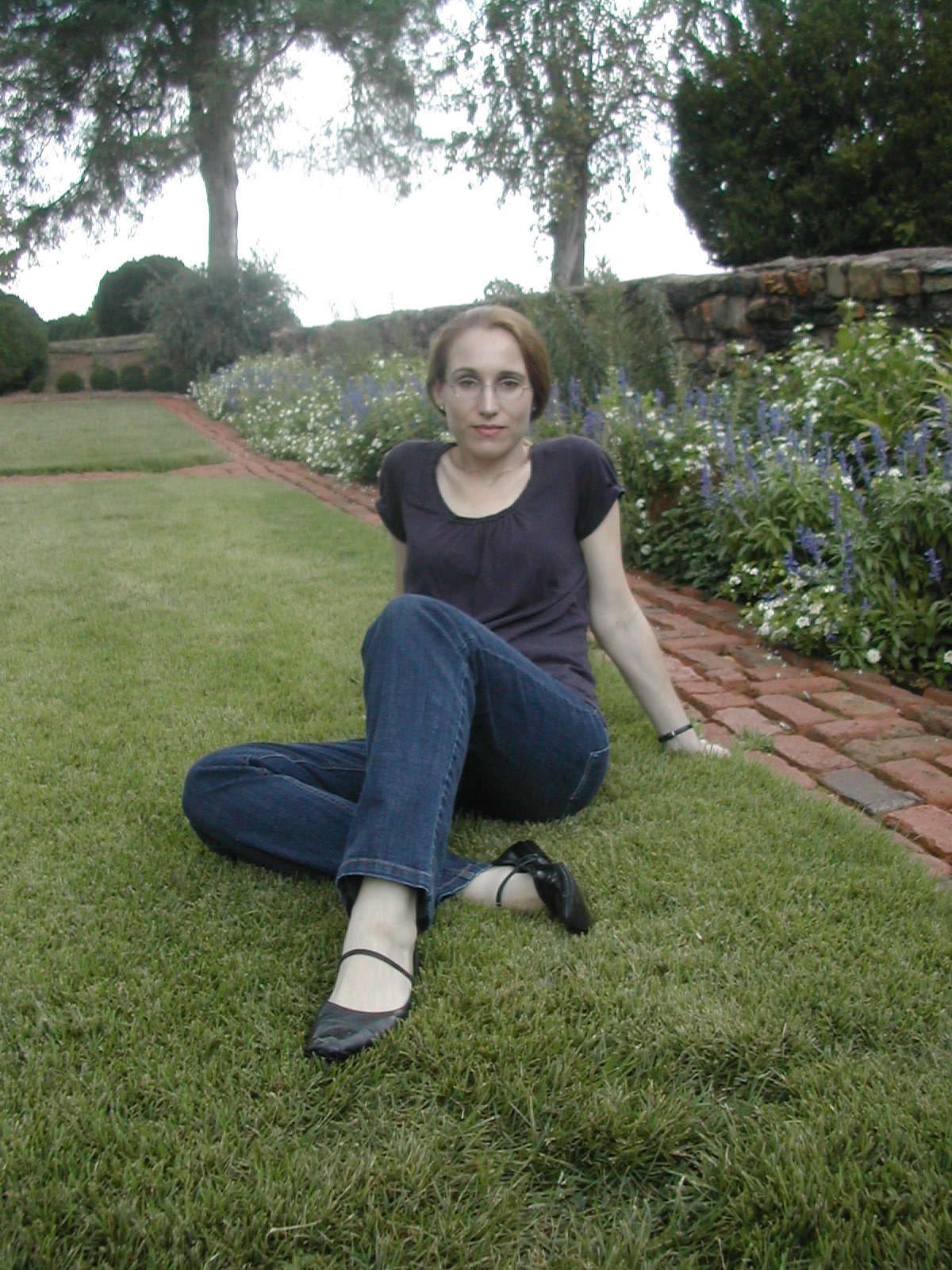
It’s late and I still have work to do for tomorrow, so I’m going to post another picture. But this will be the last one. I’m posting it in honor of the fact that today, it was actually sort of warm. Sort of.

Winter is ending, and I’m so grateful. Here, to mark its passing, is a final glimpse of winter:

I’m seeing crocuses and scilla in the lawns. Soon there will be daffodils, and I will be quoting Wordsworth in my head as I walk around. And then there will be tulips, and I’ll be thinking of Dutch paintings and stock market bubbles.

There are so many things missing from my life right now. So many things I would like to do in my life, so many ways I would like to be creative, live more fully. I can’t do them right now, because so much of my time has to be spent looking at a computer screen. I can’t plant a garden. I can’t refinish furniture. What I can do is look at the world around me as it’s waking up, throwing off the coverlet of snow it wore for so long, and longing for it, longing to live fully in a way I can’t at the moment.

I’m very good at pacing myself, I am. I’m very good at being goal-oriented and saying, I can’t have that now, but I’m working toward it. I can stay focused, take the steps I need to get there. That’s obvious, I think. How else did I get through law school and then out of the law, how else am I making it through the PhD program? But I miss living, I miss feeling as though I were fully alive. I’ll get there. I just have to keep reminding myself that the world I’m working for, the world I want to live in, exists.

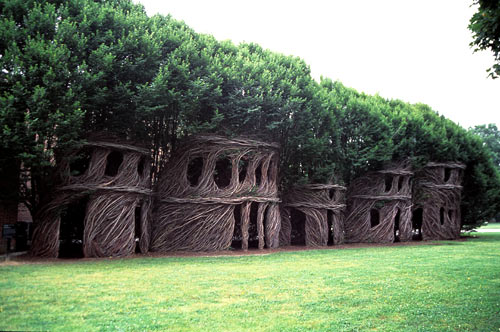
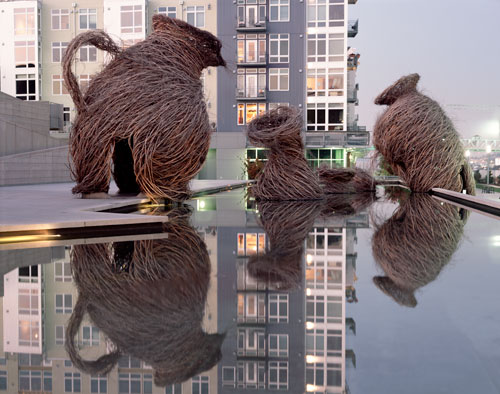
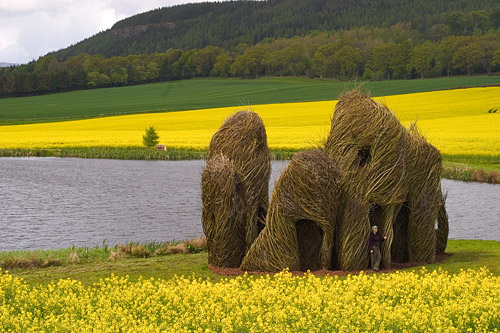
It’s a world where I have the witch’s cottage I described so long ago, where I can go to the seaside in the summer (early summer, I think) and write. (I’ve even found the perfect cottage. When I have an idea, I immediately research it. And you know, Nag’s Head is surprisingly affordable in early summer.) Where I can go to antique stores on the weekends, and go to museums and wander around the art. Where I can find some Patrick Dougherty installations to look at. (Aren’t they wonderful? Like fairy tales in wood.) Where I can stop by a farm stand and buy peaches, peas. Where I can feel the sun on my skin, and wander around in an orchard or a forest, following a creek and looking at the crawfish. Where I can feel warm and contented and free.

It’s been a long time . . .

That’s what I’m working for, and I’ll get there. It just takes all the focus I have right now, and some nights I end up like this, up late, trying to do everything I need to for the next day. Tired beyond tired.

But I have those thoughts and memories to hold on to. And I’m writing as hard as I can.

When I get there, that will be winter’s real end, I think . . .

Posted in Uncategorized | 5 Comments

In the Cemetery

I thought most of the work I had to do this week would be done by now, but I’m still working hard, still not getting much sleep. Yesterday, I didn’t even write a blog post. (You probably noticed, didn’t you?) I’ll need to make one up later this month. In the meantime, since I still don’t have the time or, more importantly, the energy to write a blog post today, I’m going to post some more pictures that used to be on my old website. These were illustrations for a series of poems. They were taken at the gorgeous Mount Auburn Cemetery. I do like cemeteries. They’re so peaceful.

And it was fun to be Gothic Girl for a day.

I can’t think of any connection between these pictures and the story I’m writing, although if you want to, you can think of this as something Thea did when she went to Mount Auburn Cemetery with her friends. They all took pictures of themselves as ghosts. (Well, isn’t that the sort of thing you do when you’re going to Miss Lavender’s School, and it’s the weekend, and Emma got a new camera for her birthday?)

Posted in Uncategorized | 5 Comments

Making Believe

I’m so tired.

But I did it: I turned in a revised version of the third chapter. It’s about a hundred pages. There’s still going to be work to do over the summer, of course. But this means I’ve completed the global revisions. The rest of the revisions will be local, more detailed. It means I have an argument with a trajectory, which is the hard part.

Did I mention how tired I am?

Here are my deadlines as of today:

April 15: short story due (part of the project I can’t talk about yet).
April 28: Folkroots column due. This may be the Narnia column, I’m not sure.
May 1: revised first chapter of the dissertation due, but it’s already almost done.

So there is still a lot of work ahead of me, but it’s not going to be quite as difficult (I hope) as the last two weeks have been.

And since I’m announcing deadlines, I should also announce some publications:

My Folkroots column on vampires will be in the April Realms of Fantasy, and will be online on the Realms of Fantasy website.

My story “The Rapid Advance of Sorrow” is being reprinted in Kafkaesque, edited by John Kessel and James Patrick Kelly. Take a look at the table of contents! Who thought that one day I would be in a book with Jorge Luis Borges, Terry Bisson, Carol Emshwiller, Jeffrey Ford, Jonathan Lethem, Tamar Yellin, and all the other incredible writers in this anthology?

And finally, a poem of mine, “Binnorie,” is going to be in the new Mythic Delirium.

But what I wanted to write today was a continuation of my blog post on David Foster Wallace. I don’t know if I can express these thoughts well, since it’s my first time putting them down, and as I said, I’m incredibly tired. But I’ll try.

On Friday, I saw that a student of mine was carrying a wand from the Harry Potter movie. When she saw that I was looking at it, she told me she was playing Harry Potter Assassin, which is a variation on Assassin where you kill the other person with a wand and a spoken spell. She told me that she was also on the Quidditch team. (I always have students who are on the Quidditch team in my class.) So, while she was going through her day, taking classes, doing her homework, she was also living in an imaginary world in which she was trying to “kill” or in danger of being “killed.” She was making believe.

This reminded me of a game I play with a friend of mine. We text each other throughout the day, and when we are particularly bored, we make believe that we are a team of assassins. We call each other by our last names, but in order to preserve his secret identity, I will call him Mr. Smith. Our conversations go something like this:

Me: Blah. Blah blah blah.

Smith: Laughing! Dissertation? I’m at work. (Describes a male customer.)

Me: Dissertation. Be careful, Smith. He may be Mr. Z in disguise.

(I will interrupt this dialog for a brief infodump: Mr. Z is our arch-nemesis. We barely escaped the last time he tried to feed us to the sharks. He seems to have a thing for sharks.)

Smith: Mr. Z would never make it that easy on us.

Me: See, you’re not anticipating it. That’s when he gets you!

Smith: Aaah! He’s too clever for me! That’s why I have you, Goss. I’m the brawn of the outfit.

Me: He could be disguised as anything. The man’s wife, a potted plant. Just be careful, is all I’m saying. If he does you in, who’s going to meet me in Antigua with Chanel No. 5 and a rocket launcher?

Me: (After thinking for a moment.) Hey! I’m also the brawn of the outfit. I’m small but deadly.

You see, we are also making believe.

According to the New York Times review, “Happiness, Wallace suggests in a Kierkegaardian note at the end of this deeply sad, deeply philosophical book, is the ability to pay attention, to live in the present moment, to find ‘second-by-second joy + gratitude at the gift of being alive.’” Well, that’s not at all what we’re doing, is it? We’re not paying attention to the present moment because we’re finding that moment boring. Therefore, we are changing it, making a game out of it. Making it exciting.

Is that wrong? You could call what we’re doing escapism. But here’s what I think: reality is a collaboration anyway, between what is there and our perception of it. Even when we pay attention, we do not perceive reality unmediated. We see it through biological and psychological filters. So do dogs, so do birds. They also see what is there, but differently. I don’t think we are meant to perceive reality unmediated, and creating a story about it is one way to mediate it. (Perhaps a particularly human way, I don’t know. Dogs and birds may have their own stories.) We create stories easily, automatically: we are made to tell them. We are made to see a flock of ravens and think of Raven. We automatically mythologize the world. By which I mean that we fill it with meaning, instinctively. We live by metaphor.

(This can lead us into error, but so can believing that we are capable of perceiving reality unmediated, that what we see is reality rather than our perception of it.)

This reminds me of the way a story is a collaboration. The reader reads the words on the page, fills them with his or her imagination, makes them live. And that’s how the story happens.

So I guess I would say, in answer to Wallace’s statement, that happiness is the ability to create satisfying stories about reality. To find the stories that fulfill you, that allow you to achieve what you desire. That fill you with joy. Because reality is, to a certain extent, our perception of it. Achieving what you desire may also involve altering reality itself, changing your circumstance. But I’ve found that I can only change my reality after I tell myself the right story about it, after I tell myself that I am the sort of person who can make that change. That’s a story I started telling myself about a year ago, that I was the sort of person who could finish a PhD, who could become a professional writer. I’m not, obviously, going to become an assassin. I do know the difference between telling stories that can come true and amusing anecdotes. But I am a person who can, when she is bored, text about flying to Antigua in the private plane, tangoing the night away at a beachside bar, and in the morning confronting the minions of Mr. Z. (What does Mr. Z look like? Even we don’t know. He will get us someday, unless we get him first. Right, Smith?)

Posted in Uncategorized | 4 Comments

Thea in the Moon

Tonight, I was going to write a blog post that addressed some of the issues I had brought up in my post on David Foster Wallace. It was going to be called “Making Believe.” But I’ll have to write that blog post tomorrow. I’m still working on the chapter I need to send out tonight. I’ll probably be working on it for another hour or so. So I don’t have time to write a blog post tonight, and honestly, whatever I wrote tonight wouldn’t be very good.

Instead, I’m going to post a picture. This is a picture I used to have up on my old website, the old black and white one I created years ago, right around the time I went to Clarion.

I’m posting it because of a sentence I wrote in the blog post “What the Cards Said.” Here is the sentence: “This is where you are going: the Moon.” That’s what Madame Violette said to Thea. So consider this yet another illustration for my story. It’s Thea in the Moon, a representation of where she’s going, whatever that means.

But it has to do, just a bit, with the blog post I want to write tomorrow, as well. I think that as we go through life, we have to tell stories. At least, I continually find myself telling stories – about where I have been, where I am going. And creating pictures like this one is a way of telling stories. Oblique, enigmatic stories about who I am. I don’t know what they mean, of course. But then, I don’t know what most of my stories mean when I write them either.

Posted in Uncategorized | 1 Comment

David Foster Wallace

Today, I spent the entire day writing, which looked like this:

No, I was not writing a story. I was working on a dissertation chapter. My dissertation has three chapters, each of which is about a hundred pages long. Because I’m also teaching three classes and writing professionally (I have stories and my Folkroots columns due), it takes me about a month to finish revising each chapter. This is the last chapter that needed to be revised. I will turn it in on Monday, and then I will begin putting the whole thing together. It feels as though, until I finish it, I won’t be able to have anything approximating a normal life. It’s been so long since I’ve gone anywhere on weekends, seen a movie or gone to the museum. Oh, I have scattered accounts of going to the museum here and there on this blog, but really taking a weekend off? It’s been a long, long time since I’ve done that. And I feel as though my life, my real life, can’t start until this is finished.

But that’s not what I want to write about today. What I want to write about is David Foster Wallace.

I’ve never read his novels, and I’m not sure whether I would like them if I did. But I’ve read some of his essays, and I’ve read about Wallace, of course. On Friday, I read a review of The Pale King, the novel he was working on when he committed suicide, in The New York Times.

Here is a general description of it:

“His posthumous unfinished novel, The Pale King — which is set largely in an I.R.S. office in the Midwest — depicts an America so plagued by tedium, monotony and meaningless bureaucratic rules and regulations that its citizens are in danger of dying of boredom.

“Just as this lumpy but often stirring new novel emerges as a kind of bookend to Infinite Jest, so it demonstrates that being amused to death and bored to death are, in Wallace’s view, flip sides of the same coin. Perhaps, he writes, ‘dullness is associated with psychic pain because something that’s dull or opaque fails to provide enough stimulation to distract people from some other, deeper type of pain that is always there,’ namely the existential knowledge ‘that we are tiny and at the mercy of large forces and that time is always passing and that every day we’ve lost one more day that will never come back.’

“Happiness, Wallace suggests in a Kierkegaardian note at the end of this deeply sad, deeply philosophical book, is the ability to pay attention, to live in the present moment, to find ‘second-by-second joy + gratitude at the gift of being alive.'”

The problem is, I don’t believe that. Oh, I believe that some of us are sometimes in danger of dying of boredom. I was a corporate lawyer, remember? But I got out of practicing law, left it to the people for whom being a corporate lawyer was not boring. The people who woke up every day wanting to be corporate lawyers. And yes, those people exist, and they are perfectly happy and very good at what they do. (I should make clear that there were aspects of being a corporate lawyer that I enjoyed. But I also knew that it was not what I was supposed to be doing, that the universe had set me another set of challenges. And when you feel like that, as though you’re in the wrong place or doing the wrong thing, I believe you have to leave. You have to find where you’re supposed to be, what your unique purpose is. What only you can do.)

I don’t believe that we are tiny and at the mercy of large forces. I suppose we are if you think of life as a materialist? But I’ve never been able to think about it that way. I’ve always thought of the universe as having meaning, as being filled with meaning, and of my life as having a purpose. I’ve always believed in the pattern I describe in Mother Night’s house.

And I don’t believe happiness consists in living in the moment. If I try to live in the moment – well, that’s when I’m bored. I often live anticipating the future, or remembering the past, or doing something else with the moment, in a sense turning it into a story. Not just passively attentive to the moment, but telling myself a story about it, placing it in the context of the past and future. I’m not sure I can explain what I mean here, but perhaps I’ll try in another post.

I guess my objection to Wallace’s world view is that I see life as at least potentially magical.

This is from later in the review:

“Not surprisingly, a novel about boredom is, more than occasionally, boring. It’s impossible to know whether Wallace, had he finished the book, might have decided to pare away such passages, or whether he truly wanted to test the reader’s tolerance for tedium — to make us share the misery of his office workers, who come to remind us of the unhappy hero of Joseph Heller’s ‘Something Happened,’ or some of Beckett’s bone-weary characters, stuck in a limbo of never-ending waiting and routine.

“Yet at the same time there are some wonderfully evocative sections here that capture the exhausting annoyances of everyday life with digital precision. The sticky, nauseating feeling of traveling on a small, crowded commuter plane, crammed up against ‘paunched and blotchy men in double-knit brown suits and tan suits with attaché cases ordered from in-flight catalogs.’ Or the suffocating feeling of being stuck on a filthy bus, with ashtrays spilling over with gum and cigarette butts, the air-conditioning ‘more like a vague gesture toward the abstract idea of air-conditioning’ than the real thing.

“In this, his most emotionally immediate work, Wallace is on intimate terms with the difficulty of navigating daily life, and he conjures states of mind with the same sorcery he brings to pictorial description. He conveys the gut deep sadness people experience when ‘the wing of despair’ passes over their lives, and the panic of being a fish ‘thrashing in the nets’ of one’s own obligations, stuck in a miserable job and needing to ‘cover the monthly nut.'”

I think that at this point, I know something about the wing of despair. But I find that the way to deal with it is, again, to look at my life and find the pattern. That way, I can often see the events that put me into despair in context, and when I understand the context, I usually feel less despairing about it. And then, I make magic. I decide what I want my story to be and try as hard as I can to make it happen. (That’s what I’m doing now, by finishing my dissertation. I want my story to include finishing it and then going on to write all sorts of wonderful things.  Writing it is an adventure in a way, and I think my life has been filled with adventures.  How many people get to do a PhD, go through the hard work of it?  The day after day of writing your analysis, thinking to the edge of your ability?  That is a great adventure.  I want to finish it and go on to all the other adventures that await.)

But I was thinking about Wallace specifically because what I write is so different, is fantasy. I suppose it’s fantasy in part because it includes the possibility of magic, which is also the possibility of underlying meaning. That’s what the story I’m writing is about, part of a larger story about Mother Night and Mrs. Moth and Miss Gray and Thea and all of my characters. And what it expresses, really, is what I think about the universe, how I think it operates. That it’s filled with meaning, but it’s up to us to read the cards, to figure out the meaning.

Which, much as I respect Wallace as a writer, is a very different worldview.

Posted in Uncategorized | 4 Comments

Describing the Castle

You can tell how tired I’ve been getting, because my writing hasn’t been particularly good for the last few days. I’ll give you some examples from the post called “Meeting Gwen,” which I wrote on Wednesday.

First example:

Gwen looked at the Lady of the Lake and said, “Is it safe?”

“I don’t see any time ruptures, do you?” said the Lady of the Lake, smiling.

“All right then,” said Gwen, smiling back. She came forward and kissed me on both cheeks. “Welcome, Thea. This is like meeting my twin sister, in a way.”

Smiling back? I was tired and didn’t take the time to think about what Gwen’s actual reaction would be. Smiling back is really a placeholder, the sort of thing I would change in revision. It’s rather awful, isn’t it? I mean, not at all what Gwen would do, and it makes the entire sentence fall flat. My fault for writing while tired, but sometimes I don’t have a choice.

What happens is that my brain stops producing interesting images, and then I fall back on standard ones. (I’m writing while tired at the moment, and it’s difficult just stringing sentences together.)

How about this: “All right then,” said Gwen, still looking concerned. Is that better? After all, Gwen knows that a time rupture would have serious consequences for both her and Thea. She knows they would explode. And yes, I did put the idea of an explosion in there because I thought it was funny.

Second example:

“So, you’re me,” I said. Could I be jealous of myself from another time? It seemed like a contradiction, yet there it was. And she was dressed better than I was, too. She had on some sort of gauze shirt and a swingy brown skirt that swirled around when she moved. Even when she walked, she looked like she was dancing.

“Yes, she’s you,” said Morgan, coming through one of the doors. “Rather than repeating that again, can someone tell me what’s for lunch?” We were in a sort of hall, with hangings on the walls. It looked medieval, like almost everything else in the castle. There were iron candelabras, a round wooden table with chairs, a chest or two along the walls. Morgan looked exactly the same as the last time I’d seen her: long black hair, dark blue robe embroidered with stars. Like a younger version of Mother Night.

Gauze shirt and swingy brown skirt? I’m dressing Guinevere of Cameliard here. What was I thinking? Honestly, what I was thinking about at the time was a gauzy cream-colored blouse, of some sort of linen, like a peasant blouse. And one of those skirts that are sewn in tiers, so that they really do swing out and make you look like you’re dancing when you walk. (I have several of those.) And a belt of gold coins, with maybe some gold bangles on her wrists, some long, swinging gold necklaces. I want Gwen to move and shimmer, because she’s supposed to be magical. After all, she’s Merlin’s great love (although I’m not saying anything more because I don’t want to give the story away). And Thea, who is her but in another life, feels inferior, as though she can’t live up. After all, she’s not a princess or a sorceress, you know?

A hall with hangings, looking medieval. I really fell down here, didn’t I? But I just didn’t have the energy to describe a proper castle. I should be able to draw on personal experience, because I’ve been to a lot of proper castles. Hungary is filled with them, from all different eras.

What I imagined when I described the castle was gray stone, one of those castles that come from the medieval era and are actually quite bare. I don’t think the Lady of the Lake cares a lot about furniture or decorating. Very high ceilings everywhere, relatively small windows with gothic arches and no glass. The floors are stone as well. Sometimes I think that I would like to live in a space like that, so spare, so clean. But I should at least have imagined the hangings, right? What sorts of hangings are they? I still don’t know. Wait – could they have all the images that were on Madame Violette’s cards on them? I actually rather like that idea. (And making up Madame Violette’s deck of cards made me want to design a deck of cards, for telling fortunes with. I think tarot cards are fun, but wouldn’t it be more fun to make up a symbol system of my own?)

Anyway, I didn’t do a very good job, did I? It’s the tiredness, blame the tiredness. Which is going to continue for a few days.

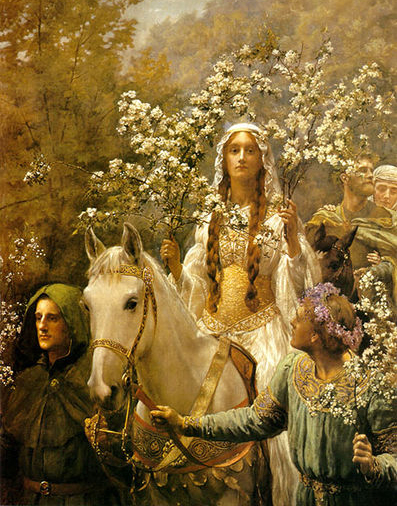
I promised pictures. Here is your picture for today. I found it when checking the spelling of Guinevere in Wikipedia. (I was pretty sure that I had gotten it wrong, and I was right.)

This is Queen Guinevere’s Maying by John Collier, and it’s almost exactly the way I imagined Gwen, except that this is a picture of her when she was Queen of England, and in the Castle in the Lake she is just Gwen. She often goes around in ripped jeans and Keds without shoelaces.

And here’s what caught my attention at once. Can you see it? It’s in the cheekbones and eyes. She really does look rather a lot like Thea.

Posted in Uncategorized | 1 Comment

The Next Few Days

For the next few days, I’m going to be ridiculously busy. And not just that, but ridiculously tired. I have a couple of deadlines, and I’m already not getting enough sleep but will be getting even less. So I can’t write blog posts, not even the story I’ve been writing, which is much easier in some ways than trying to come up with something original, meaning something that doesn’t continue on from what I wrote the day before. The story is easy, I know where it’s going. But even that is too time-consuming right now.

So I’m not sure what I’ll do for the next few day. I think I’ll try to write short notes about what I’m doing, and then post pictures. I have a special one for you today, sent to me by Emily Lam, who’s commented on this blog several times. It’s a sketch she made in her math notebook. Do you recognize what it is? Merlin in the tree, of course. I think it’s awesome. (Thank you, Emily!)

Where am I now? It’s Thursday, and I have three days of incredible busyness ahead of me. I think I can get through the next three days, right?  I’m not sure what Monday will be like, that may be incredibly busy as well.  Four days at most – I hope. This will get easier. It’s just this semester. But it will be over eventually, and then summer will begin. This summer is going to be both easier and incredibly productive. You’ll see.

The story will resume next week, unless I find some free time. But in the meantime, bear with me, all right?

And if you want to send me any pictures of the story, my email is tgoss@bu.edu.  Just saying.

Posted in Uncategorized | 2 Comments