Keeping Secrets

I’ve been so busy that I haven’t had time to post, but also I’ve been wanting to write a specific post, and it’s a difficult post to write because it’s about human behavior and relationships. It’s part of the thinking process for a book I want to write, eventually. And of course writers are thinking about these sorts of things all the time: what people are like, how they relate to each other. It’s about the secrets we keep for other people, and that other people keep from us — and specifically about women and men. It seems to me that there are women men keep secrets from, and women men tell secrets to. Most women, at different points in their lives, occupy both of these positions: secrets are kept from them, and they are told secrets.

I have a title for the book: The Malcontents. It’s about women and relationships and art.

This is what it looks like when you’re the woman from whom secrets are kept: You’re in college, and you’ve been living with him for two years. You have your own place, because otherwise your mother would freak out, but really you’re at his place all the time. You spend every night there, your clothes are there. Your books are there. Both of you are going to graduate next year, and you’ve talked about possibly getting married. It’s almost the end of the academic semester: you’re studying for exams. One night, he tells you that he’s been seeing your best friend, and wants to be with her. So, he’s breaking up with you. All right, you say, and immediately let him go, because the strongest thing about you is your pride, and who wants to be with a man who doesn’t want to be with you? And then, in private, you cry for several days, because you need to, and it’s cathartic, and how else do you deal with something like that? At the end of it, you feel free. And stronger than you did before he broke up with you, more yourself. After all, you’re young, and all of life is ahead of you. Yes, you’re angry, but for a reason he probably wouldn’t understand: that he turned you into a cliché, the girl whose boyfriend slept with her best friend. I mean, it’s so 80s movie.

A week after you broke up, he tells you that he made a mistake and wants to get back together. You agree, warily. You listen as he breaks up with your former best friend, over the phone. It gives you no satisfaction — instead, you feel sorry for her, because she will now be the girl who was broken up for, but only for a week, which is yet another movie characters. What a mess. You’re together for several months, until you complete your law school applications, and one of them is for the University of Virginia, and another is for Harvard, and you both know that you’re going to get into Harvard, but he asks you to stay at the University of Virginia, so the two of you can be together. That night, you break up with him. Because seriously, sleeping with your best friend is one thing, but asking you to give up Harvard is another thing entirely. He is asking you to be something other than yourself — your ambitious, academic self. And that’s simply not going to happen. Years later, he sends you an email apologizing for the incident and saying he should have married you, and you tell him to say hello to his mother, whom you always liked. Because what else is there to say? You got over it, and him, a long time ago. You’ve been living your life, being yourself — the self you could not have been with him. The thing about being hurt is that you get over it, you know?

This is what it looks like when you’re the woman to whom men tell secrets: They’ve been doing it often, lately. You’re not sure why, except that you’re grown up now, and you have long red hair, and eyes that have seen things. You think it’s the hair and eyes. Often, they flirt with you online, although you seldom respond. The Englishman flirts with you for several weeks before telling you he has a girlfriend. But things aren’t going well, they’re probably going to break up, so can you keep talking? He needs someone to talk to. Only don’t tell anyone, please. He doesn’t want your mutual friends to know. (If you didn’t have mutual friends, you wouldn’t be flirting with him. You’ve seen those 80s movies.) You agree, warily. So you keep talking, and try to be supportive as they do indeed break up, because after all you’re friends, right? And from what he tells you, the relationship was awful, awful. You don’t understand how he could have stayed in it. You’re an ocean apart, but that summer you’re going to be visiting his village in England. He talks about the places he wants to show you. He asks about the possibility of a relationship, but you say it’s too soon — it’s only been a month, the situation seems unstable. Sure enough, while you’re traveling, he tells you that he’s been talking to her, that he wants to try again. After all, they’ve been together for a long time.

You assume that when you arrive at his village, you won’t see him, because the situation is too complicated. But no, he wants to spend time with you, and he wants you to meet her — because otherwise she’ll be suspicious about the two of you together. (You don’t understand why — he’s not allowed to have female friends?) You agree, because you’re supposed to be friends, right? Also for what is probably the worst of reasons: curiosity. Is she the woman he described? So you sit in the kitchen, eating her cake, which is rather good cake, actually. Pretending you haven’t been talking to him for months and months, although you know things about him that she doesn’t. And know things about her, too. You can’t quite wrap your mind around the situation. Why is he doing this? Is it a sort of revenge, one she’ll never know about? What sort of relationship is this? She seems ordinary, not the angry, violent woman he described. But you never know. It’s a small village, like something out of a BBC special, and you have mutual friends, so you learn things even though you’re not there for long. Like, that you weren’t the only one — there was another woman, whom she also doesn’t know about. When the two of you talk, because you’re still ostensibly friends, you’re distant, and he says he wants to meet with you alone. So you go walking together, and you want to ask, what in the world are you thinking? What is all this? But he talks about how she’s not really trying, his financial problems. It’s a very short talk. Later that night, he sends you a message. He wants to be “just friends” because you’re too distracting. You reply, what? We’ve been just friends ever since you got back together with her. We’ve been just friends all this time. That is when he stops talking to you. After you leave the village, you send a message saying goodbye, I hope we can someday be friends again, all best wishes. Of course, he does not respond.

And this is where you think, I’m going to have to write a book, about people and relationships, because clearly there are things I don’t understand. Was he essentially innocent, being impulsive, not thinking through the consequences of his actions? Or was he the sort of person who thinks that if you’re not caught, it doesn’t matter? Or, most likely, both?

You’d think it would be worse to be the woman from whom secrets are kept, because you’re the one being betrayed. But actually, I think it’s worse being the woman who is told secrets, because you’re made complicit in a betrayal. The first you can let go, the second continues to bother you because you’re still keeping secrets. I know from experience how keeping your own secrets makes you feel: heavy, sluggish. As though you’re swimming through mud. Keeping other people’s secrets has the same effect. And while you can tell your own secrets, you can’t tell someone else’s. You have to keep faith with the faithless.

And I will probably get into these situations again, make bad decisions again, because there is something in me that gets into trouble: it’s the writer, who does things simply to experience them. Who sat at that kitchen table thinking, I’m going to put this in a book. Who lay in a CAT scan machine, tubes running of my body, broken out in hives because it turns out that I’m allergic to the fluid they pump you full of, to do a CAT scan. Doctors all around me, trying to make sure I didn’t die within the next hour. Taking mental notes, telling myself to remember, because I wanted to remember what it was like to almost die. That’s the sort of personality trait that will get you into trouble.

(Obviously, the above is based on personal experience, but details have been omitted or changed to protect the guilty. Yes, I’m still keeping secrets.)

Posted in Uncategorized | 10 Comments

Boston and Budapest

I woke up this morning in cold, gray, rainy Boston. That sounds negative, but it’s not meant to be. I love Boston, with its universities, libraries, art museums. I love its nineteenth-century architecture. I even love its weather. You experience all four seasons here: deep snow in winter; the always-delayed and longed-for spring, with its regular march of flowers; the warmth of summer, with its long days and bright sunlight; and finally the glorious autumn, when all the trees are ablaze. In the United States, it’s my favorite city, and I’m lucky to be living in it.

But it’s very different from Budapest.

A week ago, I was still waking up in Budapest, in a city that just as beautiful, similar in some ways but different in others. I thought I would try to write about some of those differences and similarities. At the moment I’m still feeling one of those differences, physically . . . when I travel from one city to another, I’m always sick for about a week. It could be partly the time difference, but I think the real culprit is the difference in humidity. Boston is on the sea, and is much wetter than Budapest: it’s like England, although our weather is more extreme. Budapest is much drier, and more consistently sunny. So when I first get there, I always feel dehydrated, and when I get back here, I always have to adjust to the moisture in the air.

As for the similarities, both cities are actually two cities: Buda and Pest, Boston and Cambridge. And the two cities have different characters. Pest is more urban: there are more shops, and it is where business happens. Buda is more residential, particularly since it’s made up of wooded hills. Pest is flat. Both are beautiful in their own way, but I think Pest is more exciting. In Boston, that’s the Boston side: urban, filled with theaters and museums. The Cambridge side is more residential, although it’s also where several of the great universities are located: Harvard, MIT, Tufts. Boston and Cambridge are less integrated than Buda and Pest, but both cities have two sides linked by bridges across a river.

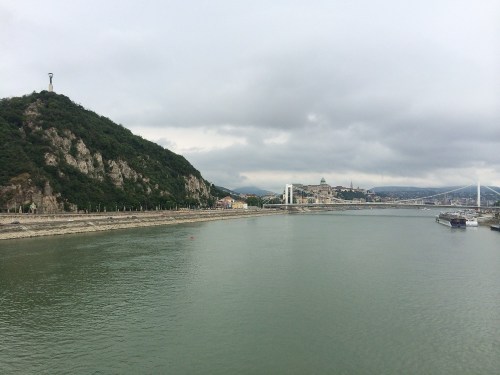
Here, by the way, is the Danube, with Buda on the left side and Pest on the right:

Danube 1

The Danube is one of my favorite rivers. On a sunny day, it’s the color of green jade. It’s one of the great rivers of the world, and ships still run up and down it, mostly filled with tourists. The Charles River, between Boston and Cambridge, is a very different river. It’s about as wide as the Danube, but it runs between wooded banks, since there are parks on both sides. And it’s gray. Whether on a sunny day or a stormy one, it’s gray the way Boston itself is gray, somber and solid and respectable.

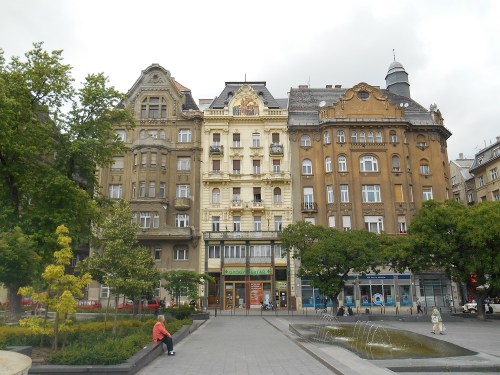
Boston is one of American’s oldest cities, but the Boston I live in was mostly built in the nineteenth century. It has an English sensibility about it, that makes me feel right at home in London. Budapest, by contrast, was built mostly in the eighteenth century, and it has buildings that look like this:

Walk 1

Actually, most of the buildings look like that, although these three are particularly spectacular examples. I can’t include many pictures here, but I wanted to give some sense of what the city itself looks like. It’s not gray and brown, which are the predominant colors in Boston: the buildings are covered with plaster, and the plaster is painted all different colors, in a particular palate that seems to suit the sunlight of Budapest. So you will find buildings in lemon yellow, and terracotta, and a sort of soft pink. A green like pistachio ice cream. And you will find ornamentation everywhere: ordinary buildings have angels on them, or fauns, or other ornamental figures. Just . . . because, I guess. It makes the city seem almost feminine. It also makes the city seem like something out of a fairy tale.

Boston is much more businesslike, and here we come to an important difference: Boston is much, much richer. Budapest is beautiful and magical: it also feels fragile. It’s a city that’s gone through two World Wars and a Cold War. It’s a city that’s been damaged. That damage has been repaired and is being repaired: now that the economy is picking up again a bit, you can see construction all over Budapest. There is a continual effort to clean up the soot left by the Soviet era, to save the glorious buildings that made Budapest one of the jewels of the Fin-de-Siècle. But you can feel that Budapest is not a rich city, that it’s like a beautiful woman who is chic on slender means. Boston, by contrast, is like a wealthy matron who doesn’t feel the need to be chic. Oh, Boston is beautiful in its own way. But part of that way involves wealth and power over centuries. Not having to go through the trauma of wars, at least not in recent memory . . .

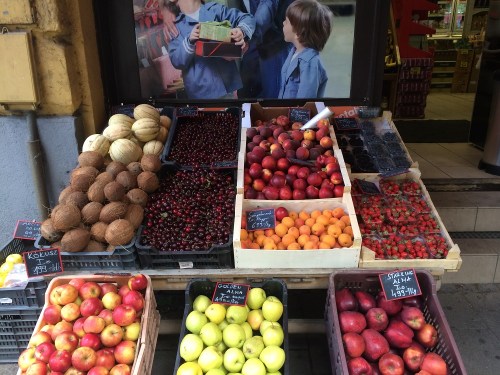
One of the lovely things about Budapest, which I miss very much, is being able to buy fruit everywhere, on every street corner (and cheaply). This was my favorite store for fruit, a simple convenience store that had the freshest and best cherries, raspberries, blackberries:

Fruit

I suppose I should mention this too: Budapest is delicious. I mean, really really delicious. Everywhere you go, you can get coffee, and cakes, and ice cream. You can get delicious soups. One thing I particularly noticed is that the tomatoes taste like tomatoes: I mean, even the tomatoes in the stories, wrapped in plastic, taste as though they were ripened on the vine. That’s something Boston can’t compete with, I suppose because Hungary is an agricultural country, and Massachusetts is not a particularly agricultural state. We’re too far north, our growing season is too short. But I think it has to do with culinary tradition as well. Hungary has one of the world’s great cuisines. England . . . does not, and that is the cuisine Boston has largely inherited. (A strange little side note: I can spend a month in Hungary without gaining weight, but in England I almost immediately put on five pounds, which I have to lose after leaving the country. Why is that? Perhaps because Hungarian food is so flavorful that I automatically eat less, I don’t know.)

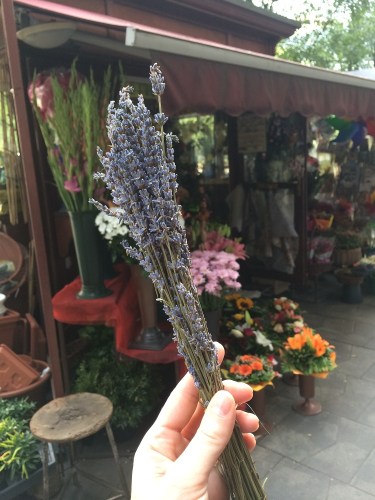
During my last week in Budapest, I bought myself some dried lavender at a flower stall. There are lavender sellers all over the city, and this bunch was 200 forints, which is about a dollar.

Lavender

I put the lavender in a little vase in the kitchen, and all week the entire kitchen smelled wonderful. I wish I’d bought lavender earlier! Which reminds me of another difference between Boston and Budapest . . . both cities have people who are homeless, but the ones in Budapest are truly beggars in the old-fashioned sense. They are often old and disabled: they seem much poorer than even the poorest person in Boston. Budapest is very much like any modern city in that way: it has great contrasts of poverty and wealth. Perhaps the wealth isn’t quite as wealthy as Boston’s, but the contrast is still there. It reminds me how very, very privileged I am to live this life, in which I can teach, and write stories and poems, and travel to a place like Budapest.

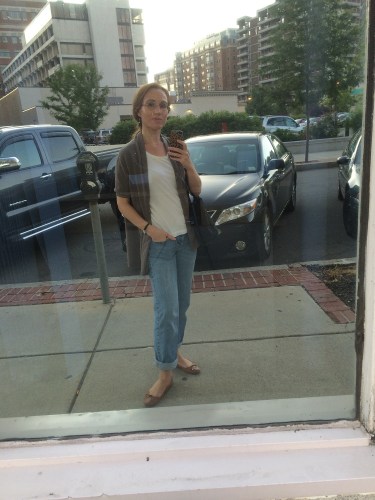
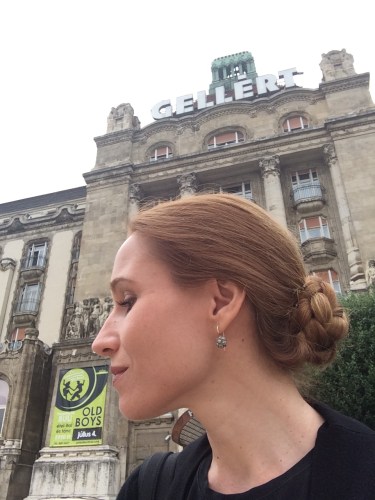
The final picture is of me in front of the Gellert Hotel, and I took it because I was on my way to school, where I was learning Hungarian, and had my hair up in a way that looked intricate, although it really wasn’t.

School Hair

I feel different in Budapest: lighter, more summery, more chic. I always wear swingy skirts. Perhaps it’s because my real life is here, in Boston: this is where I work. But I think the two cities also have different atmospheres. They allow me to be different people, to experience the world in different ways. And that’s why I love to travel: because I can be different versions of myself. Which I think is true for many of us . . .

Posted in Uncategorized | 3 Comments

Creating Habits

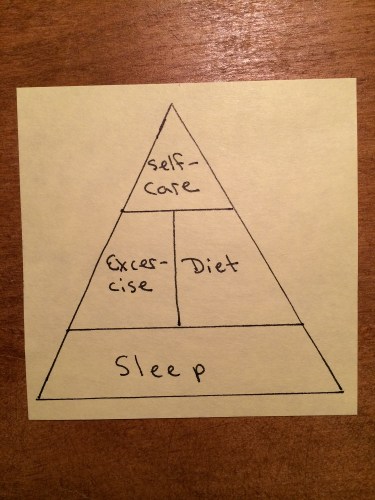
On the corkboard over my desk at home in Boston, I have a bunch of stickies, all with sayings that I want to remember written on them. One of them says,

You are what you do every day. So what are you doing every day?

It’s a reminder to myself about the power of habit. I wrote it because I realized something in a very concrete way, a way that had to do with my own body: if I exercised every day, even for only ten minutes, my body looked and felt different than if I didn’t. The daily habit of exercising made me a different person, both physically and functionally. And I thought, I bet everything works like that. I bet if you do something every day, it changes you. It forms you. You quite literally are the sum of your daily habits.

So I started trying to create habits of various sorts, daily but also weekly, monthly.

A habit is something you do habitually: without thinking about it too much. For example, every morning, I make my bed. I don’t think about it too much. I just make it. My bed is very easy to make: just fluff up the pillows, straighten the top sheet and coverlet. If I don’t make the bed, the bedroom looks messy, and I feel messy. Internally messy, as though I had left something important undone. At night, I wash all the dishes, so the next morning I can wake up to clean dishes, dry and waiting to be put away. I put them away and make breakfast. Habits are the things you do automatically.

One thing I’ve learned recently, as I’ve gotten busier and busier with the things that are truly important (teaching, writing), is that it helps a great deal if you have good habits. If you are very busy, if you have things that are important to do, it helps if you simplify your life and make certain things habitual. In the morning, I wake up and exercise, first thing. Then comes breakfast, which is also a habit, since I eat the same thing every day: in Boston, oatmeal and here in Budapest, muesli. Making my bed, putting away the dishes, doing any other necessary tidying. And then I can start my day, feeling clear and mentally fresh. I can go on to do the things that take creativity, energy.

There are all sorts of things you can make habitual, so you don’t have to think about them too much. Meditating. Paying your bills. Eating vegetables. You can consciously build habits that make you heathier, happier, more productive.

Why is this so important? Recently, I’ve seen some interesting articles on willpower, on the fact that we have less of it than we think. Willpower is actually not a very good way to get things done, because we have to exert it every time. We have to say, I WILL do that. But willpower involves overcoming inertia, which is a powerful force: your tendency to do the same thing, rather than something new. (You will know what I mean if you’ve ever joined a gym, intending to go every week, and then . . . not gone. And blamed yourself for not going.) What habit does is use the power of inertia. The habit becomes inertial. It’s easier to follow a habit than to break it.

So how do you create a habit? Because to create a habit in the first place, you have to overcome inertia, exert willpower. That’s the hard part. Here are some tricks I’ve developed for creating habits.

1. Make it as easy as possible.

It took me a long time to develop the habit of exercising every day. When I thought of exercise as going to the gym, I almost never went. First, I would have to pack my gym clothes, and then actually go to the gym, and then exercise for at least half an hour to make the trip worthwhile. Then I would have to come home and shower, because I hated showering at the gym. The whole thing took at least an hour out of my day, and I didn’t have that kind of time to spare. Now, what do I do? I get up. I put on music. I do a combination of stretches, pilates, and yoga for ten or twenty minutes. My pajamas are stretchy and work perfectly as exercise clothes. My rug is a perfectly adequate workout mat. I don’t need any equipment. All I need to do is press the play button. If I don’t want to exercise that morning, if I’ve been up too late and am too tired, I tell myself that all I need to do is some stretches, that’s all, no more than that. But when the music comes on, I almost always end up doing more, because . . . it’s a habit.

Whatever habit you want to create, think about what will make it as easy as possible. If you want to eat more vegetables, buy fresh vegetables and a steamer. (Although the way I do it is even easier . . . frozen vegetables. I boil or steam some every night, then have them either with a little butter, or on whole wheat pasta.) If you want to make a habit of paying bills, arrange them so paying bills becomes easy. Your bank probably has an online billing and payment system you can use.

2. Make it as pleasurable as possible.

I hate gyms. It’s infinitely more pleasurable to exercise in my pretty living room, to music I have picked out. I don’t particularly like washing dishes, but I love my dishes, which have roses on them. So there’s an aesthetic pleasure even in dishwashing. Whatever habit you want to create, ask yourself, how do I make this an aesthetic pleasure? Or at least more pleasing . . . Even cleaning is a more pleasurable experience when you use cleaning products that smell of lavender or orange flowers.

3. Find an immediate benefit.

We are not very good at working for benefits that might come to us in a hypothetical future. This is one reason dieting is so difficult, because it takes between a week and a month to see even the smallest benefits. It’s much easier to change what you eat because it makes you feel better, today. There are very few things I don’t eat (I’m an omnivore), but as much as possible I make sure that I’m eating brown bread, rice, pasta, because I found that the white versions had an immediate effect on my mood: within hours I would go through a mood spike and crash. It’s great that exercise makes me healthier in the long run, but the reason I do it every day is that it makes me feel better that day: if I don’t stretch every morning, my back and arms start to hurt from working on the computer.

It’s strange to think as much about habits as I have in this blog post, because the whole point is to not think about them. You want them to take up as little mental space as possible, so you can save your mental space for the important things: writing great novels, creating great works of art. Even teaching great classes. I would rather save my willpower for the things in my life that require creativity and energy, the things you can’t do from habit. Anything else, I try to make as easy and automatic as possible. After all, I have more important things to do with my time . . .

Church 4

Church 2

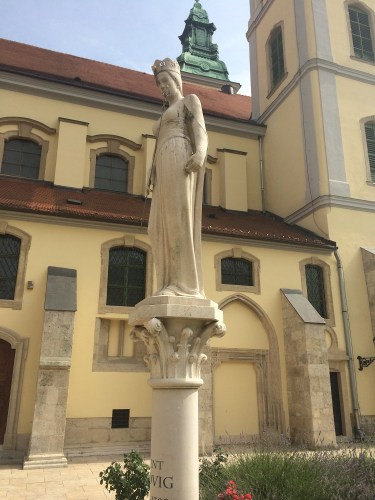
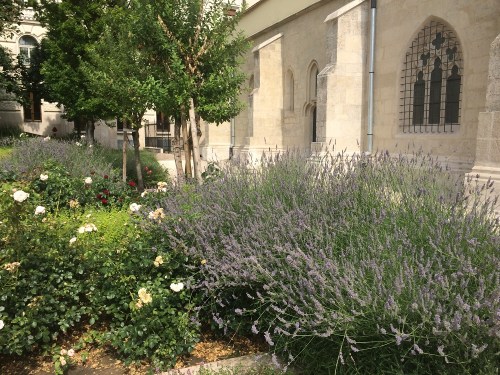
(These photos are of the garden beside the Inner City Parish Church in Budapest, which dates back to the 13th century. One reason I’ve been thinking about habits recently is that even in Budapest, I’ve been exercising every morning and eating healthily, buying food at the local health food store. I think those habits are so ingrained by now that I follow them even when I’ve been so dislocated, flying across the Atlantic ocean. And thank goodness for them, because they keep me healthy and happy . . .)

Church 5

Posted in Uncategorized | 12 Comments

Doing Pretty

I was thinking about what I would someday say to my daughter about being pretty. She’s not concerned with pretty now: she’s only ten, and focused on designing her own Magic the Gathering cards. She has read all of Harry Potter and Percy Jackson. She watches Cosmos and asks questions about theoretical physics. But someday, she will be, because most of us get there, to where we think about pretty. Am I pretty? What is pretty anyway? I remember thinking about those things when I was twelve. (And of course not feeling pretty, because who does at twelve?)

And I though, this is what I would tell her:

Pretty isn’t something you are. It’s something you do. Pretty, as has been pointed out, is a set of skills. It’s being attractive, but in a particular way: the way our culture has coded specifically female (so there is something culturally dubious about a pretty man). As you know, I’m an academic, so when I write this, I write it thinking of a class I took on aesthetic theory when I was working on my master’s degree. There is a book called A Philosophical Enquiry into the Origin of Our Ideas of the Sublime and Beautiful by Edmund Burke in which he defines the beautiful as soft, delicate, attractive. The sublime is defined as hard, large, threatening. The rolling hills of England are beautiful. The Swiss Alps are sublime. Guess which one he associates with men, and which with women . . .

My point is, what Burke describes as the beautiful is actually the pretty. (He got it wrong. Sorry, Edmund, but you did.) The pretty is kittens and Queen Anne furniture and petit fours. It is daisies in the grass and the Lake District. Lace curtains. Antique roses. A bicycle painted sky blue. The sea can be deceptively pretty . . . Because the pretty is soft and feminine, we denigrate it. But imagine a world in which everything was beautiful or sublime. I think it would give us headaches. There is a value to pretty. Among other things, it’s restful, comfortable.

But what about the pretty associated with people? I think people can “be” pretty, but it’s really by doing pretty . . . because pretty is a cultural value, a cultural construct. We make ourselves pretty. Only babies are naturally pretty, for the same reason kittens are: we are drawn to what is young because evolution, because those who loved and protected their young survived. For adult women, who are the ones traditionally expected to be, or perform, pretty, it’s a matter of dress and manner, of makeup and attitude. It’s only on the surface. There’s nothing necessarily wrong with that: lots of things are only on the surface, and nevertheless real. My central point here is that pretty is a performance. That’s why I called this blog post “doing pretty.” And I would say to my daughter,

1. Anyone can do pretty. Including men.
2. No one has to do pretty, or owes pretty to anyone else.

You can choose not to be pretty. You can choose, instead, to be beautiful, or sublime, or create your own aesthetic category, your own way of being. Or you can choose to be pretty on Monday, and sublime on Tuesday, and spend Wednesday in bed.

But pretty isn’t something you either are or are not. Pretty is a set of skills. Some of the prettiest people I’ve ever seen are male models. They know how to do pretty.

The other thing I would say is, don’t be deceived by pretty. It’s easy to assume that the pretty is also the powerless, but that’s not true. Some of the smartest people I’ve known have been delicate, feminine women who, partly because they have been underestimated and overlooked, have simply gone ahead and done whatever they wanted to. Pretty can be a useful disguise. It can reassure people, make them comfortable, convince them that you’re conforming to social ideals, while all the time you’re having revolutionary thoughts, making unconventional art. A stream is pretty, but it wears away stone . . .

Finally, I would say, don’t confuse the pretty with the beautiful. The beautiful is attractive as well, but it has something that pretty doesn’t have: a depth, a darkness. Pretty is the rose. Beautiful is the rose with its thorns, the caterpillars that eat its leaves, its roots going down into the ground. The beautiful is both surface and depth: it is necessarily associated with, infused with, death. Beauty is not a performance but a way of being.

If you want to be pretty, learn to do pretty. There is nothing wrong with that. If you want to be beautiful, you have to become beautiful . . . it’s a process of transformation. It involves observing the beauty of the natural world and human art, immersing yourself in it, becoming the sort of person who has insight, wisdom, and compassion. Often, it involves producing beauty. Georgia O’Keefe was beautiful: the angular bones of her face remind me of a bird. She looks as though she is always about to take flight. Unlike the pretty, the beautiful does not comfort or reassure us. It often disquiets, discomforts us. The sublime, by contrast, awes and overwhelms us.

A pretty wood makes us want to take a walk. A sublime wood, like a forest of redwoods, reminds us of our smallness in the scheme of things. A beautiful wood makes us wonder if it is haunted by fairies. If I were putting together an aesthetic theory, I would distinguish between these three categories.

Don’t knock pretty. Sometimes we just want to take a walk in the woods . . .

But to the question “Am I pretty,” I would answer, pretty is a performance, a social act. You can do pretty (anyone can do pretty). You don’t have to do pretty. It’s completely up to you . . .

Flowers 6

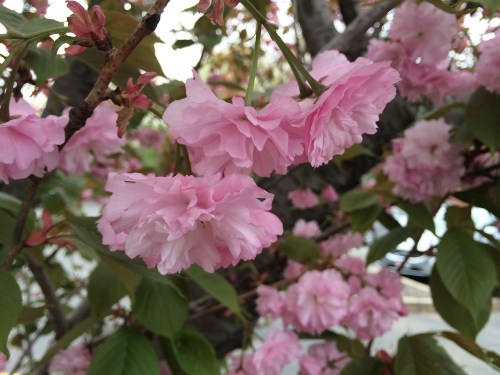
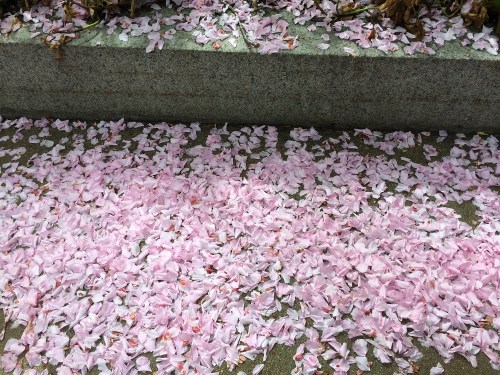
(Cherry blossoms are pretty. But I have always found that when they’re falling, they become beautiful. It is the cherry blossoms suspended above the petals on the ground, and the petals on the ground like the rags of a ball gown, that become beautiful because they remind us of our own evanescence . . .)

Flowers 4

Posted in Uncategorized | 10 Comments

Collections Available

I’m going to be posting two blog posts this weekend, because the first one is just information about the poetry and short story collections. I can’t even tell you how excited I am about this: the collections are now available for pre-order directly from the publisher, the wonderful Papaveria Press, as a set for $20. This is a special pre-order price for the two books together. They’ll be available individually soon, online everywhere. But if you want to get them together, and early, here is the link: Collections from Papaveria Press.

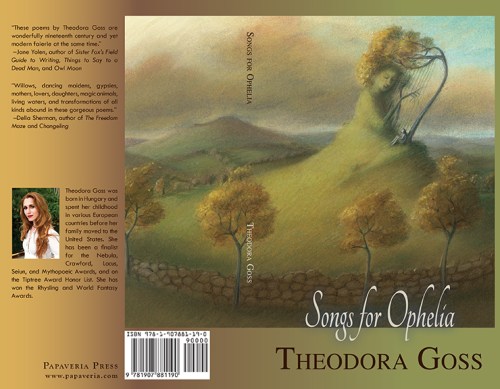
A few days ago, the publisher sent me pictures of the full covers. I can’t believe how beautiful they are:

Final Full Cover Songs for Ophelia

Final Full Cover In the Forest of Forgetting

And if you want more information on the collections, here’s what it says on the pre-order page:

In the Forest of Forgetting, with an introduction by Terri Windling, was first published in 2006 by Prime Books. The Papaveria Press edition boasts the same cover art by the amazing Virginia Lee as appeared on the original edition, this time in its wonderful entirety. The table of contents has been slightly modified: “Phalaenopsis” has been replaced by “Her Mother’s Ghosts”, which first appeared in 2004 in The Rose and Twelve Petals and Other Stories, released by Small Beer Press. In the Forest of Forgetting will retail for $15.95 (302 pages, paperback).

Songs for Ophelia, with an introduction by Catherynne M. Valente, is a new collection of eighty otherworldly poems which lead the reader, as though under a spell, through the unfolding of the seasons and into the realm of pure magic. Songs for Ophelia, also with cover art by Virgina Lee, will retail at $12.95 (146 pages, paperback).

“These two matching collections will be a treasure for all of those who are already passionate about Theodora’s work, as well as for those who have yet to discover it, and will be a fine addition to any book lover’s shelf.”

I can’t tell you how rare it is, when you’re a writer, for a book to match your vision of what it could be, and in this case, both books do! Just looking at them makes me smile . . .

Also remember that if you’re willing to review the poetry collection (in a publication, on a blog, on Amazon, on Goodreads), I would be happy to send you a free PDF copy! All you need to do is tell me where to send it.

I can’t wait to see the paper copies! I will be at Readercon this year, and they will be available for sale, so if you’re at the convention and want me to sign one, come find me . . .

Posted in Uncategorized | 6 Comments

Writing Poetry II

So first, I have a poetry collection coming out, from Papaveria Press. It should be out in the next few weeks? It has a gorgeous cover by Virginia Lee and a wonderful introduction by Catherynne Valente. I’m very, very proud of it. Here is the cover:

Cover of ARC of Songs for Ophelia JPG

At the same time, it’s kind of scary having a poetry collection come out. First, because poetry is deeply personal, more so than prose. Some of it is literally personal, in that it’s about me. Like my poem “The Goblins”:

The Goblins

I have frequented the ways, even the byways of men,
I have gone forth silently, still-countenanced and cold;
they have not noticed clustered at my hem
the tattered-earned smirking little goblins bold.

I have bowed and seemed to smile and seemed to converse with them,
while my face remained pale and my words retained their chill,
and the little goblins chattered and clattered at my hem
in voices triumphant and shrill.

This is about me of course: I have little goblins following me around. Not literally, but as a writer, figuratively, imaginatively. I can hear their voices. Sometimes it’s difficult to live in the real world, because I forget that it’s real. The interior word seems so real so me . . .

But all of it, I take personally, which connects to my second reason. I started writing poetry very early, much earlier than I started writing prose. I have notebooks full of poems I wrote in high school, and I actually had some of them published in the school literary magazine. I thought I was going to be a poet. They’re not particularly accomplished poems, but if I were looking at them today, as a creative writing teacher, I would say, “You have something here, a rhythm and ear for language. Keep going.” Then I went to college and took poetry classes with two famous poets, Charles Wright and Greg Orr, that totally killed my desire to write poetry.

What was so wrong with those poetry classes? Well, I want to learn how to write poetry: I wanted to be told, this week we are studying sonnets, so here is the history of the sonnet, here are sonnets to read, go write a sonnet and make it your own. Let’s see how you do. That’s how I would teach a poetry class. But that’s not what we did. Week after dreary week, students would bring in their dreary poems and we would go around in a circle, workshopping them. If you want to be a poet, you should never, ever start with free verse. Good free verse is actually much, much harder than writing a sonnet, just as good abstract expressionism is much, much harder than representational painting. Of course, bad abstract expressionism and bad free verse are easy . . .

Week after week of bad free verse. And nothing fun or funny or whimsical allowed. It had to all be serious. I did not think of it this way at the time, because I was too young, but there was no sense that poetry had originally sprung from song, that it was a form of entertainment.

So I came out of those classes with the distinct impression that what I wanted to do was not worth doing. The poetry I wanted to write was not worth writing. It took years and years of writing and actually publishing poetry, of people telling me they liked it, for me to believe it was worthwhile. And more than that, it took me years and years, working alone, to learn how to write the poetry I wanted to write. I’m still learning.

I think the first poem I ever wrote that I was actually happy with was this one, “Beauty to the Beast”:

Beauty to the Beast

When I dare walk in fields, barefoot and tender,
trace thorns with my finger, swallow amber,
crawl into the badger’s chamber, comb
lightning’s loose hair in a crashing storm,
walk in a wolf’s eye, lie
naked on granite, ignore the curse
on the castle door, drive a tooth into the boar’s hide,
ride adders, tangle the horned horse,
when I dare watch the east
with unprotected eyes, then I dare love you, Beast.

It was also the first poem of mine published. It’s not the sort of thing I could take into one of my college poetry classes, because in those classes, poetry didn’t dance. I want my poems to dance.

So in the poetry collection, there are poems that are supposed to be fun, or funny, or whimsical. There are several that are really for children. There are many that are quite serious and for adults. Many are about what it means to be a woman, about love and death and loneliness. There are several that have already been set to music. They are influenced by all the poets I love, Walter de la Mare as much as T.S. Eliot. They are the poems I wanted to write . . .

I don’t have any great insight to end with, other than the one I think underlies everything I do, and all these blog posts: you must do what you fear, every day. Courage is a muscle, and if it’s to become strong, you use must it. And I guess there is a bonus insight here: you must have the courage to find your own voice, your own style, even if no one can teach it to you. I’m still finding mine.

I’ll end with two things. First, an offer: Papaveria Press is generously making the Advance Review Copy of the poetry collection available, as a PDF file, to anyone who wants to review it, anywhere. So if you’d like to read the poetry collection and are willing to post a review, whether it’s on a blog, on Amazon or Goodreads, or in an official publication, I can send you the ARC. All you need to do is contact me, in the comments section below, on Facebook or on Twitter, and tell me where you would like me to send the file. And then, post a review . . .

Second, some time ago I made a YouTube video of me reading the first poem I posted above, “The Goblins.” Here it is, if you’d like to see it!

Posted in Uncategorized | 23 Comments

Living in Budapest

I know, I haven’t been blogging regularly. I try to write a blog post each week, to post on Saturday or Sunday. And that hasn’t been happening.

It’s because I’ve been living too hard, and writing hard too. And that doesn’t leave much room for blogging. In May, I finished the university semester, which means that I turned in my grades and wrote to my students one final time. Then I started packing. Today I am writing this post in a cafe in Budapest. I’ve been here for a week and a half, and will be here for another three weeks. Usually when I’m in Budapest, I’m a visitor: I go around to see the sights. But this time, I’m a student, taking an intensive course in Hungarian, trying to relearn my native language, the language I spoke until I was about five years old, when my family left Hungary. So on weekday mornings, I go to school for three hours. And then in the afternoons, I study.

Also, I work on the novel. In case you were wondering, it’s going very well. I have over 100,000 words written, and they’re close to the right words, which is the important thing. This weekend, I should be able to finish this particular draft, which will mean that I have an entire draft of the novel written. Then, I will revise. And then it will go to readers for feedback.

Studying Hungarian and writing a novel don’t leave much room in my brain for anything else!

But I wanted to write about what it’s actually like to live here, rather than just visit. It feels as though I’m doing all the things I would be doing at home in Boston: shopping for groceries, going to school (although here I’m a student rather than a teacher), trying to make sure I have the basic things I need (like plates, towels, wifi). So I’m going to include some pictures and try to describe what my life looks like, here in Budapest.

Below is my pretty little street. The cafe on the street is called the California Coffee Company. One difference between my schedule here and in Boston is that here, I wake up at 5 a.m.! Because across the street is the park around the Nemzeti Múzeum, and in the park there are tall trees, and in those trees live birds. They wake up at 5 a.m., and they wake me up too. It’s like a bird alarm, and there is no snooze button! So I wake up, and eat breakfast, and study Hungarian. When the California Coffee Company opens at 7:30 a.m., I go get my tejeskávé, which is a latte, and do whatever needs doing with wifi. By the time I’m done, it’s time to leave for school.

Working 1

And this is the museum itself. The statue is of a famous poet, János Arany, because in Hungary poets are very highly thought of, and they get statues made of them, and squares named after them. It would be nice if we did this sort of thing, wouldn’t it? My school is across the Danube, so I walk across the Szabadság Bridge to Buda. (Budapest is two cities, Buda and Pest, separated by the Danube. Rather like Boston actually, with Boston on one side and Cambridge on the other. It’s funny that, in the United States, I ended up living in the city most like Budapest.) And then it’s Hungarian for an hour and a half, with a break, and then another hour and a half. My class is ten students, from all over the world: there is a doctor, a folk singer, a businesswoman. They come from countries such as Italy, Switzerland, Japan. And of course the United States. The class itself moves quickly: during the first week, we covered over a hundred vocabulary words, the objective case, and how to pluralize both nouns and adjectives. We were expected to know numbers up to a million. How to count money, make phone calls, buy produce in the shops. How to have a basic conversation.

Museum

Hungarian is what a language would look like if it were created by a mathematician who is also a poet.

It’s a particularly difficult language to learn because it’s not Indo-European. It came down from the steppes with the Magyar tribes, who were nomadic horsemen. In Hungarian, you say that a person lives in another country: Amerikaiban. (“Ban” means “in.”) But you say that a person lives on, not in, Hungary (Magyarországon). Because the early Hungarians did not think of themselves as living in a country. Other people lived in countries: the Magyars lived on their hills and plains. It’s part of the Finno-Ugric groups of languages that includes, basically, Finnish and Hungarian. In Hungarian, most of the grammatical work is done by suffixes, so you need to know which suffixes to use for different tenses and cases. Word order is important for emphasis. And then, there’s the poetic part: the suffixes change vowels so that the vowel sounds harmonize. In other words, the plural of tomato (paradicsom) is paradicsomok. But the plural of gyerek (child) is gyerekek. Because o is a back vowel, and e is a front vowel. So ok and ek just . . .sound better. In order to make a word plural, you not only need to know the ending, you also need to know which vowel to use. And there are fourteen vowels. (In French, you can talk about the vowel e, taking several different kinds of accents. In Hungarian, e and accented e actually function as different letters.)

One things that saves me, in particular, is that Hungarian is almost entirely phonetic: if you know how a word looks, you can pronounce it. Pronunciation often trips up Americans, but mine is actually pretty good. So I can say things like “viszontlátásra” (“goodbye,” technically “see you later”) without tripping up.

This, by the way, is a Puli, a traditional Hungarian herding dog. I see him sometimes as I head home, back across the Danube. His dreadlocked hair keeps off the rain, and is said to protect against wolf bites. I think that if a wolf took one look at a Puli, it would be so confused that it would slink away, trying to figure out what in the world that was and what one does to it . . .

Puli

And this is what my lunch might look like. Kifli (the bread, which has a specific name), with a paprika and ewe cheese spread, pickles, smoked cheese, and cherries.  Food in Hungary tastes completely different from food in American, or England, or even Austria. It has its own distinctive flavor: less sweet, more complex.  When I’m not here, I miss it.

Lunch

And then it’s time to do my own work (mostly writing just now, although I also have to start preparing for my summer residency with creative writing students). And of course to study Hungarian. Honestly? It’s difficult sometimes. I’m a terrible introvert, and I have to force myself to have conversations in Hungarian. It would be so easy to pretend I don’t know any, just speak English. Most people here know enough English that I could get by. It’s embarrassing to make mistakes, and I’m sure I make many more than I’m aware of. But I make myself say “egy tejeskávét kerek” even though I’m not sure it’s right. I tell salespeople that I’m learning Hungarian, even though I don’t speak well (“magyarul tanulok, de nem jól beszélek). As I walk down the street, I sound out the signs. Whenever I see a number, I make myself say it. Because the best way to learn anything is to live with it. Or on it . . .

Here, finally, is a picture of me with my river, the Danube. In the distance is Castle Hill. It’s lovely to be here, and although I know my stay here is temporary, I’m glad that it feels as though I’m living here, not just visiting. It’s good to be “Budapesten.” Which, yes, means on Budapest . . .

Dora and Danube 4

Posted in Uncategorized | 6 Comments