Leonora Grimsby

(Just a note before I begin. I was so tired today! All day long it was twenty degrees or below, and there were problems with the commute, and when I finally got home, I didn’t even feel like writing. But then I saw how many people had come to this website, and suddenly I felt better and as though it was all worthwhile, because I was writing essays or stories and you were reading them. And you know, for me that’s the whole point. So thank you. We now return to our regularly scheduled programming. But I just wanted you to know that . . .)

The next morning, our conversation went something like this.

Emma: I still think we should tell Mrs. Moth.

Matilda: No. Aunt Matilda is my aunt, and she’s a nasty old witch, but we’re still going to rescue her. Without getting kicked out of school.

Thea: You wouldn’t use the word “witch” in that way if you’d grown up with witches.

Matilda: Well, I didn’t. All right?

Mouse: I think we have a couple of clues. We should look at the clues.

Thea: I agree. Let’s focus on the clues. What clues are you talking about?

Emma: Miss Lavender’s. That woman said they went to school together, and that Mrs. Tillinghast did something to her. With her friends.

We were sitting in our room, before classes. Your first year at Miss Lavender’s, you pretty much all take the same classes. That morning we had Elementary Teleportation with Miss Gray. Then lunch, then Spells and Incantations with Hyacinth, then a Magical History study session in the library.

“The Yearbooks,” I said. “We need to look at the Yearbooks.”

The Yearbooks were on shelves in the hallway by Mrs. Moth’s office. There were years and years of them, all the way back to when books were first produced, I guess. And even before, because the earliest ones were just scrolls with names on them. They took up the entire hallway, all the way down to the teachers’ parlor.

“We have half an hour before class,” said Emma. “Let’s go look! I’m so curious.”

But when we got there, to the hallway with those long shelves, we looked at one another with dismay.

“Where do we start?” asked Matilda. “I mean, there have to be a thousand books here.”

“Several thousand,” said Mrs. Moth. We all turned around, startled. She was standing behind us. Where had she come from?

“Oh, we’re just looking for the book with Matilda’s aunt in it, Mrs. Moth,” said Emma. The useful thing about Emma is that she always sounds so respectful and polite. She never sounds as though she could be doing anything dangerous or forbidden.

“That’s this one right here,” said Mrs. Moth, pulling out a dusty old volume. It was bound in leather, and had gilding on the spine. It said, Miss Lavender’s School 1963.

“Would you mind if we borrowed it for a while?” asked Emma.

“Not at all, girls,” said Mrs. Moth. “I’m glad to see that you’re interested in school history.”

Which sounded all right. I mean, it sounded as though she believed us. But as we were going back toward the students’ parlor, I looked back at her. There was an expression on her face – but maybe I was misinterpreting it, I don’t know.

Anyway, there was no one in the students’ parlor (all the other girls were either still at breakfast or up in their rooms), so we sat on the rug by the fireplace. There was a fire going, because even though it was only September, the mornings were already chilly. We flipped through the Yearbook.

“Can you believe anyone ever did their hair like that?” said Emma.

“Our uniforms look exactly the same,” said Mouse. And they were: the purple skirts, white blouses, and purple jackets or cardigans with Miss Lavender’s School embroidered on a front pocket. It didn’t allow for a lot of individuality.

“Look, there!” said Matilda. And there she was, Matilda Tillinghast. Captain of the Flying Club, on the Magical Sciences team, and a Junior Pattern-Keeper.

“No, look there,” said Mouse. “That’s her.” Each of the girls had two pages of their own, with their photographs, activities, sayings they had chosen (and pretty sappy some of them were, I thought). Mouse was pointing to a photograph of four girls together, all in their sports clothes, all holding broomsticks. Underneath, the caption read, “Me, Em, Leo, Tollie. The best roommates ever!”

“That’s her,” said Mouse again. “Leo. Who do you think she is?”

Quickly, because we only had ten minutes before class, I flipped through the pages. “There she is again. Leonora Grimsby. What about the other two?”

“Well, I can tell you who one of them is,” said Emma.  We all looked at her.  How did she know?  “It’s just – the one called Em? That’s Mom.”

“What, your Mom?” said Matilda. “Seriously?”

“Yes, seriously. Her name is Emmaline, like me. She was Matilda’s roommate here at Miss Lavender’s. They used to get together once every couple of months, with the other one – Tollie. Anatolia. She’s one of the Mandragoras.”

“So, let me get this straight,” I said. “There were four roommates, just like us: Matilda Tillinghast, Emmaline Gaunt, Anatolia Mandragora, and the one we saw at Tillinghast House – Leonora Grimsby. And the other three did something to her. Emma, why didn’t you tell us that your Mom was Aunt Matilda’s roommate?”

“Well, I didn’t want you all going and talking to her. And I didn’t think it was that important. I mean, that woman – Lenora – she just said friends. She didn’t say roommates.”

“It was Sitgreaves who said friends,” said Thea. At the mention of his name, Mouse flinched.

“Mom told me that something had happened at school,” said Emma. “But she never told me what, and I never connected it with any of this stuff. Until now.”

“What did she tell you?” asked Matilda.

“Just that a friend of hers had done something and gotten expelled, that’s all. She told me that if I ever got into trouble at Miss Lavender’s, she was going to – well, she never said what, exactly. But I bet it would be horrible. You don’t know Mom when she’s angry! Thea, don’t look at me like that. I was the one who said that we should tell Mrs. Moth. But we’re not talking to Mom.”

“Well, we’re going to have to talk to someone,” said Mouse. “We know her name – Leonora Grimsby – but we still don’t know what happened, or why she’s so angry at the other girls. How do we find that out? Could we do some sort of spell?”

“I think we should just ask,” said Matilda.

“No!” said Emma. “I told you, we’re not talking to Mom.”

“No, I think Matilda means the other one,” said Thea. “Anatolia Mandragora. Where is she now?”

“Here in Boston,” said Emma. “All right, we can talk to her. I don’t think she would tell Mom – I don’t think she would even remember or think it was important. She’s kind of strange, thought.”

“Strange how?” asked Matilda.

“I can’t describe it,” said Emma. “You’ll see.”

I’ve decided that every Friday, I’m going to write part of the Shadowlands serial. If you want to read parts that I’ve already written, go to Serial. There, you can read all about Thea Graves, Matilda Tillinghast, Emma Gaunt, and Mouse, from the beginning.

Posted in Uncategorized | Leave a comment

Convention Schedule

Here is my convention schedule for the next two months.

February 18th-20th, Boskone

I will be at Boskone from Friday afternoon to Sunday afternoon. Here are the panels and reading I will be doing:

Friday, 8 p.m., Welcome to Lovecraft’s World

Theodora Goss
Jack M. Haringa
John Langan (M)
Charles Stross

Considering the worldview of New England’s master of weirdness H. P. Lovecraft (1890-1937), fantasy writer Theodora Goss observes: “Lovecraft’s universe has turned out to be the place we actually inhabit. He tells us that our world operates by laws we do not understand. That the universe is larger than we know, and older, and that it does not care about us. He tells us that we can lose our humanity more easily than we imagine.” Discuss. (Cthulhu visual aids are optional.)

Saturday, 1 p.m., The Writer’s Child

Katherine Crighton
Theodora Goss
Jo Walton (M)
Jane Yolen

What’s it like for a writer to raise a kid? Our panel includes both writers and people who were (and are) writers’ children. Are the writer’s child-rearing methods, biases, or hopes different from those of other parents? How is a writer’s child different from a reader’s child? Stories will be told.

Saturday, 2 p.m., Writer vs. Copyeditor – Lovefest or Deathmatch?

Theodora Goss
Teresa Nielsen Hayden (M)
Jo Walton

Let’s discuss process and roles, how copyeditors can help, when they can go too far, points of contention, and more. Red pens may be flourished, but let’s hope not blood-red . . .

(Notice, by the way, that these first three panels are related to blog posts I wrote! I’m incredibly flattered to have given the Boskone scheduling folks some ideas.)

Saturday, 4 p.m., Fairy Tales into Fantasy

Greer Gilman
Theodora Goss (M)
Jack M. Haringa
Jane Yolen

A whole branch of fantasy literature is based on re-examining the assumptions of well-known fairy tales. Panelists discuss some of the best examples.

Sunday, 11 a.m., Mythpunk

Debra Doyle
Gregory Feeley
Greer Gilman
Theodora Goss
Michael Swanwick

Wikipedia says, “Described as a subgenre of mythic fiction, Catherynne M. Valente uses the term “mythpunk” to define a brand of speculative fiction which starts in folklore and myth and adds elements of postmodern fantastic techniques: urban fantasy, confessional poetry, nonlinear storytelling, linguistic calisthenics, worldbuilding, and academic fantasy. Writers whose works would fall under the mythpunk label are Valente, Ekaterina Sedia, Theodora Goss, and Sonya Taaffe.” And what do WE say?

(Well, I’ve already said quite a lot about this one, I think. And hey, who’s the moderator?)

Sunday, 1 p.m., A Child’s Garden of Dystopias – the Boom in Nasty Worlds for Children

Bruce Coville
Theodora Goss
Jack M. Haringa (M)
Kelly Link

Why do dystopias and YA literature seem to go together? Are YA dystopias more common now than previously? Are there differences between YA and adult dystopias – perhaps a different ratio of cynicism to hope? How does “if this goes on” fit in?

Sunday, 2:30 p.m., Reading: Theodora Goss (0.5 hrs)
Theodora Goss

(This is late in the day on Sunday, and I’m not sure anyone’s going to come. So come to my reading? And what would you like me to read? Any ideas?)

March 17th-19th, International Conference on the Fantastic in the Arts

I believe I’m reading at this time:

Friday, March 18, 8:30‐10:00 a.m.

With the wonderful James Patrick Kelly and Rachel Swirsky.

(I had to ask for a last-minute change because of my flight schedule, but I think that’s the right time. Again, what should I read? I think that for the academics, I should read something from “Pug.” If I can’t read them a Jane Austen time travel story, who can I read it to?)

I’m particularly looking forward to ICFA because it’s going to be in Orlando, Florida, and I’ve already bought summer dresses to bring with me. And a swimsuit.

I know, I know, I’m supposed to be totally focused on professional networking and development. But it was below freezing here in Boston today. If I network, it’s going to be at the poolside bar. If there’s a poolside bar. All I can say is, there had better be.

(And there had better be umbrellas in the drinks, too. How can you have an academic conference without them?)

Posted in Uncategorized | 6 Comments

Researching Fairies

What was wrong with me yesterday?

Whatever it was, I’m clearly not right yet. I’m still completely exhausted.

The problem with writing is that, like any other intense activity, it requires focus, concentration. And I just don’t seem to have that right now. And my throat hurts. I think I’m sick, honestly.

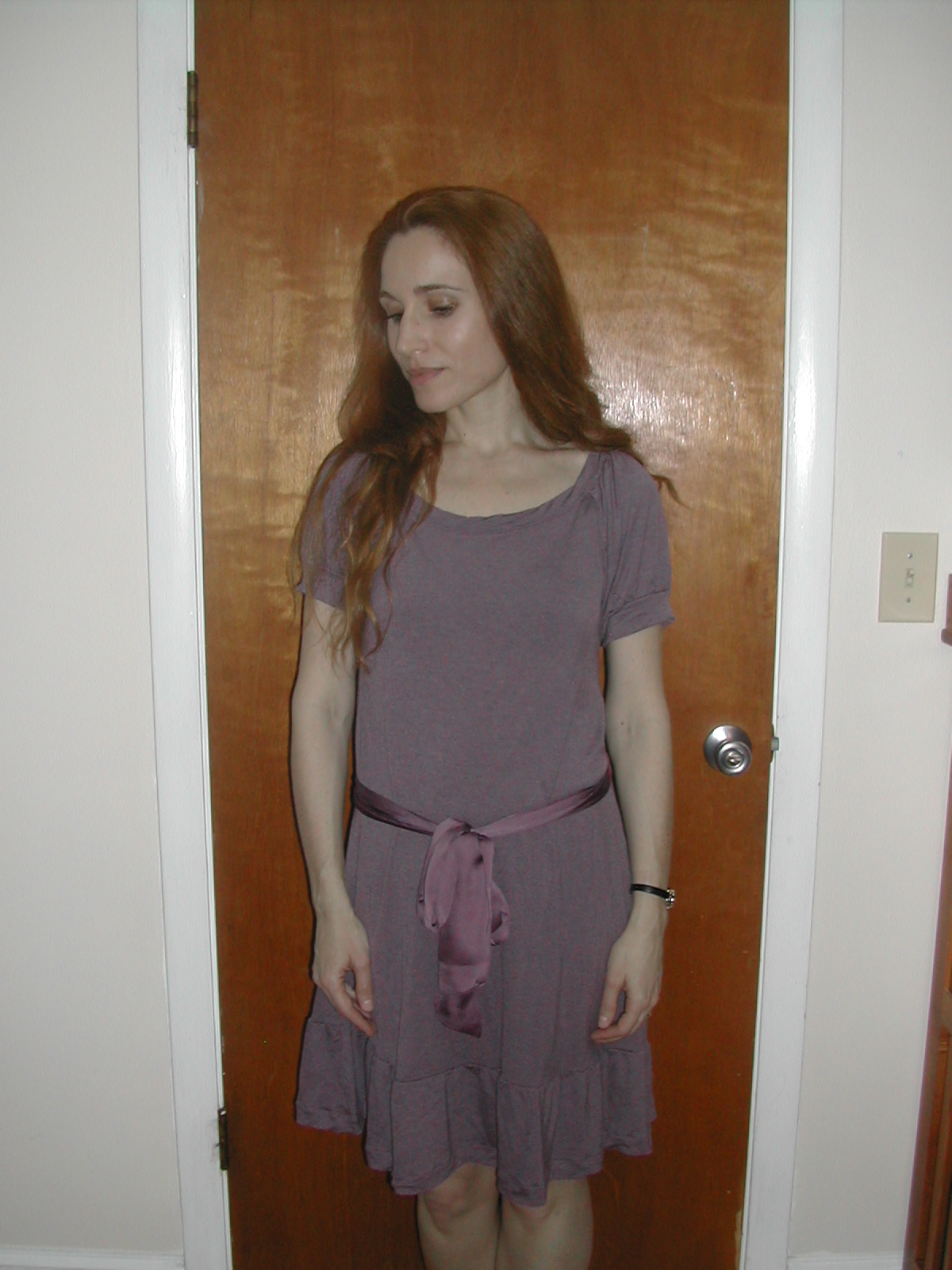
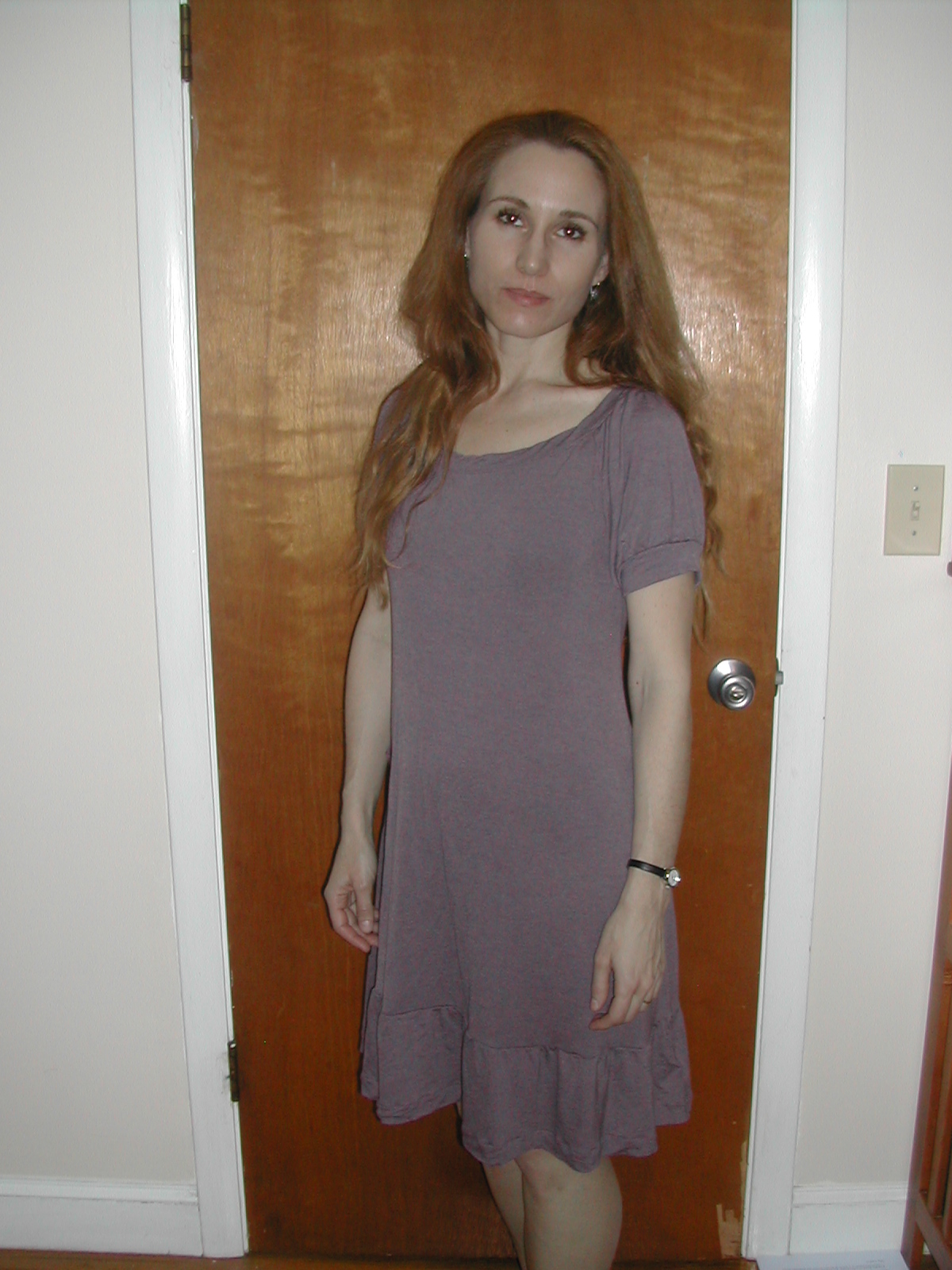
I woke up this morning and, although I knew it was going to be below freezing today, I just couldn’t face wearing the same old jeans or corduroys again. So I wore one of the skirts I wrote about yesterday, which looked like this:

At the university, I went to the library and picked up two books on fairies, The Fairies in Tradition and Literature and An Encyclopedia of Fairies by Katherine Briggs. I read the first one and took notes, then taught my classes, then came home and read the first one again, taking notes until I fell asleep. Not actually on top of the book, but pretty close.

When I woke up, I sat down to write this post. But my head doesn’t feel particularly clear, and as I said, my throat hurts. I think the season of being sick is upon us.

This is the place in my research process where I just read for a while, where I start to get a feel for my subject. What I’m looking for at this point is some way of approaching it, some point of view. Also some way of dividing it up. Do I write about fairies by looking at them historically: folklore fairies, literary fairies in their various centuries? Do I write about the characteristics of fairies, their interactions with humans, fairy poetry, fairy paintings? I’m still trying to decide.

What I do know, already, is that there’s an awful lot of information out there.

One thing that surprises me is how many people claim to have seen fairies in one form or another. Add that to the people who claim to have seen ghosts, or to have had other sorts of supernatural experiences, and what do you get? I mean, it’s so easy to discount things like that, to say there’s no scientific validity to them. But what are they really? Our brains tricking us? Or something genuinely strange about our world that we’re interpreting in the ways we know how, as ghosts or fairies? What shape is reality, I guess is what I’m asking. And I ask this as a fantasy writer, meaning that I need to know reality in order to bend it, or break it, or otherwise shape it anew.

I did read something in one of Briggs’ books that started me thinking about story ideas. It was an excerpt from Ancient Legends of Ireland by Lady Wilde, Oscar’s mother, about the Banshee:

“But only certain families of historic lineage, or persons gifted with music and song, are attended by this spirit; for music and poetry are fairy gifts, and the possessors of them show kinship to the spirit race – therefore they are watched over by the spirit of life, which is prophesy and inspiration; and by the spirit of doom, which is the revealer of the secrets of death.

“Sometimes the Banshee assumes the form of some sweet singing virgin of the family who died young, and has been given the mission by the invisible powers to become the harbinger of coming doom to her mortal kindred. Or she may be seen as a shrouded woman, crouched beneath the trees, lamenting with a veiled face; or flying past in the moonlight, crying bitterly; and the cry of this spirit is mournful beyond all other sounds on earth, and betokens certain death to some member of the family wherever it is heard in the silence of the night.”

For some reason, this reminds me of a story by H.H. Munro called “The Wolves of Cernogratz.” A wealthy family has moved into the von Cernogratz castle. They are told that if someone dies in the castle, the wolves will howl for them, and the Baroness says that is not true, a relative died in the castle recently and no wolves howled. The faded old governess speaks up and says that the wolves will not howl for just anyone, only for a member of the von Cernogratz family. She says that she herself is one of the von Cernogratz. She is not believed, is thought to be claiming an ancestry that does not belong to her. But several weeks later she becomes sick, begins dying. And the wolves begin howling.

“Not for much money would I have such death-music,” says the Baroness.

“That music is not to be bought for any amount of money,” says one of her relatives.

The governess dies, listening to the howling of the wolves.

My story would not be like that. I would focus on “persons gifted with music and song,” because I’m interested not in hereditary aristocracy, but in the aristocracy of creators, of people who are gifted with artistic talent and use it. But it would be about who the Banshee wails for, who deserves to have that sort of warning.

I have other work to do tonight, this being February as I said some time ago – the difficult month. But writing my Folkroots column teaches me so much. If you’re going to be a writer, I highly recommend writing non-ficton – in some form.

Posted in Uncategorized | 5 Comments

The Haul

I’m so sorry.

It’s the sort of day when I have absolutely no thoughts, nothing at all to say.

I haven’t had a chance to work on the Folkroots article, so I can’t write about that. And I have nothing at all to say about writing, not today. All I’ve done today is work on projects that wouldn’t interest you. (Trust me.)

The only thing I have to write about today is the haul I made at Goodwill. This was the Goodwill on Commonwealth Avenue, the Goodwill of all Goodwills. The Platonic Goodwill.

So I’m going to post some more pictures of my finds.

I found two baskets. This is the first of them, and it’s filled with the dishes I bought, which are all my favorite cream-colored ironstone. I just buy a lot of ironstone, and it all sort of mixes together, you know? These are Johnson Brothers and Adams.

This is the Adams, this adorable little sugar container. No lid, but I don’t think that matters, because I’m probably going to use it for flowers anyway.

This is the second basket, with some silver plate I found. Here it’s all tarnished.

But as you see, it cleans up quite nicely.  (Although it needs more cleaning.  Silver never really stays nice until you use it regularly.)

And I bought a dress and four skirts, each of which actually fits. No alterations necessary, thank goodness.

I would be a little depressed about the summer skirts, because it’s going to be so long until summer. But in March, I’m going to the International Conference on the Fantastic in the Arts in Orlando, and I’m going to need summer skirts there. So I’m excited.

It’s been a long day, and I’m tired. But at least I brought some beautiful things into my life, and that’s always worthwhile.

Posted in Uncategorized | Leave a comment

Writing Fairies

It’s funny how publishing works.  My first Folkroots column hasn’t come out yet, and here I am working on my third.  My first one was about the femme fatale, my second one was about vampires, so I thought that for the third one I would focus on something lighter, more traditional fantasy fare. I chose fairies.

I have to write as much of the column as I can this week, since the next few weeks will be particularly busy for me. I thought you might be interested in the process, so I’ll be posting about writing the column as I write it. Today I thought I would post about how I begin.

I actually begin with the art.

I’ve chosen the art to include with the column, and of course I’m not going to post what I chose here. You’ll have to wait for the column, for that. But I will post some pictures that I decided not to include, and why.

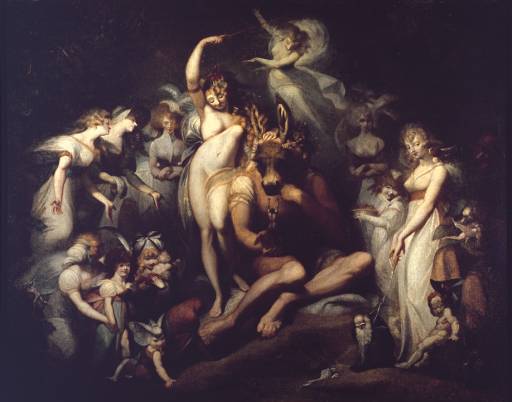
The first picture I chose not to include was Titania and Bottom, by Henry Fuseli. It’s a beautiful painting, but rather dark. And I’m not sure I want to focus on particular fairies in the pictures, although I suspect that I’ll write about Titania and the Shakespearian fairies in the column itself.

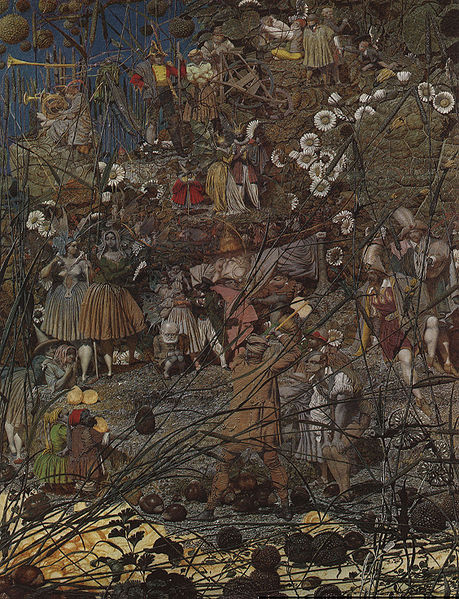
The second picture I chose not to include was The Fairy Feller’s Master-Stroke, by Richard Dadd. It’s just too busy. It’s not going to reproduce well in a magazine, particularly since it’s going to be smaller than this size. Online that wouldn’t be such a problem, because you could click on it and look at the details. But that’s not possible in a magazine, of course.

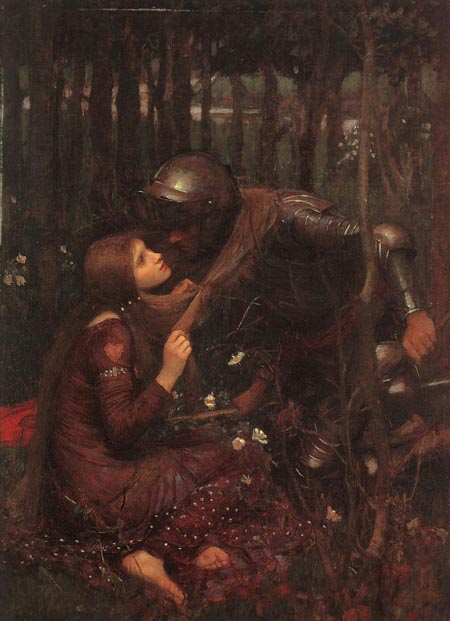
The third picture I chose not to include is La Belle Dame sans Merci, by John William Waterhouse. I wrote about the Belle Dame in my column on the femme fatale, and don’t want to use her image again so soon, even though the image I chose last time was a different one.

At least, I think I won’t be including those. I could still change my mind.

The second step is to locate my sources. Of course I started with the university library database. And I found some books that look useful and interesting, one on Elizabethan fairies and one on Victorian fairies. (Isn’t it interesting that both focus on eras named for queens? I wonder if fairies tend to become more prominent in eras when queens are ruling.) But in this instances, I knew that I would also find some sources online, because I knew there must be articles on fairies on the Journal of Mythic Arts website. And sure enough, I found two wonderful articles on fairies by Terri Windling:

Fairies in Legend, Lore, and Literature

and

Changelings

I know those articles are going to help me figure out what I want to focus on, because this article can’t be longer than 5000 words. And anything Terri wrote, I know is thoroughly researched and reliable. I also want to make sure I know what Terri has written, because I don’t want to simply reproduce her work with my own research. I want to be able to offer my own interpretation of fairies, and then also tell readers where to find hers.

I have two more library books to look at, and a stack of my own books that will have information on fairies, including W.B. Yeats’ book on Irish fairy and folk tales. The problem with fairies is that there’s actually too much information out there. I’ll have to narrow it down first, figure out what is most important to look at. I think looking at Terri’s articles will help me do that, so I’ll start there.

I learn so much from writing these columns, and get so many story ideas. That makes all the work worthwhile.

Posted in Uncategorized | 7 Comments

A Beautiful Life

There are some blogs I love to read just because they’re so beautifully put together. Three of my favorites are Terri Windling’s The Drawing Board, Rima Staines’ The Hermitage, and Jen Parrish’s blog for Parrish Relics Jewelry. Somehow, I came across an old blog post of Jen’s, “Treasures Found,” on going to Sister Thrift, one of her favorite thrift stores in Burlington, Massachusetts. And I thought, wait a minute! I live a short drive away from Burlington. So I looked up Sister Thrift on Google Maps, and away I drove through the snowy landscape. I love thrift stores. Partly because I genuinely am thrifty, although I’ll spend a great deal of money on things I believe are important, like going to conventions. And partly because I think shopping is boring unless you turn it into a game.

Here’s the game: be elegant while spending as little money as possible. The game is not to spend as little money as possible. You also have to be elegant. That’s crucial, otherwise it’s no fun. So I’m going to show you some of the things I bought at Sister Thrift, and you can decide for yourself whether they were elegant enough to justify the cost.

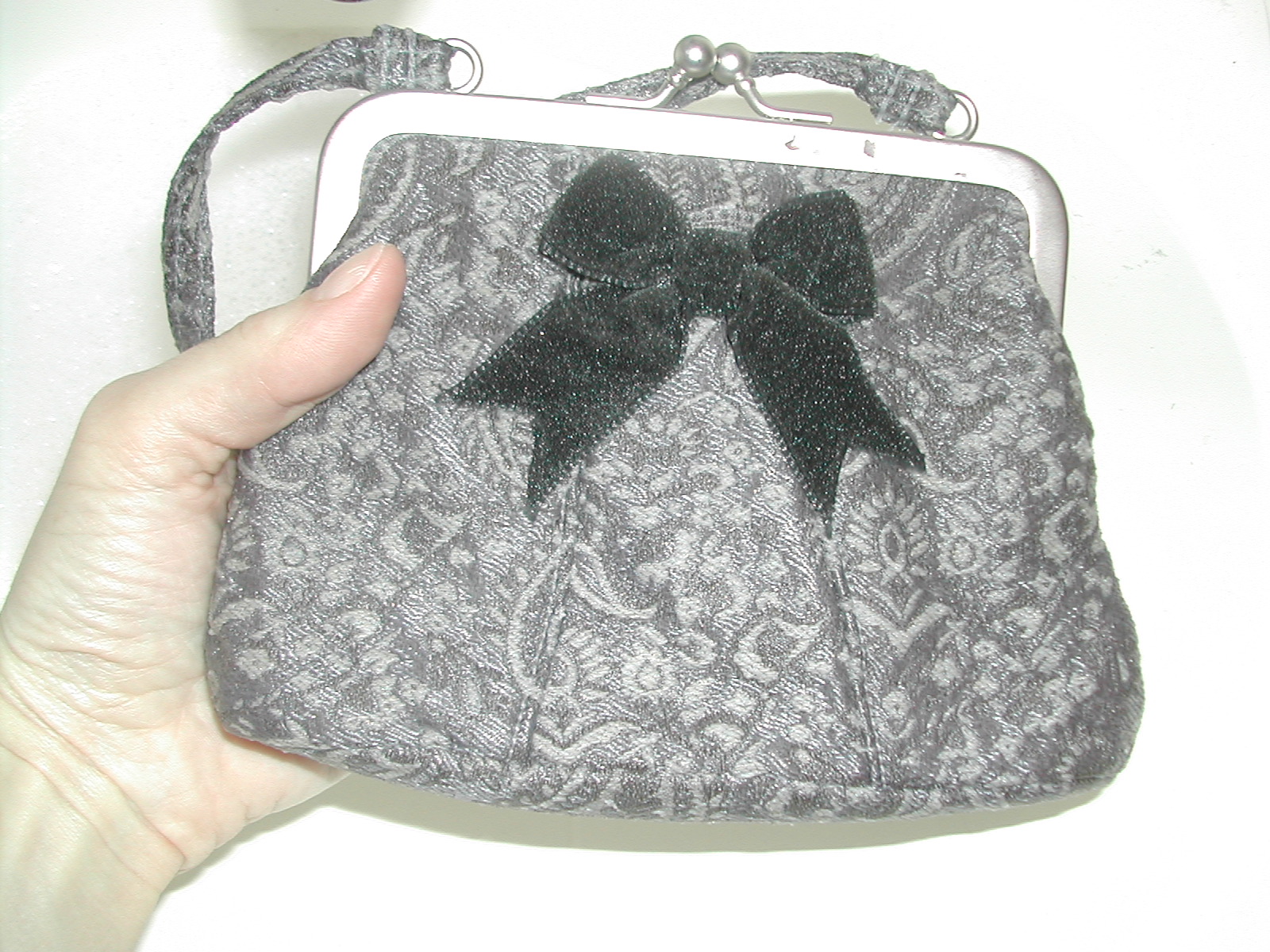
First, I bought a small evening purse. I’m going to show you all of these items as they were processed once I brought them home.  Here is the purse being washed in the sink:

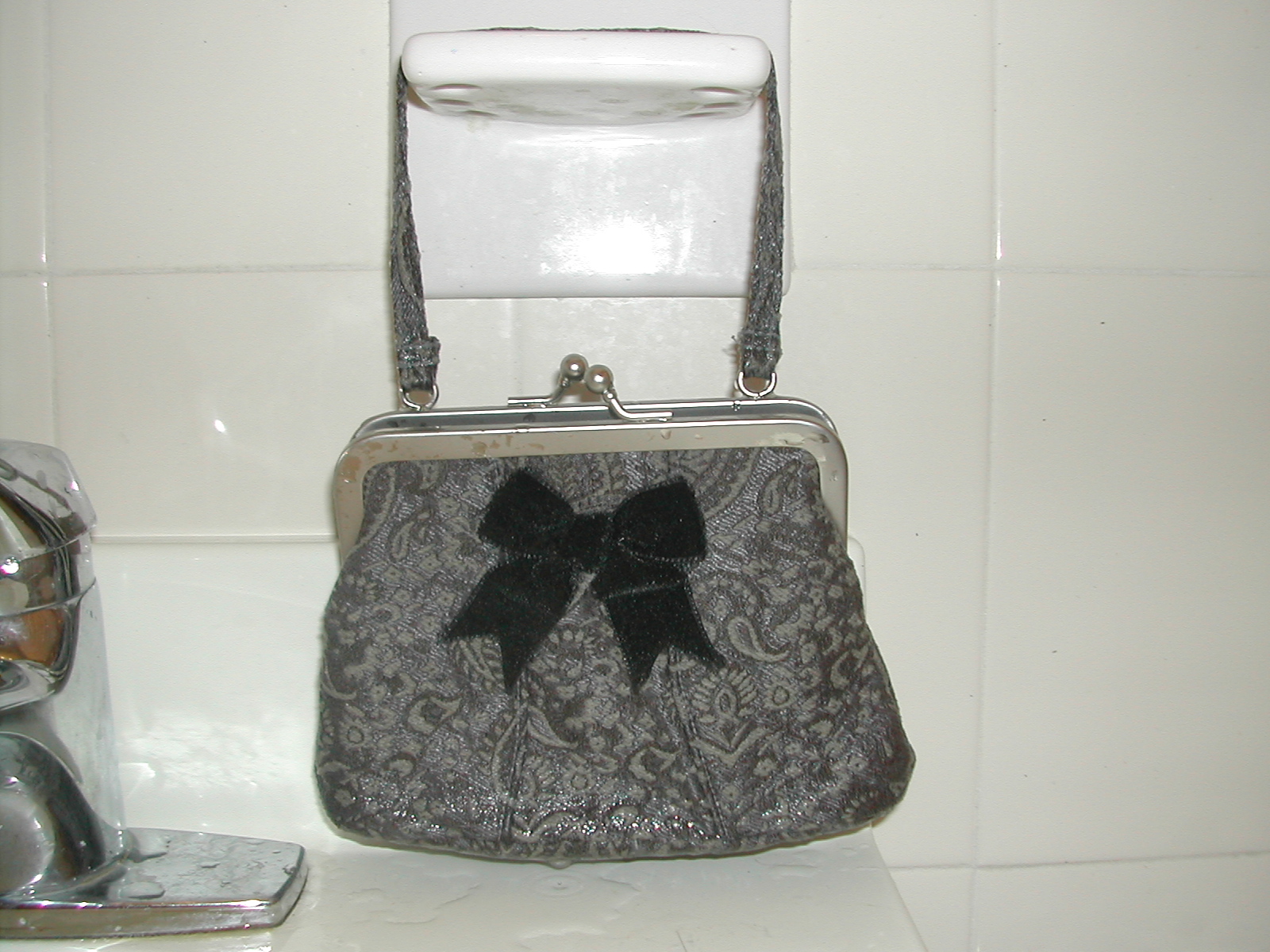
And hung to dry:

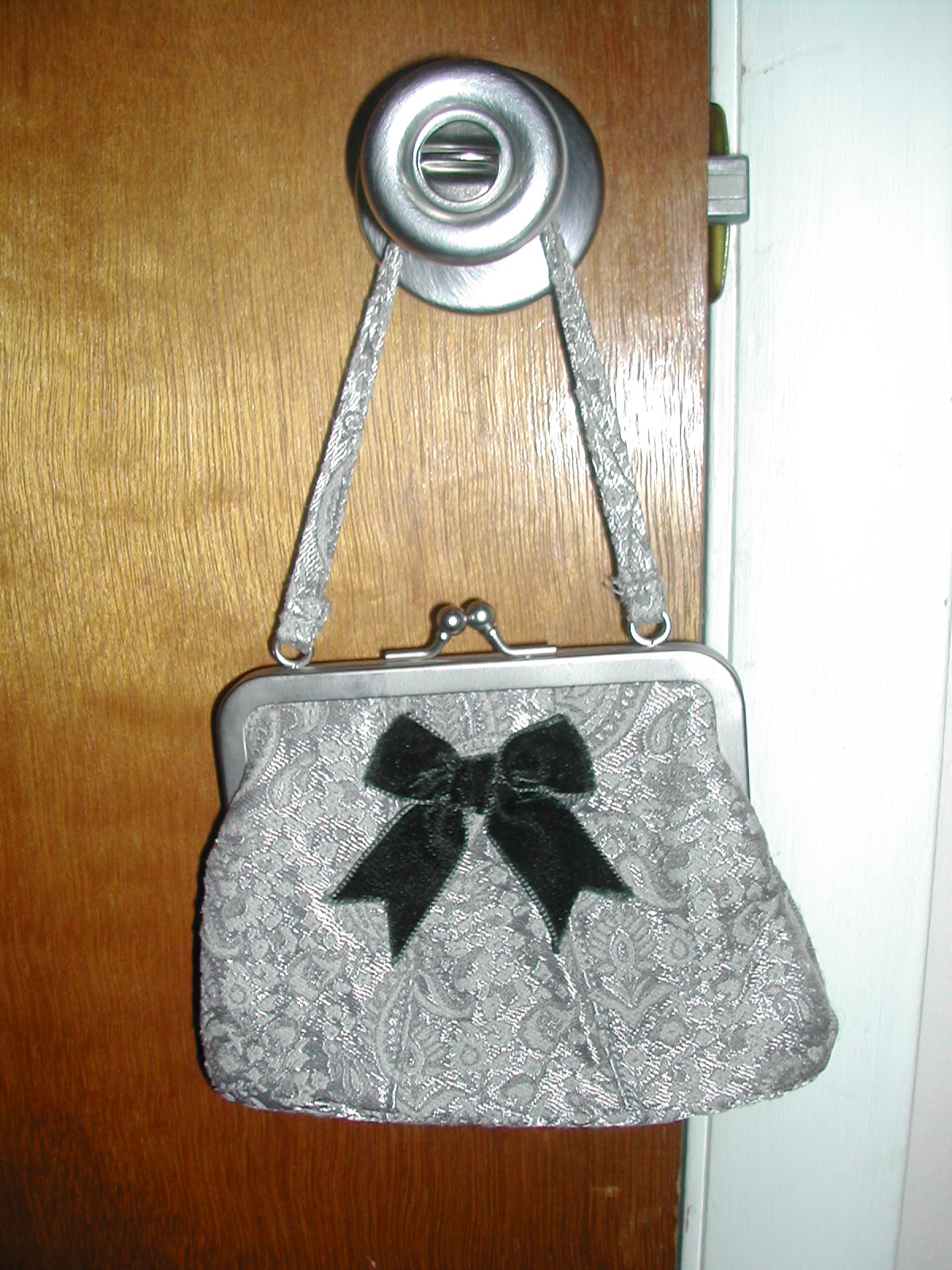
And here it is all dry:

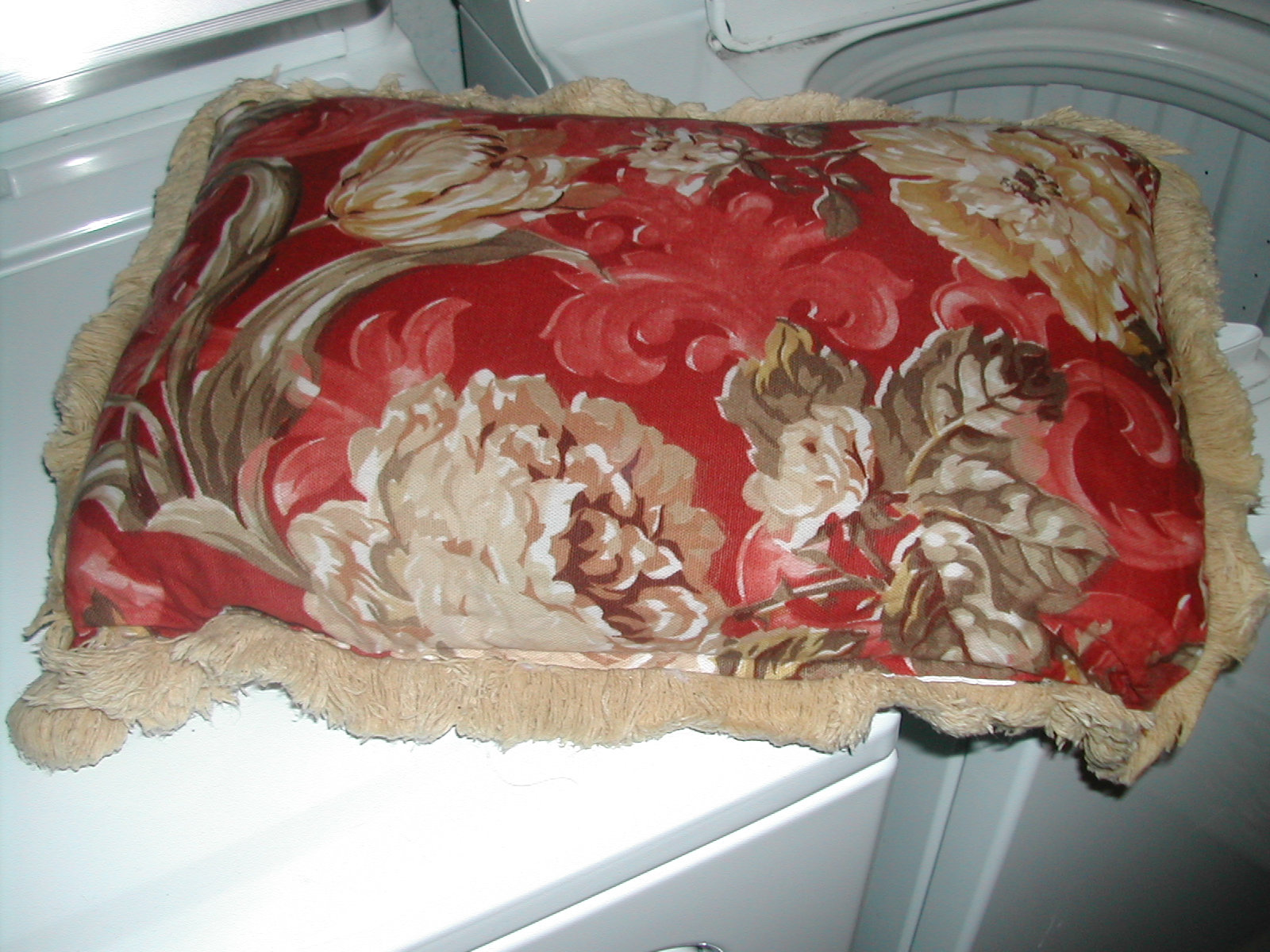
I think it’s going to look nice with a black evening dress. The second item I bought was a pillow. Here is the pillow being washed:

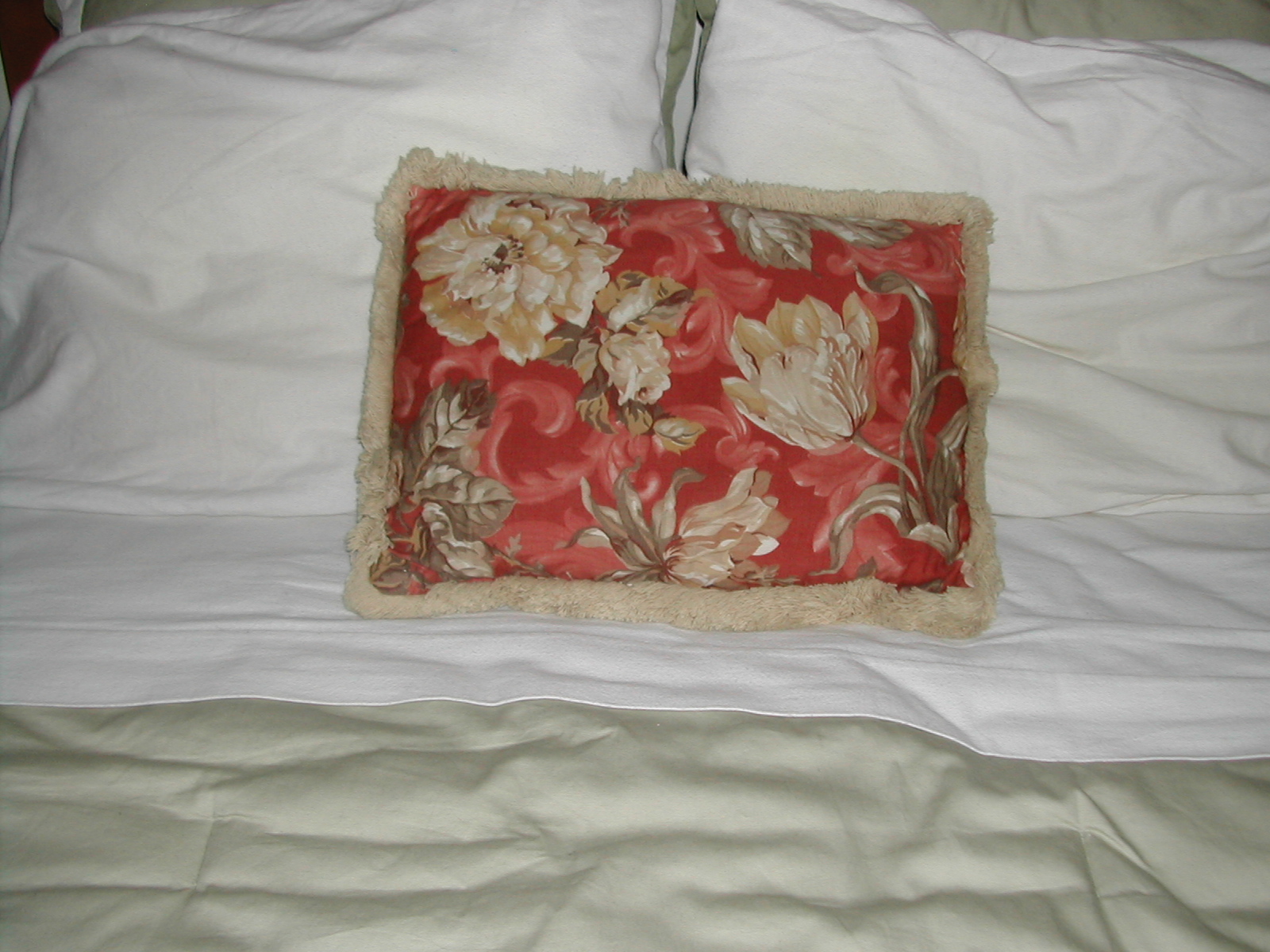
And here it is all dry and on a bed:

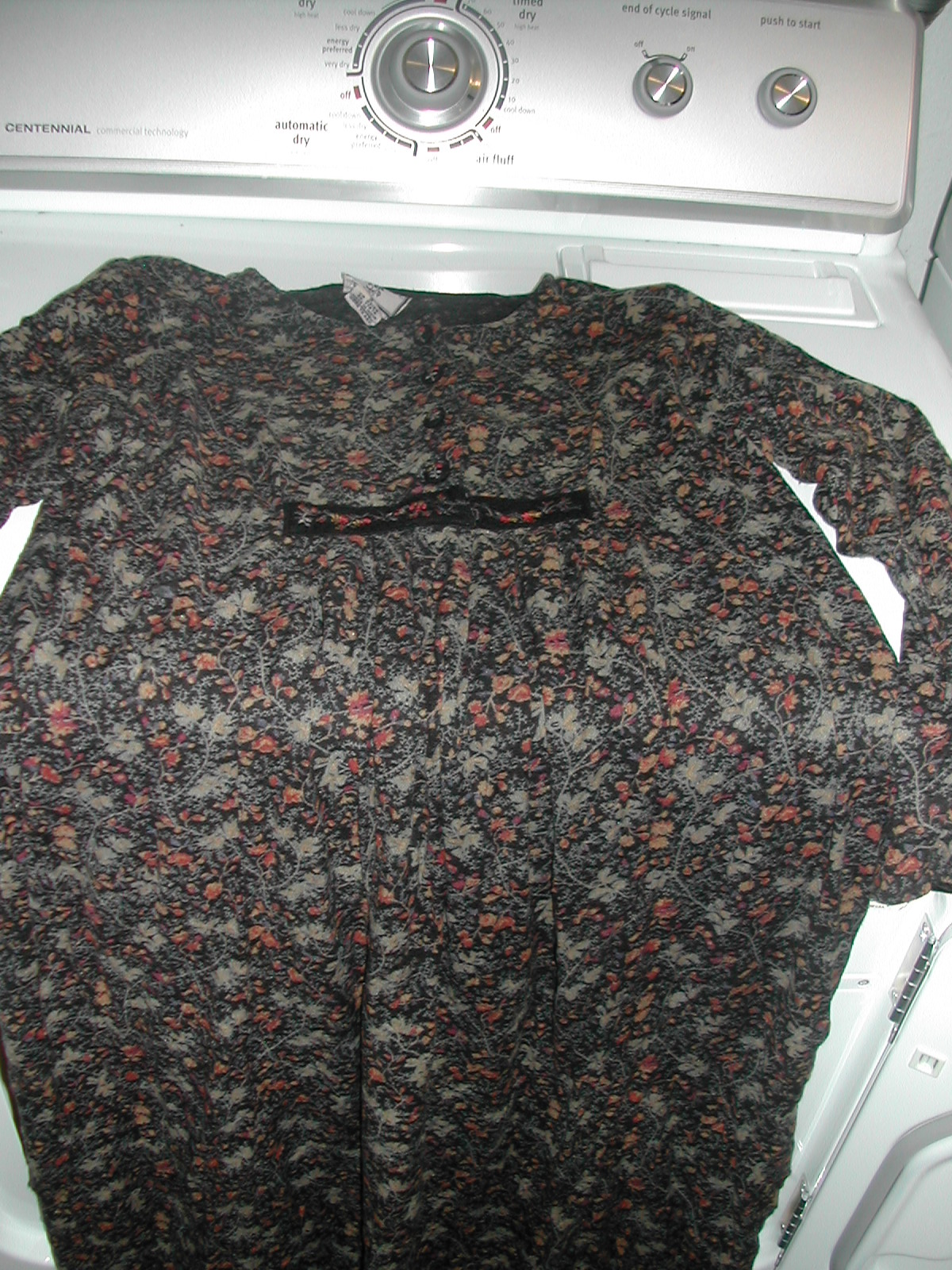
The third item was a dress from April Cornell. You know how expensive April Cornell dresses are. Here it is being washed:

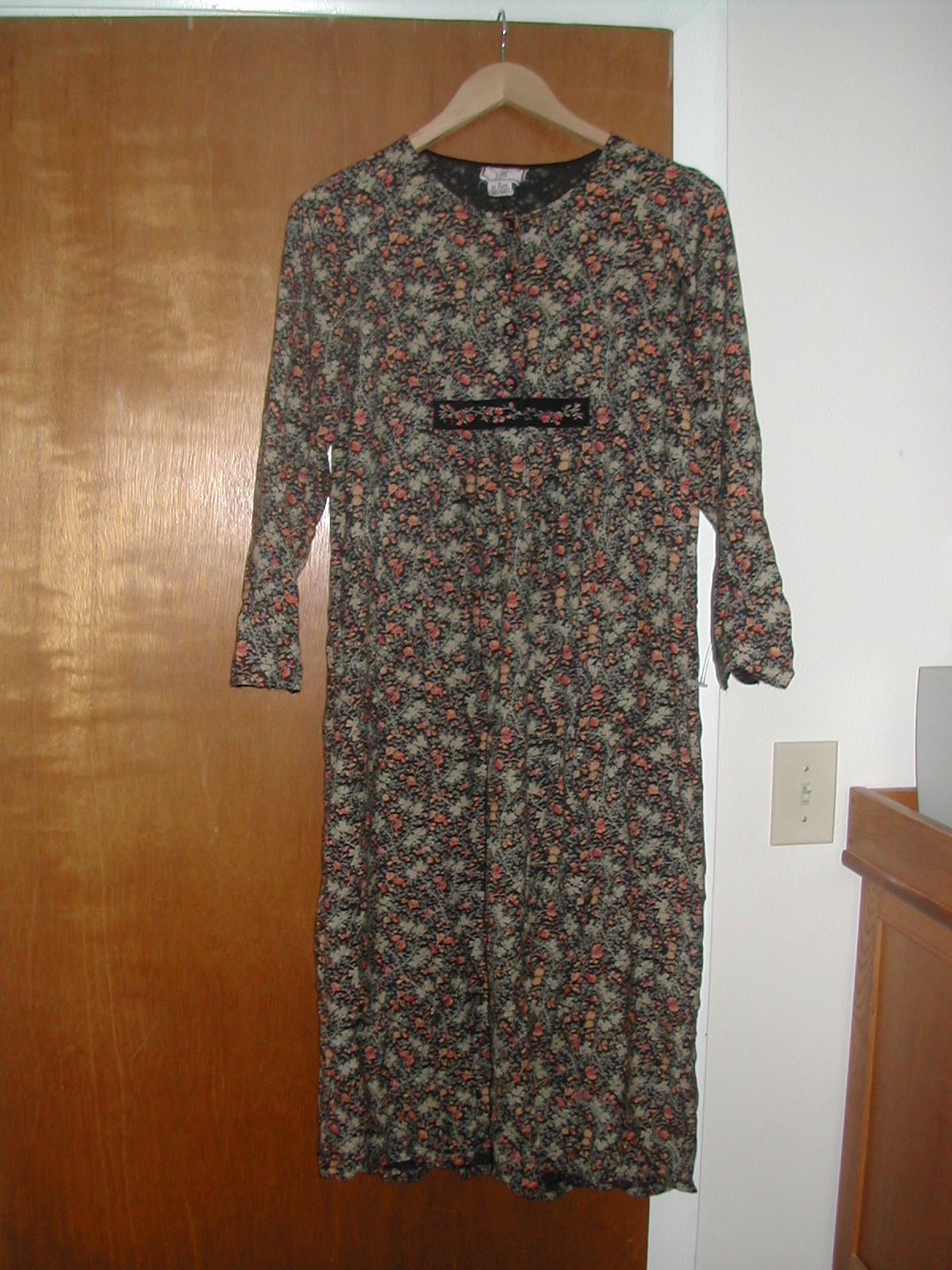
And here it is hung on a door, although a dress like this never really looks like anything hung on a door:

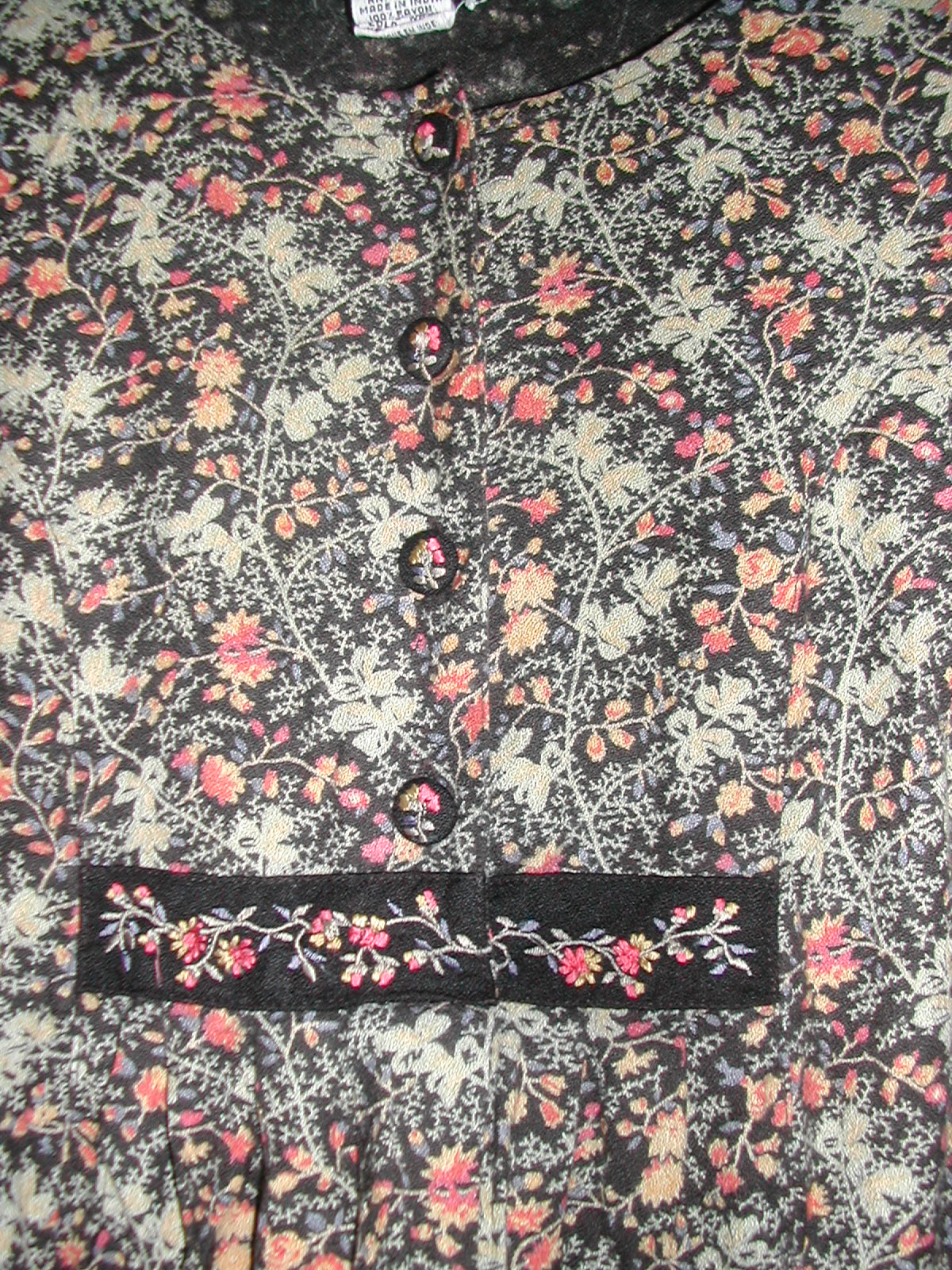
And here is a detail, because I love this embroidered strip and the embroidered buttons:

And here it is on me:

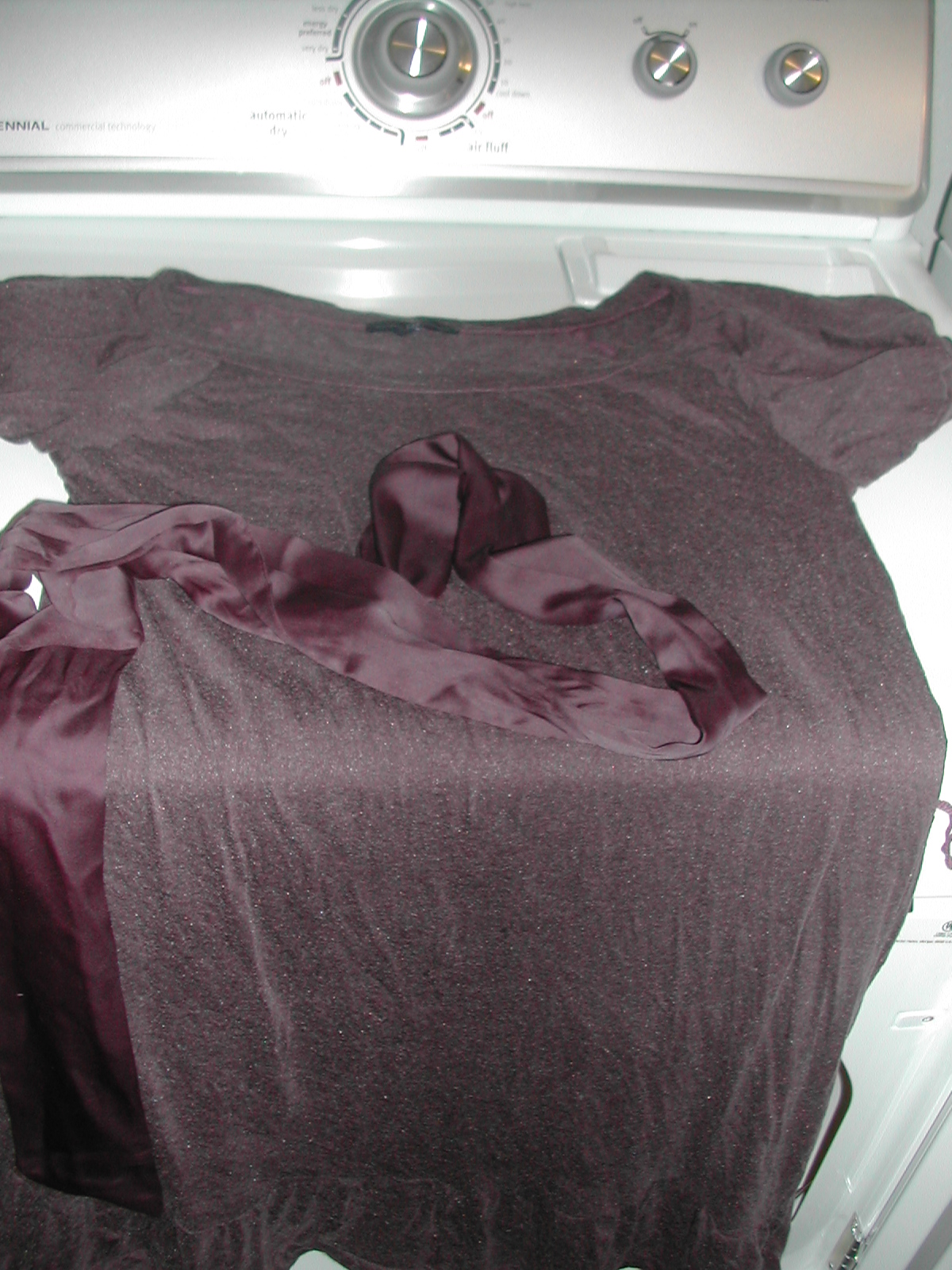
It comes down to about my calves, and I have no idea yet where I would wear it. But it’s incredibly comfortable. And here is the final item I bought. It’s a dress from The Gap. Being washed:

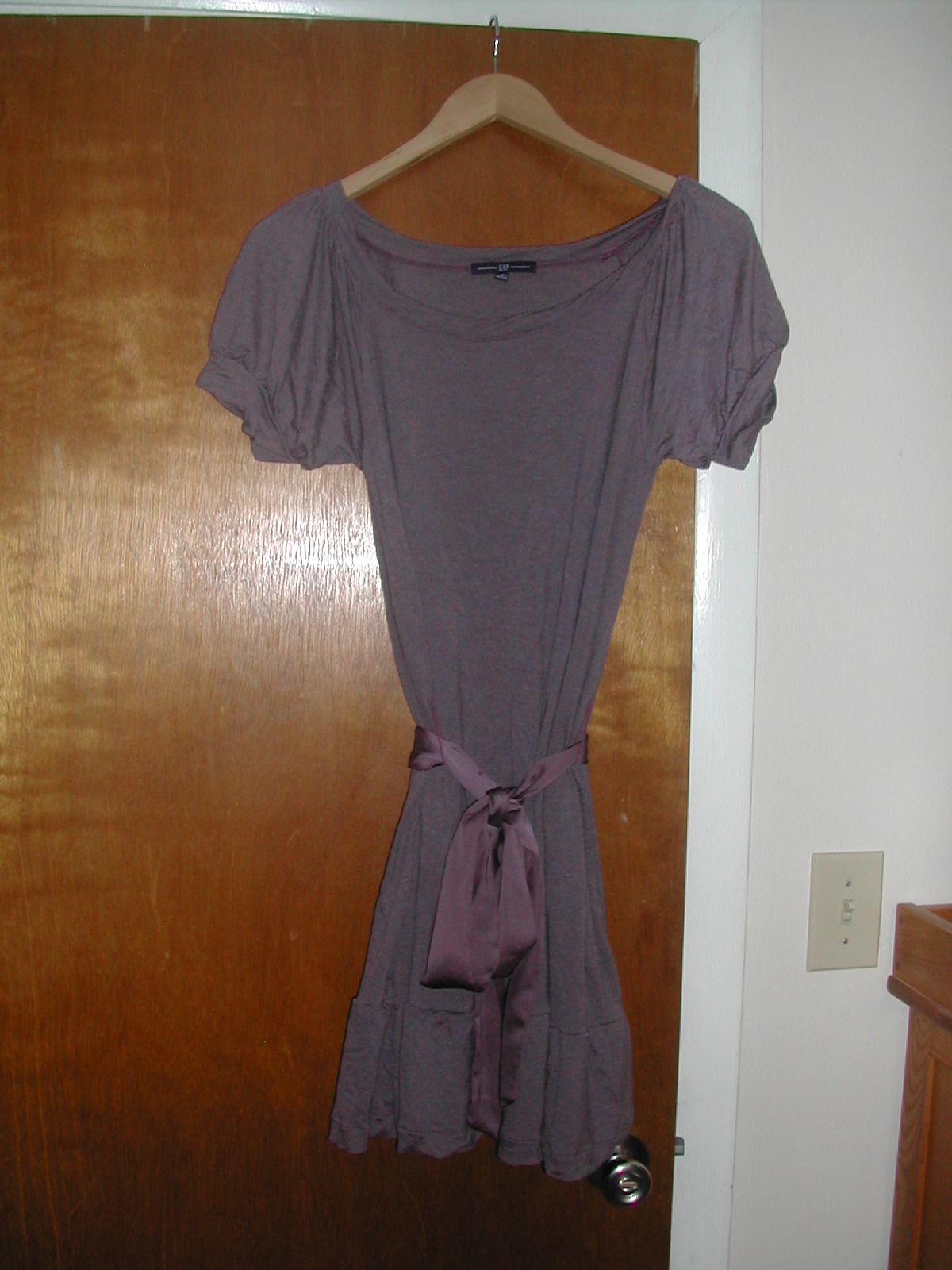
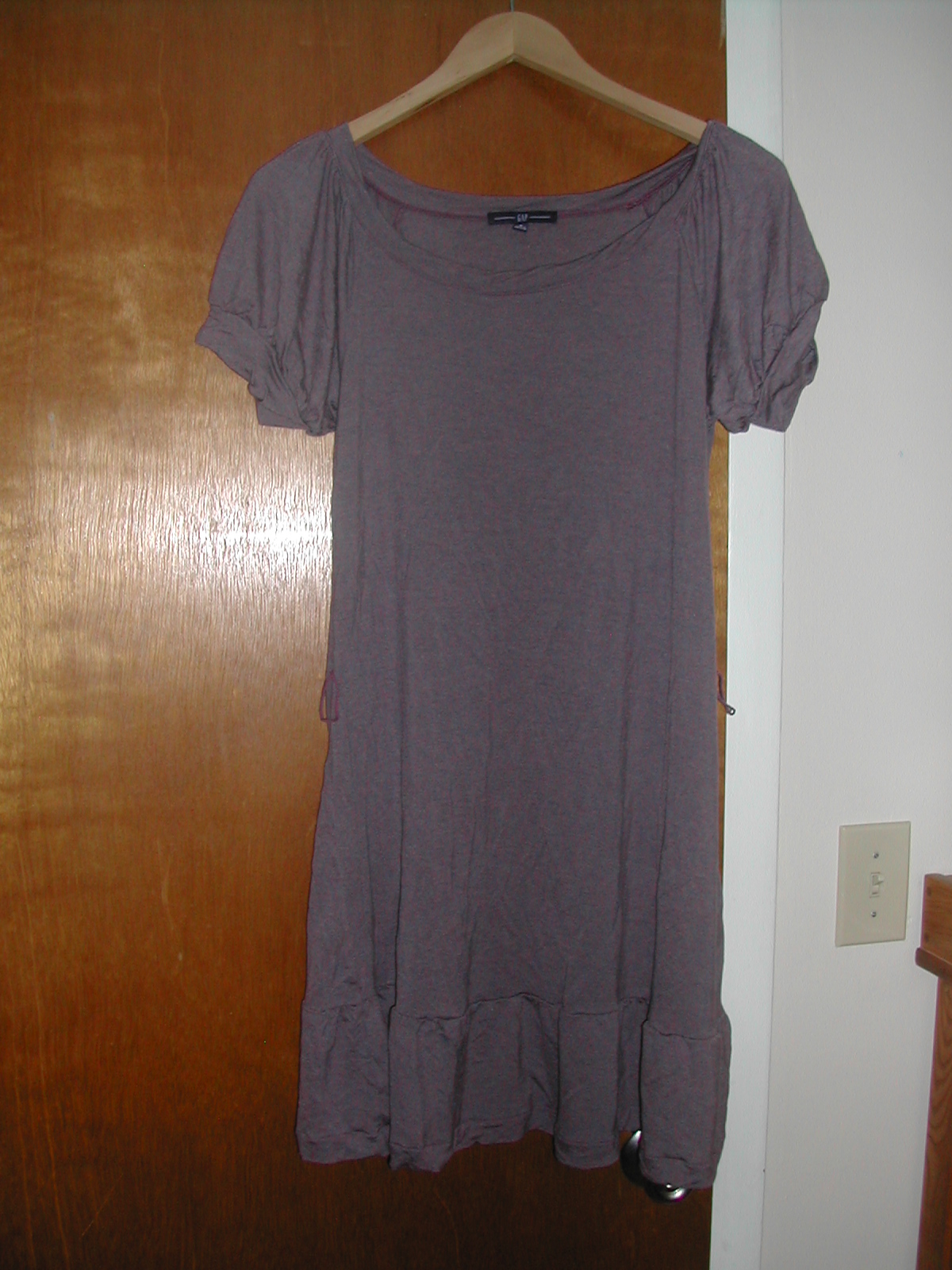
And hung on a door both with and without the sash:

And on me both with and without the sash:

I’m not actually sure I like the sash that much. And these pictures remind me that I need a haircut. Desperately.

But what I wanted to say today, inspired by Terri’s, Rima’s and Jen’s blogs, is that even though my life is completely crazy right now, even though I barely have time for a quick trip to a thrift store or a haircut, I want my life to be beautiful. I want it to contain beautiful things, to be as elegant as I can make it. That doesn’t involve spending a lot of money. If it did, people who were wealthy would have elegant houses. I’ve been in quite a lot of houses belonging to people who were wealthy, and almost none of them have been elegant. (Remember that I was a corporate lawyer in Manhattan and Boston. I went to a lot of cocktail parties.)

I think that’s part of being a writer too, creating a space for yourself where you can be happy, where you can look around and see comfortable, beautiful things. And wear comfortable, beautiful clothes. I think it’s important to surround yourself with things you truly love.

That’s what I mean by a beautiful life.

Oh, and by the way, those four items?  Cost just under $15.

Posted in Uncategorized | Leave a comment

Love and Squalor

I’ve been writing about all sorts of things related to writing. I thought I’d better write about writing itself.

The title of this post comes from the J.D. Salinger short story “For Esmé – with Love and Squalor.”

Have you read it? It’s one of his most famous short stories. It’s told by a soldier who is training in England, in World War II. One day he walks into a church and listens to a children’s choir practicing. He notices the best singer, a girl. Later, he is sitting in a tearoom when she, her brother, and her nurse walk in. (I’m doing this from memory, so correct me if I make any mistakes.)

Her name is Esmé, her brother’s name is Charles. She is a self-possessed young lady with a vocabulary that is not quite under her control – she uses words that don’t quite mean what she things they mean in an effort to be sophisticated. But she’s charming, an attractive character. Her brother, who is younger, is a typical little boy. Their nurse tries to get them away from the soldier, but they pay no attention to her. Their father has died in the war, their mother is somewhere, I don’t remember where. But it’s obvious that Esmé is used to giving orders and looking after Charles. When Esmé learns that the solider is a writer, she asks him to write her a story. She asks him to put a lot of squalor into it. It’s obvious that she doesn’t quite understand the word. Before she and Charles leave with their nurse, she asks the soldier for his address so she can write to him.

The scene shifts, and the solider who is narrating the story tells us that this is the part with the squalor in it. The war has ended. It’s obvious that there’s something deeply wrong with the soldier, that he’s seen terrible things. But he finds a letter from Esmé, a letter that has taken a long time to reach him. Reading that letter is almost like reading a letter from another world, where there are still children, and there is still innocence, and there is still a future. And it saves him – suddenly, instead of the terrible insomnia he’s been feeling, he feels sleepy.  And you know that he’s going to be all right.

It’s a wonderfully written story, strong and clear. And my point today is that without that, without the wonderful writing, none of the rest of it matters.

If you’re a writer, your first duty, a duty you owe to yourself and your readers, and to your writing itself, is to become wonderful. To become the best writer you can possibly be.

Now that I’ve written that, I feel obligated to suggest some ways to actually do it, to become a wonderful writer. I think everyone becomes a wonderful writer differently. But here, at least, are some ideas.

1. Read a lot. But read as a writer, to see how other writers are doing it. And make your knowledge of literature in English as deep and broad as you can. In workshops, writers are often told to read what is being written now, but if that is all you read, you are limiting yourself. You need to get a good overall sense of English literary history, so you can write out of that knowledge.

2. Learn as much as you can. Take every opportunity to learn about writing, whether it’s through classes, workshops, whatever is available to you. This may be difficult, because things like classes, workshops, writing programs, require time and money. But I say this honestly and somewhat harshly – if you’re not willing to prioritize your writing, perhaps you should do something else?

3. Write all the time. I believe in writing every day, at least a thousand words a day. We have a strange idea about writing: that it can be done, and done well, without a great deal of effort. Dancers practice every day, musicians practice every day, even when they are at the peak of their careers – especially then. Somehow, we don’t take writing as seriously. But writing – writing wonderfully – takes just as much dedication.

4. Accept criticism. If you do not offer your work for criticism and accept that criticism, meaning give it serious thought and attention, then you will never improve.

5. Be ambitious. Try to be as good as you can, to improve your craft, to become a master of your art. Push yourself to be better, do not rest on what you have done before or what comes easily. If you tell a group of writers, and specifically science fiction and fantasy writers, that you want to be as good as Salinger, as Jane Austen, as Jorge Luis Borges, they may look at you strangely. I know, because I’ve gotten that look before. It’s as though you’ve told them you’re aiming too high, wanting too much. But why shouldn’t you? Why shouldn’t you take the best writers as your models? Why shouldn’t you want to write as well as Virginia Woolf? With fairies.

I think what I’ve said can be encapsulated in four words:

Engage fully. Be relentless.

I write all this because there’s so much information out there now about how writers can succeed. A great deal on marketing, social media, that sort of thing. And I do think all of that is important. I do.

But if the writing isn’t wonderful, what’s the point?

Posted in Uncategorized | 9 Comments