Making Time

I was talking to a friend who is also a writer, and he asked whether the social networking I did (blogging, posting on facebook, tweeting) took part of my writing time. And I started thinking about how I’ve arranged my life to make time for writing. Because I think the answer is no, it doesn’t take part of my writing time – I just have to make extra time for it. But time – whether for writing, social networking, or going to conventions, is always an important consideration for a writer.

And my time is particularly precious right now, because I’m not only writing but also teaching full-time and attempting to finish a doctoral dissertation. And I have a seven-year-old.

To be honest, I think what I did to make time for all those things is cut out the things that wasted time, that didn’t seem worthwhile. But that took looking at life a little differently.

So for example, once upon a time I used to make dinner. I would get home from the university and make dinner, which took about an hour. When we lived in the city, that was easy to do and still left time in the evenings. But here, after my commute, I am far too tired in the evenings. So instead of making dinner, I rely on organic frozen dinners. I know, they’re not homemade, but they’re as healthy as anything I would make myself, and Ophelia gets to try all sorts of things I don’t know how to make. She likes Indian food in particular. Also, I could never get her to eat vegetables, but when they’re in one of these dishes, she eats them without thinking about it. It’s healthy and easy – I just had to learn to deal with the assumption that it was always better for me to cook. I’m sure I’ll go back to cooking myself at some point, but right now, these are the perfect solution. And while they’re cooking in the oven, I can write a blog post.

There are all sorts of other ways in which I decided to simplify my life and make time for what I thought truly mattered. For example, I decided a long time ago never to buy any clothes that required dry-cleaning. Clothes that need to be cleaned that way are fake clothes, anyway. Clothes made of synthetic fabrics. Anything natural can be washed. And I never bother anymore with anything that needs ironing. All of the dishes and utensils go into the dishwasher, including the silver plate. If silver plate is used every day, it doesn’t need polishing. I have furniture that doesn’t need a lot of care, solid wood pieces. The floor requires sweeping and the rugs must be vacuumed, but this is a small house, relatively easy to keep clean. (It could be both cleaner and neater, but here I’ve decided that I’m not going to feel guilty about spending time writing instead of cleaning. Because after all, everyone who visits tells me how neat my house is. So that’s good enough, right?)

We have two cats, who generally take care of themselves. The seven-year-old is surprisingly self-sufficient, although she would get you to play endless games of Ninjago if she could. (And she would win.) She goes to an after-school program that she loves, and when she gets home she does homework, or reads, or watches videos. (She can download Netfix instant, which is more than I know how to do.) I think there are things I’ve done with her, too, that have made childraising easier. If she doesn’t want to eat something, she doesn’t have to. After bedtime, she has to be in her room, but can stay up and play if she’d like. (She’s very good at putting herself to bed.)  I never take her shopping unless it’s for her, because I remember from my own childhood how boring that can be.  We’ve always treated her as a person with her own point of view, her own choices to make, and I think that’s given her the ability to make choices effectively.

I should say, too, that there are a lot of things people consider leisure activities that I don’t bother with, partly because to me they’re not all that interesting. Going to movies in theaters, for example. Any sport that involves a ball. (I’ve discussed, haven’t I, my experience with balls? We repel each other, like magnets. Imagine how difficult that made kickball, in elementary school!) Going sailing, just to go sailing rather than getting anywhere. Going to any sort of gym for exercise. (Why? I’d rather go to a dance class.) Going to a spa. (Why? I’d rather learn to spin wool, or fight with a sword, or just about anything.) And I don’t shop, except when I’m going to an old book store, a thrift store, an antiques market. If I’m going to shop, it’s going to be an adventure. (Malls. Why?) That’s a good rule, actually: don’t do anything unless it’s an adventure. The other stuff: what’s the point?  (Unless you like doing it, of course, and then you should.  But don’t do things just because you feel as though you ought to.)

Not that it’s effortless. There are days when I’m tired, days when I don’t want to write. But I do think that writing is not about having time, but about making time. It’s about priorities. It’s about doing the things that truly matter, and trying to minimize the rest.

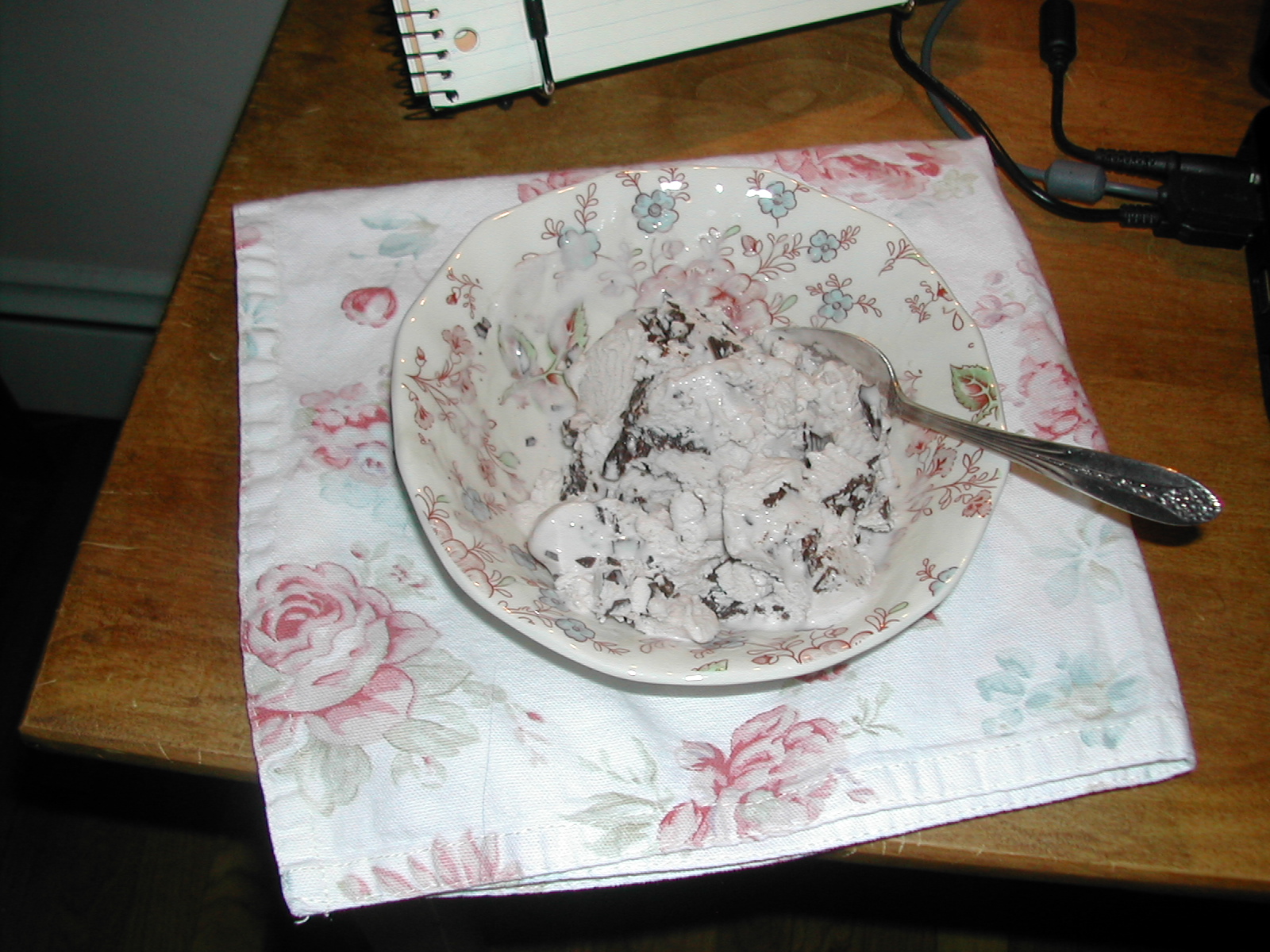
Now, I’m going to watch about an hour of television while eating Cherry Amaretto Coconut Milk ice cream, which is what I call multitasking. And then I’m going to write.

Posted in Uncategorized | 5 Comments

The Other Stuff

When I started writing seriously, just before I went to the Odyssey Writing Workshop (where, incidentally, I’m going to be teaching this summer), I imagined that my writing life would go something like this: I would write. What I wrote would be published.

But you know, there’s a whole lot of other stuff you have to do as a writer.

I’m not talking here about what everyone’s discussing nowadays, building your author platform (an imprecise metaphor, I think), publicizing your work, all that. I’m talking about stuff.

Let me tell you what I was doing today. First, I was revising a manuscript. I should say making final revisions to a manuscript, because that’s actually quite different from revising. When I’m revising, I’m still changing significant portions of the story, still making decision about how the story is going to go. By the time I’m working on the final revisions, I’m deleting commas. (I have the bad habit of using too many commas in my writing, particularly before conjunctions that don’t separate independent clauses. As I tell my students, commas aren’t pepper. You can’t just sprinkle them into your writing. I don’t quite do that: I do teach grammar after all, and I know the comma rules. But I usually have to go back and take some out. And I can agonize about commas. For hours.)

Once I had made my final revisions, I sent the manuscript to the editor. And then, I focused on stuff. First, I went over a contract. When I’m going over contracts, I’m actually grateful that I was a corporate lawyer, because at least I know what the various parts of the contract are for. How do people who aren’t lawyers do it? A publishing contract can be confusing, and you may not have an agent to explain it to you. The contract may be too small to make getting an agent worthwhile. So it’s a good idea for writers to understand the various contract provisions and what is standard. I suspect that most writers don’t. But there are two instances in which you absolutely need to think of your writing as a business: when you’re signing contracts and when you’re handling taxes.

Then I proofed a story that will be coming out later this year. You always have to proof stories because although editors and copyeditors are wonderful, and I would certainly not want to live without them, there are times when they don’t know specific usages that you’ve incorporated – in my first published story, for instance, a copyeditor suggested that a backboard (which is tied to a Victorian girl’s back to keep it straight) should be a blackboard (awkward to tie to a girl’s back, at the best of times). Proofing takes time, but it’s absolutely crucial, and it’s one of the things that writers usually have to do quickly because of publishing deadlines.

Then I sent an editor my biographical information. It’s a good idea to have a paragraph of biographical information written and readily available, and if you’re going to be asked for biographical information often, you might want to have several paragraphs of various lengths. And you need to keep them updated. (Also have a current author photo. That’s another thing you’re going to be asked for often.)

And then there were emails: requests for interviews, requests to reprint stories, that sort of thing. Each of them needing to be answered, and a pleasure to answer because who doesn’t want to have those sorts of opportunities? But again, stuff that isn’t writing.

One of those emails told me something I’m completely thrilled about:

My story “The Mad Scientist’s Daughter” was the first place story in the Strange Horizons Reader’s Poll!

Evidently I get a certificate, which I’m going to hang on my wall because for me, that’s what writing is all about: communicating with readers. And if the readers liked my story, that’s what matters to me, more than awards or right up there with money. (Don’t get me wrong, awards are awesome too. And I cannot exaggerate the awesomeness of money. Although I have to admit that I would write even without the awards and money. But don’t take this as a reason not to pay me . . .)

I guess the message of this particular post is that if you’re writing regularly, you have to start thinking of your writing as a business – probably earlier than you thought. Even if you’re only publishing a couple of stories a year, you’re going to have to deal with the other stuff. But you know, that’s good. That means you’re having a vital, exciting writing career. And that’s what most of us want, I think.

Posted in Uncategorized | 4 Comments

Becoming Yourself

You’d think that being yourself would be the easiest thing in the world, wouldn’t you?

But I think we lose ourselves somewhere along the way. I suspect it starts in sixth grade, meaning middle school, which is a sort of state-sponsored engine for the crushing of souls. In sixth grade we learn, if we haven’t learned it already, that we’re supposed to be a number of things we probably aren’t naturally, such as cool. Sixth grade was when I first started to realize that there were fashionable clothes, and that I didn’t have them.

And then there’s high school, where the message becomes more complex and sophisticated. In my high school, there was tracking, which meant that certain kids were on the academic track and certain kids weren’t. (I was on the honors track, which was a separate system, about fifteen of us taking classes all together, essentially separated from the rest of the school. Imagine how cool that made us! If you did not notice the sarcasm in that last sentence, you must have gone to school in another country.)

What were the expectations placed on me? I was supposed to be pretty and have boyfriends. That was what my peers expected. I was supposed to excel academically, that was what the school expected. I was supposed to go to a good college so I could eventually have a successful, meaning reasonably lucrative, career. That was what my family expected.

I had a vague idea though all this that I wanted to be a writer, that writing was somehow at my core. But I was also the captain of the debate team, because I was probably going to law school, and the Cheshire Cat in Alice in Wonderland because my boyfriend was in drama, and on the tennis team I have no idea why, because I’m naturally the sort of person who cannot hit balls.

And then I went to college at the University of Virginia, and I was supposed to be pretty and have boyfriends and excel academically and go to law school, but by then I think I had developed a subversive streak. I worked as an artist’s model, I dated the boys who had to leave next semester, I stopped telling my family which classes I was taking because they were simply not going to understand how African and Caribbean Literature was going to advance my career.

But I still went to Harvard Law School. And that was it for me. I think at one point, on the forty-second floor of the MetLife building in Manhattan, I looked at myself in the bathroom mirror and asked the Caterpillar’s question: who are you?

It’s very difficult, after you’ve spent twenty years and eighty thousand dollars becoming someone else, to become yourself again. It takes time. At that point you can’t just be yourself anymore, because you have no idea who you are. You have to figure it out.

I’m sure there’s a better and easier way than the way I tried, the way that more or less worked for me, over time. I first read about it in Oprah Magazine, make of that what you will. The way has two steps:

First, ask yourself what you like.
Second, try to go in that direction.

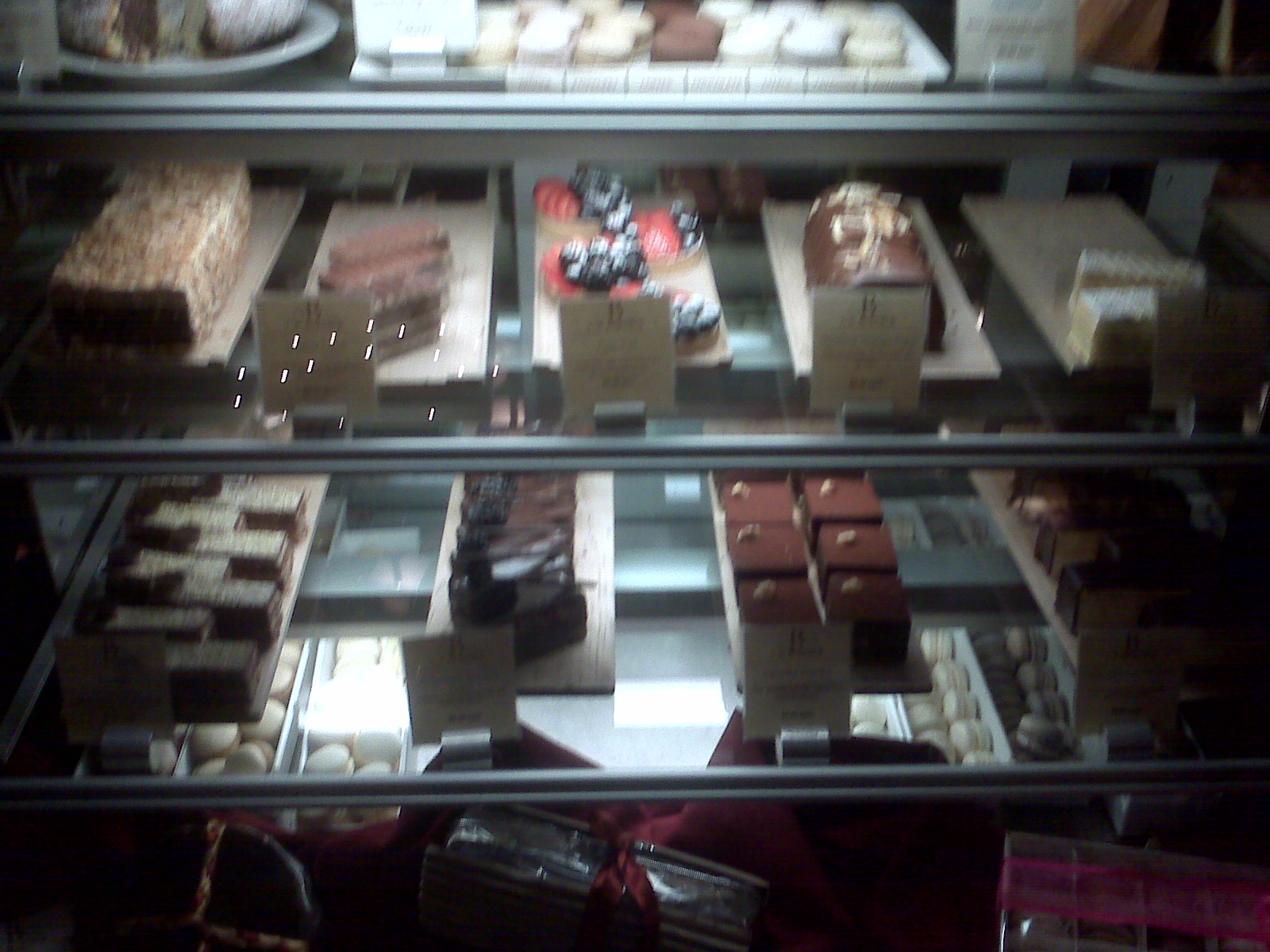
So for example, if you’re standing in front of a display case full of cakes, as I was yesterday at Berdick’s, look at all the cakes carefully and ask yourself, what do I actually like? Do not order the richest, most chocolaty thing because that’s what you’re supposed to order in a chocolate shop. Do not order whatever looks least caloric because you’re supposed to be losing weight. Try to figure out what you actually want. And then get it, unless you’re simply not sure. In that case, order something as an experiment, and see if you like it. Treat your journey through the world on any particular day as an experiment in what you like.

There are a number of things I thought I liked that I realized I didn’t like after all. Dramatic, sweeping skirts. They were gorgeous, and I kept stepping on them. Waist-length hair. I had it for years, and it didn’t actually suit me. (I grew up with short hair, which was my mother’s idea, and that didn’t suit me either. So I’ve been to both extremes.) I’ve been through three different pianos because I thought I really ought to have a piano, and they were free. (There are a lot of free upright pianos out there.) Each time, they took up space and were never played. And don’t get me started on when I adopted two borzois because I had a secret thought that I might be a Russian countess under the skin. (I am not. I like pets that walk themselves and have no deep-seated desire to slay wolves on the steppes.) And no matter how beautiful I think hats are, I will never, ever wear them because I find them hot and itchy.  And they’re always blowing off in the wind.

In other words, I’ve made some strange mistakes.

The surest way to become yourself again, I think, is to discover what you actually like, item by item, and fearlessly acknowledge it, no matter how uncool it makes you. I have a passion for murder mysteries, for example. I like Land’s End cardigans, and buy them in various colors. I also like pearls, and brooches of various kinds (I know, what am I, sixty-two?). Also, The Secret of Roan Inish and banana splits (I know, what am I, twelve?). I will probably never wear a scarf, because I have a passion for murder mysteries and it would give someone a convenient way to murder me, thank you. Most modern dance bores me, but then so does most Russian ballet. I don’t really see the point of modernist art. I love the pre-Raphaelites and Art Nouveau, and if that means I have bad taste, so be it.

I remember the days when I used to write with a fountain pen, until I realized I didn’t really like it. I was just trying to fit an image I had of myself as a writer. Now I write with a cheap rolling ball ink pen.

Figure out what you like and move toward it, one item at a time. Each item individually may seem trivial. But in the end, you will start to figure out who you are, and to become it.

Island 26

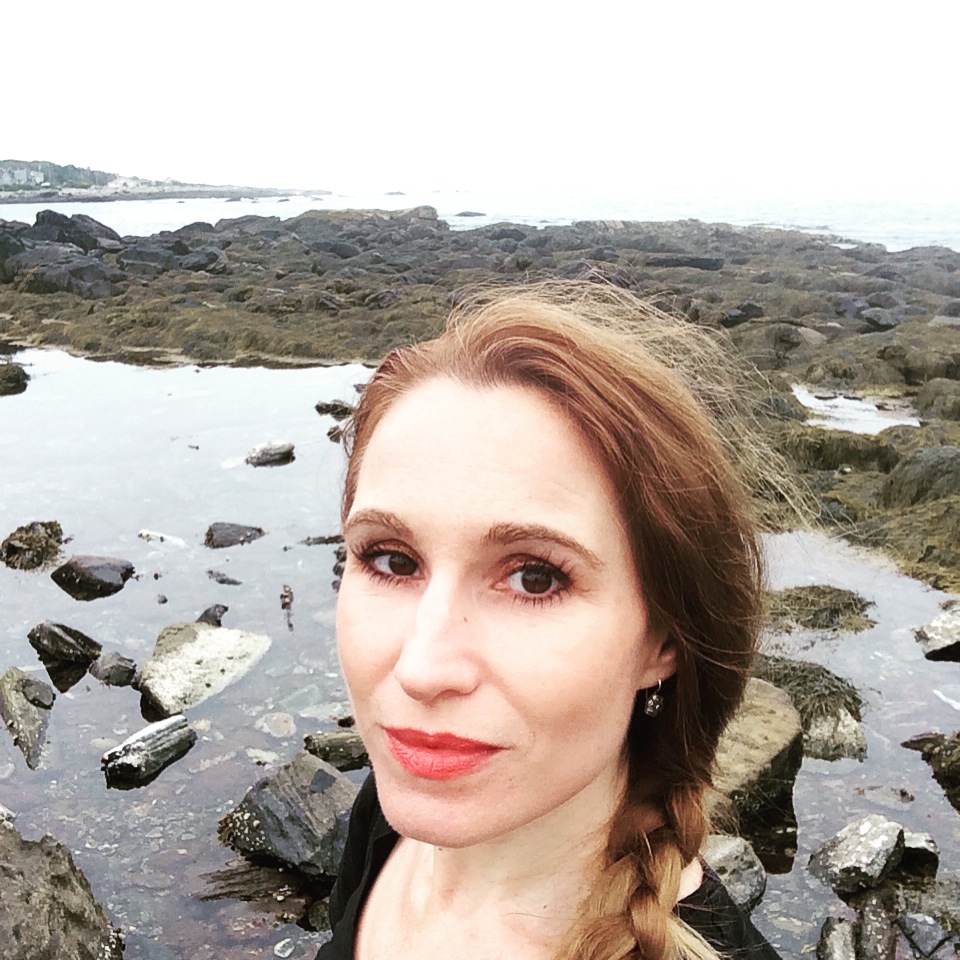
(Me on Peak’s Island, being very much myself . . .)

Posted in Uncategorized | 18 Comments

A Day Off

No, of course I didn’t actually take a day off. I spent a good portion of it writing, and will spend another portion of it writing later tonight. But I did take a couple of hours off to do some things that were restful and fun.

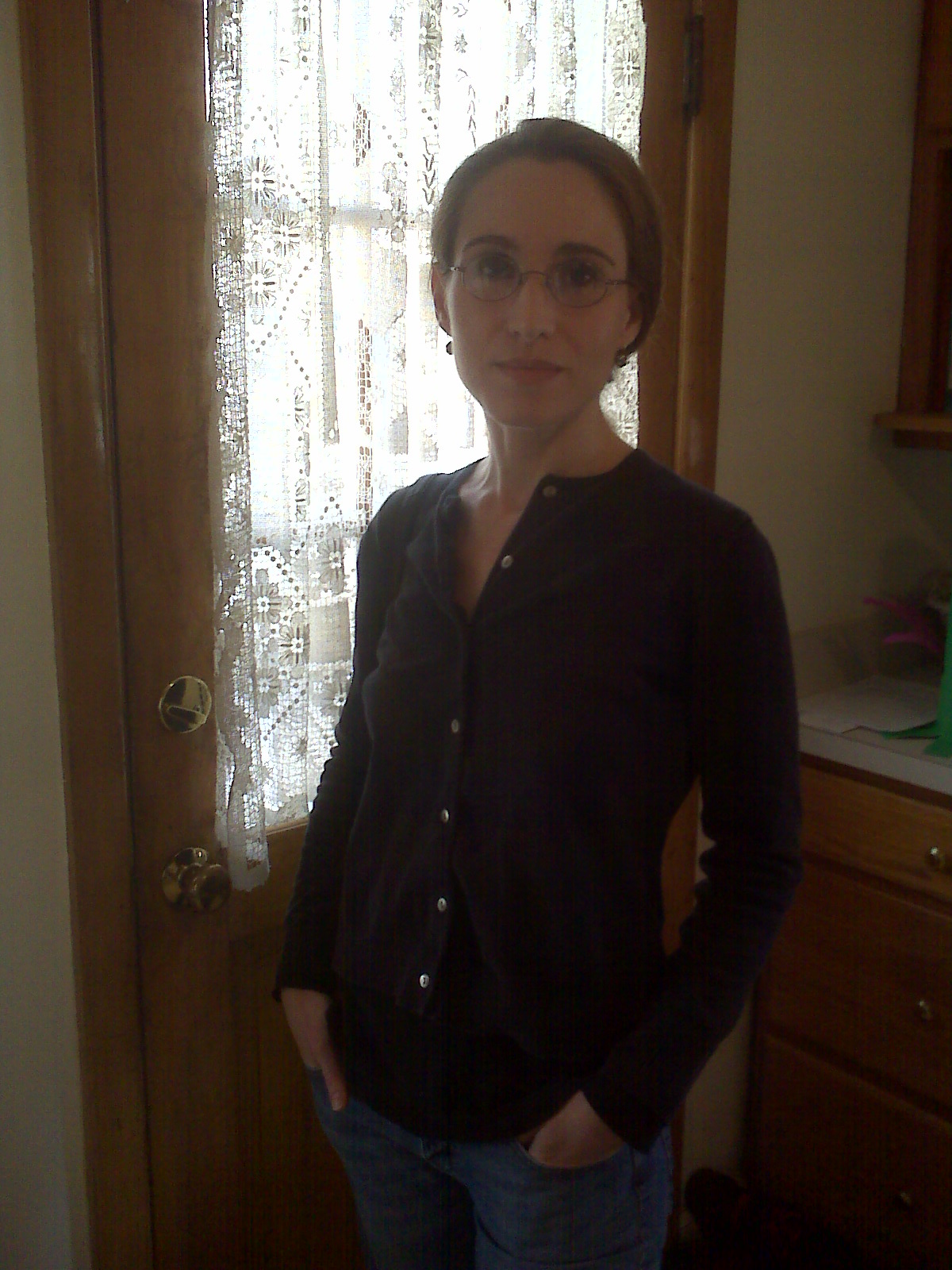
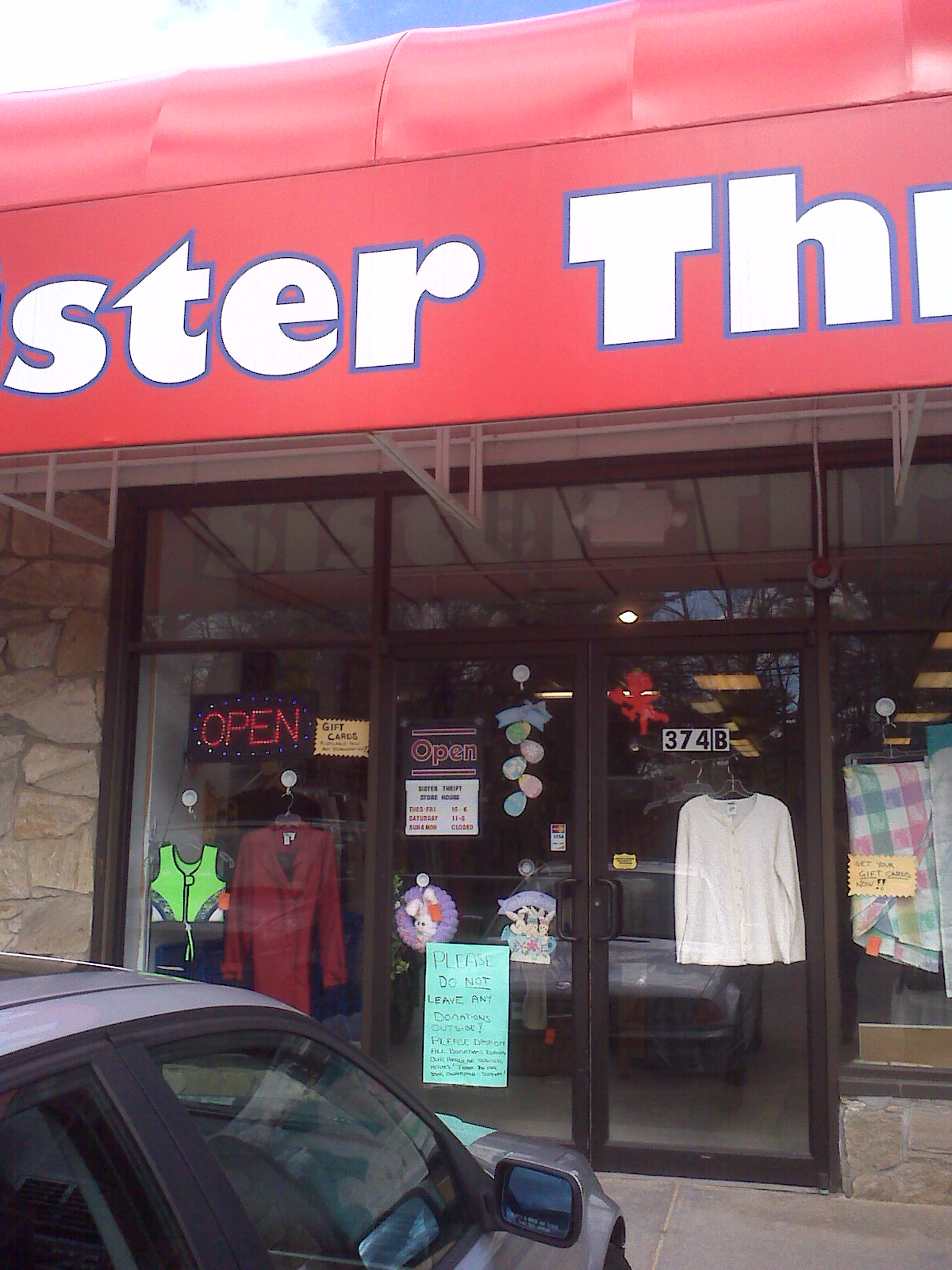
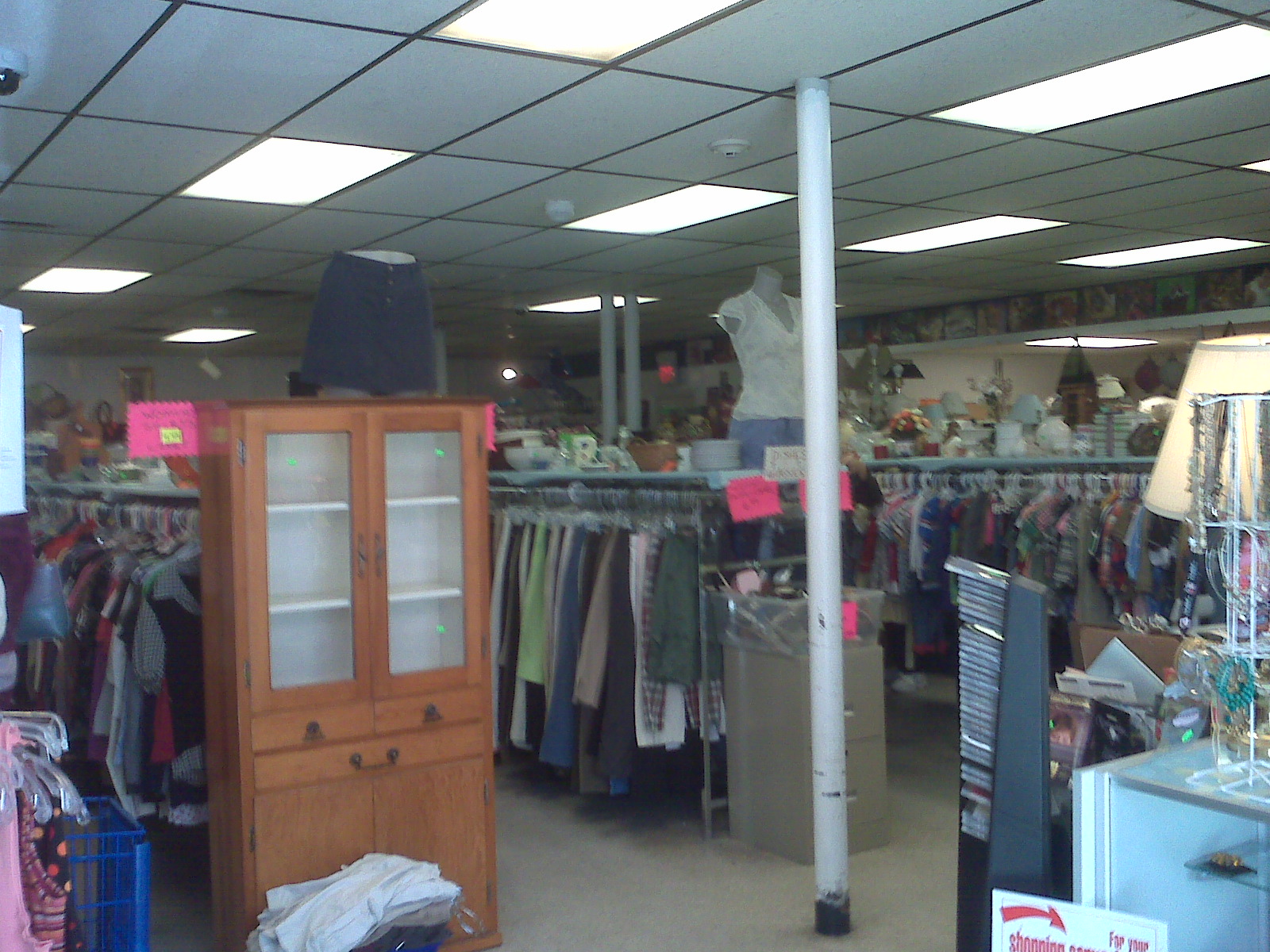
First, I decided to go to Sister Thrift, in Burlington. Here I am about to go thrift shopping, and the store itself.

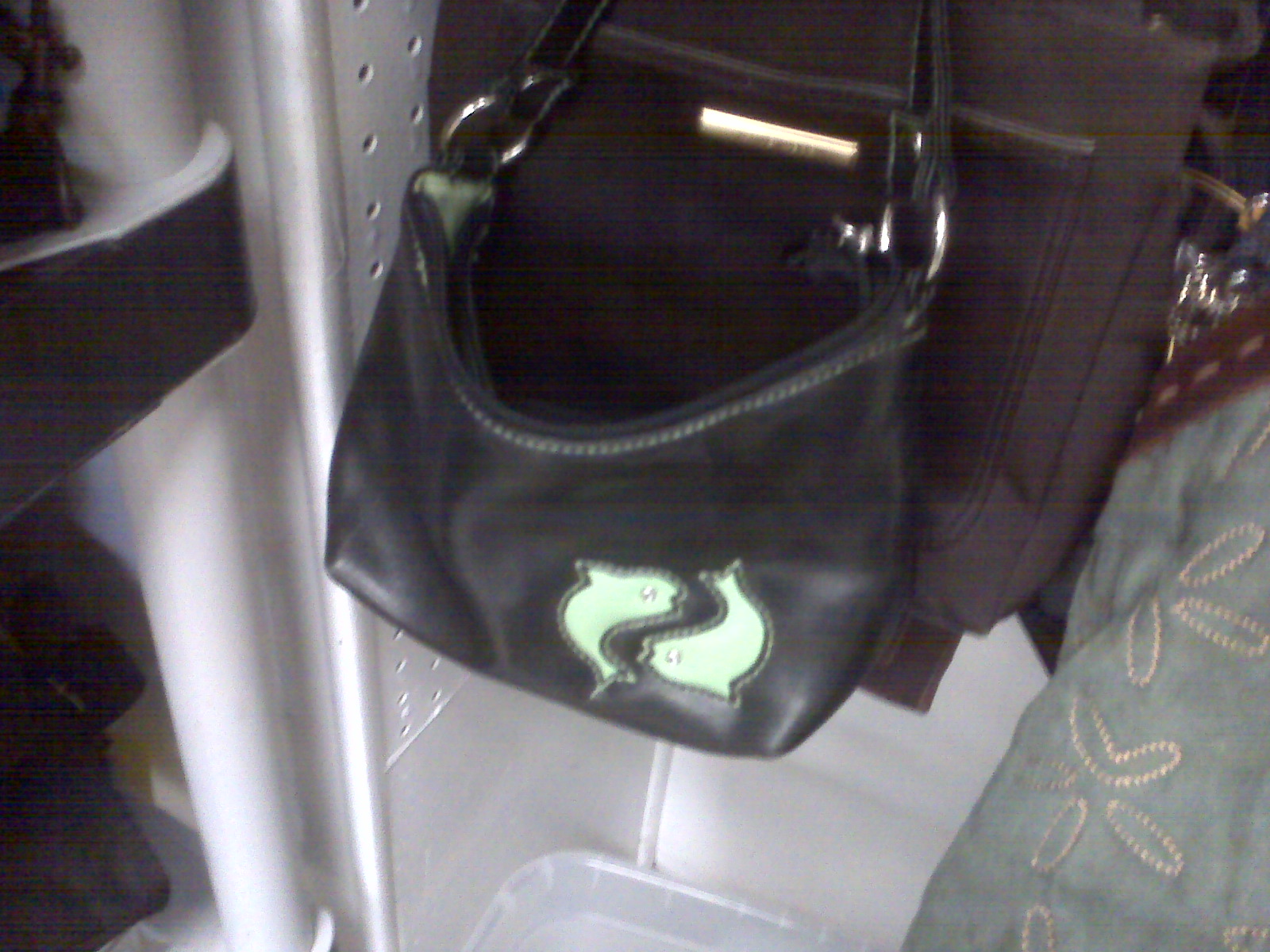
I know this may seem silly, but I decided to take some pictures of items I did not buy. (So if you want them, hurry and get them!) Here, on the right, is an adorable purse with two lime green fish on it. I have no idea who made it, and if I were the sort of person who liked cute purses, I would buy it at once. But I have no use for cute purses. My purses are always functional, black or brown, unless they’re evening purses. And then they’re usually something like silver mesh from the 1930s.

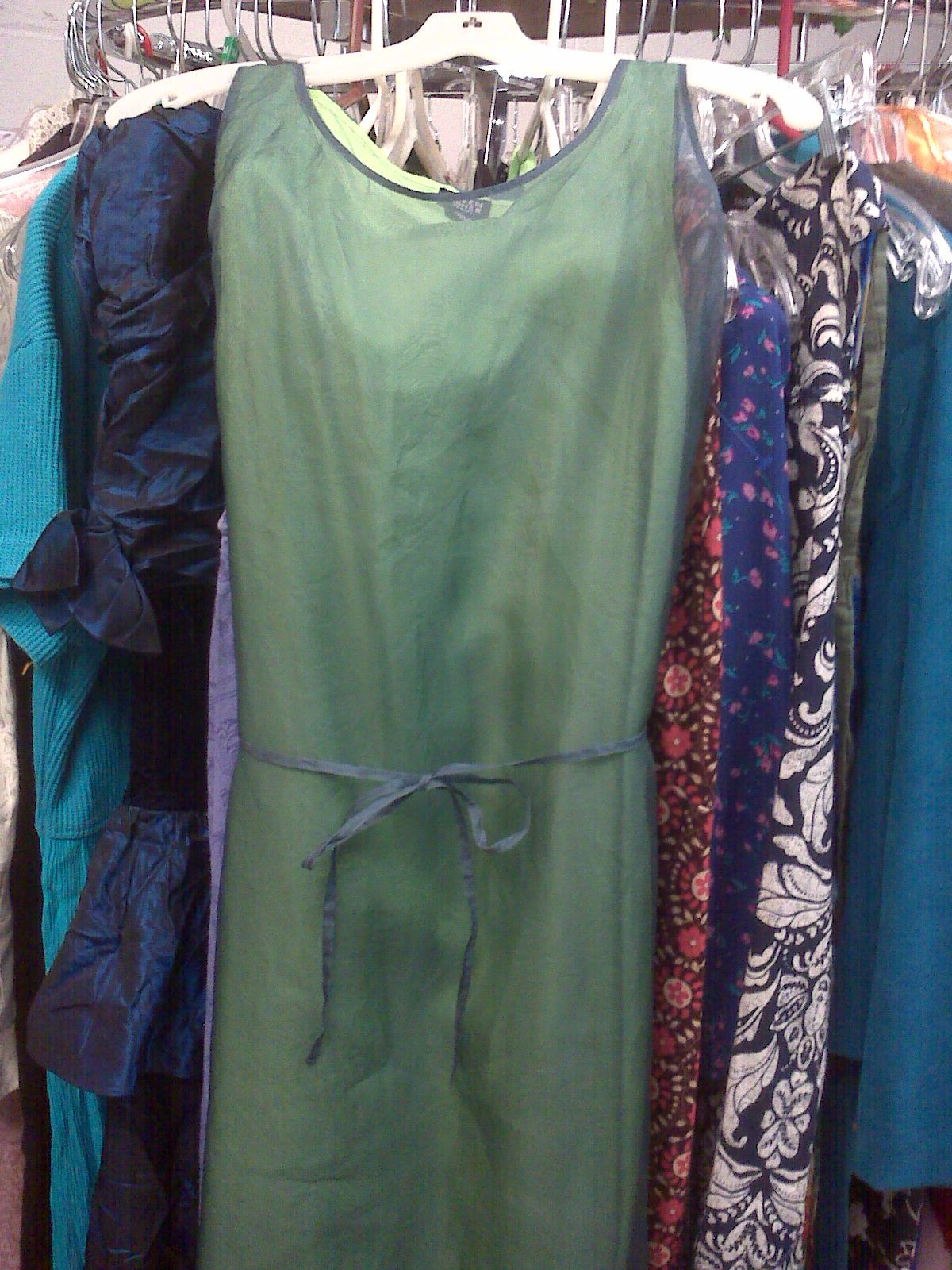
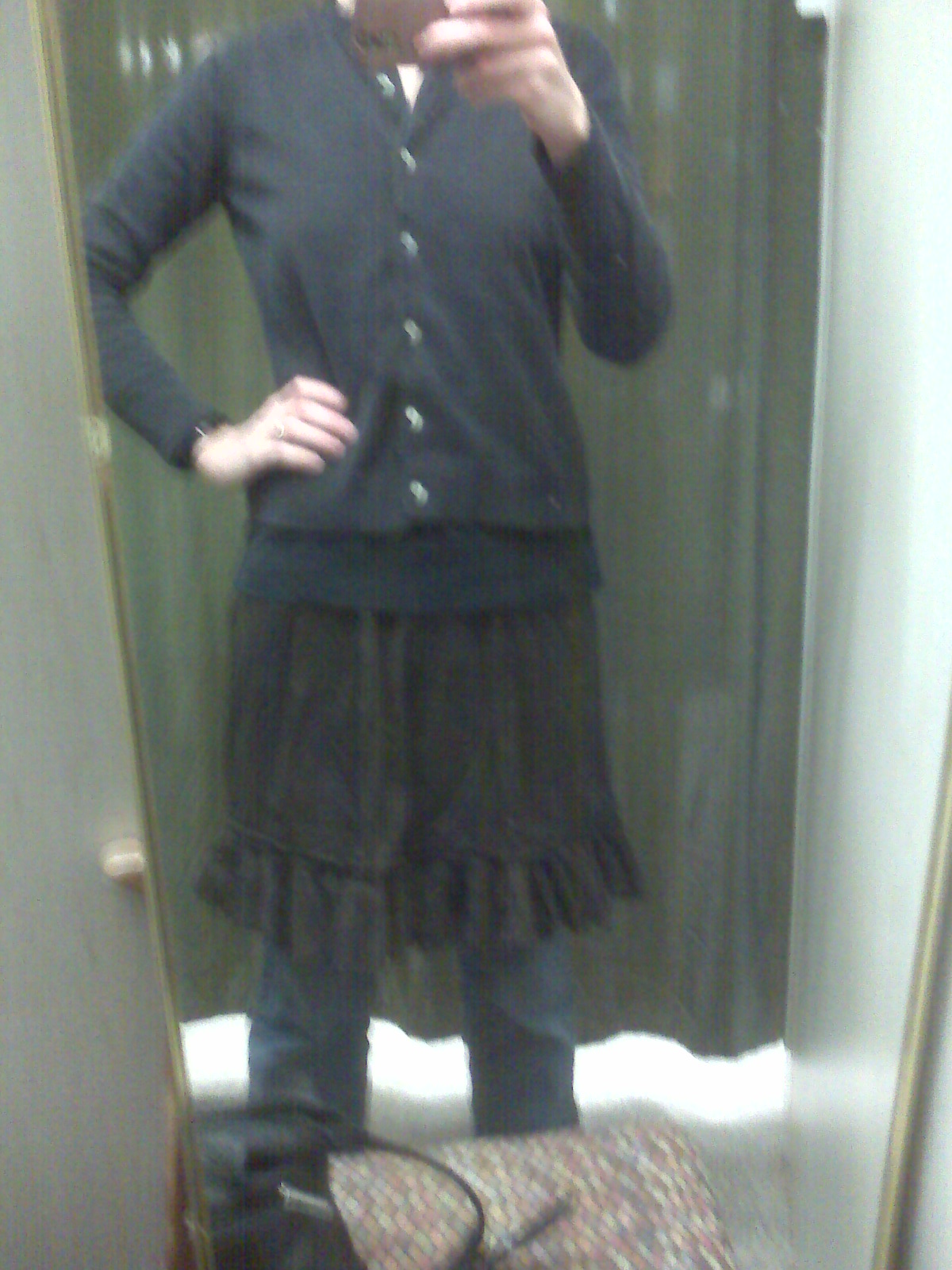
Here, on the left, is an Eileen Fisher dress that was lovely, lime green underdress and a blue overlay. But so not my colors. What I bought instead is the skirt on the right, an Ann Taylor cotton summer skirt. I hate trying things on, and usually I don’t bother because I know my size and I can tell visually whether something will fit. But this was a size 0P, and the P changes the sizing. (I don’t usually wear petites.) So I tried it on, and it fit just fine, even over jeans.

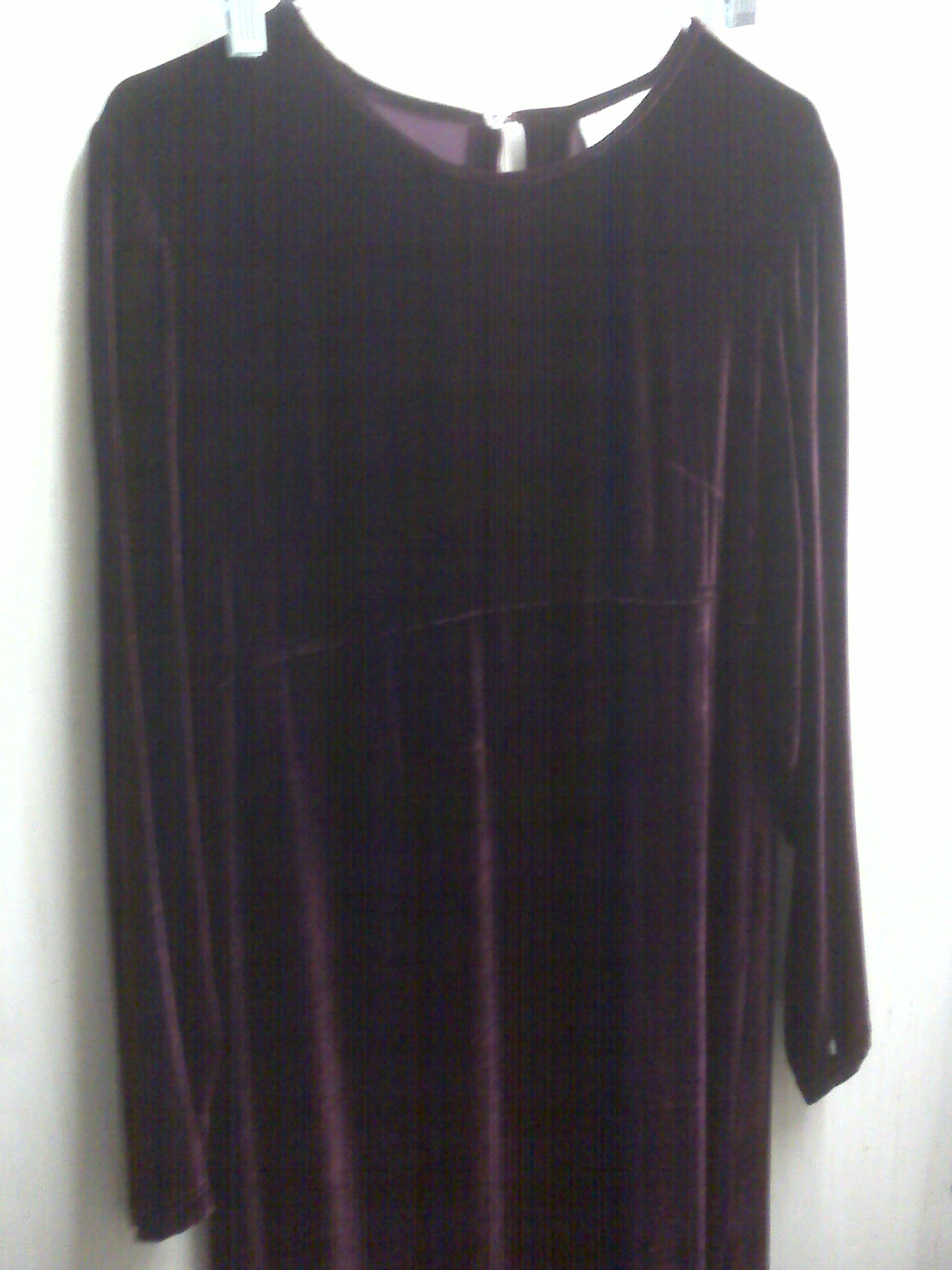
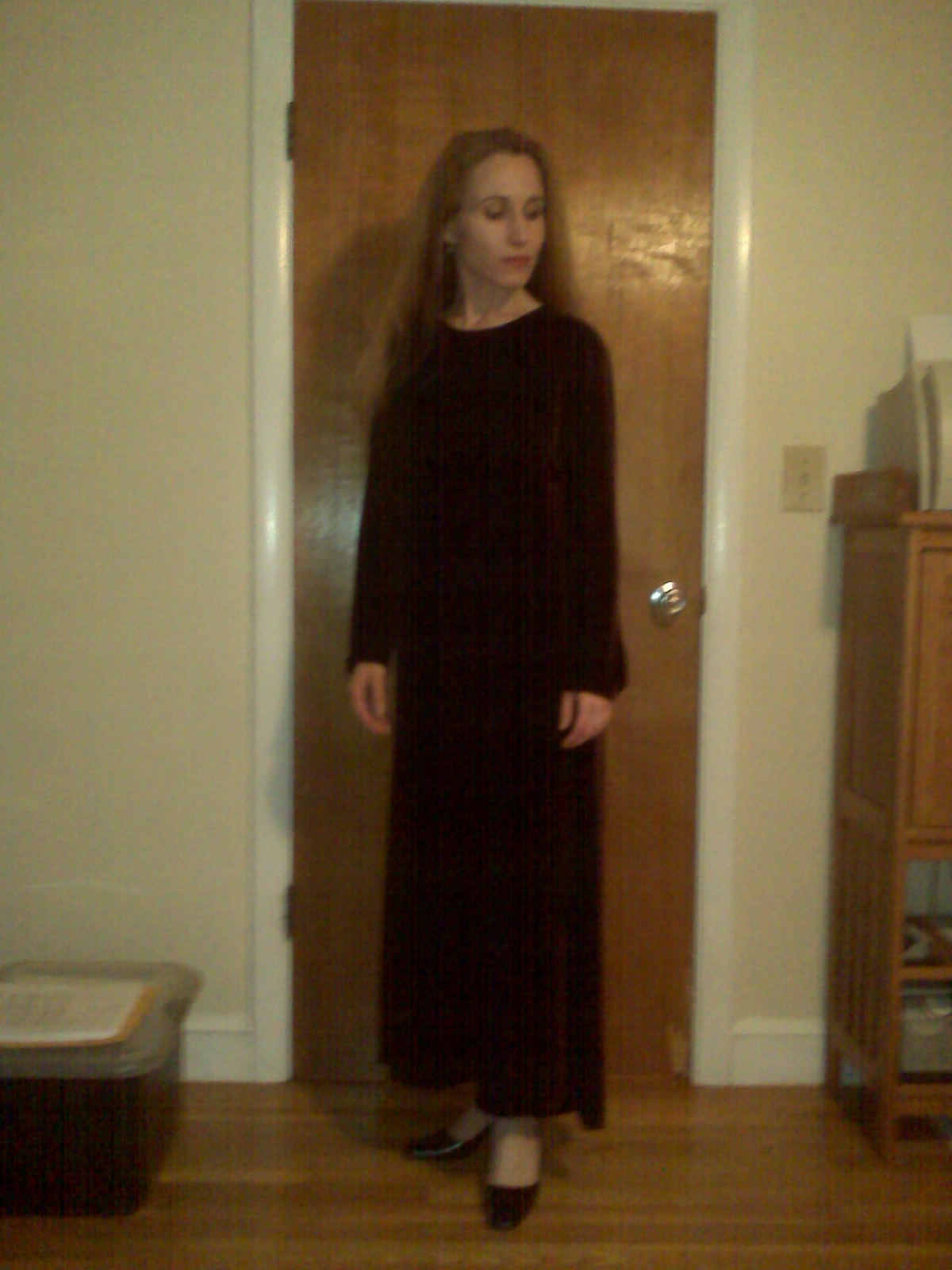
I didn’t even bother trying on this dress. It was loose enough that it was going to fit me no matter what. Here it is on the left on a hanger in the dressing room, and on the right on me, after being washed, at home. It’s a cascade of burgundy silk velvet, incredibly soft and comfortable, and I’m seriously considering it for an ICFA banquet dress. It’s in the final three. (I think it looks like something the pre-Raphaelites would paint.)

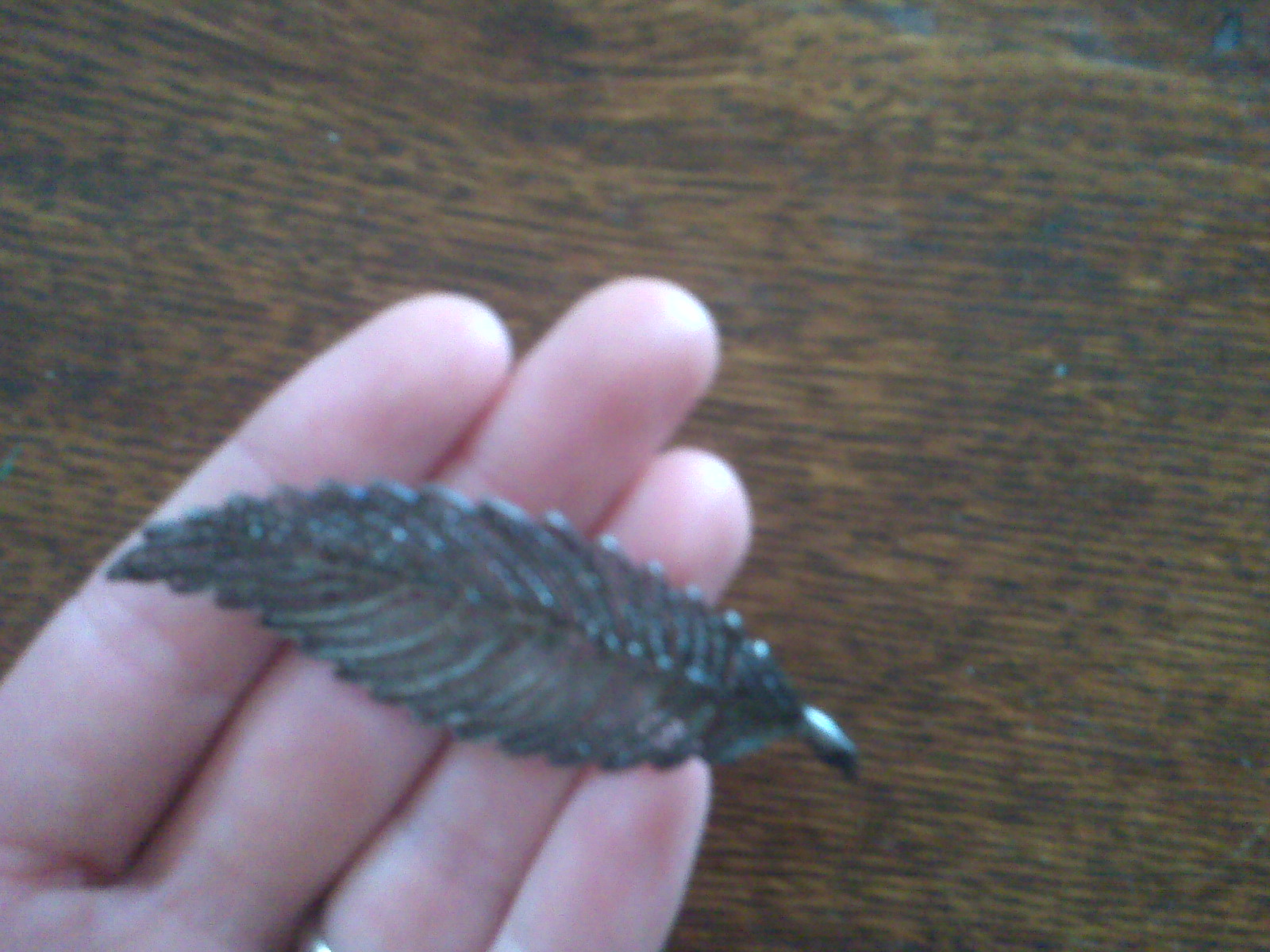
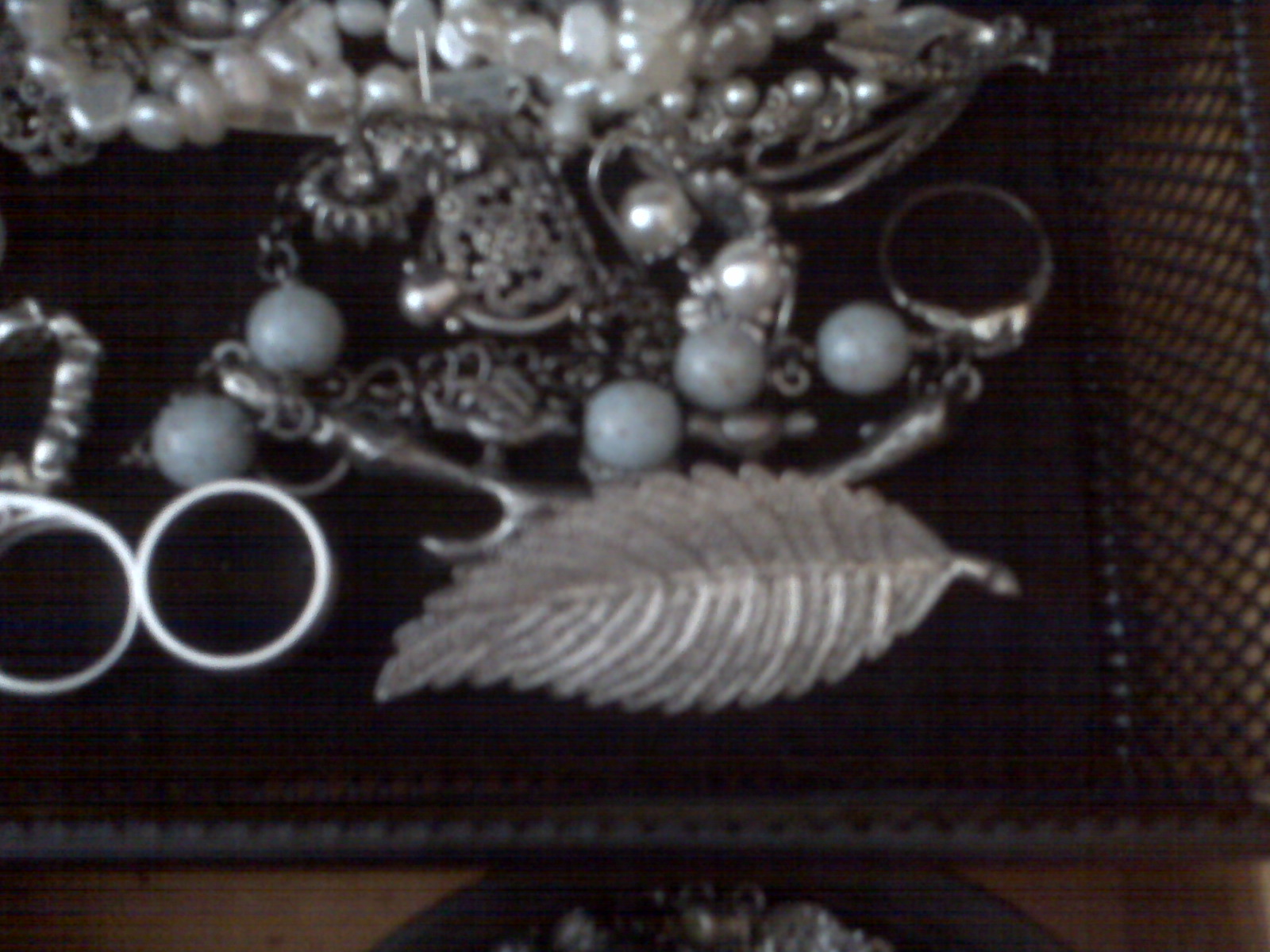
On my way out, I saw this silver leaf pin. It was pretty tarnished, but I knew it would clean up nicely. Here it is as I found it in the thrift store and after cleaning, with my other jewelry.

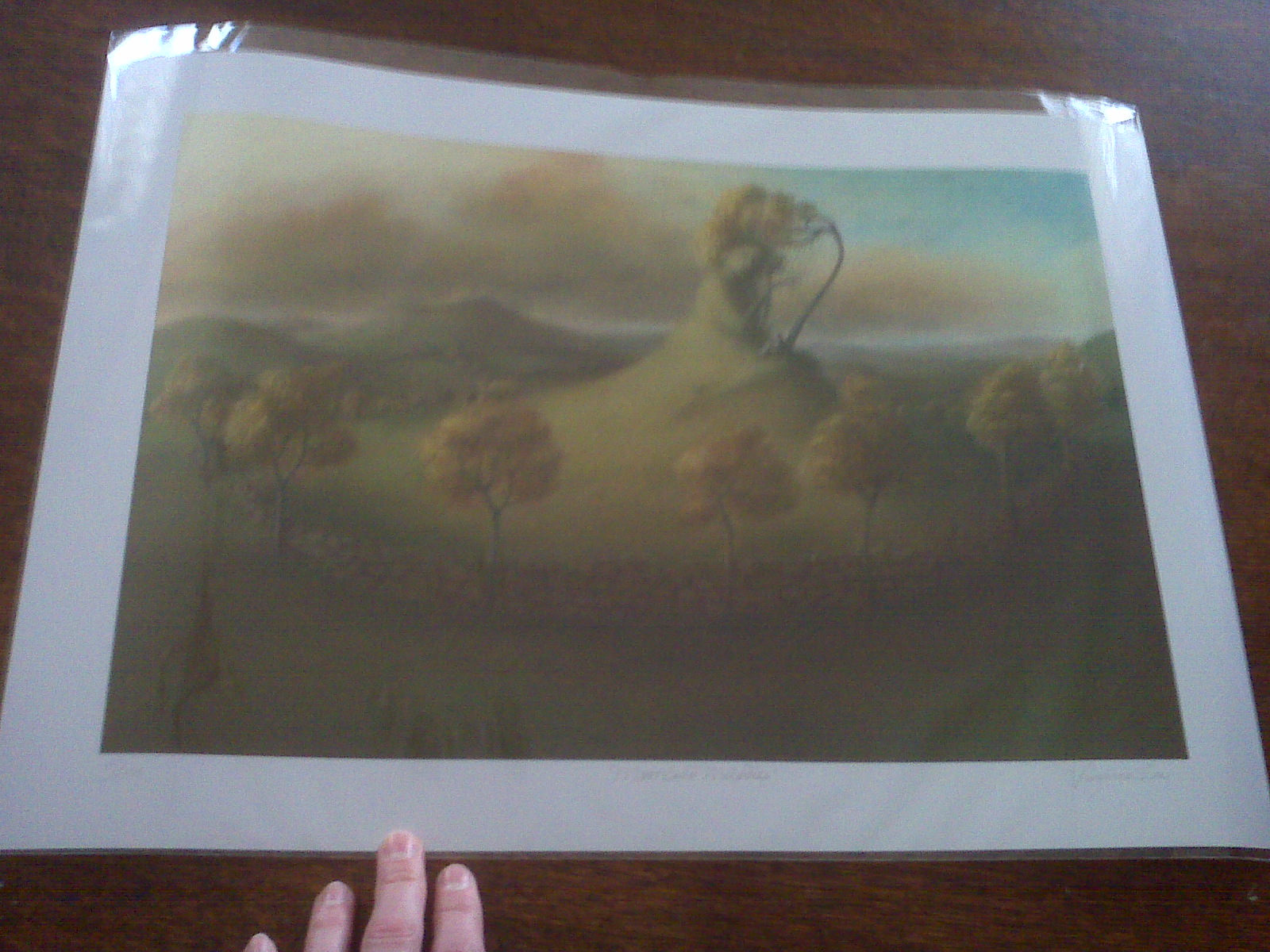
While I was gone, guess what had come in the mail! Virginia Lee’s Moorland Melodies. It’s absolutely gorgeous, and it’s currently in a portfolio flattening out, because of course it was mailed rolled up. I’m very excited to have it framed. And then I wrote and wrote and wrote. And then, before dinner, there was a family trip to Burdick’s in Harvard Square.

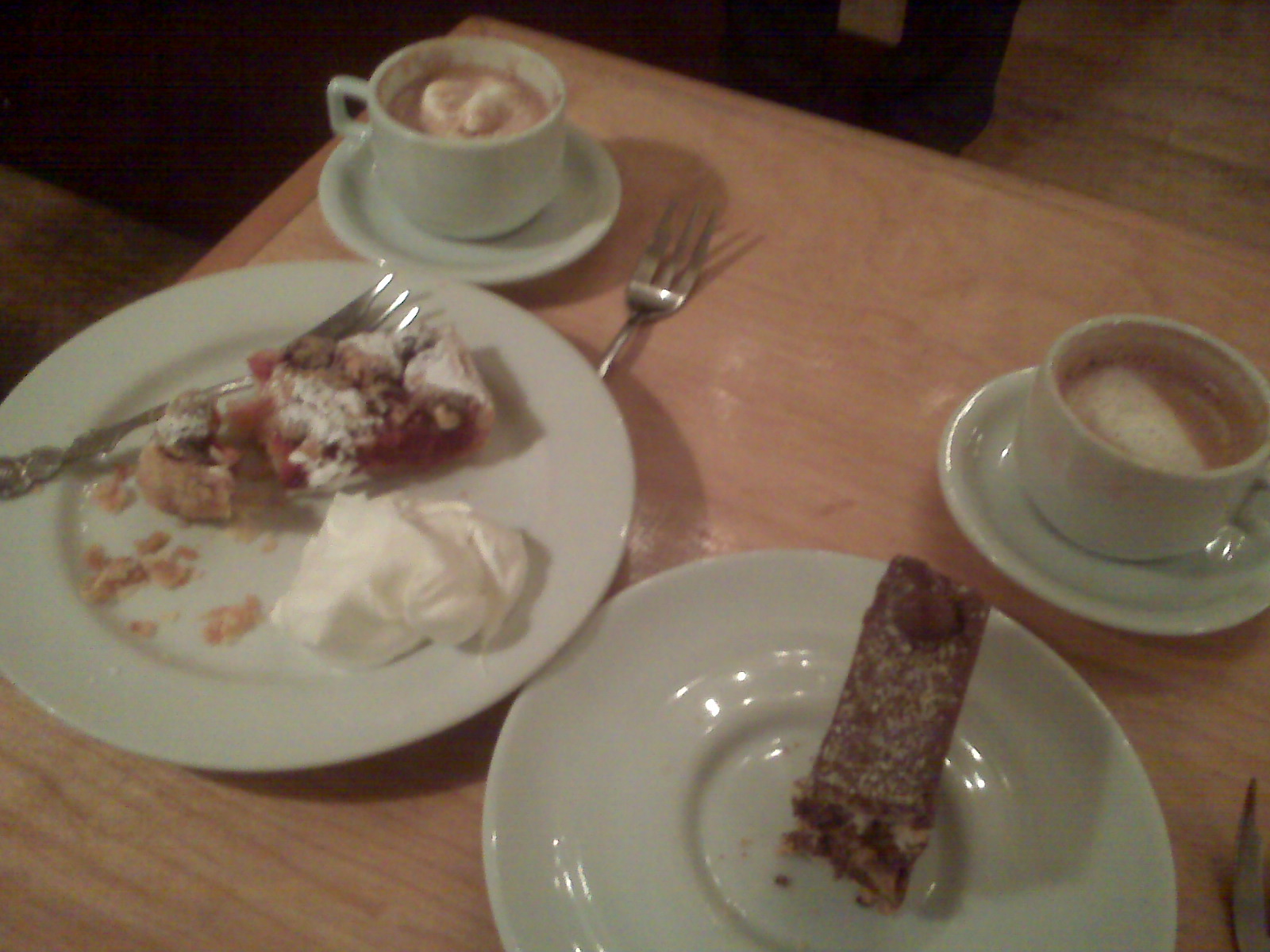
There were demi milk hot chocolates all around, which I think is the perfect drink and the perfect size. And shared pastries.

And that was it! Tonight I will be writing, writing, writing again. But it was nice to take at least some time off, to get out, see and taste new things. I need that, at least every once in a while.

Posted in Uncategorized | 2 Comments

Purity and Danger in Narnia

I know, it’s Friday, so I should write a chapter of the Shadowlands serial. But I’m so tired tonight that I can’t write fiction. I’m not sure why non-fiction is so much easier for me to write, but it is. (I used so three times in three sentences. That’s not something I would ever do in fiction. But in non-fiction, at least in a non-fictional blog post, it doesn’t seem to matter as much.)

What I want to do instead is start exploring an idea for my next Folkroots column. I’m thinking of writing about the various creatures in Narnia, where they come from in myths and legends. For example, Mr. Tumnus is clearly a faun or satyr. Where do fauns and satyrs come from? (Greek myth, right? But I’ll have to look that up and provide more information.)

There are two basic ideas I’m starting out with. In each column, I seem to have some sort of underlying argument. I certainly did in my column on “The Femme Fatale at the Fin-de-Siècle.” I think I had one in my column on “Vampires in Folklore and Literature” as well, which is coming out in the next issue. (It will be online as well as in Realms of Fantasy.) Here are my ideas:

1. The first idea is that, despite C.S. Lewis’ Christian message, the Narnia books show a deep love for the pagan mythological world on which Lewis was probably raised as a schoolboy. All boys of the upper classes were raised on the classics, back then, and you can see a love of that world in their works. I see the same impulse in Kenneth Grahame’s The Wind in the Willows, in the chapter called “The Piper at the Gates of Dawn.”

2. The second idea is that Lewis creates evil creatures in a particular way: they are creatures that break the boundary between the human and the non-human. Of course, he has all sorts of animals with human attributes, like Reepicheep, as well as half-humans, half-animals like Mr. Tumnus. But he tells us specifically, at one point, that you can’t trust things that look human and aren’t, or used to be human and are no longer. Humanity is a special attribute in the Narnia books, and anything that attempts to pass itself off as human is suspect. The most important example is Jadis, the White Witch. She would like you to think that she’s human, but she’s really from the line of Lilith, Adam’s first wife. And we are told that giants and dwarves, who are also uncomfortably human-looking, cannot be trusted.

This second idea came to me years ago after I had read part of Mary Douglas’ Purity and Danger. In that book, Douglas connects the prohibitions of Leviticus to the Genesis story. She says, if I remember correctly, that those prohibitions were about maintaining boundaries. Certain foods were prohibited because they fell outside the categories that had been established at the creation. For example, lobsters lived in the sea but did not have scales or fins. They did not fit into the category God had created for fish. Anything outside the categories that defined purity was taboo, unclean.

The creatures that torment Aslan before he is killed in The Lion, the Witch, and the Wardrobe are all unclean, minions of the White Witch who break that boundary between the human and not-human. And the human is important, because only sons of Adam and daughters of Eve are allowed to rule Narnia. Humanity equals purity, the ability to function as king or queen. In a way, that rule stands as a sort of bulwark against what is otherwise a jumble of contradictory mythological material. I mean, Lewis drew from all sorts of mythological systems without worrying too much about consistency. Greek centaurs and Norse dwarves? Santa Claus? I believe Tolkien criticized him for that.

So I have a basic idea for the Folkroots column (the mythological basis of the Narnia books), and two basic hypotheses about what Lewis was doing. That should be enough to start with, right?

Posted in Uncategorized | 5 Comments

Small Pleasures

I think a significant amount of one’s happiness depends on small pleasures. I was at home today, working on a story, and I thought I would document some of the small pleasures I gave myself throughout the day. Because I do rather insist on the small pleasures.

The first one was breakfast: oatmeal with raisins, and orange juice mixed with sparkling water. Eaten while I was reading my email and checking on blogs in the morning. I usually run out of the house, grabbing two slices of toast and two Baby Bell cheeses, so having a warm, slow breakfast feels luxurious.

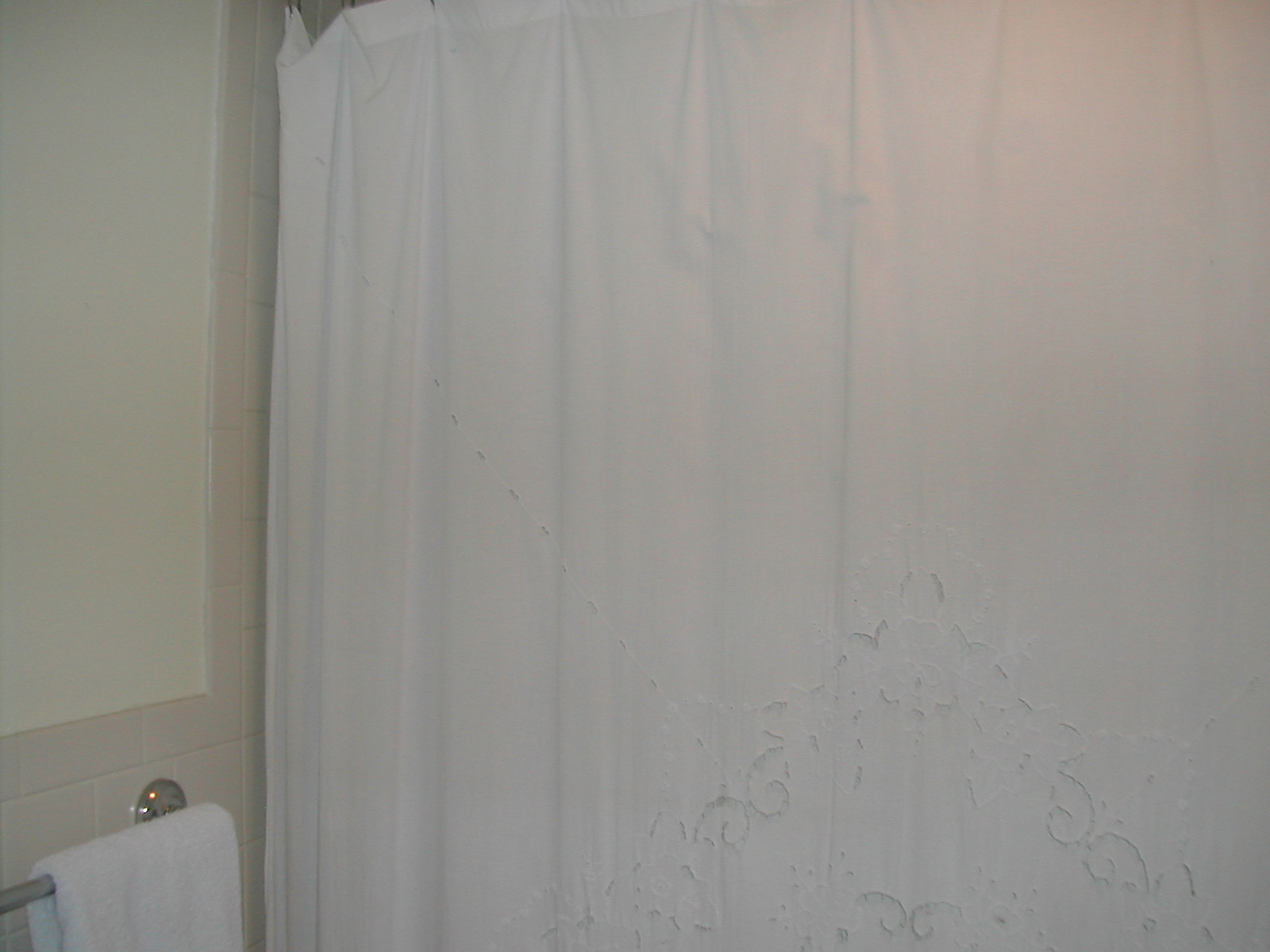
Yes, this picture is of a shower curtain.  It represents the pleasure of a hot shower. Is there a more luxurious pleasure than hot water? I think I’ve lamented, in the past, the claw-foot bathtub that we had in our Boston apartment. I will lament that bathtub until I get my next one, or until the day I die – whichever comes first.

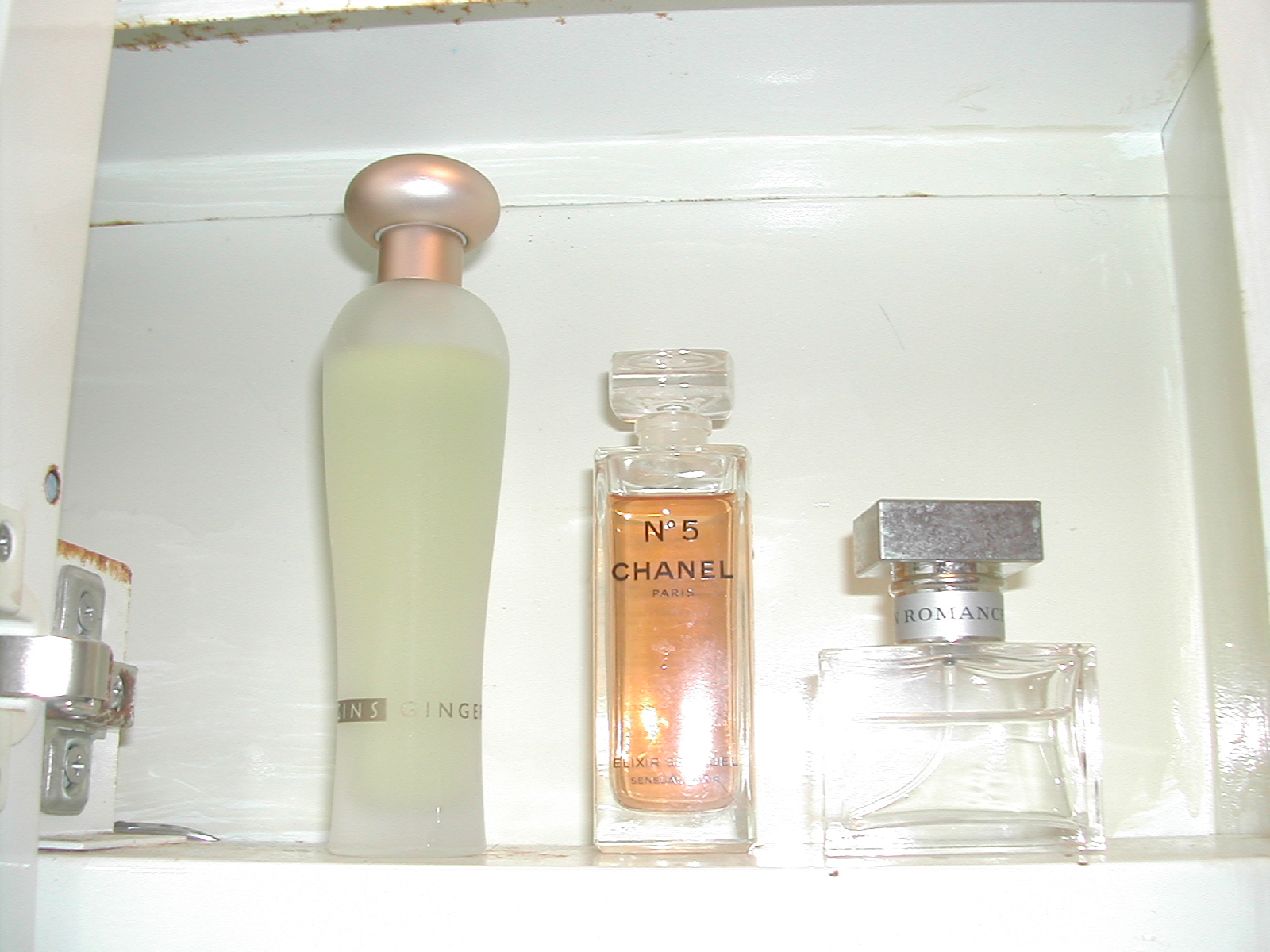
The third is perfume. These are Origins Ginger Essence, which is my everyday perfume, Chanel No. 5, which is my perfume for evenings at the opera or other gala events, and Ralph Lauren’s Romance, which I have to admit I’m not actually that fond of anymore. It’s rather strong, and I have to be in the mood for it.

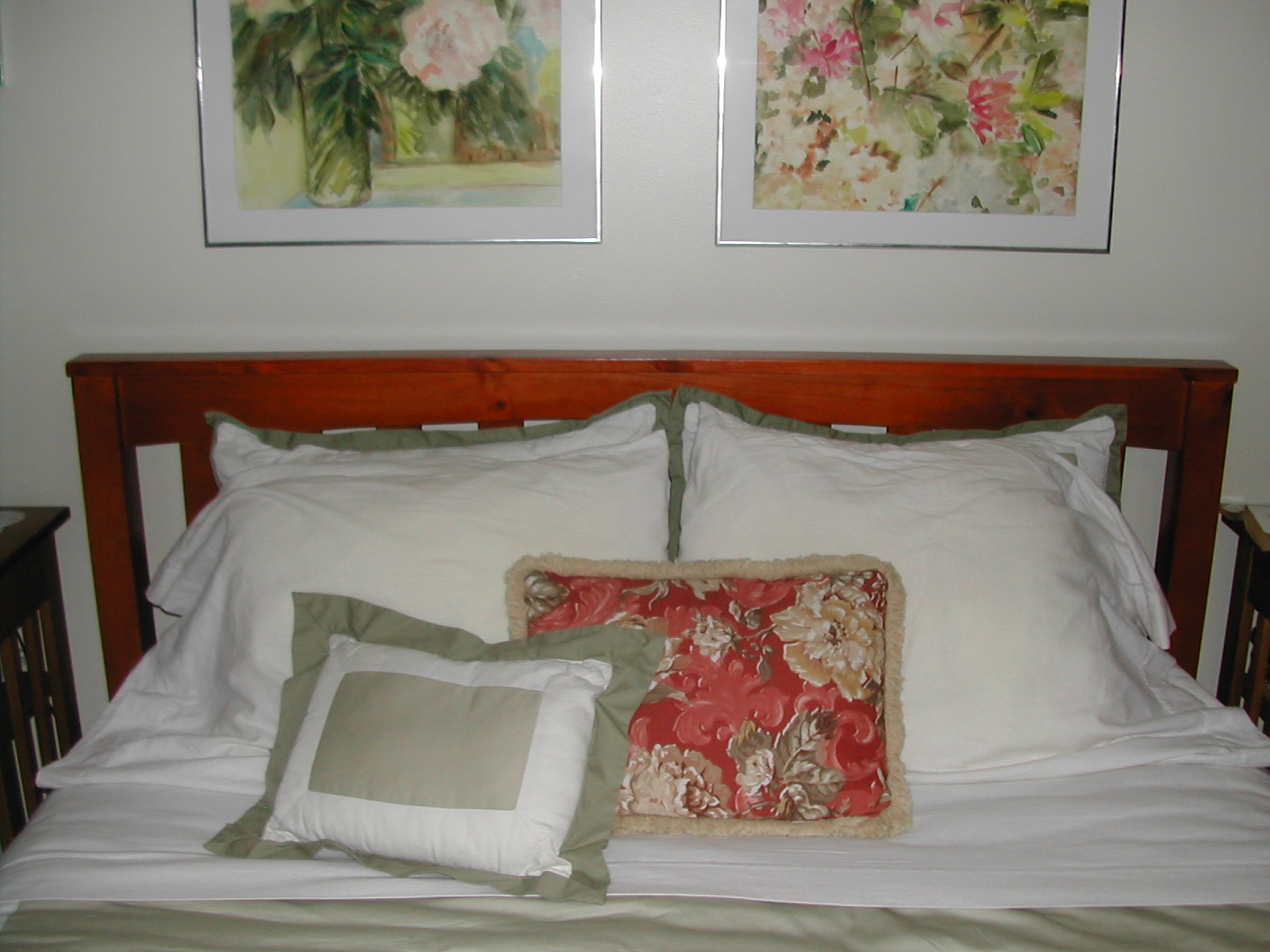
And then of course there’s the pleasure of a made bed. There’s something irritating about seeing an unmade bed. I have a hard time leaving beds unmade even in hotel rooms. Yes, that’s the pillow I bought at a thrift store. You can get a lot of small pleasures at thrift stores. (Let me just add that I never understood the importance of flannel sheets before I moved to Boston. Now, I so understand.)

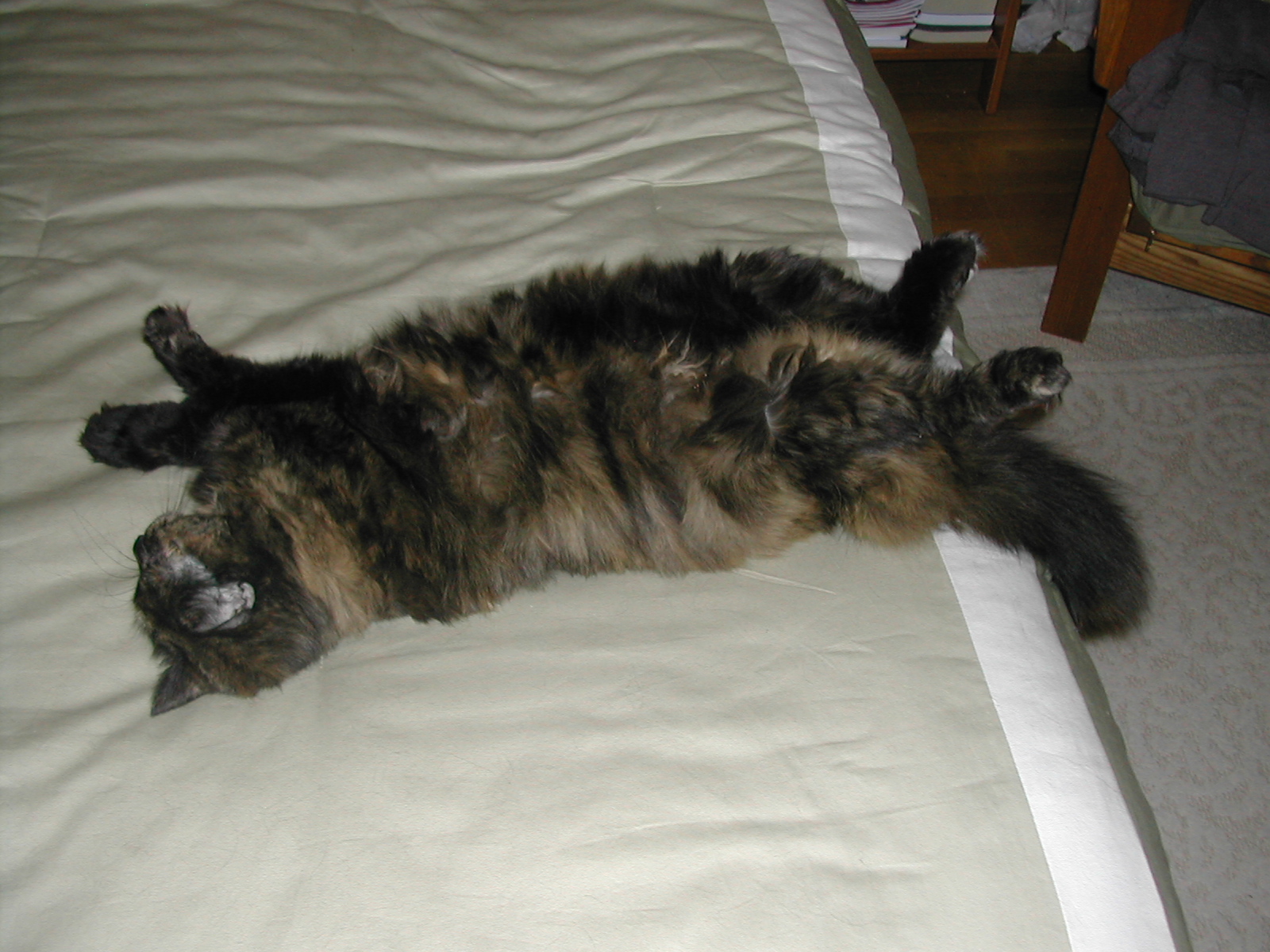
And here is the pleasure of a deeply ridiculous cat. But the cat has to be truly, deeply ridiculous. Cordelia fits the bill nicely. She makes such interesting shapes as she rolls around, and she shreds the paper on my desk so efficiently. And climbs on the printer. And throws up mice. (I’m starting to reconsider including her as a pleasure . . . And if she is a pleasure, I’m not sure she’s a small one!)

I took those pictures this morning. For lunch I had a cheese sandwich and an apple, but I didn’t take a picture of those, because how many pictures of food can I take, really? And I sat around in yoga pants and socks, writing a story, which qualifies as a great rather than a small pleasure. I don’t get to do that enough, nowadays.

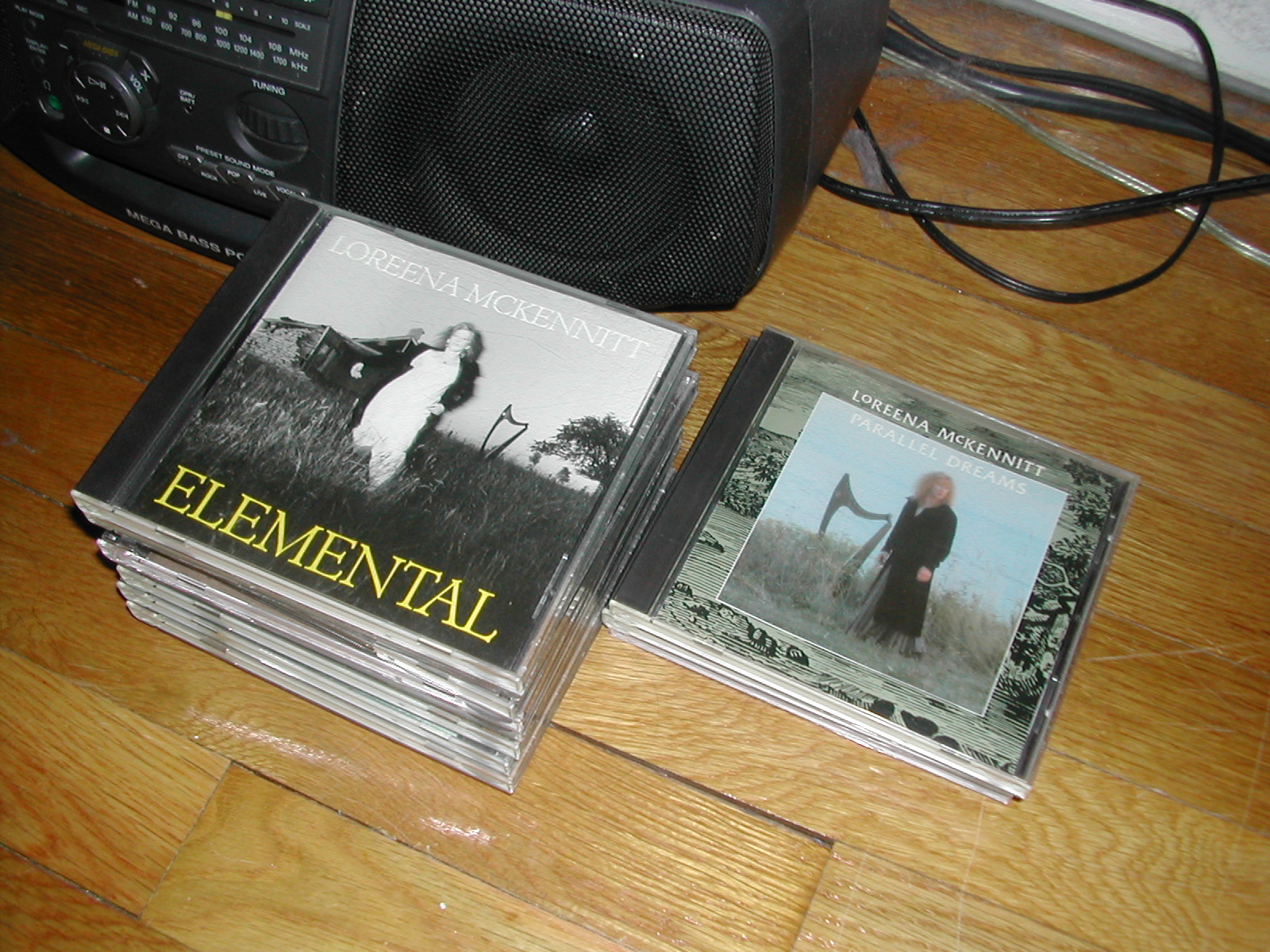
I spent most of the day writing and listened to Loreena McKennitt, because I can listen to her with only half my brain. The other half of my brain can continue working. I don’t know if that’s kind to Loreena McKennitt, who actually writes wonderful and not particularly ignorable music. But it is the perfect music to write to, at least for this story.

And finally, after I was done working on my story for the day, while I was writing this post, I had pomegranate chip coconut milk ice cream. Which is my new favorite.  No, I don’t eat every single meal sitting in front of my computer.  Ophelia and I had quite a nice dinner together (although while watching Pokémon).  But afterward, I did need to write today’s blog post.

This is a silly post, isn’t it? But I can’t write about what I’m working on, and I didn’t do anything else today, just write. So I thought I would at least write about the small pleasures that got me through a long day of work – through the great pleasure, but also the great effort, of writing.

And in general I recommend small pleasures, sprinkled judiciously throughout the day.  Just on principle, you know?

Posted in Uncategorized | 6 Comments

The Romantic Underground

Once upon a time, by which I mean in 2005, Jeff VanderMeer wrote an essay called “The Romantic Underground.”

It’s about an imaginary literary movement, or rather non-movement, because the defining characteristic of the Romantic Underground is that all of its supposed members denied both the existence of the movement and their own membership. I’m going to give you a few excerpts from the essay, although you’ll certainly want to read it for yourself. Jeff writes, “The first text identified with the Romantic Underground was Gustave Flaubert’s The Temptation of St. Anthony (1874), since claimed by the Symbolists.” However,

“Flaubert vehemently denied that his book was a Romantic Underground text; in fact, he denied the existence of the movement altogether. This has been a recurring refrain in the development of the Romantic Underground: every author identified as an adherent of the movement has denied this fact. No text has long remained part of the Romantic Underground because no living author has allowed it to for very long. (In some cases, another movement has made a better case in claiming a particular text, as well.)”

Other supposed members of the Romantic Underground include “Remy de Gourmont, Oscar Wilde, August Strindberg, Emile Zola, Alfred Kubin, Andre Breton, and Ronald Firbank.”

“Regardless, the enduring properties of the Romantic Underground remain a lack of membership by those authors cited and a general lack of identifying characteristics. At first, reading between the lines of critical texts from the period – some from the infamous Yellow Book – the Romantic Underground apparently formed a “loose umbrella” around certain authors, attempting to provide a critical and imaginative landscape in which creativity could have free, albeit vague, reign. Authors being skittish at best, most apparently saw the umbrella as more of a trap and escaped without their names ever being connected to rumors of a vast but secret literary organization dedicated to the antithesis of anything popular, tidy, or, indeed, logical.”

By this point in the essay, we’re getting a sense of what this movement might have looked like, if it had indeed existed. It would have included particular writers, ones I usually think of as turning away from nineteenth-century realism. It would have been “dedicated to the antithesis of anything popular, tidy, or, indeed, logical.” (I think I can detect, in Jeff’s essay, the influence of Jorge Luis Borges’ “Tlon, Uqbar, Orbis Tertius,” although the imaginary creation is a literary movement rather than a world.)  Jeff continues,

“Chroniclers of the Romantic Underground lost track of it during the 1920s and most of the 1930s, when the group may have decided to form ‘literary guerrilla cells of single individuals, with no communication between any two cells.’ It is supposed that Jorge Luis Borges joined the movement in the 1940s, but only a reference to ‘the underground romantic with his hopeless beret’ in his short story ‘The Immortal’ (1962) suggests any active participation. Fellow South Americans Pablo Neruda and Gabriel Garcia Marquez may have joined the movement in the 1960s and 1970s, but, again, both deny the existence of the movement and any participation in it – thus seeming to substantiate the rumors, since this behavior is all too indicative of Romantic Underground members.”

I find this, “literary guerrilla cells of single individuals, with no communication between any two cells,” incredibly funny. But again we’re getting a sense of who this non-movement might have included: Borges, Neruda, Marquez.

“In the 1980s, writers such as Rikki Ducornet, Angela Carter, Edward Whittemore, and Alasdair Gray all denied being part of the Romantic Underground movement. At this point, noted critic John Clute, in a footnote to a review of Iain M. Banks’ Culture novel Consider Phlebas (Interzone, 1987), wrote ‘The sole criteria of the so-called Romantic Underground movement? The conscription of idiosyncratic writers dragged without their consent to the renunciation block, where they proceed to deny entrapment in anything as clandestine and formless.'”

Which does rather sound like something John Clute might have written. Jeff goes on to consider whether the Interstitial Arts Foundation might have anything to do with the Romantic Underground, or whether New Weird might have. He strongly refutes both possibilities and concludes,

“Therefore, I reluctantly tip my hat to the cleverness of the Romantic Underground movement. It appears once again to have relegated itself to single-author cells, none of which are in communication with any other, similar cells. Although writers such as Angela Carter, Edward Whittemore, and Vladimir Nabokov, as well as such contemporary authors as Edward Carey, Peter Carey, A.S. Byatt, Thomas Pynchon, Martin Amis, Ursula K. LeGuin, Jack Dann, M. John Harrison (a double-agent), Kelly Link (another double-agent, working for both the Interstitial and RU), Paul Di Filippo, Zoran Zivkovic, Gene Wolfe, Jeffrey Ford, K.J. Bishop, Liz Williams, Nalo Hopkinson, Michael Cisco, Stepan Chapman, Rhys Hughes, Ian R. MacLeod, and myself have at one time or another been associated with the Romantic Underground movement – depending on the tone or theme or style of a particular book – none of us has ever admitted belonging to such a movement (either while living or after death). The Romantic Underground, it would appear, retains its crafty self-denying ability even one hundred years after its non-formation and the non-creation of its non-rules. In short, dear reader, the Romantic Underground, like many so-called movements, does not exist.”

Which is funny, right? I think it’s incredibly funny. But.

The term Jeff uses to describe these writers is in fact a useful term. It does describe something, a tendency in literature. It’s useful and interesting, at least for me, to look at Oscar Wilde and Gabriel Garcia Marquez and Rikki Ducornet and see an underlying – certainly not similarity in terms of themes or styles, but similar resistance to a realistic mode of representation. I’ve argued before on panels that fantasy is not a genre, but a pull in a particular direction, toward representing the world in a particular way. Jeff is largely describing writers who feel and respond to that pull.

James Owen has taken the Romantic Underground seriously. He has subtitled his blog, The Wonder Cabinet, “Words from the Romantic Underground.” And you know, I think he has a point. I think there is a way in which the writers and artists I know who are currently working in fantasy, and who are working in what we often call the literary and artistic mainstream but who incorporate elements of the fantastic into their writing and art, form a romantic underground. As Jeff describes it, “literary guerrilla cells of single individuals, with no communication between any two cells,” but nevertheless with some commonalities that we can point to, and that may be important.

I would have to think about what I mean when I say romantic underground, because my academic training is not in that era. But I think part of what I mean is a valuing of imaginative and fantastic, rather than realistic, representation. I think what we’re seeing in some parts of the artistic and literary world (and have been seeing for some time) is a response to modernism that is not necessarily post-modern, but something else. The New Weird was part of it, but it’s a larger and more general phenomenon. It’s a new romanticism, a new kind of romanticism. At least, I connect it with the romanticism of Coleridge and Shelley and Keats. And with whatever was happening at the fin-de-siècle, with Stevenson and Wilde.

And I’ll leave it there, because I can’t go much beyond that, at least not at the moment. I’m too tired, because I spent the day teaching and commenting on papers. The latter of which looked like this (in my office, of course):

And I still have a lot to do tonight. Mostly writing, because as I mentioned, I have a deadline before I go to ICFA next week. I’m looking forward to ICFA, and of course I’ll keep you updated while I’m there. I’ll even post pictures. But there are people I wish were coming this year who can’t make it, which is sad. (Hopefully next year.)

Posted in Uncategorized | 13 Comments