Alternative Values

Last night, I watched a PBS documentary called Emile Norman: By His Own Design. Here’s a description of the documentary from the PBS website:

Emile Norman: By His Own Design is a portrait of the self-taught California artist, Emile Norman, who worked with a passion for life, art, nature and freedom that inspired him through seven decades of a changing art scene and turbulent times for a gay man in America.

“The film tells the story of Norman’s independent spirit – how it developed from his early days on a walnut ranch in the San Gabriel Valley and brought him success in New York City in the 1940s and 1950s. This independent spirit later gave him the confidence to leave the New York art scene and find freedom in Big Sur, where he and Brooks Clement, his partner of 30 years, built a house and created a haven for a circle of friends that still grows today.”

Norman’s art is beautiful, but for me, not particularly ground-breaking. What interested me more was the life he and his partner built for themselves in Big Sur. In the mountains, above the sea, they built a house for themselves: an artist’s house, in which everything was carefully chosen and finely crafted. It’s a beautiful house, filled with art. Norman worked there until he died two years ago, at the age of 91. He and his partner lived through difficult times for gay men, and in Big Sur, they created a sort of alternative society, a place where they could live and create.

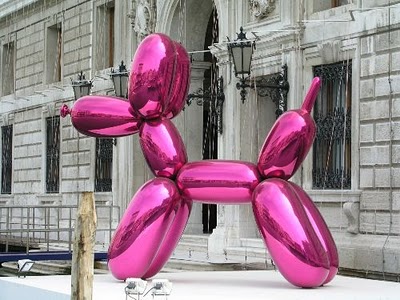
There are artists who fit perfectly into the societies they live in. Jeff Koons comes to mind, but you probably already know what I think of Koons and his mylar bunnies. Most artists end up having to create a space for themselves, as Norman did. To create their own societies, with alternative values.

What do I mean by alternative values?

We live in a society that values certain things: popularity, wealth, ease. That’s why we have Wal-Mart, fast-food restaurants, hybrid tea roses, The Da Vinci Code, and Las Vegas. It does not particularly value beauty, difficulty, or insight. The artists I like best value those things, and teach us to value those things.

For that reason, I do not like Jeff Koons:
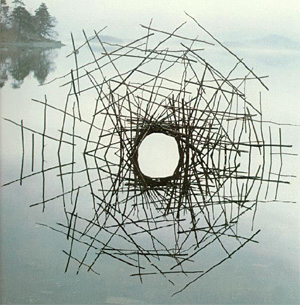
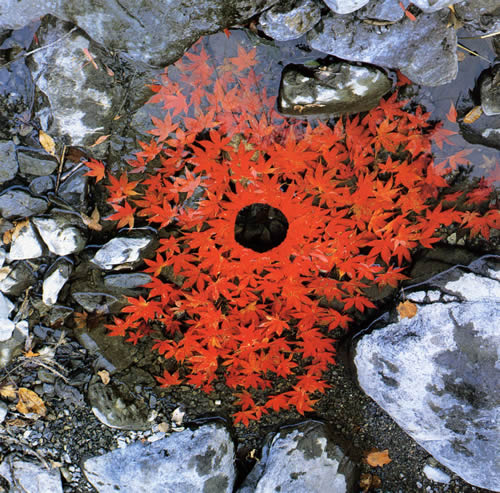
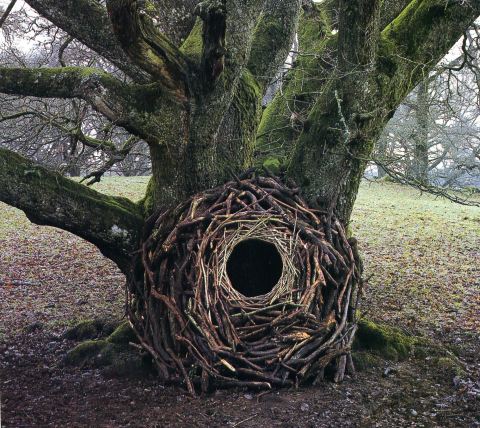
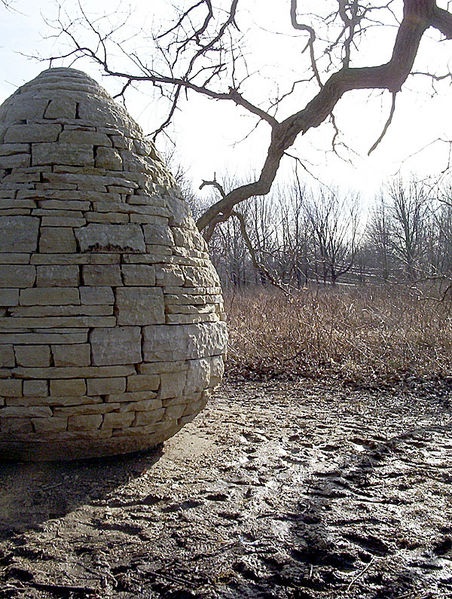
And do I like Andy Goldsworthy:

So I guess the question is, how can I become more like the artists I admire? How can I live a life that honors those values: beauty, difficulty, insight? I suppose one way is by doing what Emile Norman did: creating my own space. I don’t have acres in Big Sur, of course. But in the life I live, even in a city like Boston, I can make choices that reflect those values. I can fill my life with beautiful things, and try to create beauty myself. I can choose what is difficult and challenging, rather than what is easy. I can go to the theater, or to see dance. I can spend time in art museums. (I can even try to understand what in the world anyone sees in Jeff Koons.) And I can, in my own art, try to do what challenges me, to embody my own insights and hope they allow others to see the world in new ways.

Although I live in the world, I don’t have to accept its values. I can choose my own. That was the lesson of the documentary, for me. It does make life more difficult, not to accept what everyone else accepts. (Because you know me, there I’ll be, standing in front of a bottle of shampoo, asking myself, does this embody my values?) But it also makes life more interesting. Instead of Wal-Mart, fast-food restaurants, hybrid tea roses, The Da Vinci Code, and Las Vegas, I choose old hardware stores, corner cafés, Virginia Woolf, and Paris. And someday I will have a garden filled with old roses, albas and gallicas and damasks, with the scents I love.

Perhaps some day, I’ll have the sort of space Norman had, with a house that is completely individual. Until then, I’ll continue to stand in front of the shampoo bottle, interrogating it. And reading Woolf.

(And, if we live our own lives according to alternative values, perhaps we can eventually change the values of the society we live in.  If enough of us insist on equal rights regardless of sexual orientation, on the importance of environmental protection, of all the things we decide we stand for and live by, perhaps the world will begin to look different.  That’s part of what we do as artists, isn’t it?  Change the world?)

Posted in Uncategorized | 5 Comments

Preparing for Odyssey

Oh my! It’s been such a busy week.

Today, I’ve actually had some time to rest, for the first time in about a week. And you know, it feels nice. I’m eating dinner as I type: a chicken hot dog on a whole-wheat bun with ketchup, a sliced heirloom tomato with salt, and steamed carrots, broccoli, and cauliflower with a pat of Olivio, which is a butter and olive oil blend. And for dessert, blueberries and low-fat cottage cheese.

Over the weekend, I went back to the antiques shop and bought two more pretty things. The first is this collection of shelves:

I love mission-style shelves and stands, and these were particularly inexpensive. And I saw these silver salt and pepper shakers and thought they would be useful:

And today, in the mail, I got a bottle of my new favorite perfume: Pacifica’s Persian Rose, which does actually smell like a garden of old roses.

I mention all this because, as I’ve said before, pretty things get me through. Whether it’s a dinner that makes me feel healthy and balanced, or furniture that makes my space neater. Or the scent of roses, which is the freshest, sweetest scent I know.

As you know, I spent this week fixing things, but I think they’re all fixed now. So I can go on to the other things I need to do, which are preparing to teach at Odyssey and writing my Folkroots column. Although I’ve actually been working on both of those things for a while now. I just need to pull what I’ve already done together.

My talk for Odyssey will be on Finding Your Voice(s), and I’m thinking about that phrase in three ways. First, in terms of your identity as a writer: what is your individual voice? Second, in terms of the voices in your stories: the voices of your various characters, as well as your narrator who is, of course, a character as well. And third, in terms of what you can give voice to. Can you give voice to something that has no voice? Can you make an ant speak? How about a city? I think of these three ways of talking about voice as focused on identity, versatility, and diversity.

Obviously, I’m not going to give you the substance of my Odyssey talk. You’d have to come to Odyssey for that. But I thought it might interest you to know what I’m going to talk about and how I’m thinking about it. And of course I’m going to have exercises. For example, I’m going to ask the students to compare passages written in different voices and try to figure out how those voices are produced. How does the author create the voice in the passage? What sorts of words does he or she use? What sorts of punctuation? So we’re going to get deeply into technique, I think.

I’ve been thinking about voice myself, lately. I started thinking about it last summer at the Sycamore Hill writing workshop, where a fellow writer said, about a story I had written, “I wanted a Theodora Goss story.” And I had to think about what that meant, what a Theodora Goss story was. Particularly what that meant to me, to write like myself. I realized that there was a Theodora Goss story, that there was a voice that was authentically mine. Which didn’t mean that I couldn’t experiment with other voices, of course. But underneath every voice I wrote in, there had to be something of myself. The story as a whole had to be a Theodora Goss story, had to belong to me. I realized that I wanted to write in my voice. (Friends of mine have used pseudonyms, but somehow, I don’t think I ever will.)
So I’m looking forward to typing up the notes I’ve made for my talk, which is what I’ll do tonight. And then I have some critiquing of student stories to do. And Thursday I’ll drive up and meet the students. I don’t think it even entered my head, when I went to Odyssey a decade ago, that someday I would be teaching there myself.

I’ve also been thinking about teaching, just in general. I’ve wondered, in the past, if I would ever give up teaching to just write, if I had the opportunity. And you know what? I don’t think I would. I love teaching too much. It gets me out, gets me talking. And I love working with students.

I have so much to do this summer, but I know that I’m heading to a place where I’ll have incredible opportunities: to write, to teach, to be the self I want and was meant to be. I’ll leave you with one thought: what I’ve been working on all this week is the Secret Project. And I think it’s going to be beautiful. I can’t wait to tell you more about it.

Posted in Uncategorized | 2 Comments

Four Things

First, I saw the video, and it reminded me of the painting, which reminded me of the photograph and a poem I had written some time ago. But I’ll give you the poem first, then the photograph, then the painting, then finally the video. This is the way my mind works, most of the time: the world becomes a continual series of links.

The River’s Daughter

She walks into the river
with rocks in her pockets,
and the water closes around her
like the arms of a father
saying hello, my lovely one,
hello.  How good to see you,
who have been away so long.

The eddying water
tugs at the hem of her dress,
and the small fish gather
to nibble at her ankles, at her knees,
to nibble at her fingers. They will find
it all edible, soon, except
the carnelian ring by which her sister
will identify her.

Bits of paper
float away, the ink now indecipherable.
Was it a note? Notes for another
novel she might have written, something new
to confound the critics?  They will cling
to the reeds, will be used
to line ducks’ nests, with the down
from their breasts. The water
rises to her shoulders, lifts her hair.

Come, says the river.  I have been waiting
for you so long, my daughter.
Dress yourself in my weeds,
let your hair float in my pools,
take on my attributes: fluidity,
the eternal, elemental flow
for which you always longed.
They are found not in words but water.
You will never find them while you breathe,
not in the world of air.

And she opens her mouth
one final time, saying father,
I am here.

Posted in Uncategorized | 3 Comments

Exquisite Things

My poor old camera is on its last tripod (get it? on its last legs, but cameras don’t have legs? sorry, it’s been that sort of day). And I still haven’t had time to figure out my lovely new camera yet. So I apologize in advance for the quality of these pictures.

As you know, I’ve been having one of those weeks. I’ve been working very hard, and today I needed a break. So first, I went to downtown Lexington. I bought myself some ice cream, a scoop of heath bar with extra heath bar pieces on top. With my ice cream, I climbed up to my favorite place in Lexington: the top of the bell tower hill. There’s a large rock up there, and from it you can see all around. Here I am on the rock, in weekend working gear (an old v-neck shirt, an old pair of jeans that are two sizes too large but very comfortable, Keds with no shoe laces because they broke and I’ve never bothered buying new ones).  Looking somewhat ragged, but then I was up until 3:00 a.m. last night, reviewing and correcting.

Then, I went to the library, which was having a book sale, and bought two books: an anthology of ghost stories edited by Roald Dahl and On Writing by Stephen King. I’ve actually read very little by Stephen King, having been traumatized by Pet Sematary when I was a teenager. Also, he writes in a style that I’ve never found all that compelling, although perhaps I haven’t read the right stories. But I’m interested in what he has to say about writing.

And then I drove in the other direction, toward the town of Bedford, to an antiques store that had been recommended to me. There, I bought three things. The first was a small silver pin. I’m afraid the photograph did not come out well, and also the silver is tarnished and needs cleaning, but it has a glass insert at the center with a design of oranges and leaves. It’s a pretty thing for me to wear on sweaters.

The second was a green Wedgewood plate. I have several pieces of green Wedgewood, and this is a nice addition to my collection.

The third was a Chinese snuff bottle with a reverse-painted design of rabbits on both sides. I love Chinese snuff bottles, and I liked this design.

Part of what makes these things exquisite is their size: the pin is about an inch and a half long, the plate is about four and a half inches in diameter, and the snuff bottle is about three inches tall.  (And I’m 5’4″, but I wasn’t counting myself among the exquisite things.  Not looking as ragged as I did today.  And I don’t know yet whether the books will be exquisite, but I rather think not.)

Then I came home again, to get to work once more. But just as it was getting dark, I walked around the yard, and in one corner I saw three white bellflowers. No one would see them where they were, in the middle of a lilac bush, so I cut them and put them into a vase. They are now sitting on a corner of my writing desk. I think I’ll take a picture of them with my cell phone – right now – so you can see what they look like. They’re exquisite too.  (That’s my glass of lime fizzy water, on a coaster I sewed ages ago from cotton scraps.)

And here I am, back home, getting back to work, reviewing and correcting. I’ll probably be up until 3:00 a.m. again tonight.

I’ve been thinking a lot about meaning – what is the meaning of my life, and why do I keep going, even when the going is as tough as it has been lately? Sometimes, to be honest, I’m not entirely sure. It’s at those times that exquisite things can help. That I can look to my right, as I’m looking now, and see bellflowers in a vase, and think – yes, lovely. And that gets me through, at least a little while longer.

Posted in Uncategorized | 2 Comments

On Darkness

When I was a teenager, I read Flowers in the Attic. You probably did too, if you are female and around my age. I don’t remember much about it, although every once in a while I see a movie version as I’m clicking past some obscure TV channel.

It’s a story of cruelty and abuse, rather crudely written. About four children who are locked in an attic, almost starved. And the beautiful older girl has her hair cut off. That’s about all I remember.

I mention this book because of the recent controversy about darkness in Young Adult fiction. We’re living on internet time now, and that controversy has already blown over, although I suspect it will occur again. These things are cyclical. But no one is seriously going to suggest censoring Young Adult fiction, or negatively affect a genre that is so profitable. After all, we live in a capitalist system. The market decides.

While it was still going on, serious and thoughtful people suggested that there was something troubling about offering such dark images to teenagers, that they genuinely thought such images did harm. And I thought back to my own reading of Flowers in the Attic. Did it harm me?

I have a complicated answer to that question that begins, yes. Reading that book, and others equally dark, put images into my head that I have sometimes wished weren’t there. Such books do have the ability to familiarize us with cruelty. They do make our minds cruder. There is a way in which they desensitize us to the real cruelty of the world by familiarizing us with representations of it.

But – and I write this as someone who kept her hands over her eyes during most of Nightmare on Elm Street and never went to see a horror movie again – for me, they acted like a vaccine. I was a sensitive child, and in a way, reading about darkness prepared me for the much greater cruelty and crudity of the world. Reality is worse than almost anything we can write. Growing up involved learning that lesson. Learning not to be shocked by the photographs of Abu Ghraib. It may sound silly to say that Flowers in the Attic prepared me for that. But the book did prepare me for the idea that people could behave in that way. The lesson shocked me then – the reality still does. But it was something I had to learn, to function in the world. (Which, after all, doesn’t actually work a whole lot like Little Women.)

There was another kind of literary darkness that I also read, and that affected me differently. It was the darkness of Edgar Allan Poe, of H.P. Lovecraft. The darkness in which Hyde roams London, in which Dracula feeds. That was not crude, ordinary human darkness, but a deeper psychological and metaphysical darkness – and it was profoundly freeing. Its message was – there is something more than this, more than ordinary human society, with its rules and judgements. There are monsters.

In a way, the second kind of darkness offered an alternative to and even combated the first. In the first, darkness was crude, meaningless. Just the way the world was. In the second, darkness offered something. In the darkness, you could fight monsters, or become one. Becoming a monster, in particular, meant escaping from ordinary human meaninglessness. Monsters didn’t wait for Godot. (They had probably eaten Godot in the first place.)

The second kind of darkness was valuable not because it conferred immunity, but because it provided the possibility of freedom. At least, I felt it was freeing. By the time I finished college, I had read every Poe and Lovecraft story I could find. The Lovecraft stories were more difficult to find back then. They had not yet entered the cultural mainstream. When you saw Campus Crusade for Cthulhu stickers and Miskatonic University sweatshirts, you smiled because you knew – here was one of your tribe.

I feel as though I should come to some sort of grand conclusion about darkness in literature, about the two types of darkness I’ve written about here. But I don’t have one. Today has felt dark, and I’m grateful that there’s a hand in that darkness, as monstrous as my own, to clasp. Perhaps my grand conclusion is this: I recently bought a new edition of At the Mountains of Madness, which I have not read for a long time.  I think it will be the next book I keep on my bedside table, to read before I go to sleep each night. I will find it profoundly reassuring. And when I read the news, about what the crude, ordinary, human monsters are doing, I will think about how wonderful it would be if they could be eaten by Shoggoths. And I will look out into the darkness of the night, and feel that there is so much more than these human lives we live, this human world we have created for ourselves. There are wonders in the darkness.

Monstrous Dora:

Posted in Uncategorized | 8 Comments

Dreaming of Fairyland

One of my favorite poems is W.B. Yeats’ “The Man Who Dreamed of Fairyland.”

He stood among a crowd at Dromahair;
His heart hung all upon a silken dress,
And he had known at last some tenderness,
Before earth took him to her stony care;
But when a man poured fish into a pile,
It seemed they raised their little silver heads,
And sang what gold morning or evening sheds
Upon a woven world-forgotten isle
Where people love beside the ravelled seas;
That Time can never mar a lover’s vows
Under that woven changeless roof of boughs:
The singing shook him out of his new ease.

I have fallen terribly behind. As you know, I was sick for two weeks. And then my computer was sick, and now I have so much to do, and so I haven’t been able to get to the smaller things at all, like answering emails or responding to comments on this blog. I’ve had to focus on the larger things: responding to copyedits on the Secret Project, preparing to teach at Odyssey, writing my next Folkroots column, and revising my dissertation. All very large things.

“His heart hung all upon a silken dress, / And he had known at last some tenderness”: he found love, mortal love, but all the silver fish sang of Fairyland, “Where people love beside the ravelled seas; / That Time can never mar a lover’s vows.” Where love is immortal.

He wandered by the sands of Lissadell;
His mind ran all on money cares and fears,
And he had known at last some prudent years
Before they heaped his grave under the hill;
But while he passed before a plashy place,
A lug-worm with its grey and muddy mouth
Sang that somewhere to north or west or south
There dwelt a gay, exulting, gentle race
Under the golden or the silver skies;
That if a dancer stayed his hungry foot
It seemed the sun and moon were in the fruit:
And at that singing he was no more wise.

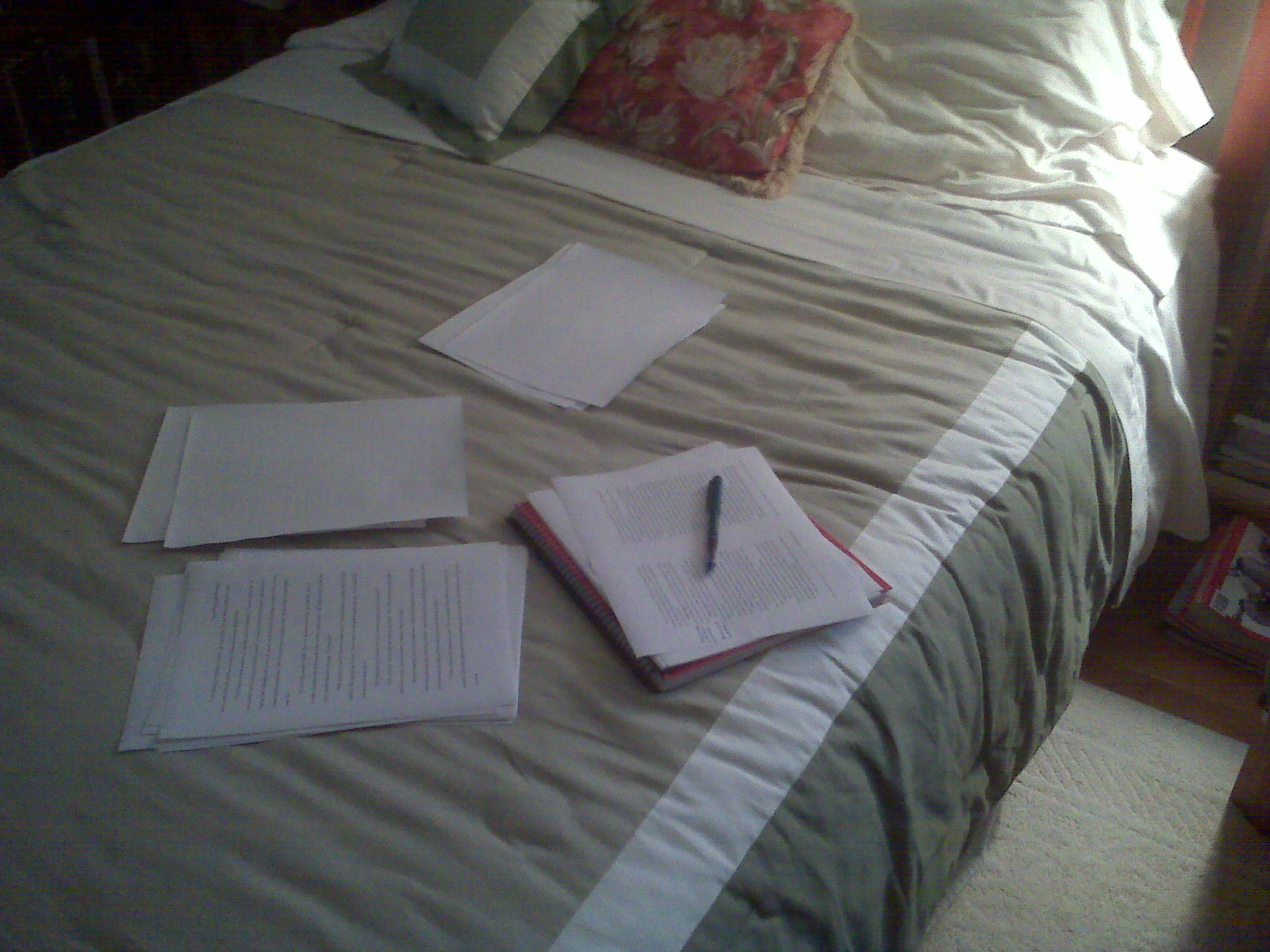
Some people work at desks, and when I type, I do it at a desk, of course. But so much of my work I do wherever I have space. So, for example, the work I was doing today, I spread out on my bed. (Today: responding to copyedits.)

When I write, I often do it on the bed, lying on my stomach and leaning on one elbow. Or leaning back against the headboard, with the notebook propped on my knees. Or in my chair, with the notebook on one broad arm. (It’s a mission-style chair, the arms are very broad).

“His mind ran all on money cares and fears, / And he had known at last some prudent years”: so finally he wasn’t worrying about money, as we all do. At last he had some savings, but the lug-worm (which, by the way, is large marine worm of the phylum Annelida) sang of a place where there are no money cares and fears at all. Where value is calculated otherwise.

He mused beside the well of Scanavin,
He mused upon his mockers: without fail
His sudden vengeance were a country tale,
When earthy night had drunk his body in;
But one small knot-grass growing by the pool
Sang where – unnecessary cruel voice –
Old silence bids its chosen race rejoice,
Whatever ravelled waters rise and fall
Or stormy silver fret the gold of day,
And midnight there enfold them like a fleece
And lover there by lover be at peace.
The tale drove his fine angry mood away.

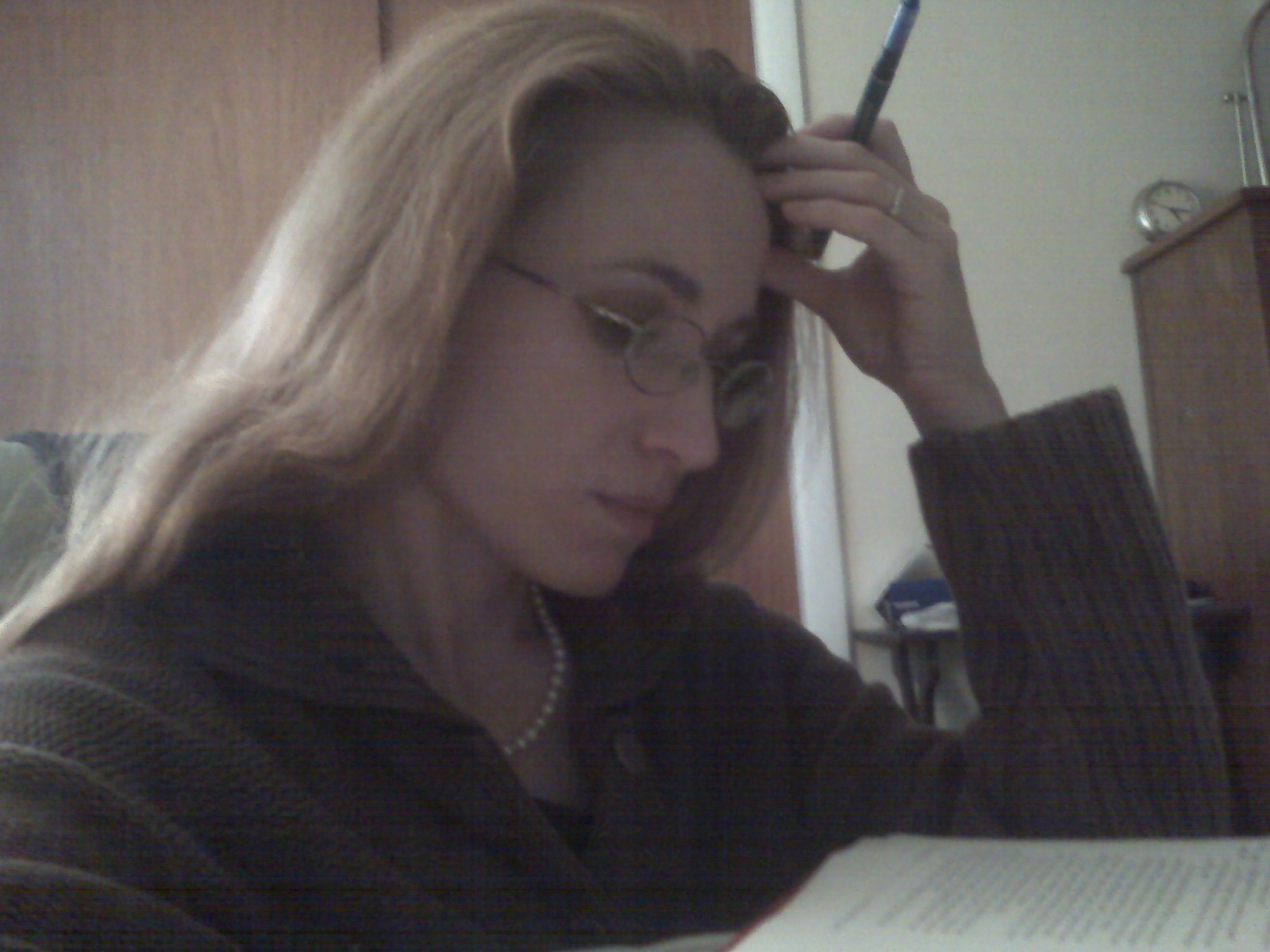
Today, I spread the copyedits out on the bed and knelt beside it, as though it were a low table. Which looked rather like this, except that this is obviously posed, because I’m holding the pen in my left hand (for effect). I’m right handed, so usually I would be holding it in my right hand. But I couldn’t get a picture from that direction that wasn’t backlit.  This is me in full working mode: glasses, comfortable sweater.

Don’t I look all pensive and writerly? Which was I today, the writer in the world, thinking of cares and fears, or the writer dreaming of Fairyland? Because of course the poem is really about being a poet, a writer. It’s about what the writer experiences, living that half-and-half life I described. A writer dreams of Fairyland, and that dream transforms ordinary life. Sometimes it makes ordinary life difficult to live.

He slept under the hill of Lugnagall;
And might have known at last unhaunted sleep
Under that cold and vapour-turbaned steep,
Now that the earth had taken man and all:
Did not the worms that spired about his bones
proclaim with that unwearied, reedy cry
That God has laid His fingers on the sky,
That from those fingers glittering summer runs
Upon the dancer by the dreamless wave.
Why should those lovers that no lovers miss
Dream, until God burn Nature with a kiss?
The man has found no comfort in the grave.

Even in death, he has found no comfort – the man who dreamed of Fairyland. Even in the grave he dreams of a place beyond the ordinary world. There is no peace for him, once he has seen Fairyland, and there never will be.

I’m not sure why I combined these two things, the pictures of me responding to copyedits and Yeats’ poem. Except that I think they represent the two halves of a writer’s life. One half of you dreams of Fairyland and will find no peace in this world, except perhaps when you are piecing together the fragments of that dream, turning them into a poem, a story, a novel. And the other half is depositing checks and responding to copyedits, which are both things I did today. It’s a strange life, a life that takes a sort of double consciousness.

Which may be why I ended the day with a terrible headache.

Posted in Uncategorized | 4 Comments

The Scaasi Exhibit

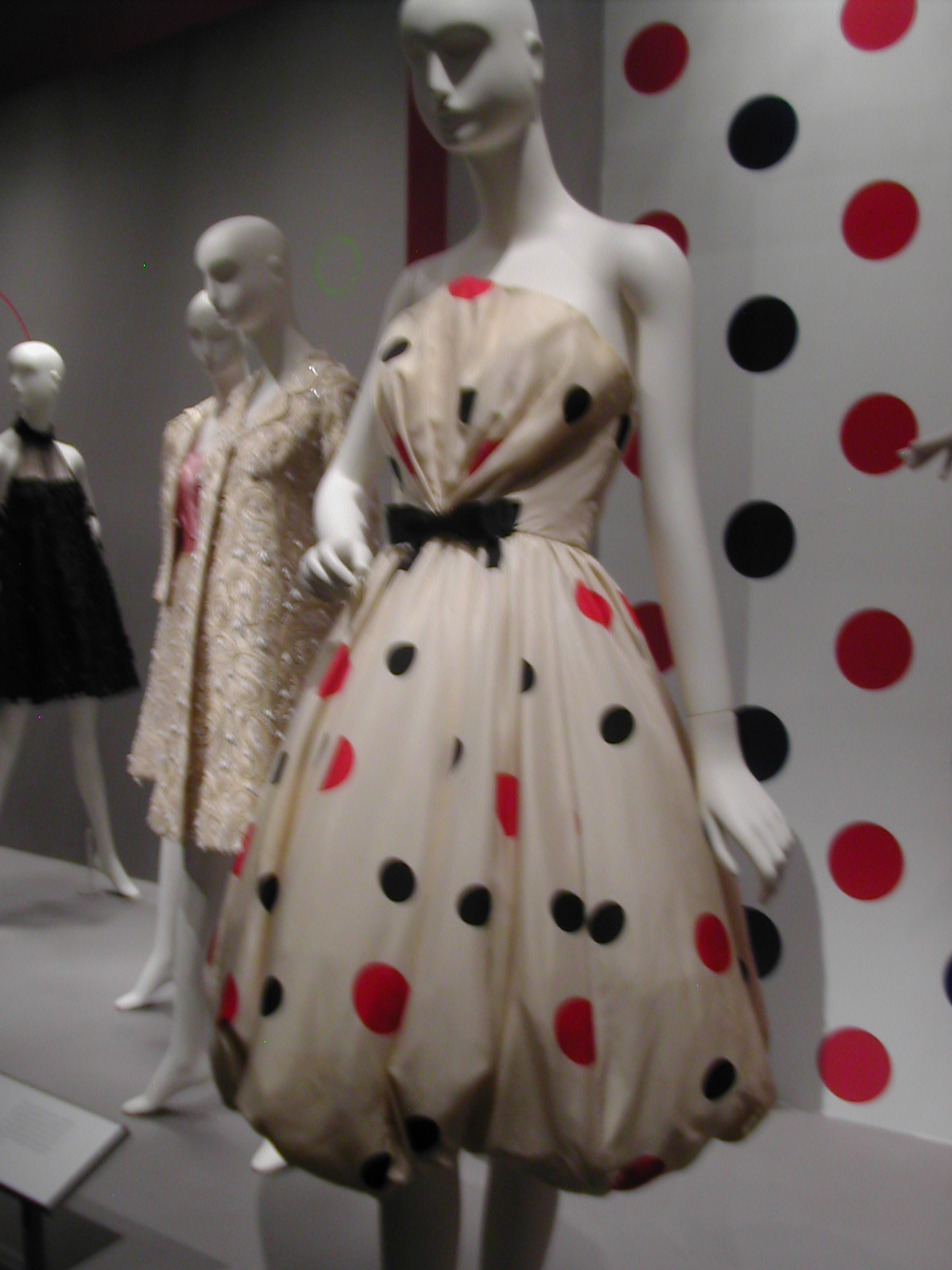
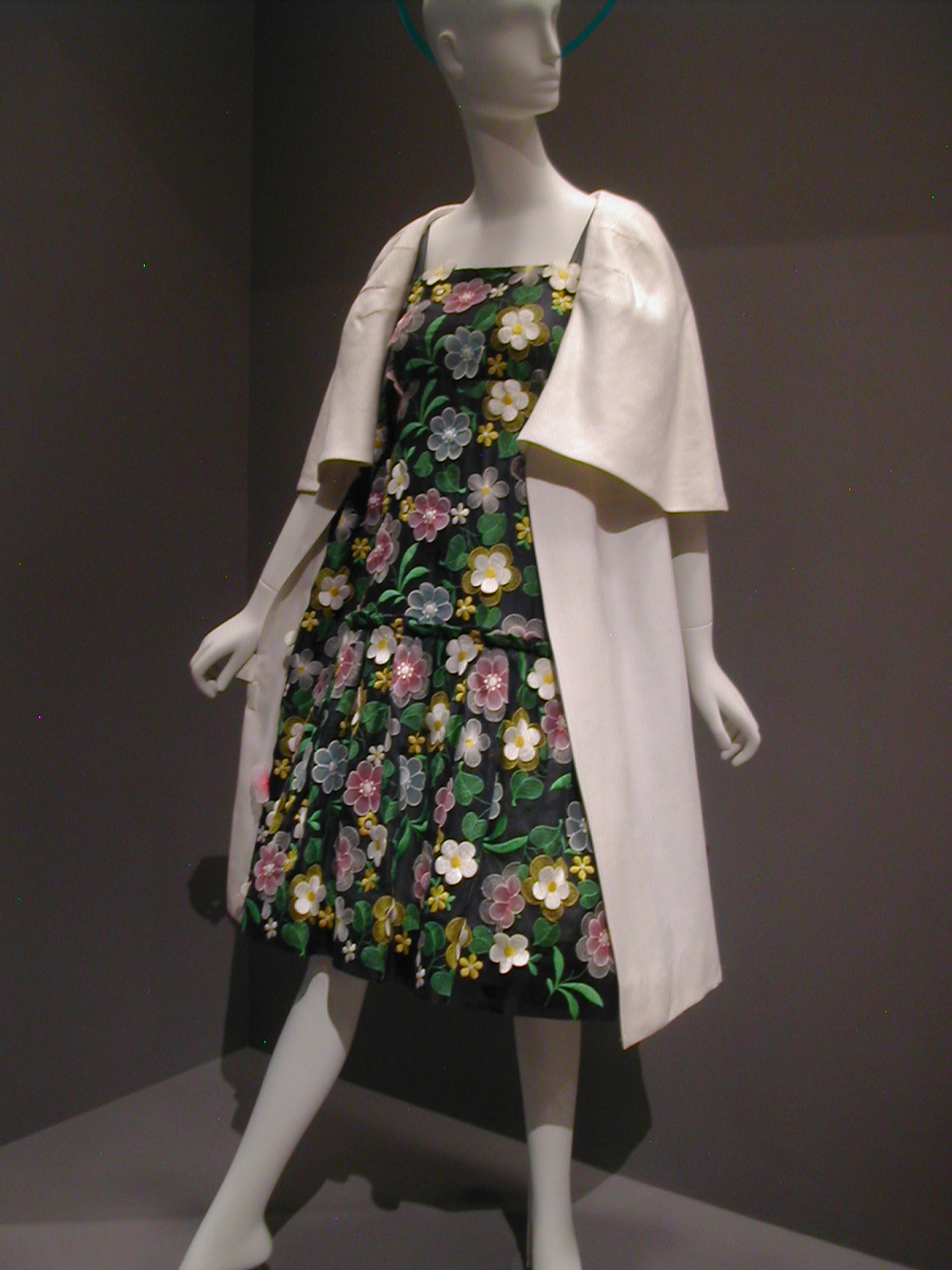
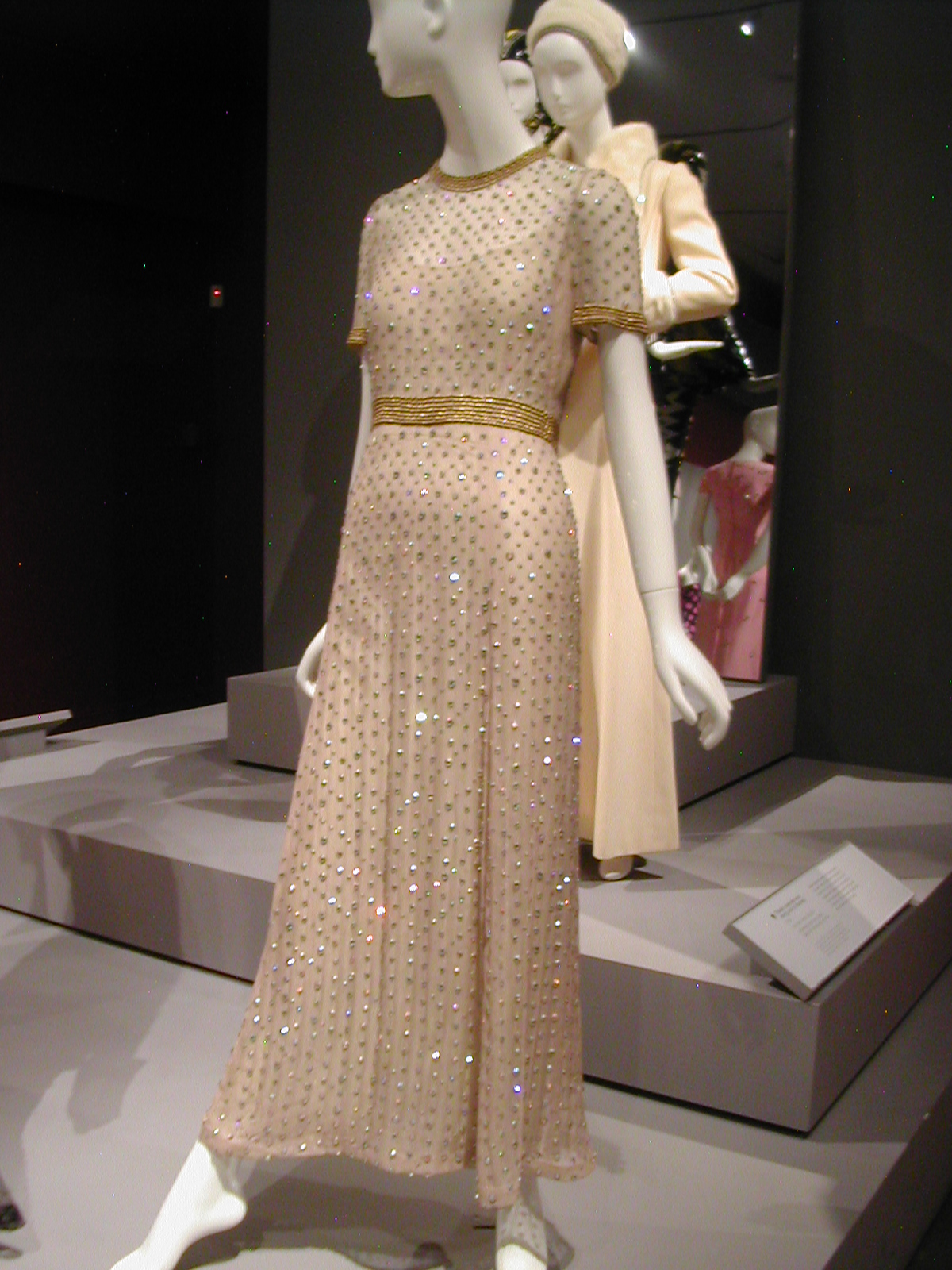
I promised that I would show you pictures of the Arnold Scaasi exhibit, so here they are. The exhibit was small, all in one room, but quite rich in terms of its range and the outfits themselves.  You could spend an hour wandering around that room, looking at all the details.

These are clothes as clothes, not clothes as art.  For that, you’re going to have to wait for Alexander McQueen.  So I’m going to critique them as just that – clothes one might actually wear (or not).

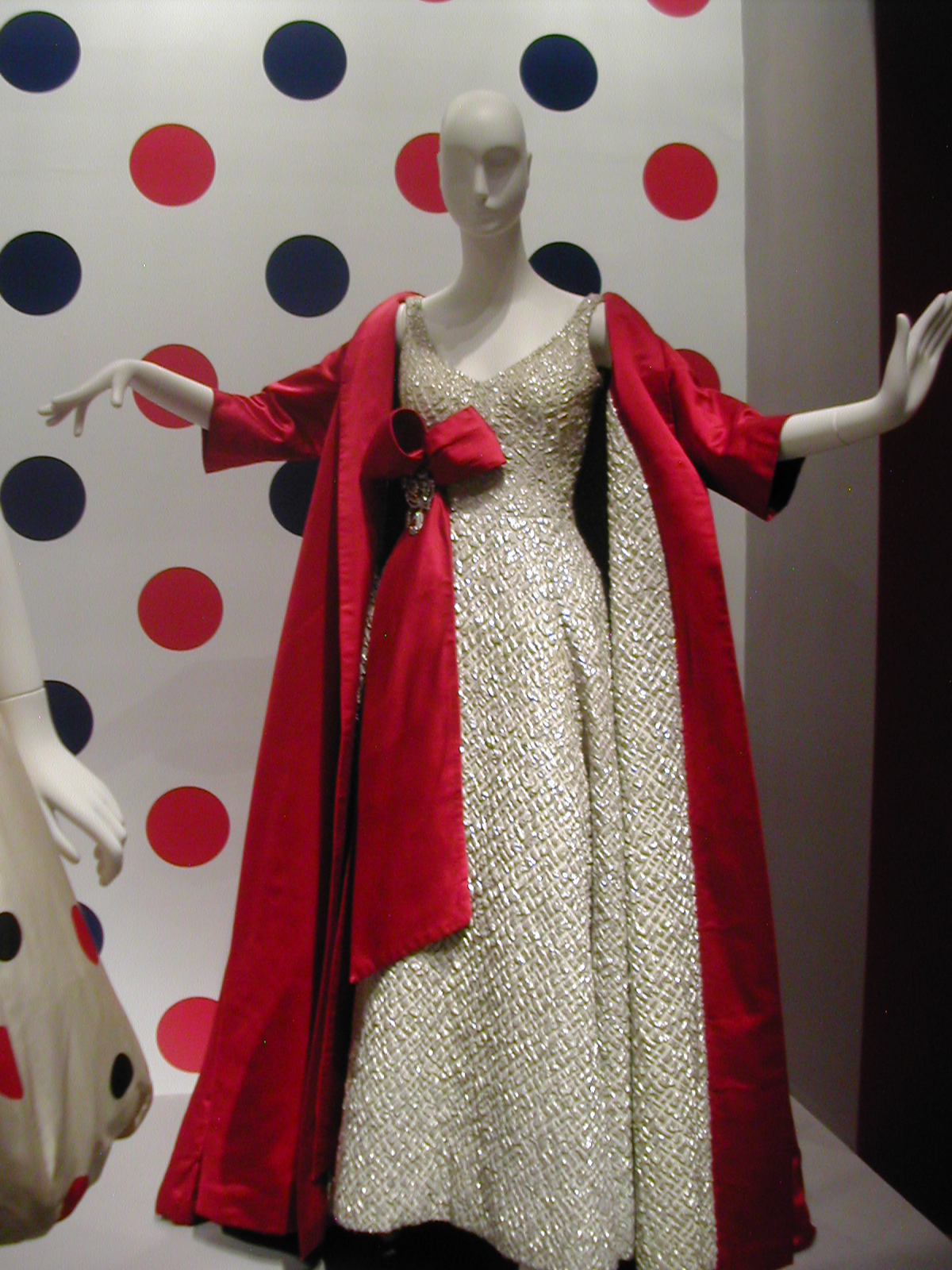
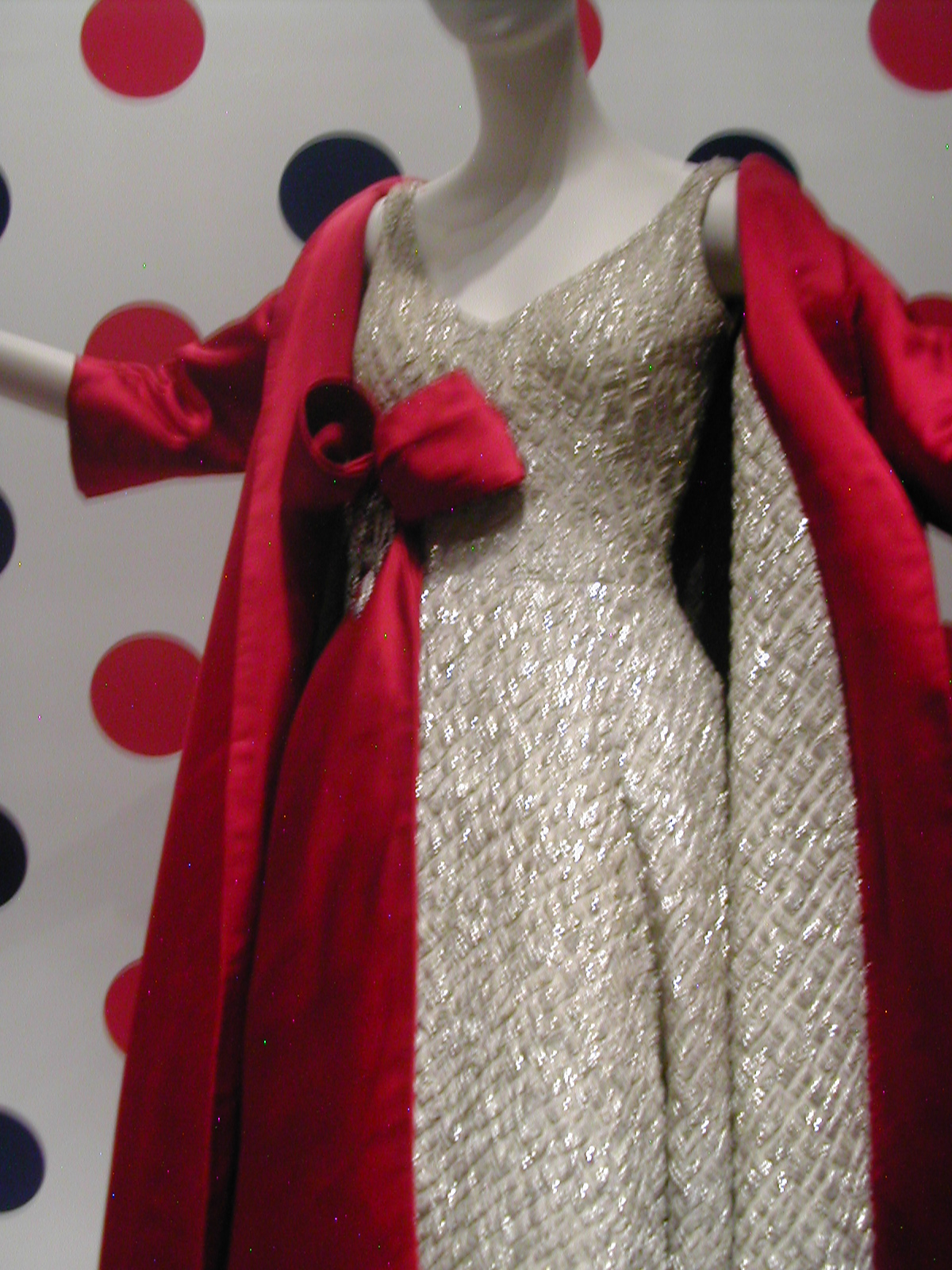
The first section of the exhibit focused on the 1960s. You can see the 1960s silhouette in the following dresses.  I like that the red velvet cape has a silver lining that echoes the fabric of the dress, and the silver dress has a red velvet bow that echoes the cape. You could be a sorceress in this dress. You would certainly cast a spell.

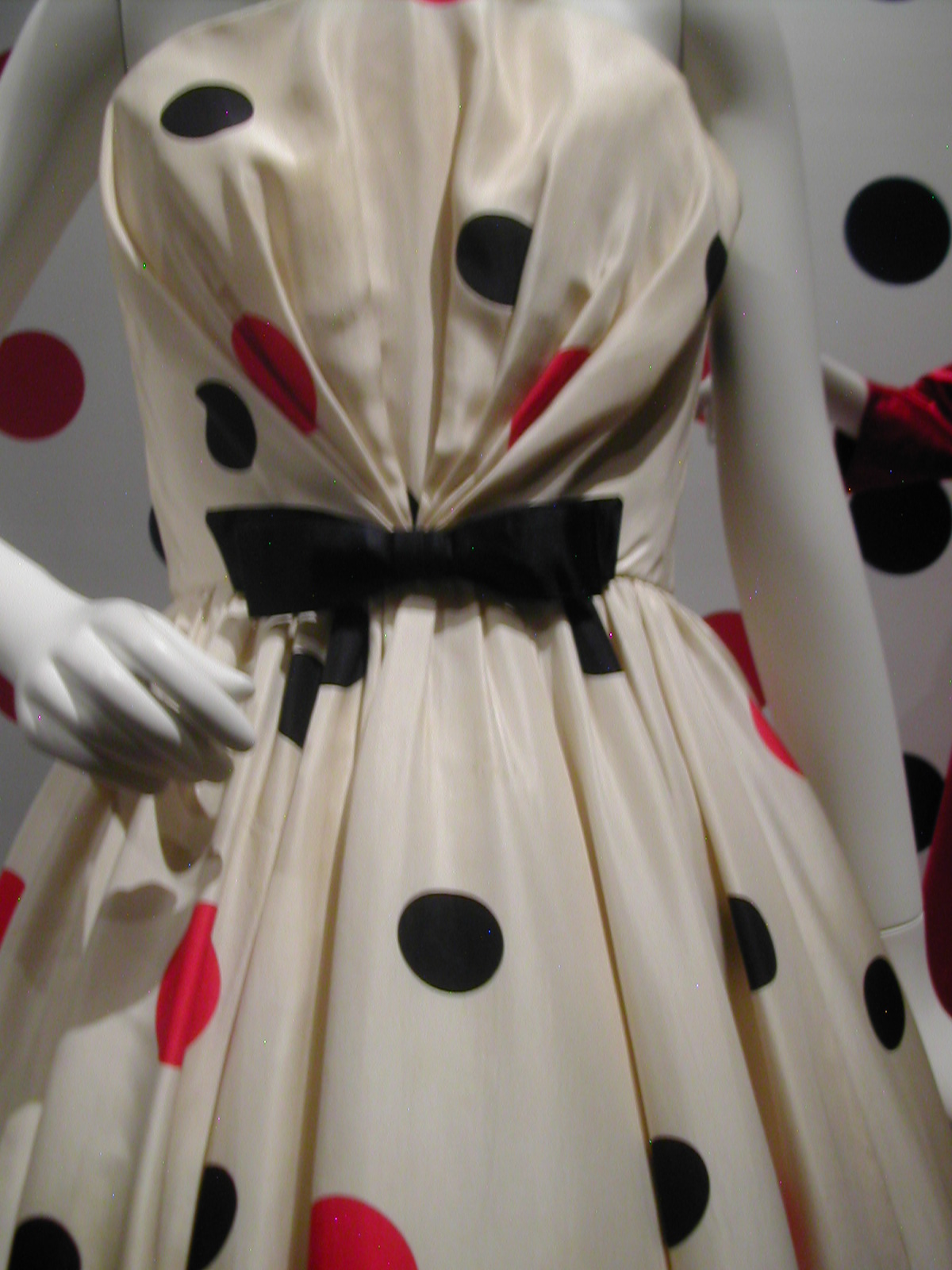
The polka-dot dress feels so contemporary. This is still the early 1960s, which was influenced by Christian Dior’s New Look. The waist was still at the waist, and skirts were still pouffy. This isn’t my style (there’s no magic in it), but I like the dress.

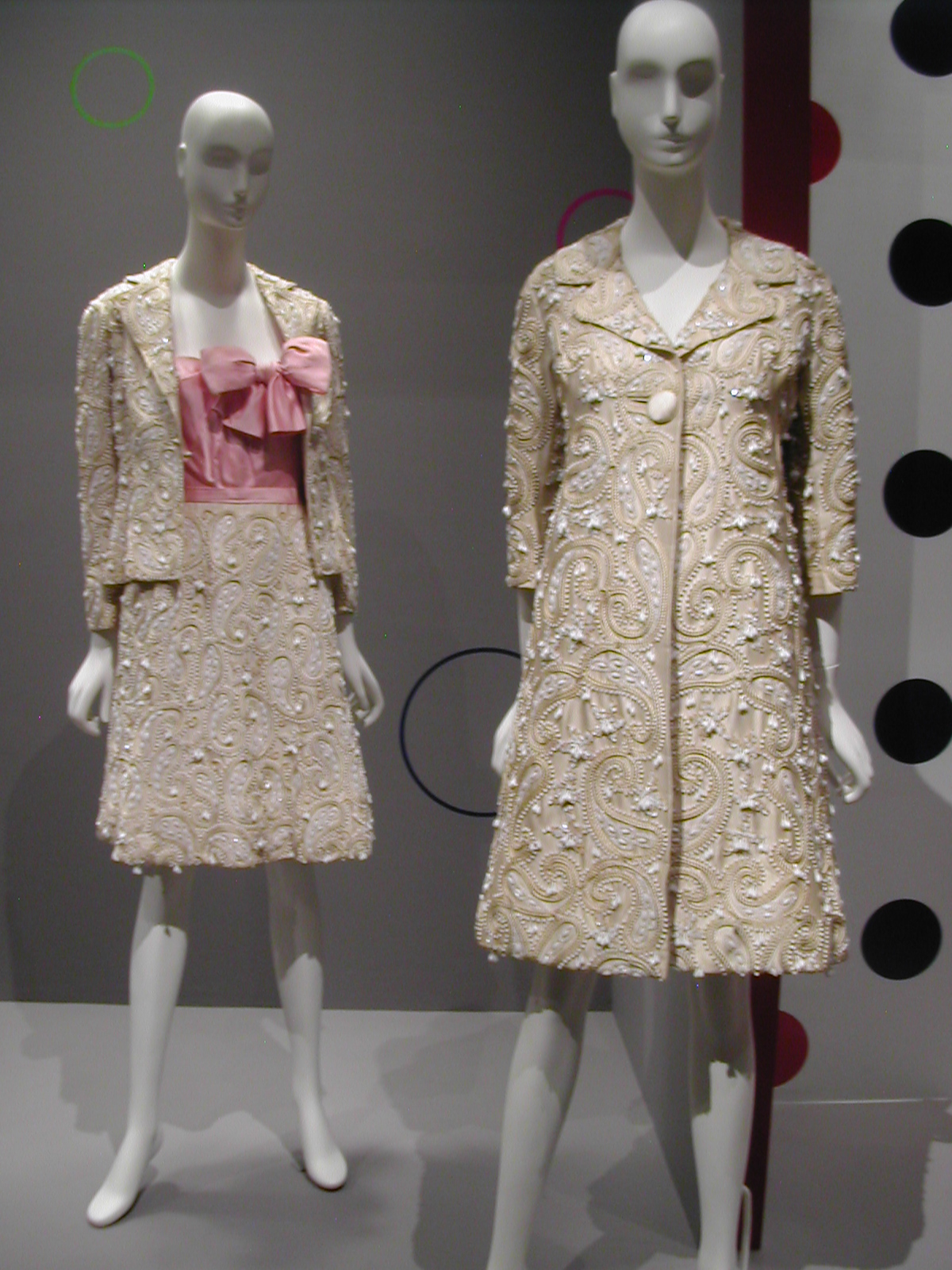
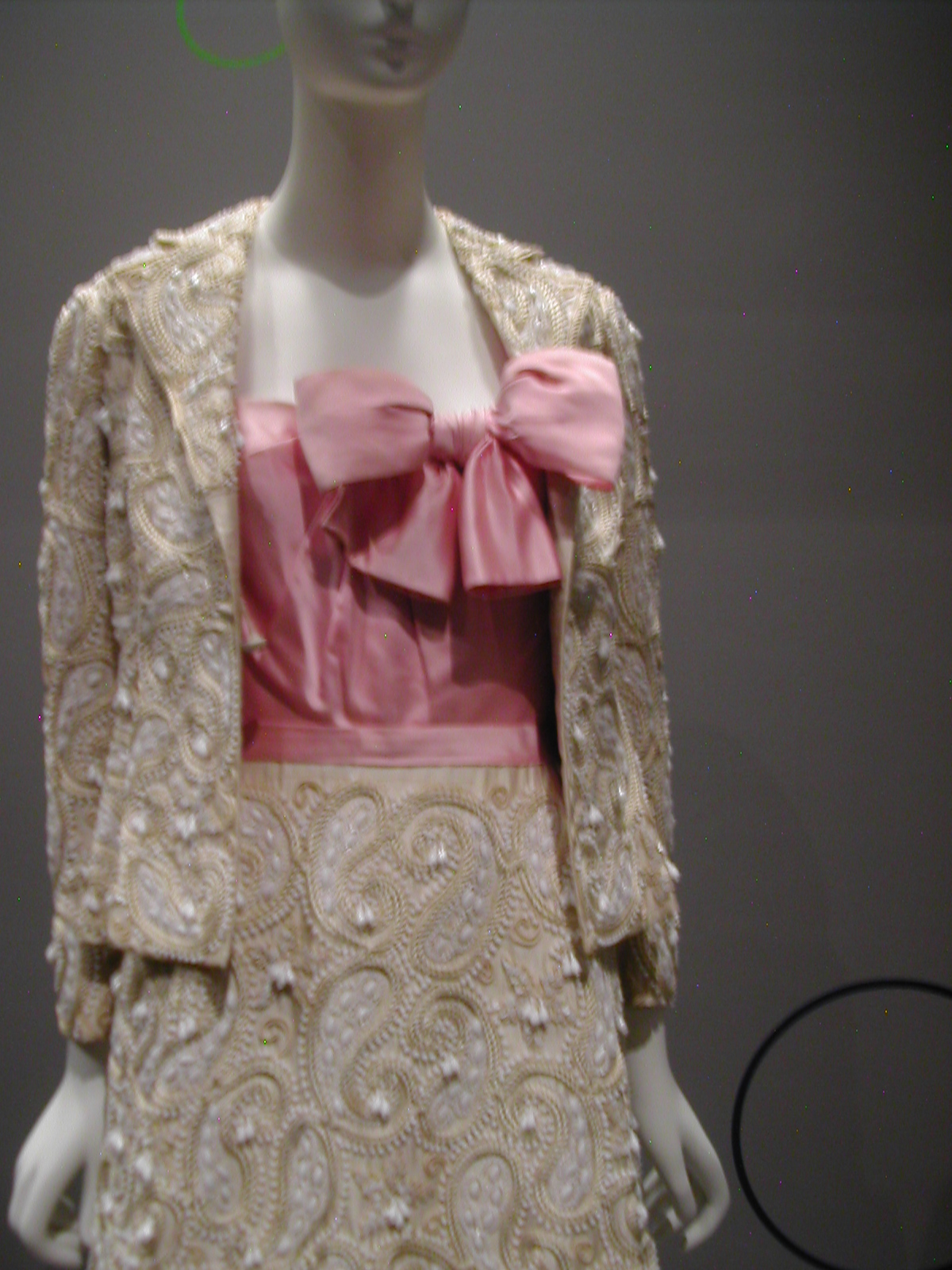
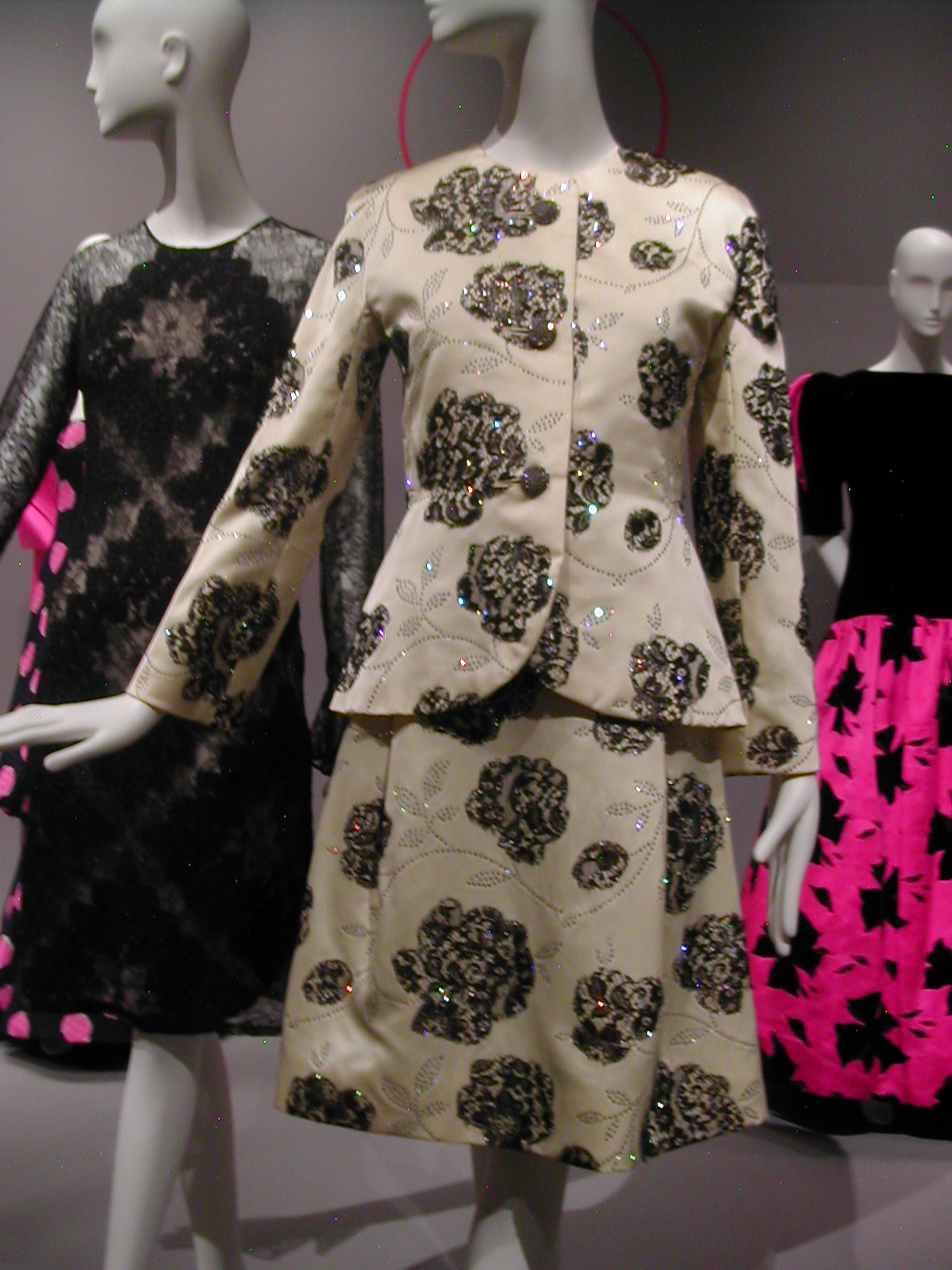
I liked the details on several of these outfits, like the pink bow on the suit.  In any suit like this, I think we’re seeing the influence of Coco Chanel.  It’s still the Chanel suit silhouette. I would wear something like this, if it weren’t so heavily beaded.

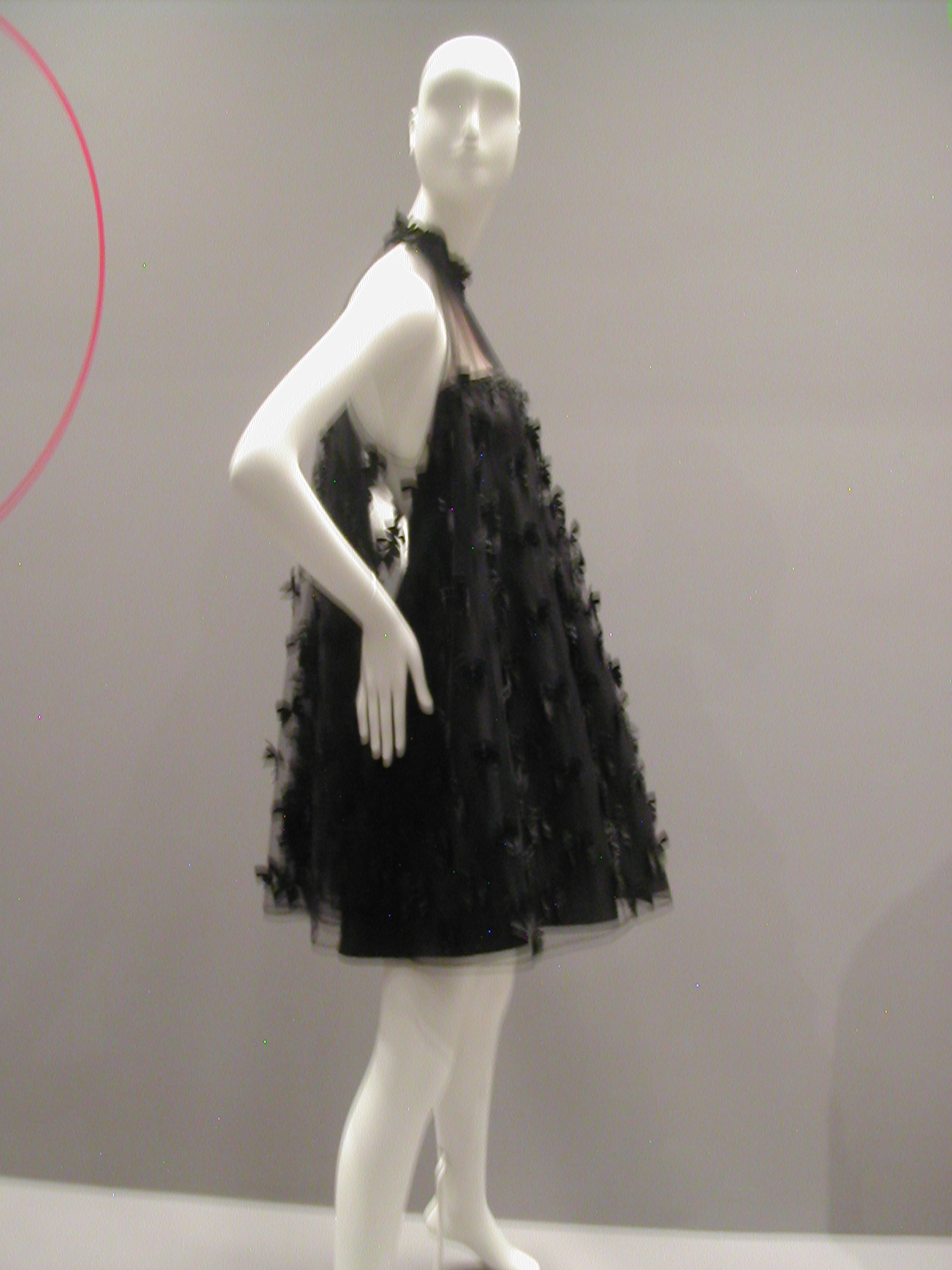
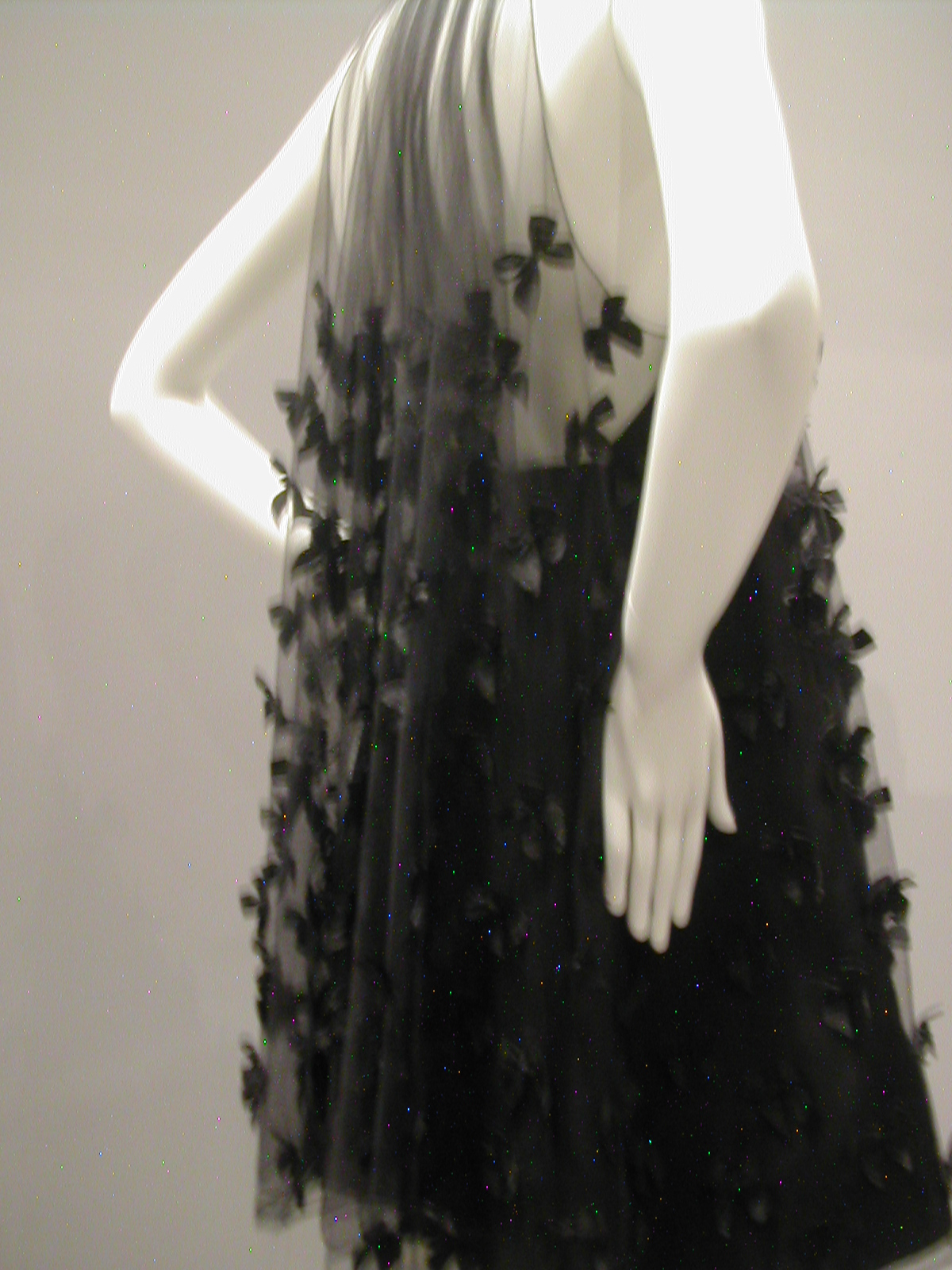
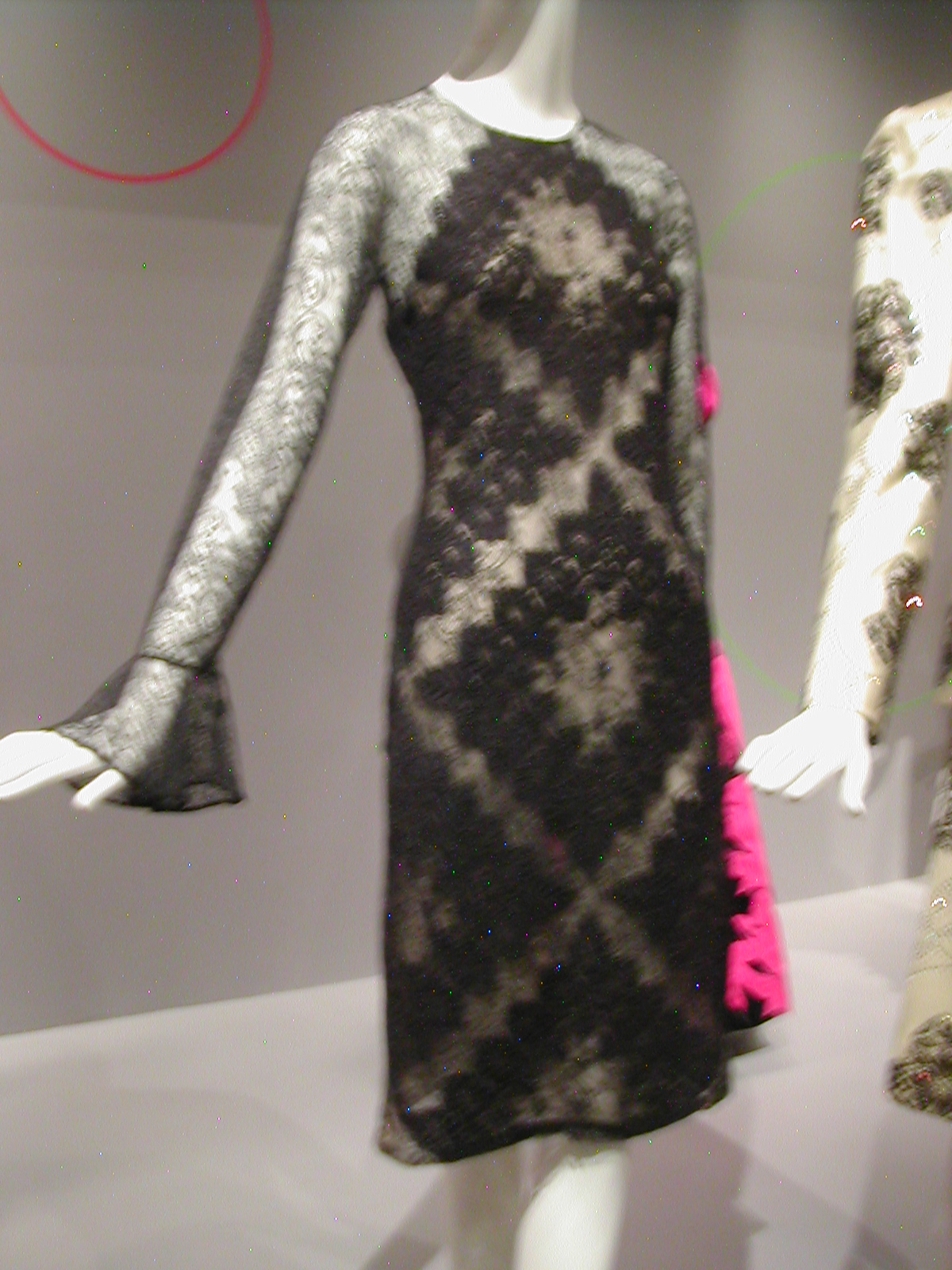
The short black dress was worn by Natalie Wood.  Here we get to the late 1960s silhouette, where you start to lose the waist. You could wear a dress like this to a party (I wouldn’t), but it starts to feel retro, whereas the earlier dresses feel more contemporary.

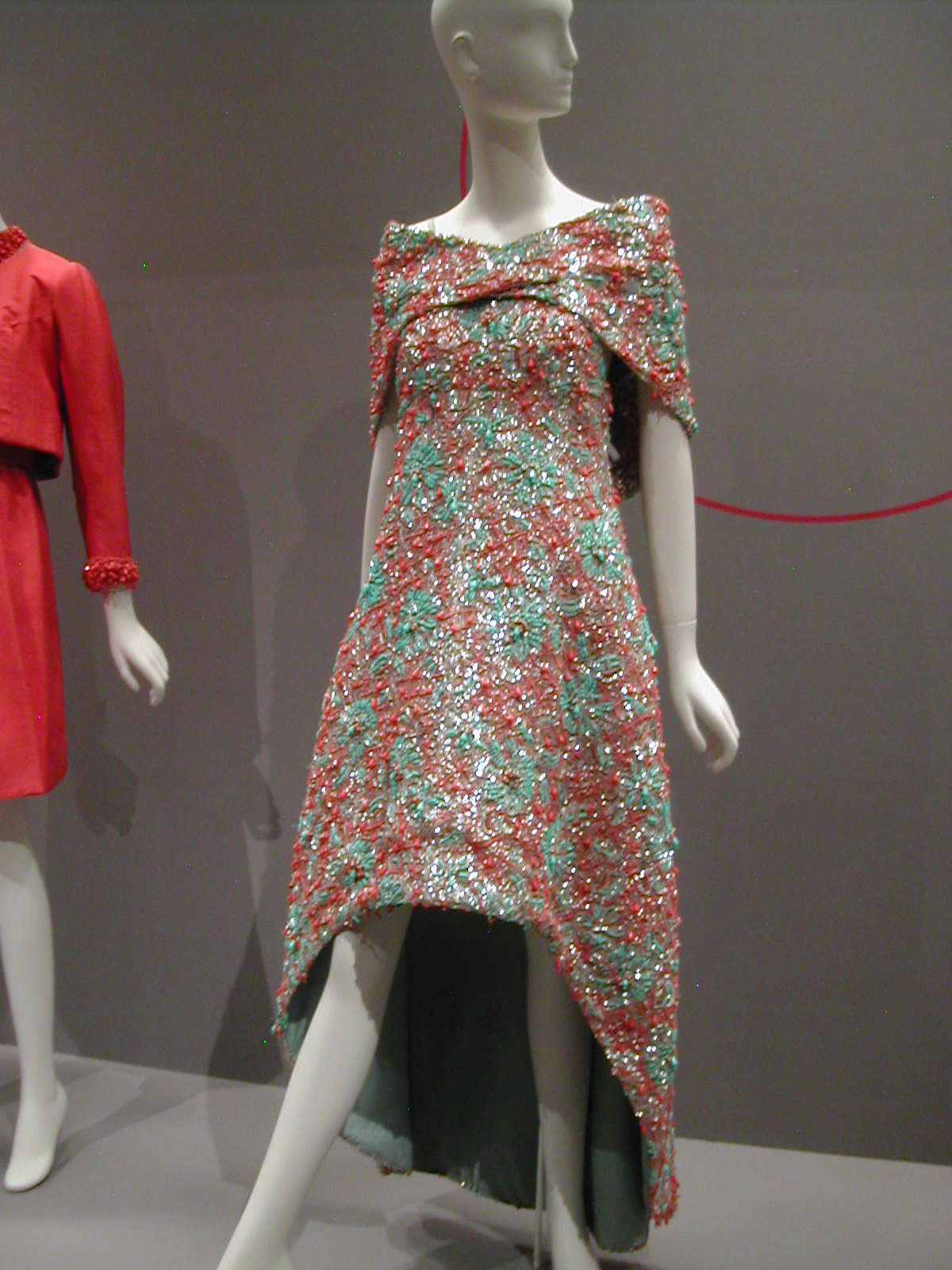
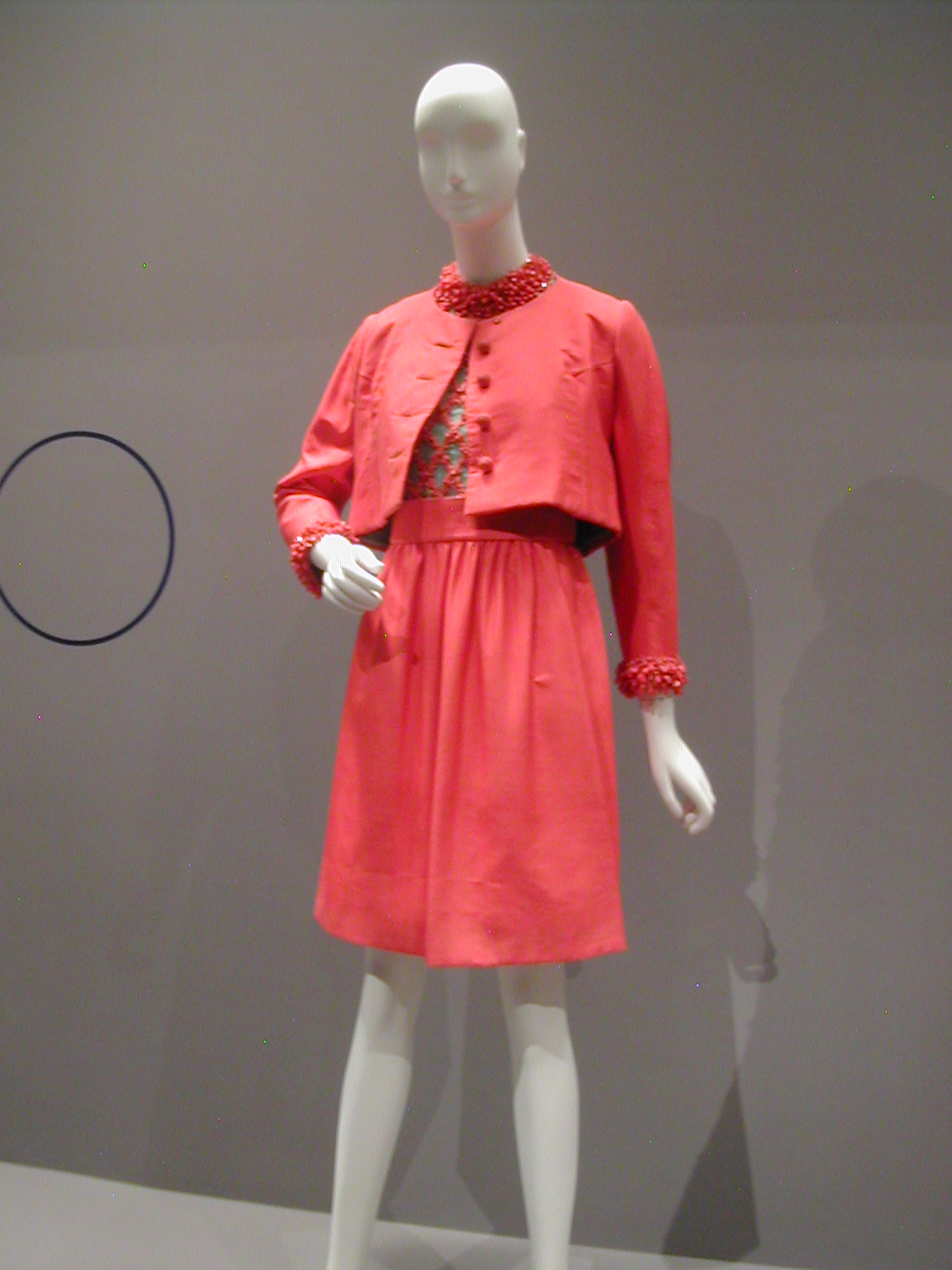
One thing that startled me about the exhibit was the mix of fabrics and other materials.  Many of the dresses mixed silk and synthetics.  The beading on the turquoise and coral dress below is coral – and plastic.  The silhouette on the coral suit is still Chanel.

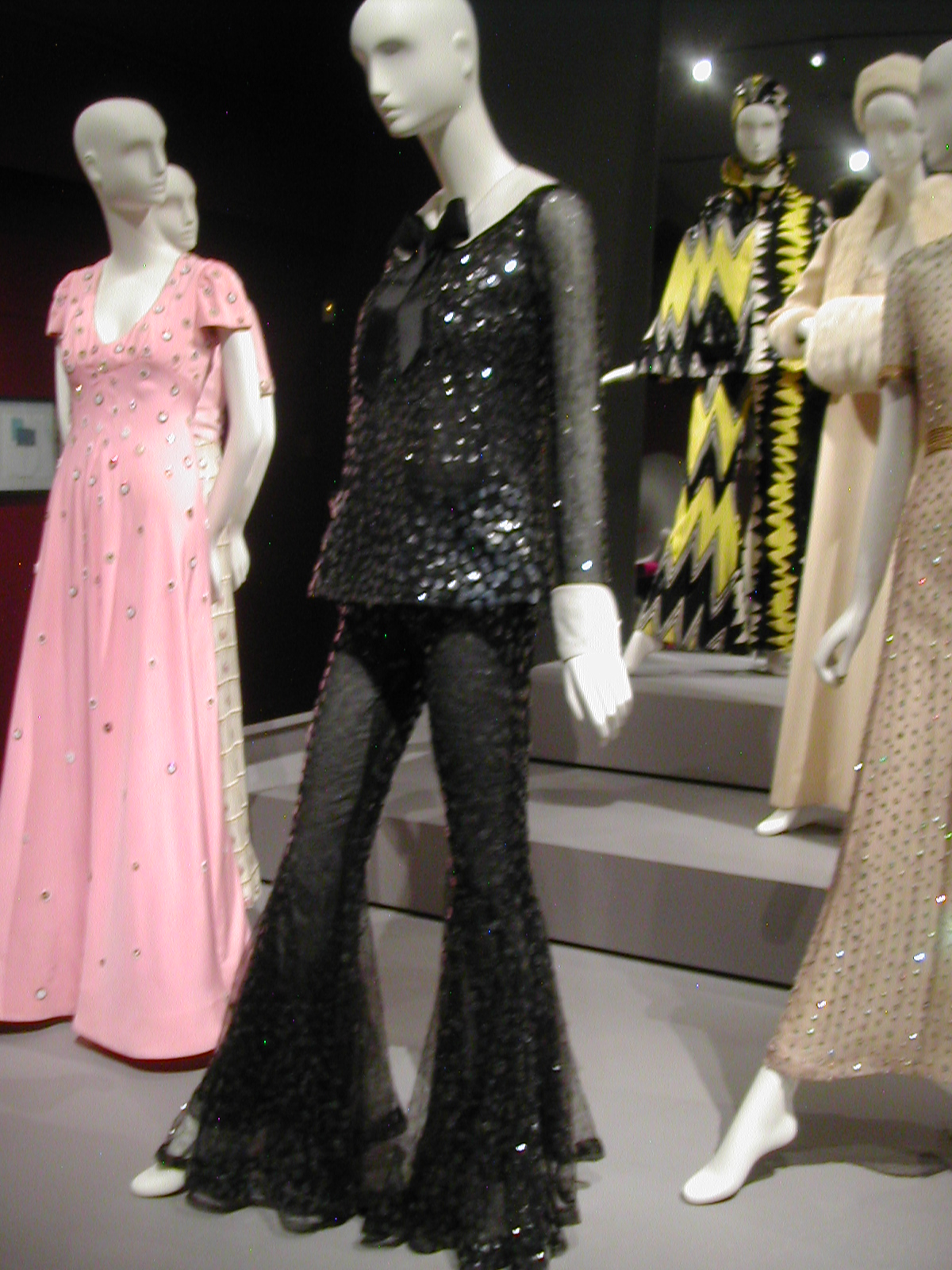
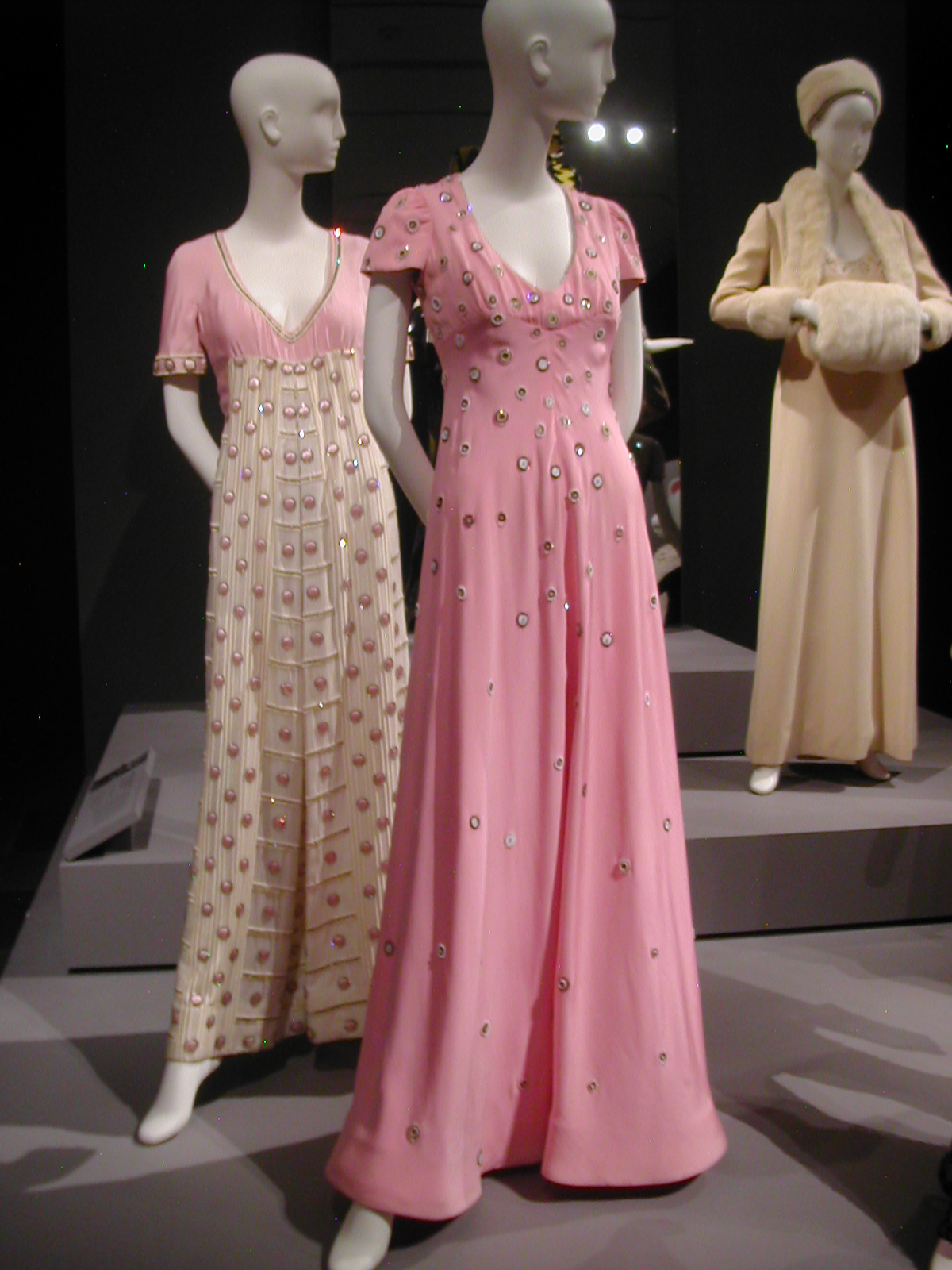
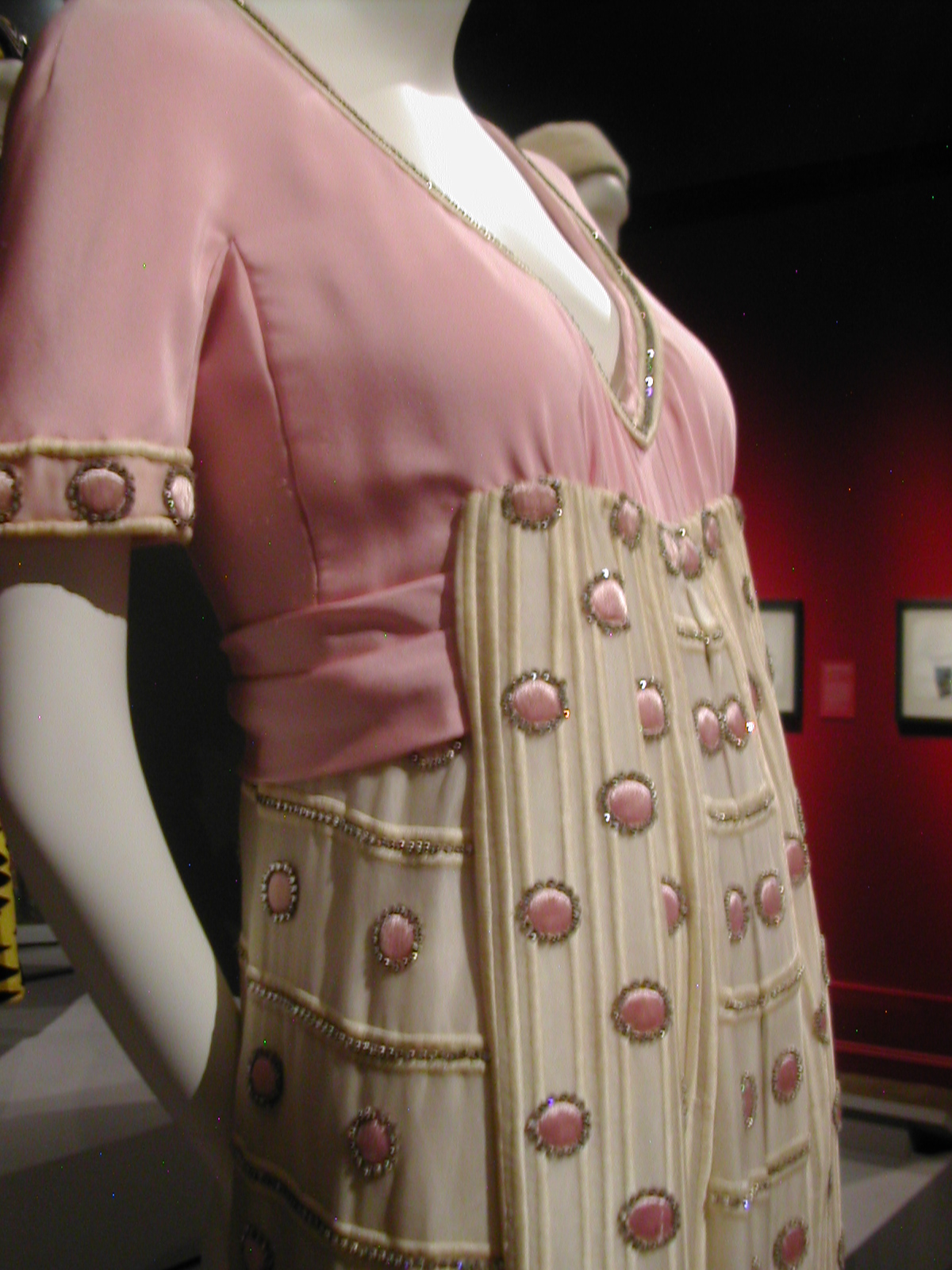
Here we transition from the 1960s to the 1970s.  The dress on the left is late 1960s, the dress on the right is already 1970s. Most of the 1970s outfits were made specifically for Barbara Streisand, and you can see that they represent a different way of thinking about the female body. It’s no longer a woman’s body. It’s a pretty boy’s. Slender, without an obvious waist. An Empire silhouette, with pants rather than skirts (although that may have been Streisand’s individual preference.)  Honestly? I don’t know who these would actually look good on. They certainly didn’t look good on Streisand.

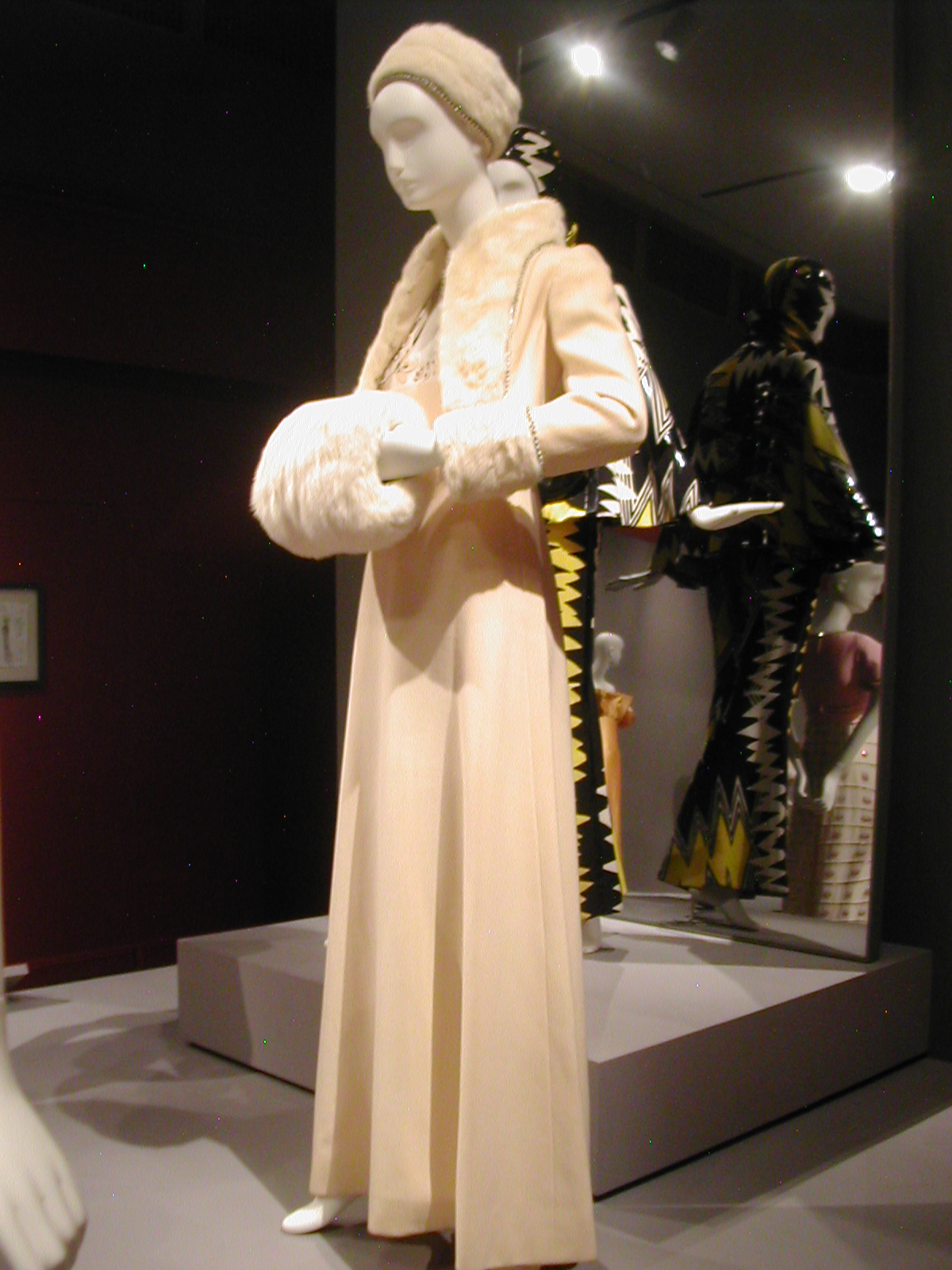
I do like the long white wool coat with fur collar, hat, and muff (although I don’t wear fur).  It’s very Dr. Zhivago. The black mesh outfit was the one Streisand wore to accept an Academy Award.  Under the lights, it looked see-through (although it wasn’t).  Which was scandalous at the time, although nowadays we think of it as rather ordinary, don’t we?  We expect wardrobe malfunctions. Bell bottoms: seriously, Scaasi?

You can see the Empire silhouette here – Empire silhouette jumpsuits, which are so 1970s.  As is that particular peachy pink, which does not look good on any skin tone.  I do like the detailing, though. It looks almost Egyptian.

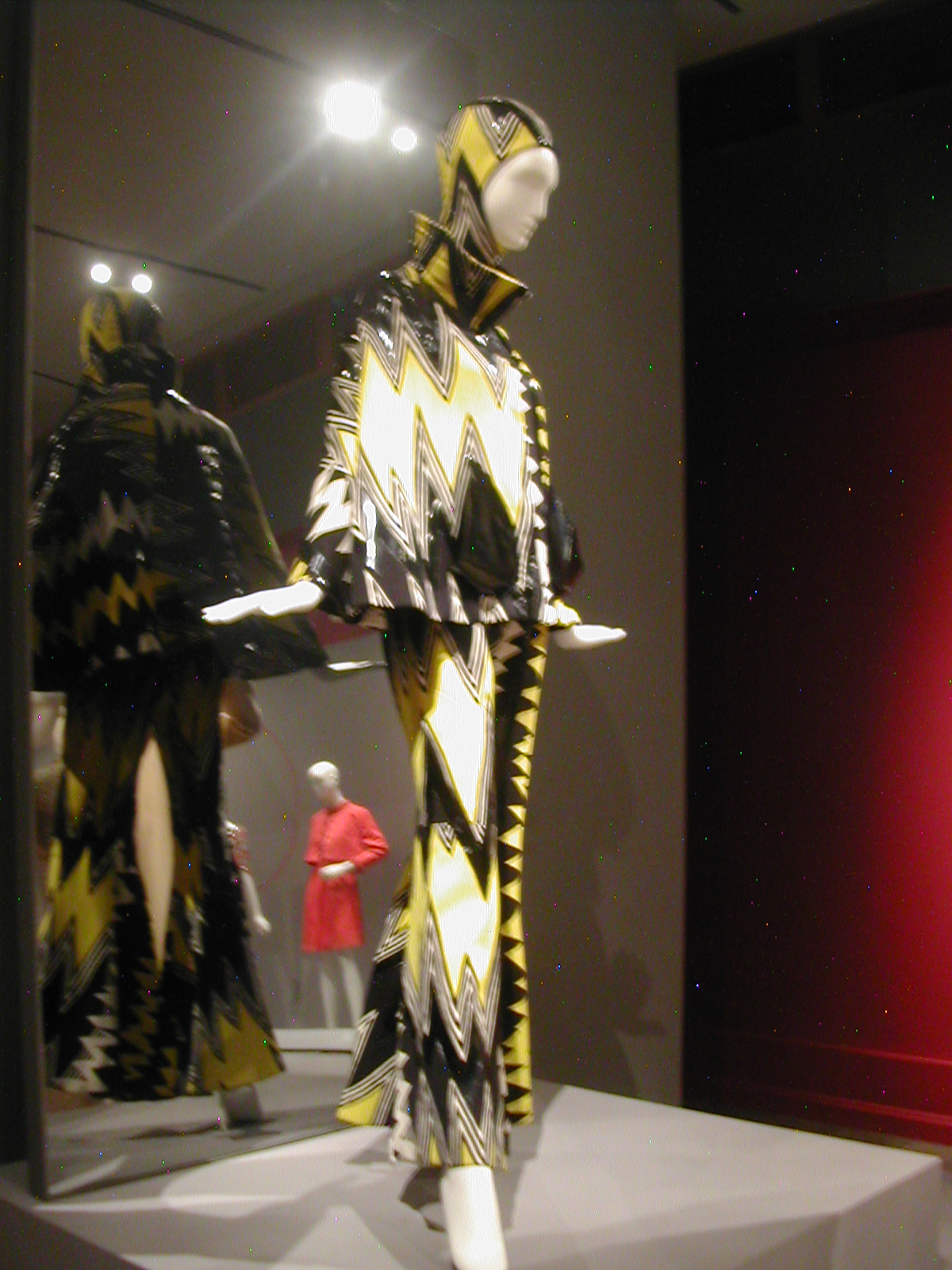
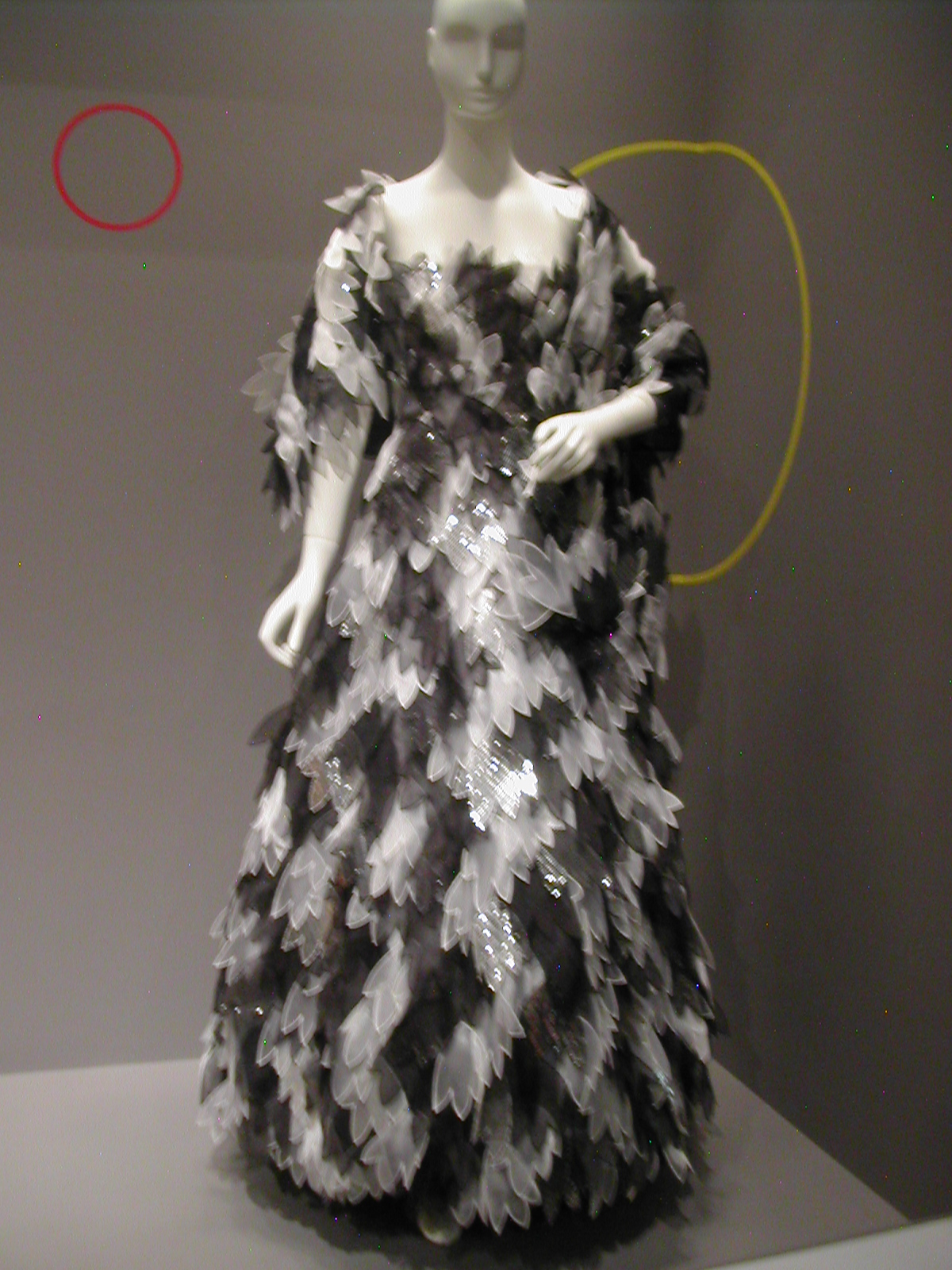
Oh yes, the strange 1970s lightning-pattern outfit!  Obviously created for Streisand in her incarnation as a space alien.  Scaasi, what were you thinking?  And here we transition to the 1980s, which is the silhouette I grew up with, in the dress covered with black, white, and silver leaves. It’s difficult for any woman to look attractive in a dress that fussy.

Didn’t quite a lot of us wear a variation of this dress to prom?  Scaasi’s is the high-end version, but it’s no more attractive for its expensiveness.  It looks more dated, to me, than the polka-dot dress at the beginning of the exhibit.  And why would anyone bring back the bustle?

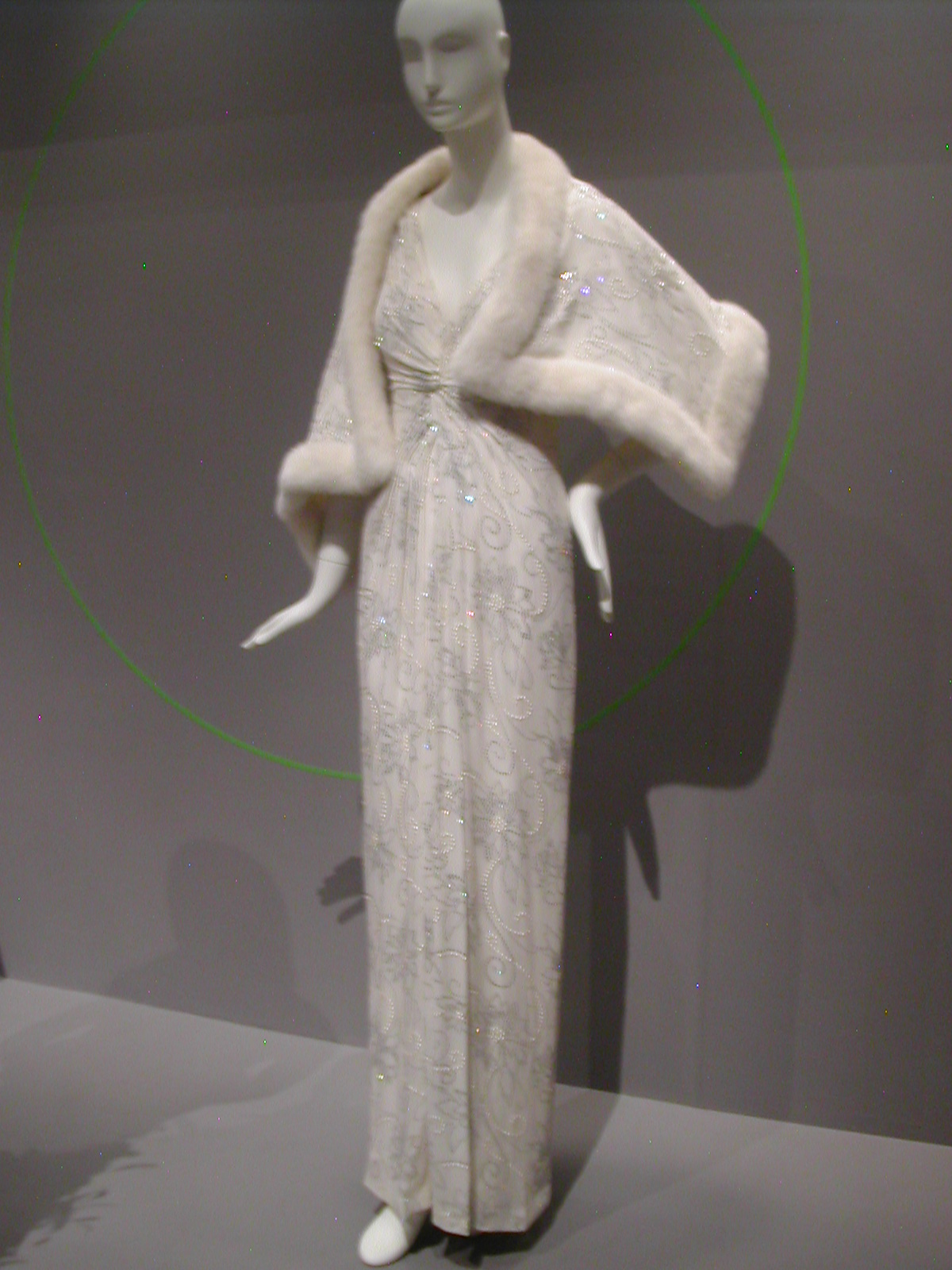
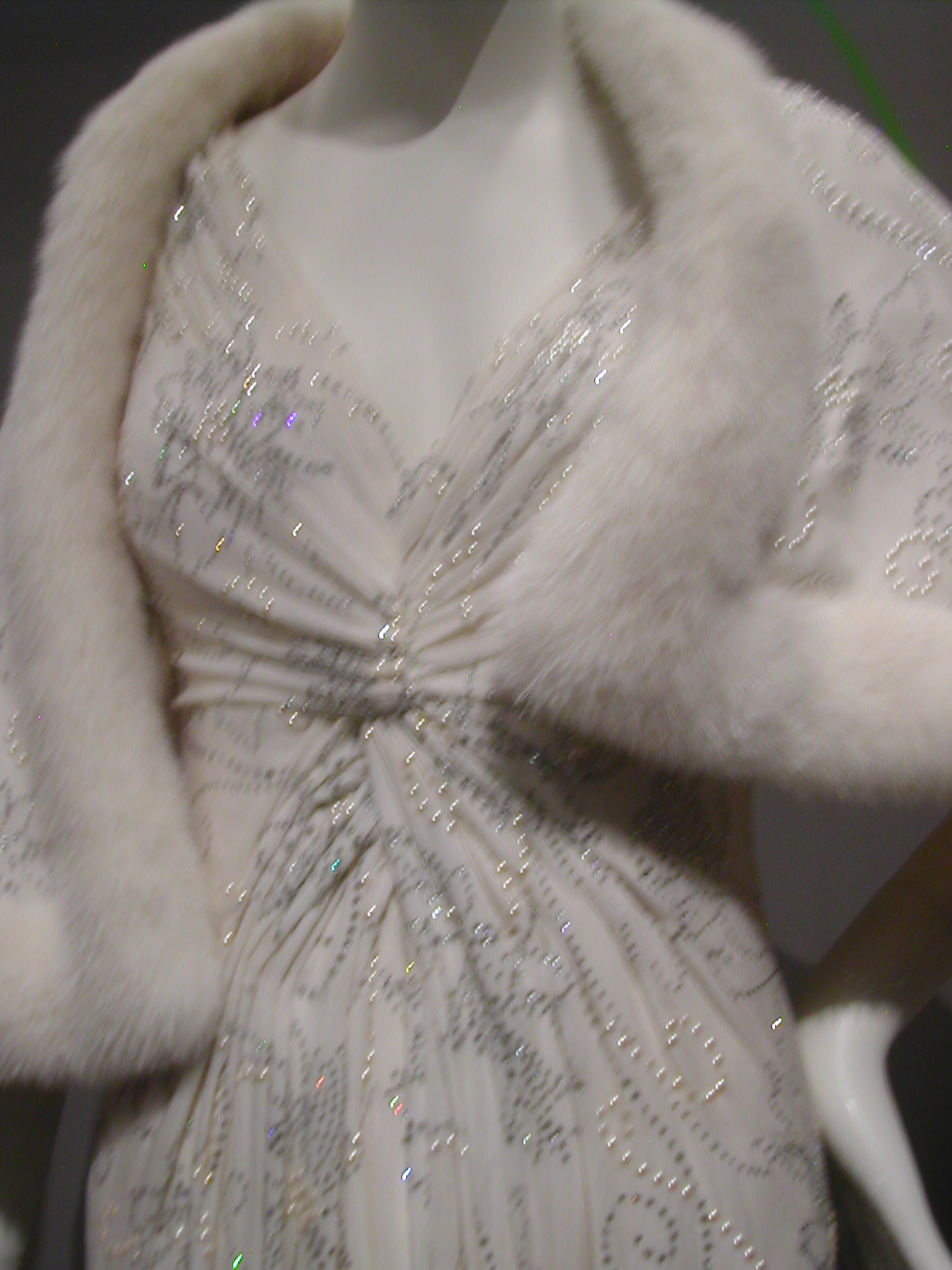
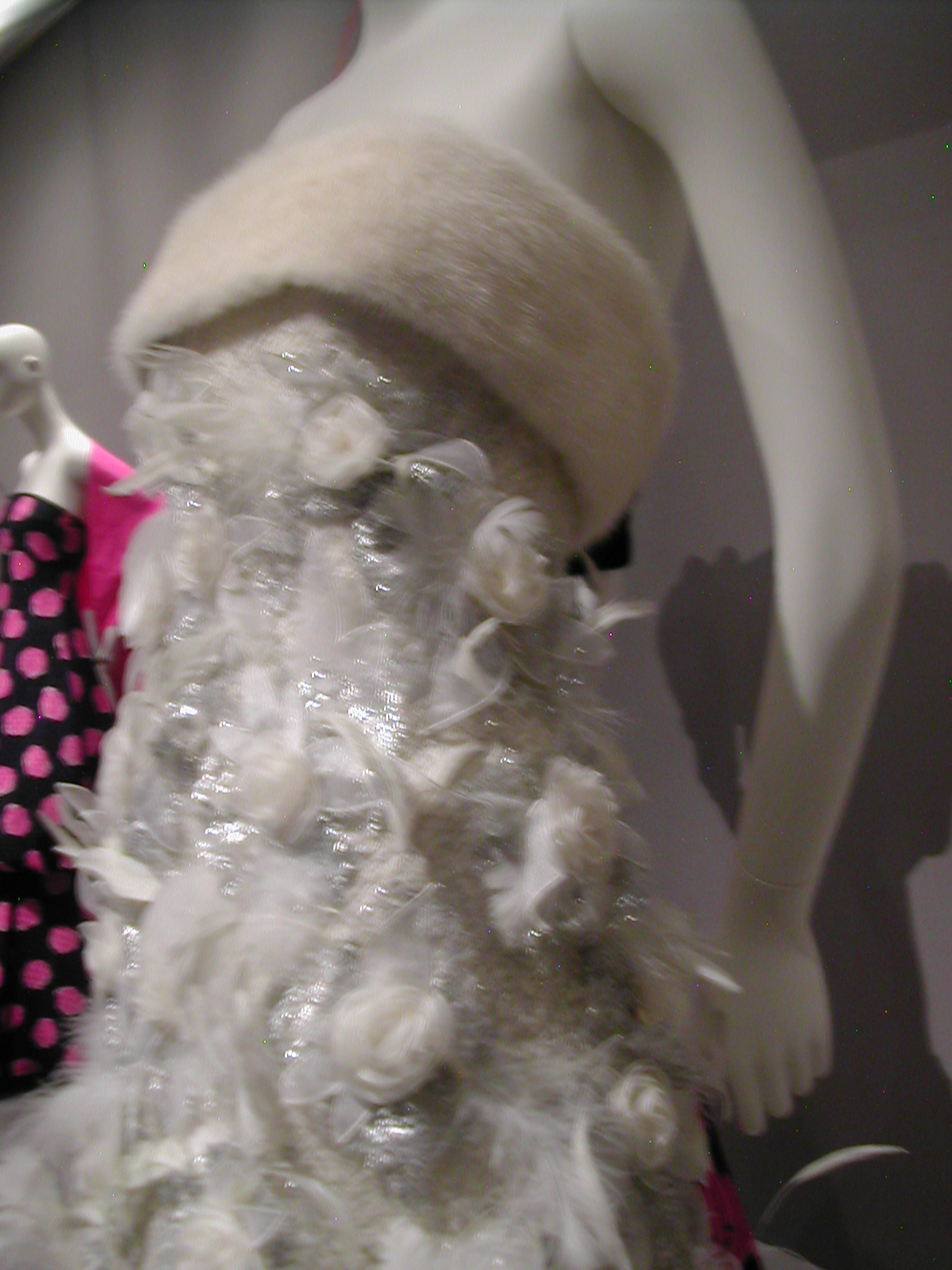
But this was a beautiful dress!  A Snow Queen dress.  I would wear this dress in a heartbeat.  Anywhere.  To the opera, to do dishes.  The mix of gauzy white fabric, silver embroidery, and luxurious fur make it magical.  You could walk through an enchanted forest in this dress. I want one just like it (with fake fur). It looks simple, without being simple at all.

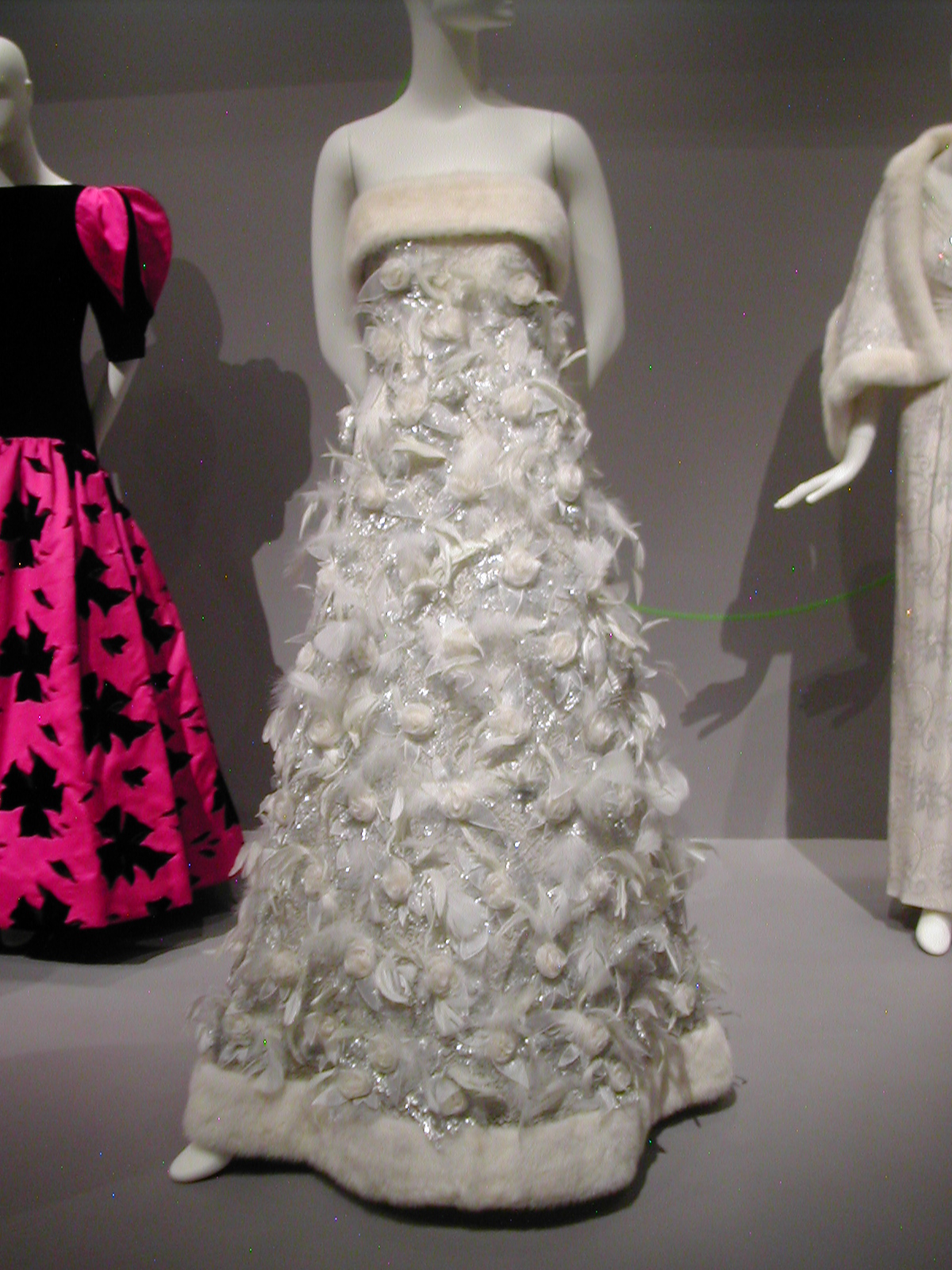
I liked this dress too.  It’s a bit over the top, with its feathers and fabric roses and silver embroidery and fur.  But still, it’s a Queen of the Birds sort of dress.  It’s dramatic, unusual, and lovely.  It just needs something around the shoulders. Or maybe a crown.

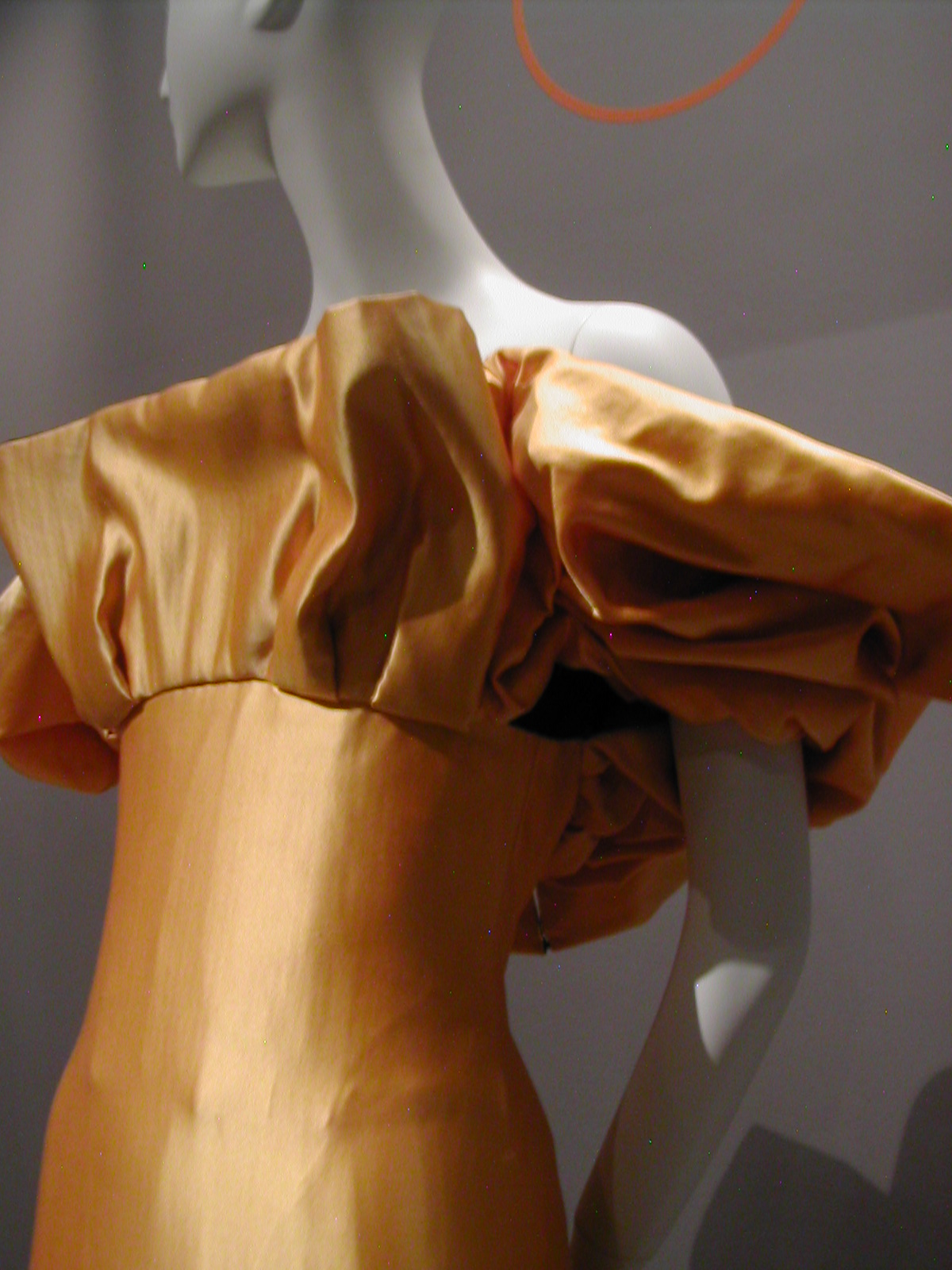
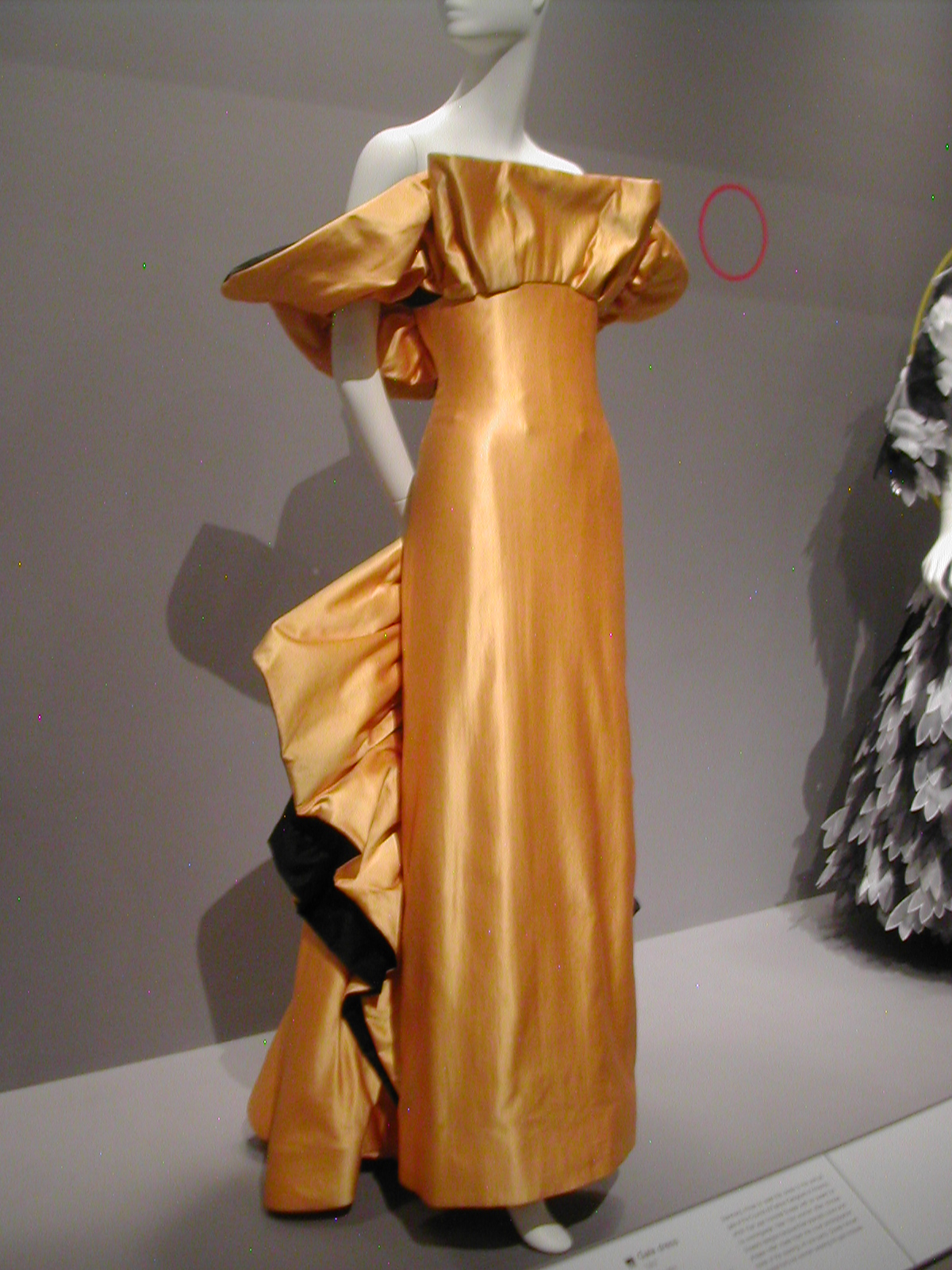
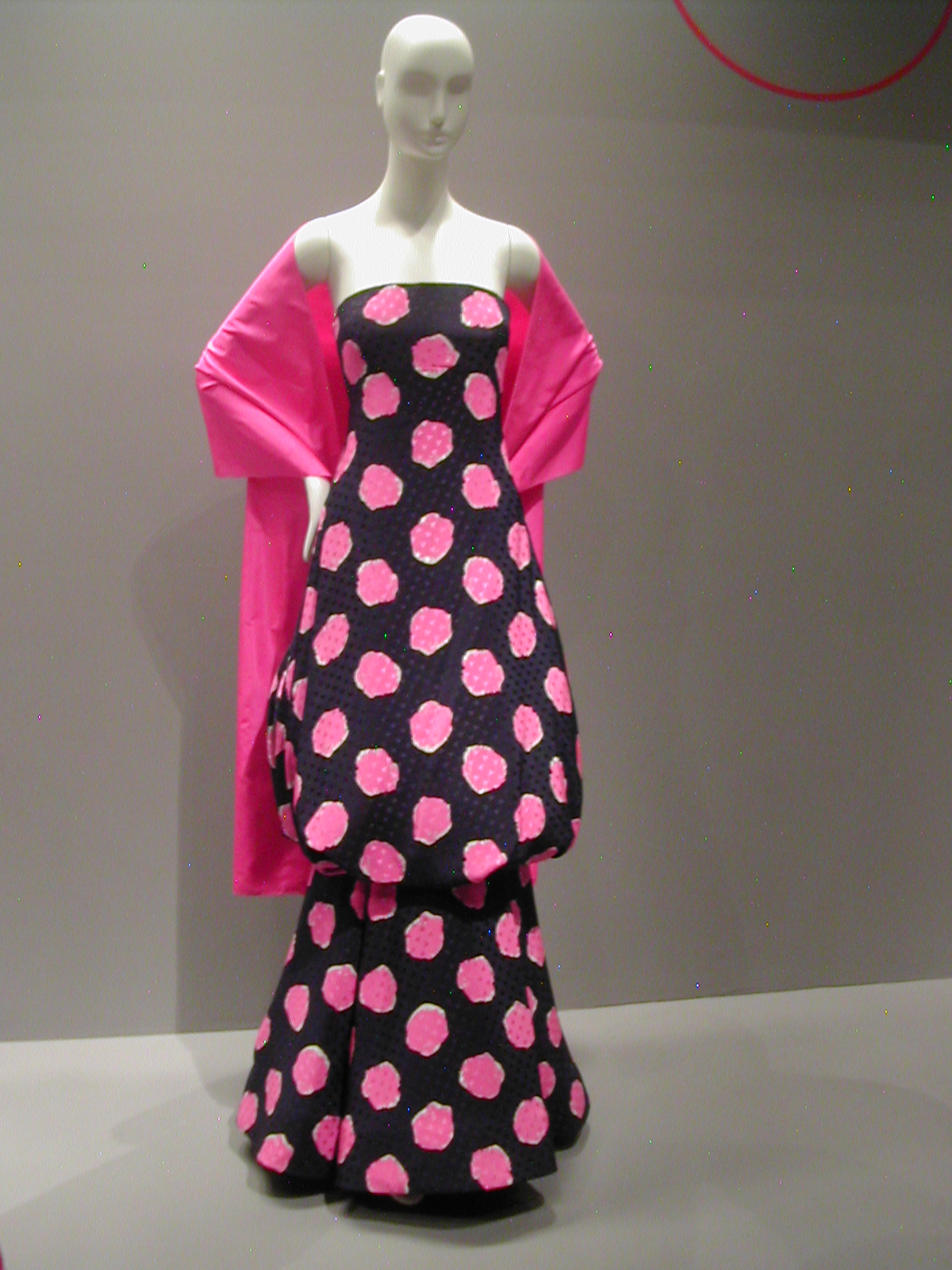
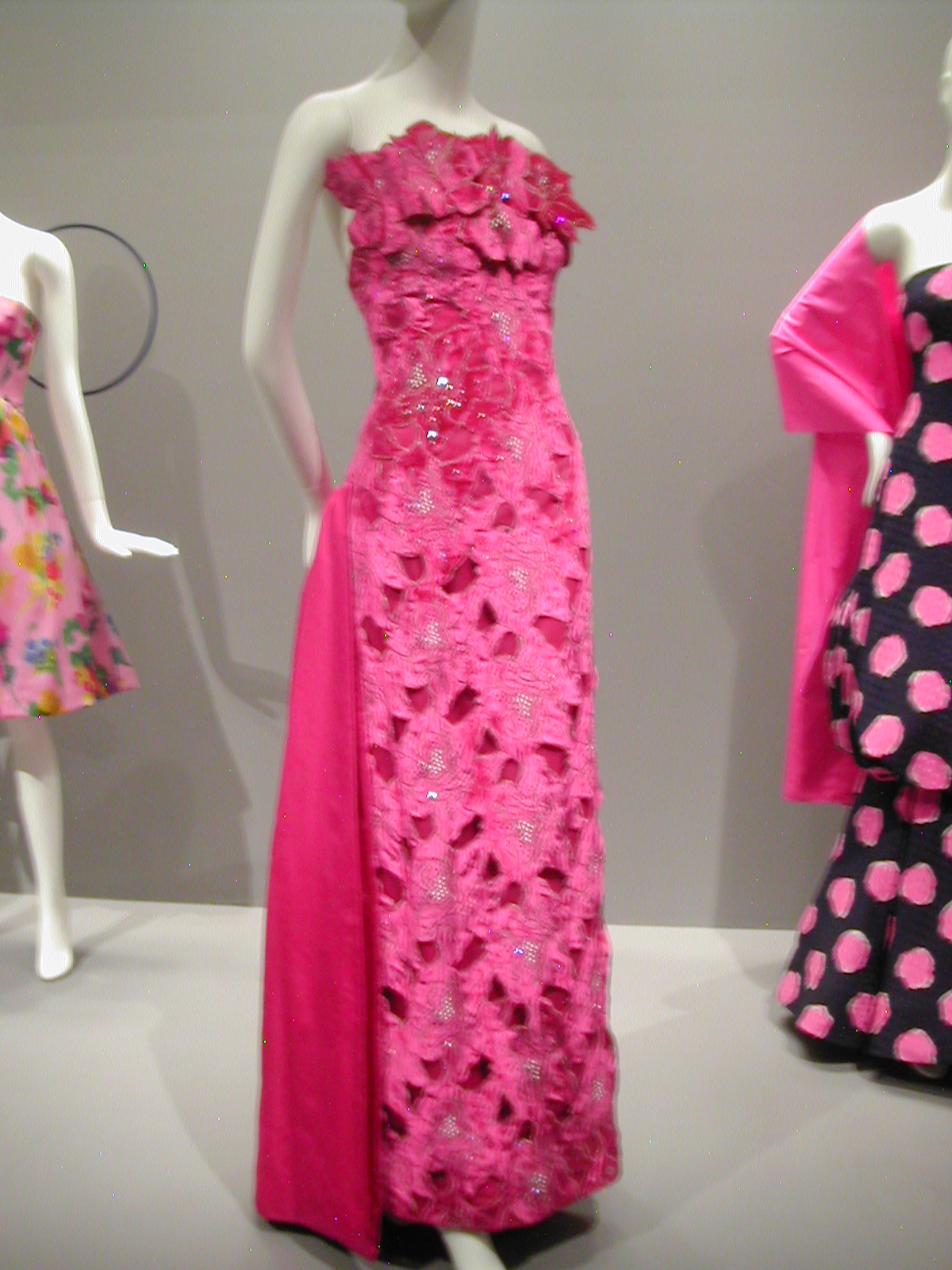
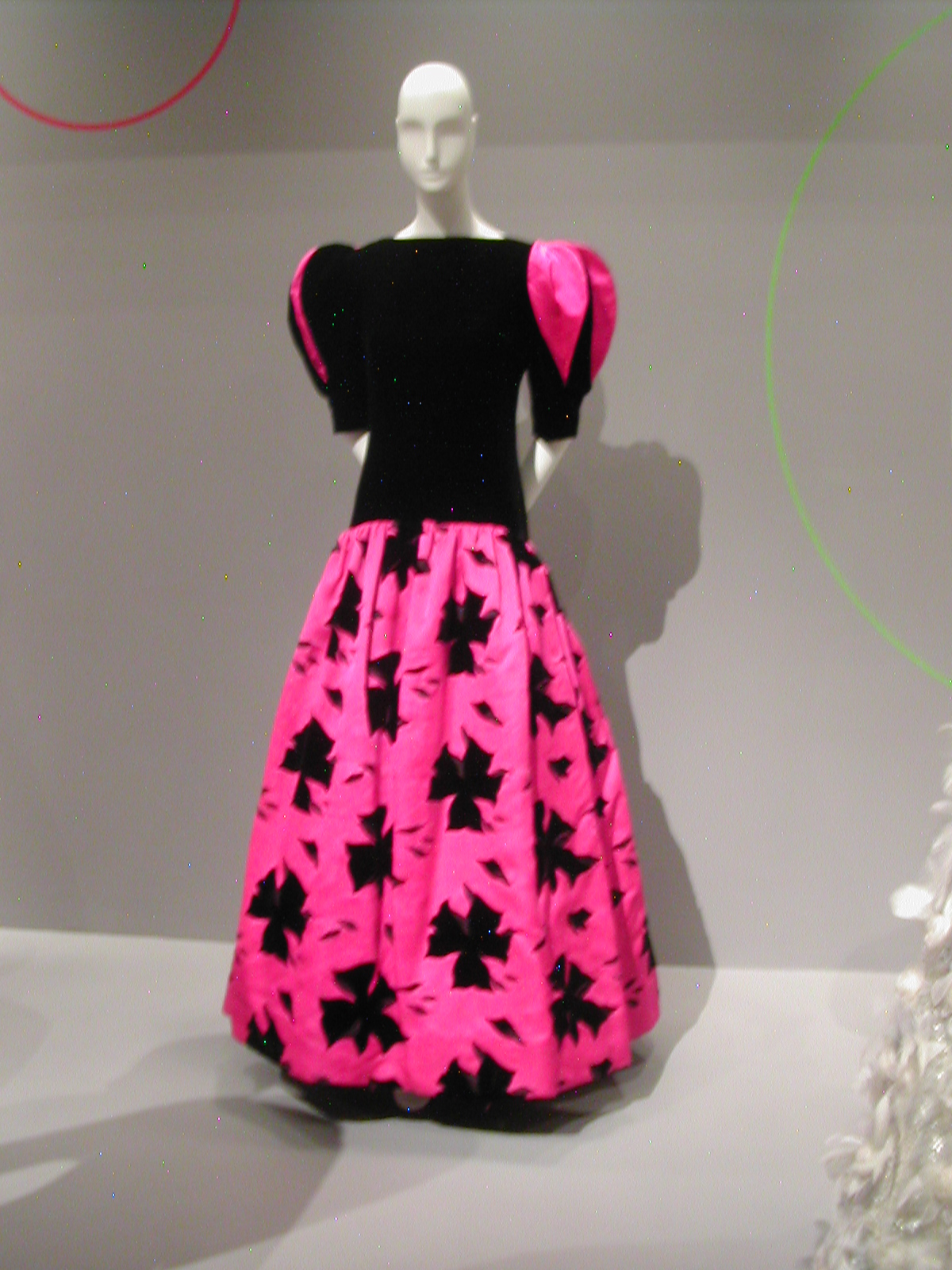
And here we come to everything that was wrong with the 1980s.  The black and hot pink dress! What were you thinking, Scaasi? It’s not even appropriate for prom. And the shoulders! No one should ever wear puffed shoulders. Chanel taught us not to wear puffed shoulders.  Listen to Chanel, my sisters! And banish puffed shoulders from your closets forever.  On the other hand, the suit on the right is quite nice.

What ordinary dresses Scaasi designed in the 1980s! Or is it that I grew up seeing the knock-offs of these dresses? But there is absolutely nothing distinctive about these.

Or these. And the colors. Yuck! Like wearing scoops of sorbet.

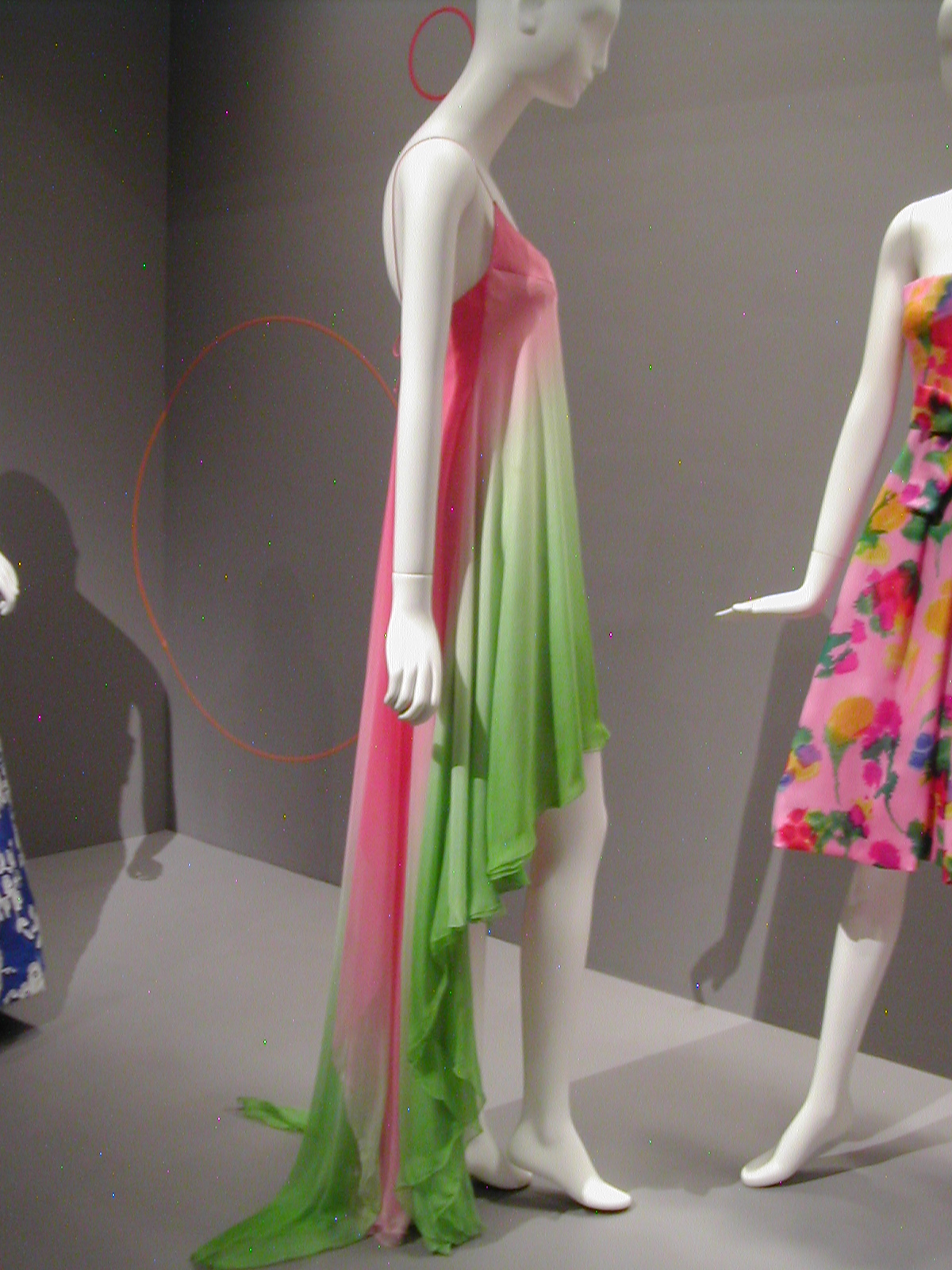
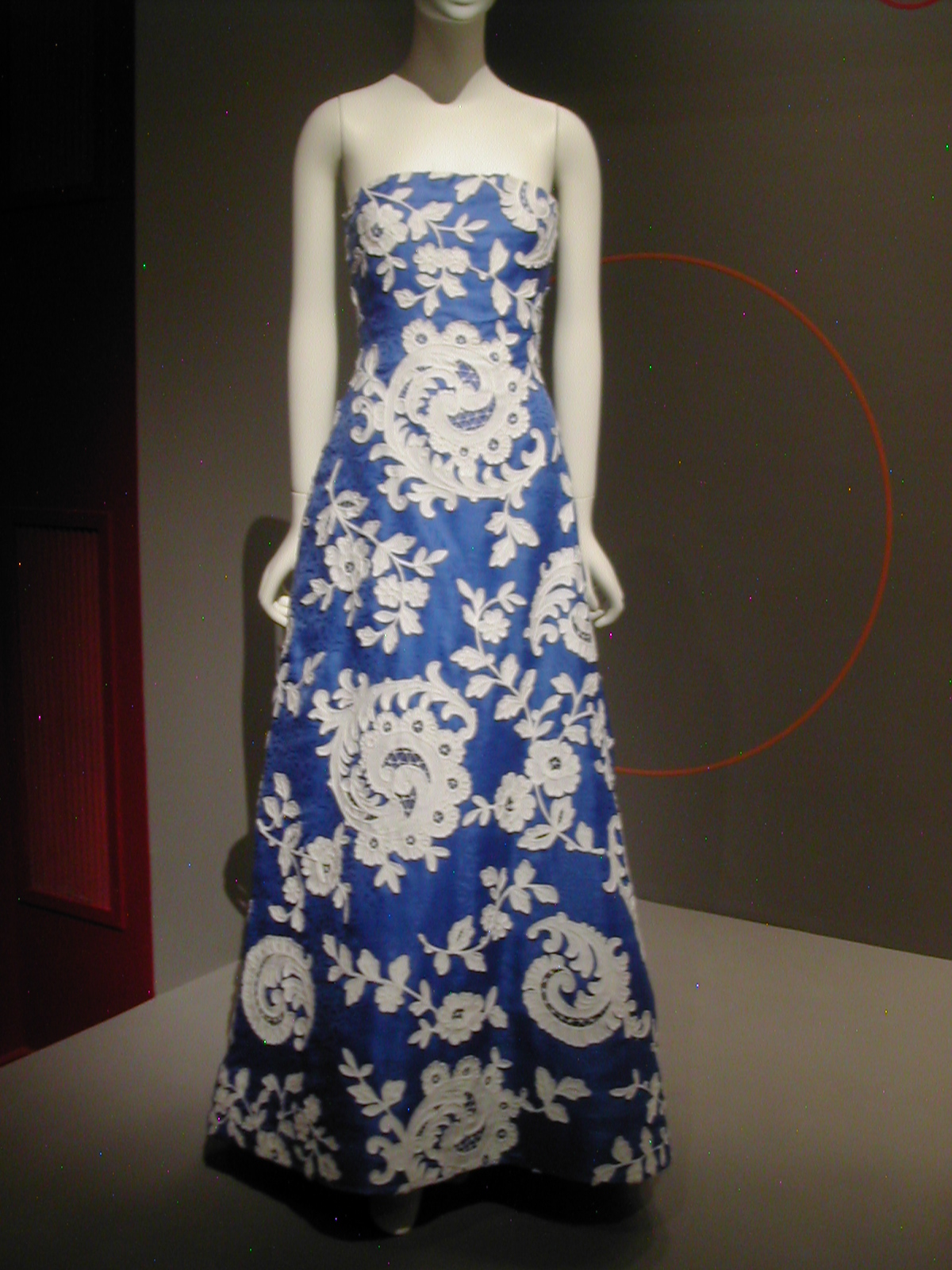
And with the Watermelon Dress, we come to a silhouette that is attractive on no one (except perhaps a few select supermodels).  And the blue dress with the white lace appliques is just blah.

So what lessons can we learn from the Scaasi exhibit, my sisters?

1. Dresses from the 1960s can still look fresh and fabulous.
2. The 1970s were a regrettable decade. And let’s just pretend that the 1980s never existed.
3. Chanel was always right about fashion. (Other things, not so much. Like collaborating with the enemy in World War II. But the woman knew what looked good on other women.)
4. If you get a chance to look like the Snow Queen, go for it. Don’t even think twice.

Posted in Uncategorized | 4 Comments