Now What?

On Friday, I successfully defended my doctoral dissertation. So, it’s done. I still need to print out copies for the library, which will be an elaborate process. And I still need to fill out a few forms. But all the hard work is over.

Now what?

After the defense, after everyone had shaken my hand and said “Congratulations, Dr. Goss,” I walked along the grassy strip behind the College of Arts and Sciences. It has a view of the river. There was a sort of mist in the air, falling – not rain exactly. But it was wet. I walked over the wet grass, looking at the river, feeling a curious blankness. For the last decade of my life, I have either been working on the dissertation or worried about not working on the dissertation (when I took time off, I mean).

And now, it’s over. I feel as though the rest of my life is in front of me, and I have no idea what it’s going to be like. I suppose it’s up to me to create, at least partly.

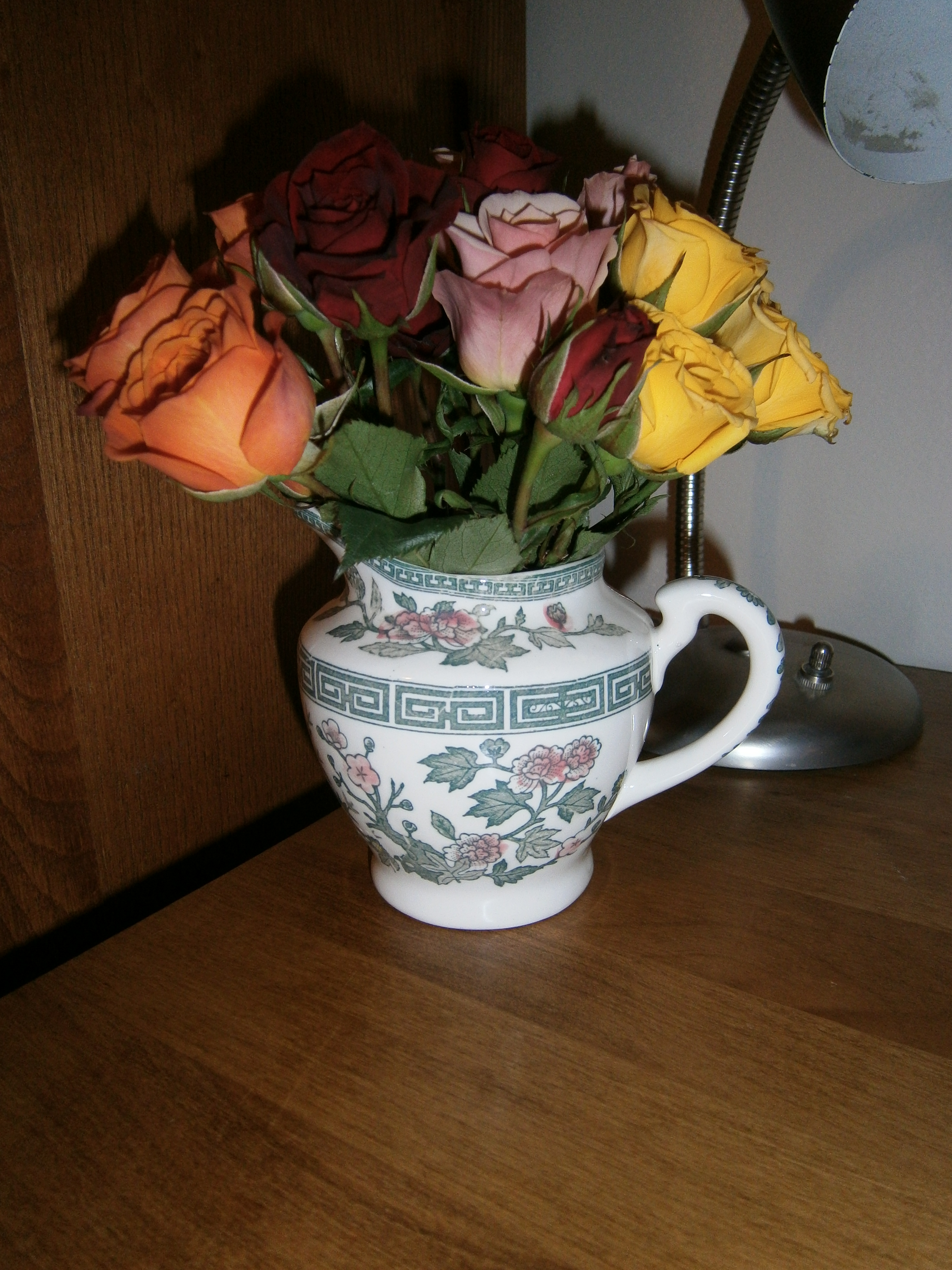
On Saturday, I went to Concord and bought myself two things. The first is a green transferware pitcher with pink flowers. Here is it on my desk, with clustered roses in it:

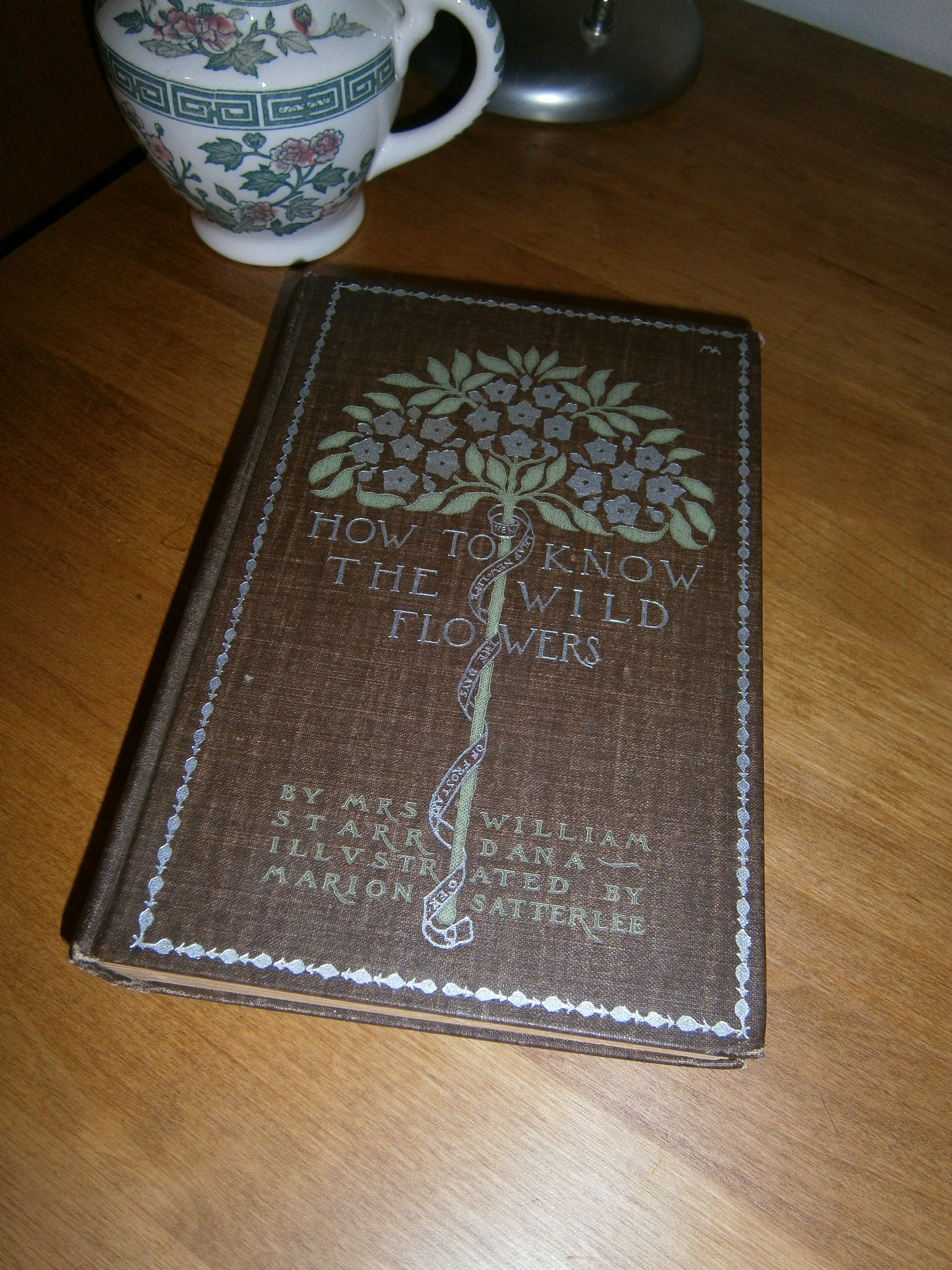
And I bought myself a book called How to Know the Wild Flowers, by Mrs. William Starr Dana, published in 1899.

I thought they were good presents to myself, for successfully defending.

I do have some projects I need to work on. I’ve promised a short story to an editor. I have a poetry collection to compile. But I still feel curiously blank. I wonder if I will feel like that for a while. I’d like to have a sense of joy and purpose again. I’m not entirely sure where they’ll come from. Perhaps they’ll return by themselves?

It does feel good, at least, to post here again. I couldn’t post for a while before the defense – I just didn’t have the concentration. Perhaps that will return too.

I think what’s happened is that I’ve gone through a liminal process. I’ve crossed a boundary and become something different from what I used to be. And now I’m not sure yet who I am. This is different from having finished the J.D. or M.A. Neither of those degrees were like this one. Perhaps part of the reason is that I’m now done with school. I will never be a student again. Even as I was graduating from law school, I knew I would be going back, pursuing a degree in English literature. Now, I can’t imagine a reason I would go back for another degree. I’m done. And it’s time to get to work, but I’m not sure who I am yet. And so, I’m not sure what work I need to do. (Writing, of course.  But writing what?  You see, it’s not so simple.)

It may take me a while to find out.

Posted in Uncategorized | 9 Comments

The Farmer’s Market

“Where have you been?” you ask. Because I don’t think I’ve updated this blog so intermittently since I first created it, in November. But I’ve never before been so close to my dissertation defense, either. So that’s where I’ve been, preparing and just trying to keep up with daily life, which is particularly full of teaching right now. In a little while, I have to work on creating an assignment and planning for tomorrow. But I’m taking a few minutes to write something here, really anything, so I don’t forget how. I feel almost as though I’m in danger of that.

Today was like all the days I’ve been having recently, in that almost nothing happened: I drove into the city to drop off some books with my first reader, and then I met with some students. And then I drove back. But on the drive back, I noticed that it was Farmer’s Market day in Lexington. So I stopped by the market and walked around. There was produce, eggs, meat (lamb and fish), honey, breads and pastries of various sorts. I bought myself a plastic cup of apple cider and a multigrain bun with raisins. I also bought two whole-wheat pastries with raspberry jam filling for later, to share with Ophelia. And – I couldn’t resist this – I bought a bunch of oyster mushrooms, all growing together, the loveliest gray, the most interesting shapes. What to do with them? I think I’ll just sautée them with onions and put them on toast, so I can really taste them. There was something so calm, so right, about walking around among the booths, seeing the various things people had for sale. Some from real farms, some just from small businesses.

It made me think about the life I want to live. It doesn’t involve going to the grocery store once a week and stuffing foods into an enormous refrigerator. It involves growing things, but also going to farmer’s markets and buying things, bringing them back home, cooking. (I’ve missed cooking lately. There’s no time to cook when you’re finishing a doctoral dissertation.) It made me think, with nostalgia, of living in Europe, going to the small markets several times a week to buy bread, cheese, sausages, tomatoes. And of walking around Budapest, along the narrow streets, so many of which seem to have ice cream shops on them. (But Hungarian ice cream is completely different from American ice cream. It’s more like gelato and comes in many more flavors.)

I think I’ll eventually be able to create that life for myself. I just have to figure out how. And at the moment, I’m too tired even to think about it. But it was nice to stop by the farmer’s market today, to walk around on the grass, drinking apple cider, looking at the honey soaps, the lavender creams, the hand-made pottery, the tiny eggplants and giant tomatoes.

Now, I’m going to get back to preparing. But I’m going to try to update this blog more regularly, even if I can’t update it every day (for now). After all, I need to keep writing, simply to remind myself that I can, and I’m not doing much of it at the moment. So I might as well at least write here.

(And here, by the way, is a link to the Lexington Farmer’s Market, in case you’re ever in the area.)

Posted in Uncategorized | 3 Comments

Deadlines and More Deadlines

I’ve been away from this blog for a while. But just a few minutes ago, I looked at the site stats and realized that this will be my 301st blog post. And that since I created it, this blog has received over 70,000 hits. I know, there are people who receive that number each day. But I’m so pleased with how this blog has done. After all, I created it in the midst of turmoil, and kept it up during one of the most tumultuous years of my life. Through finishing my dissertation and writing my first book (which will come out in January).

I’m still in the midst of the tumult, preparing for the dissertation defense. But soon that will be over as well.

And then I’ll have a series of deadlines. My Folkroots column will be due, and I have a couple of short stories that I owe people. And it looks as though I’ll be working on a poetry collection, which is something I’ve wanted to do for a long time. Honestly, I’m not sure my poetry is good enough to merit a collection, but other people seem to think it is, and I guess I’ll leave that decision up to them. And I need to get back to the novel.

You remember the novel, right? The YA novel from the YA novel challenge. I never finished it, of course. Instead, I finished the dissertation, and that made sense at the time. The dissertation had to be completed. But there’s more to the story than that. I learned something important this summer, while trying to finish the novel. It’s that I can’t write someone else’s novel. I have to write my own. I’m not sure, now, if the idea I had for the novel really works. I’m not sure it’s me, the way I write. I’m not sure it’s the story I want to tell. And I’m not sure what to do about that. Start over? Maybe.

I have a feeling that I won’t be able to work on the novel at all until I get some of the other projects I have out of the way – until I meet some of my deadlines. I certainly won’t be able to work on it, or anything else, until after the defense. I have a feeling, or at least a hope, that once I’m finished with the defense, it will come to me. That the novel I’m supposed to write will start forming in my head. That’s the way it usually happens, at least with stories.

So I have a column, stories, poems for the collection, and a novel to write. Honestly, I’ll be glad to get back to it. I need writing, and I haven’t been doing any of it lately, and that’s not good for me.

Right now, it’s deadlines all the way. But at least the projects I’m working on are ones I care about, ones that I think matter. Which is important because in the midst of turmoil, it gives me a feeling of purpose.

Posted in Uncategorized | Leave a comment

The White Witch

I know I haven’t been posting regularly. It’s because I’m so tired. Teaching and preparing for the dissertation seem to take all my time.

But I did find another “White Witch” poem. Here it is:

The White Witch
by Dora Sigerson Shorter

Heaven help your home to-night,
MacCormac; for I know
A white witch woman is your bride:
You married for your woe.

You thought her but a simple maid
That roamed the mountain-side;
She put the witch’s glance on you,
And so became your bride.

But I have watched her close and long
And know her all too well;
I never churned before her glance
But evil luck befell.

Last week the cow beneath my hand
Gave out no milk at all;
I turned, and saw the pale-haired girl
Lean laughing by the wall.

“A little sup,” she cried, “for me;
The day is hot and dry.”
“Begone!” I said, “you witch’s child,”
She laughed a loud good-bye.

And when the butter in the churn
Will never rise, I see
Beside the door the white witch girl
Has got her eyes on me.

At dawn to-day I met her out
Upon the mountain-side,
And all her slender finger-tips
Were each a crimson dyed.

Now I had gone to seek a lamb
The darkness sent astray:
Sore for a lamb the dawning winds
And sharp-beaked birds of prey.

But when I saw the white witch maid
With blood upon her gown,
I said, “I’m poorer by a lamb;
The witch has dragged it down.”

And “Why is this, your hands so red
All in the early day?”
I seized her by the shoulder fair,
She pulled herself away.

“It is the raddle on my hands,
The raddle all so red,
For I have marked MacCormac’s sheep
And little lambs,” she said.

“And what is this upon your mouth
And on your cheek so white?”
“Oh, it is but the berries’ stain”;
She trembled in her fright.

“I swear it is no berries’ stain,
Nor raddle all so red”;
I laid my hands about her throat,
She shook me off, and fled.

I had not gone to follow her
A step upon the way,
When came I to my own lost lamb,
That dead and bloody lay.

“Come back,” I cried, “you witch’s child,
Come back and answer me:”
But no maid on the mountain-side
Could ever my eyes see.

I looked into the glowing east,
I looked into the south,
But did not see the slim young witch,
With crimson on her mouth.

Now, though I looked both well and long,
And saw no woman there,
Out from the bushes by my side
There crept a snow-white hare.

With knife in hand, I followed it
By ditch, by bog, by hill;
I said, “Your luck be in your feet,
For I shall do you ill.

I said, “Come, be you fox or hare,
Or be you mountain maid,
I’ll cut the witch’s heart from you,
For mischief you have made.”

She laid her spells upon my path,
The brambles held and tore,
The pebbles slipped beneath my feet,
The briars wounded sore.

And then she vanished from my eyes
Beside MacCormac’s farm,
I ran to catch her in the house
And keep the man from harm.

She stood with him beside the fire,
And when she saw my knife,
She flung herself upon his breast
And prayed he’d save her life.

“The woman is a witch,” I cried,
“So cast her off from you”;
“She’ll be my wife to-day,” he said,
“Be careful what you do!”

“The woman is a witch,” I said;
He laughed both loud and long:
She laid her arms about his neck,
Her laugh was like a song.

“The woman is a witch,” he mocked,
And laughed both long and loud;
She bent her head upon his breast,
Her hair was like a cloud.

I said, “See blood upon her mouth
And on each finger tip!”
He said, “I see a pretty maid,
A rose upon her lip.”

He took her slender hand in his
To kiss the stain away –
Oh, well she cast her spell on him,
What could I do but pray?

“May heaven guard your house to-night!”
I whisper as I go,
“For you have won a witch for bride,
And married for your woe.”

I haven’t had time to answer the comments, but I think whoever said the White Witch is a version of the White Goddess, or the other way around, is right. So here is the White Goddess:

The White Goddess
by Robert Graves

All saints revile her, and all sober men
Ruled by the God Apollo’s golden mean –
In scorn of which we sailed to find her
In distant regions likeliest to hold her
Whom we desired above all things to know,
Sister of the mirage and echo.

It was a virtue not to stay,
To go our headstrong and heroic way
Seeking her out at the volcano’s head,
Among pack ice, or where the track had faded
Beyond the cavern of the seven sleepers:
Whose broad high brow was white as any leper’s,
Whose eyes were blue, with rowan-berry lips,
With hair curled honey-coloured to white hips.

The sap of Spring in the young wood a-stir
Will celebrate with green the Mother,
And every song-bird shout awhile for her;
But we are gifted, even in November
Rawest of seasons, with so huge a sense
Of her nakedly worn magnificence
We forget cruelty and past betrayal,
Heedless of where the next bright bolt may fall.

I love the last stanza. To be perfectly honest, I think that in creating his White Witch, Lewis was mostly influenced by George MacDonald’s Lilith, from his book of that name. Lilith was the first wife of Adam, who was cast out of Eden when she refused to be subject to him. She became a demoness, or at least that’s how the story goes. Lewis’ Jadis is of the line of Lilith, and is part jinn and part giantess, not human at all. The White Witch, in the first Narnia novel, isn’t quite Jadis yet: Lewis has not yet created the character fully. By the time he introduces the Empress of Charn, she has become more beautiful, more sexual, more dangerous. I also wonder to what extent he was influenced by H. Rider Haggard’s Ayesha, from the novel She? At one point, Ayasha also plans to conquer England, and she also has magical powers, as well as unending life.

Although this is not at all the book Lewis wrote, it almost seems to me as though Aslan and Jadis are opposites, principles in opposition, almost counterparts. If I were to write about them in some way, I think that’s how I would do it.

I’m very tired, but there are things I need to start doing, just so my writing life does not go completely stagnant. Updating this website, for example. I’ll try to do a little of that in the next few weeks, but mostly I’ll be working, studying. I’ll let you know when it’s all over. And then, I’ll be back.

Posted in Uncategorized | Leave a comment

Thinking of Jadis

I have a defense date. No, I’m not going to tell you what it is. I’ll just tell you afterward what sort of snake I had, and all that. And I’m very tired tonight, so instead of an actual blog post, you’re going to get two poems. But I do have some observations about them.

As far as I know, they were both written before The Lion, the Witch and the Wardrobe. Why is that important? Because they’re both called “The White Witch.”

The White Witch
by Olive Custance

Her body is a dancing joy, a delicate delight,
Her hair a silver glamour in a net of golden light.

Her face is like the faces that a dreamer sometimes meets,
A face that Leonardo would have followed through the streets.

Her eyelids are like clouds that spread white wings across blue skies,
Like shadows in still water are the sorrows in her eyes.

How flower-like are the smiling lips so many have desired,
Curled lips that love’s long kisses have left a little tired.

The White Witch
by James Weldon Johnson

O brothers mine, take care! Take care!
The great white witch rides out to-night.
Trust not your prowess nor your strength,
Your only safety lies in flight;
For in her glance there is a snare,
And in her smile there is a blight.

The great white witch you have not seen?
Then, younger brothers mine, forsooth,
Like nursery children you have looked
For ancient hag and snaggle-tooth;
But no, not so; the witch appears
In all the glowing charms of youth.

Her lips are like carnations, red,
Her face like new-born lilies, fair,
Her eyes like ocean waters, blue,
She moves with subtle grace and air,
And all about her head there floats
The golden glory of her hair.

But though she always thus appears
In form of youth and mood of mirth,
Unnumbered centuries are hers,
The infant planets saw her birth;
The child of throbbing Life is she,
Twin sister to the greedy earth.

And back behind those smiling lips,
And down within those laughing eyes,
And underneath the soft caress
Of hand and voice and purring sighs,
The shadow of the panther lurks,
The spirit of the vampire lies.

For I have seen the great white witch,
And she has led me to her lair,
And I have kissed her red, red lips
And cruel face so white and fair;
Around me she has twined her arms,
And bound me with her yellow hair.

I felt those red lips burn and sear
My body like a living coal;
Obeyed the power of those eyes
As the needle trembles to the pole;
And did not care although I felt
The strength go ebbing from my soul.

Oh! she has seen your strong young limbs,
And heard your laughter loud and gay,
And in your voices she has caught
The echo of a far-off day,
When man was closer to the earth;
And she has marked you for her prey.

She feels the old Antaean strength
In you, the great dynamic beat
Of primal passions, and she sees
In you the last besieged retreat
Of love relentless, lusty, fierce,
Love pain-ecstatic, cruel-sweet.

O, brothers mine, take care! Take care!
The great white witch rides out to-night.
O, younger brothers mine, beware!
Look not upon her beauty bright;
For in her glance there is a snare,
And in her smile there is a blight.

I wonder if these are the only two poems about a White Witch? I have a feeling there may be others. And if so – who is this White Witch poets keep writing about in such similar ways? She is very much like Jadis, isn’t she? It’s almost as though she’s a mythological figure we don’t know about. Belonging to a mythology we may have forgotten or never discovered. I wonder if I should write her story? I think I would like to.

Posted in Uncategorized | 5 Comments

The Lady of Shalott

I’m so busy right now that I barely have time to post. And so distracted by all the preparation that it’s difficult to come up with things to post about. (For the dissertation defense, but you knew that.)

Today, I thought I would just mention, once again, that The Thorn and the Blossom is coming out in about four months. (Isn’t it pretty?)

I was reminded of that because when I study, I listen to music, but I can’t listen to anything distracting. So I end up listening to a lot of music without lyrics, or to Loreena McKennitt, whose voice doesn’t seem to distract me, I’m not sure why. Here she is, singing “The Lady of Shalott,” which is one of my favorites by her:

I was listening to “The Lady of Shalott” and remembered that in The Thorn and the Blossom, my male character buys a notebook with the John William Waterhouse picture on it for the female character. Of course it has all sorts of significance in the story.

This was the picture I meant, when I wrote that scene:

That’s the depiction we’re probably most familiar with. But Waterhouse actually painted two other Ladies of Shalott:

I like this one because it’s contemplative, it’s her before the vision of Lancelot, before the curse falls upon her.

This is the moment when she actually sees Lancelot, and it’s my least favorite, perhaps simply because the colors aren’t as vivid, but also perhaps because it’s too easy to choose that moment. It’s the dramatic moment, when the most important thing happens. The other moments, before and after, are not moments of choice. They are moments before choice and after the choice has already been made.

Why did Waterhouse do better with those moments? I’m not sure. But I often find that the least interesting moments in literature are also when things happen. We are told to dramatize, dramatize, but the moments that are most interesting are the moments before and after, the contemplation and the consequence. I wonder if that’s why they are almost all Henry James ever wrote? Although I would not recommend James as a model for any writer. I think you can go very wrong trying to write like James.

It’s late, and I’m tired, and I have to go back to work. But I hope you like these Ladies of Shalott as much as I do. I suppose each one, on the notebook in which my female character writes her poetry, would have a different significance. But all of them would be appropriate.

I can’t wait until the book comes out . . .

Posted in Uncategorized | 3 Comments

Two Hawks

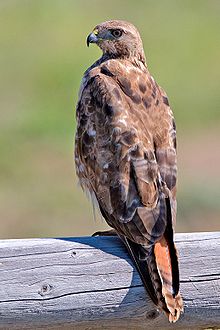
I meant to get my work done early today, so I could write a proper blog post (because I missed yesterday altogether). But I’m still working. Still trying to catch up. So instead of a proper blog post, you’re going to get two hawks. One of them is in a favorite poem of mine, “Hurt Hawks” by Robinson Jeffers.

Here it is:

I.

The broken pillar of the wing jags from the clotted shoulder,
The wing trails like a banner in defeat,

No more to use the sky forever but live with famine
And pain a few days: cat nor coyote
Will shorten the week of waiting for death, there is game without talons.

He stands under the oak-bush and waits
The lame feet of salvation; at night he remembers freedom
And flies in a dream, the dawns ruin it.

He is strong and pain is worse to the strong, incapacity is worse.
The curs of the day come and torment him
At distance, no one but death the redeemer will humble that head,

The intrepid readiness, the terrible eyes.
The wild God of the world is sometimes merciful to those
That ask mercy, not often to the arrogant.

You do not know him, you communal people, or you have forgotten him;
Intemperate and savage, the hawk remembers him;
Beautiful and wild, the hawks, and men that are dying, remember him.

II.

I’d sooner, except the penalties, kill a man than a hawk;
but the great redtail
Had nothing left but unable misery
From the bone too shattered for mending, the wing that trailed under his talons when he moved.

We had fed him six weeks, I gave him freedom,
He wandered over the foreland hill and returned in the evening, asking for death,
Not like a beggar, still eyed with the old
Implacable arrogance.

I gave him the lead gift in the twilight.
What fell was relaxed, Owl-downy, soft feminine feathers; but what
Soared: the fierce rush: the night-herons by the flooded river cried fear at its rising
Before it was quite unsheathed from reality.

And here is Robinson Jeffers reading the poem:

I’ve seen hawks many times, of course, flying high above. You can always tell they are hawks: the silhouette is so distinctive. And several times in my life I’ve been privileged to see hawks up close, carried on a leather gauntlet, their jesses held in the fist. It is a privilege, always. After all, these are birds that used to hunt for kings and their retinue. Look a hawk in the eyes, sometimes, and you will realized that it is the perfect predator. Aerodynamic and slightly mad. The eyes will look at you with a mad intensity.

Robinson Jeffers knew hawks, and one of my other favorite writers, T.H. White, knew hawks as well. He wrote one of my favorite books about hawks, The Goshawk, about his futile attempt to train one so it would hunt for him, using a medieval manual of falconry. It chronicles his mistakes, his defeats, his almost always temporary triumphs. It is a book I read every couple of years, because it’s about a man who did something he loved, albeit badly. But he did it with great passion, and books about that sort of thing are always worth reading. And he tells you things that are worth knowing, like the following: “Hawks were the nobility of the air, ruled by the eagle,” and “in the old days, when to understand the manage of a falcon was the criterion by which a gentleman could be recognized – and in those days a gentleman was a defined term, so that to be proclaimed ‘noe gent.’ by a college of arms was equivalent to being proclaimed no airman by the Royal Aero Club or no motorist by the licensing authorities – the Boke of St. Albans had laid down precisely the classes of people to whom any proper-minded member of the Falconidae might belong. An eagle for an emperor, a peregrine for an earl; the list had defined itself meticulously downward to the kestrel, and he, as a crowning insult, was allowed to belong to a mere knave – because he was useless to be trained.”

That’s a very different idea of a hawk, not as wild and free, belonging only to itself, but as another participant in an ordered medieval world where even birds have their ranks.

I’m not sure why I’m thinking of hawks today, except that I see them soaring, wild, free. And I keep that image in my head as I’m doing my work, because I would like to be soaring too, even while I’m desperately trying to catch on on everything. So thinking of the hawks gives me hope that once I’m done with these intensive projects, there will be something better: some blue sky above me, some wind under my winds.

Posted in Uncategorized | Leave a comment