Telling the Truth

My Klout score is 58. This morning, I weighed 126 pounds. The advance for my first book was $0. The advance for my last book was $5,000.

Why am I telling you this?

About a week ago, I read a story in The New York Times about Klout.com, which claims to track and score your social influence. I had no idea what it was, so of course I checked it out. And now I know my Klout score. What I learned in the process is that, although everyone I asked about it told me how silly it was, how it made the internet seem like high school, many of the people I know and follow were on Klout. They were presumably checking their Klout scores as well. (I won’t name names. You know who you are.) The higher their score, the more likely they were to be registered on the site.

And this got me thinking about all the things we don’t talk about.

There are so many of them!

I think it’s because we don’t want to seem shallow, vain, narcissistic. We don’t want to seem overly concerned with money. (When you’re in a group of writers who are just starting out, they talk about craft. When you’re in a group of professional writers, and all of you in that group are professional writers, you know what they talk about? Money. And sales. That’s where you get the real information.) We know that we’re supposed to focus not on our weight, but on our health. We know we’re not supposed to compare ourselves to others (although we don’t, don’t we?). We’re supposed to be inclusive rather than competitive. But the truth is that many of us are competitive and ambitious. We just politely disguise the fact that we are. And of course there are the things we’re ashamed to talk about, because they might expose that we’ve failed.

The problem with not telling the truth is that we end up not telling each other things – withholding information. I spent years reading ridiculous and potentially harmful diet books before I realized that the people who actually maintained the shape I wanted to be in all monitored their weight carefully. So now I count calories, and I weigh myself every morning. If I weigh more than I would like to, I cut back on my calories. When I say that I need to lose five pounds, I always get “Oh no, you look fine,” as though my statement were some sort of code for self-doubt or criticism. But what I actually mean is that in the next month, I intend to lose five pounds. I take ballet classes. If I don’t understand and have control over my body, I could injure myself.

Similarly, we are often given the impression that people with writing careers got them in some mysterious way – by luck, by good fortune. That may sometimes happen, but it’s rare. The people I know who have writing careers built them – they are ambitious, they kept track of their progress. They publicized in specific and targeted ways.

I’m always fascinated by stories of how people got where they are, like this article on how Imogen Heap makes and markets her music. How she has found her own way in the music industry, which is even harder to navigate than the publishing industry. And when I read stories like that, I think, is there a lesson in it for me? For what I do? Because I am ambitious, and silly as a Klout score genuinely is (what does it mean, anyway?), I’m going to keep track of it. And if it falls, I’m going to wonder why.

I’m always grateful to people who tell the truth, rather than practicing polite reticence or obfuscation. People like Catherynne Valente or Tobias Buckell (who once gathered and posted information on book advances – the first information some people had ever seen on what is standard in the industry). And I think that if you’re a writer, telling the truth is important. That’s the business we’re in, after all: truth-telling, even if we tell it with elves or dragons. If you’re a writer, you have no business maintaining polite fictions.

I think society expects us to make it look easy. Like ballet: a good ballerina will make it look as though anyone can jump that high. But it takes a lot of work. If I didn’t watch calories, I would gain weight fairly quickly, because I like food. A lot. I want my next advance to be higher (if any publishers are listening). And I’m going to keep working on this writing career of mine, because it really, really matters to me.

Also, and this is the final thing I’ll say, in our society there’s a tremendous sense of shame associated with failure. I’m always so grateful when people talk about their failures (Imogen Heap was dropped from record labels twice), because it makes me feel as though my failures are not so bad, nothing to be ashamed of. Simply bumps on the road. So in the interest of truth-telling, I did not get into graduate school the first time I applied (my essay was not particularly good, and I wasn’t mentally ready – it was a failure, but turned out to be good for me because I ended up in the program where I belonged). My hair color is Naturtint 7G Golden Blonde, and yes it’s close to my natural hair color, but redder, brighter, because I like it that way. And I deal, on and off, with depression, which is not a mood but a recurring illness.  I’ve been dealing with it a lot this year.

If I can think of anything else to tell the truth about, I’ll let you know.

Posted in Uncategorized | 16 Comments

Simplicity

First, let me tell you about the auction to benefit Terri Winding. Terri has been one of the benefactresses of the fantasy community for many years. She is a writer, artist, and editor, and writes one of my favorite blogs, The Drawing Board. She is also one of the loveliest people you are ever like to meet. Because she’s been dealing with medical and legal issues, her friends have set up an auction to help her out. The most astonishing things are being auctioned: art by some of the best fantasy artists, plenty of signed books, opportunities to have your manuscripts critiqued, and some truly strange and interesting items. If you’d like to see what the auction has to offer, click here:

Magick 4 Terri

I’ve donated some items to the auction as well, and when they are listed, I’ll let you know!

Today’s blog post is inspired by a post written by Damien G. Walter, the Guardian columnist who does such a wonderful job bringing attention to important fantasy works and writers.

Yesterday, he wrote a post called “Why Crap Books Sell Millions.” It’s a response to an interview with Umberto Eco in The Guardian in which Eco says, “I was always defined as too erudite and philosophical, too difficult. Then I wrote a novel that is not erudite at all, that is written in plain language, The Mysterious Flame of Queen Loana, and among my novels it is the one that has sold the least. So probably I am writing for masochists. It’s only publishers and some journalists who believe that people want simple things. People are tired of simple things. They want to be challenged.”

Walter has a different opinion. He writes,

“I wish I could agree with Umberto Eco (who I LOVE) in The Guardian when he says that ‘people are tired of simple things, they want to be challenged.’ And by wish, I mean that every fibre of my superior, snobby little soul is vibrating in agreement. But the rational part of my mind that retains a tenuous engagement with reality knows that more people will watch X-Factor this Saturday than will ever read any one of Mr. Eco’s sublime novels.

“When it comes to complexity in novels, it is lost on most people. Worse than lost, it will likely make a text incomprehensible to most people. Because most people, whilst literate, just aren’t very good at reading. Dense, poetic prose, rich in symbolism and thematic depth, the things us writerly smarty pants all love so much, will just confuse the hell out of most people. That prose passage you’re so proud of, the one that switches seamlessly between the internal monologues of the novel’s five key protagonists whilst expanding the narratives core philosophical argument? Most people just couldn’t make it go in to their head even if they tried. You may as well expect them to read pure binary machine code.

“Bestselling books are, by and large, simple books. Simple stories, simple language, simple ideas. But, simple is as simple does. Perhaps the real art of the novelist is saying the most complex things in the simplest ways, so that even stupid people can understand.”

I disagree with Walter’s use of the word “stupid” here because I think it’s imprecise. I know people who put one of Eco’s novels down after a couple of pages. They’re not stupid. The ones I know personally tend to be doctors and lawyers, and they’re more likely to watch (and love) Downton Abbey than X-Factor. They like to read John Grisham. They pay attention to the latest bestsellers. They’ve read The Da Vinci Code and Eat, Pray, Love. They like nonfiction, such as Atul Gawande’s books on the medical practice or books by political figures.

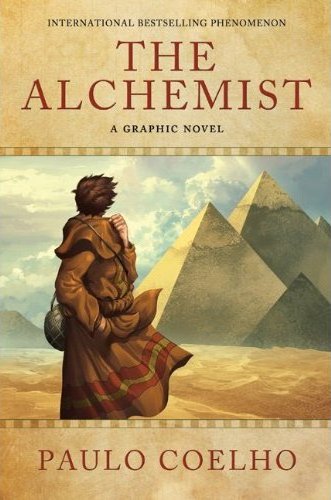
Bestselling books are generally simpler, I think that’s true. Two summers ago, I was staying at Lake Balaton in Hungary. The house had very few English books in it. I ended up reading a John Grisham. After a while I began skipping, because I realized that if I read random pages, I could still follow the plot. And I recently read Paulo Coelho’s The Alchemist.

I mostly liked it, although it lost me toward the end, when Santiago turned into the wind. At that point it became too religious and mystical for me. I lost the connection the book had made, all along, between my personal journey and Santiago’s allegorical journey. And for some reason, I didn’t like that Santiago’s journey was to find his treasure, while the journey of the woman he loved was to find him – her love. She should have been on a quest to find her own treasure. I don’t think your treasure can be another person. (Imagine the pressure you put on someone, expecting them to be your life’s goal!) But I could absolutely see why the book had sold as well as it had.

It’s a simple book, in that its meaning is immediately accessible, and I think Walter is absolutely right that simple books, without the sorts of erudite complexities that one sees in Eco, appeal to a much wider audience. So often when we sit down to read, we want simplicity: a clear path into the book, an easy escape from the reality we’re leaving behind. If the book contains a lesson, we want it to be evident, not hidden from us.

That’s not necessarily a bad thing. Simplicity can be done badly, or done well. The Little Prince is a lovely book, and it’s simple, accessible. The novelist has to make choices, and one of those choices is prose style: between “dense, poetic prose, rich in symbolism and thematic depth” and something else. I suspect the reason Eco’s supposedly simpler book did not sell well is that it wasn’t written in his style. When people buy Eco, they want Eco. They are prepared to be challenged. If they weren’t, they would buy something else.

So I suppose what I’m doing here is, first, saying that “simple” and “crap” are not the same things – that simplicity is an important tool for the writer, that there is a reason simplicity sells, and that it can be used well. And second, I’m saying that what Eco claims may be true for Eco. Readers may go to him when they are tired of simplicity. What is true for one writer may not be true for another – after all, Eco’s best-selling book is The Name of the Rose, and how many readers put it down when they get to the chapter in Latin and just watch the movie? Simplicity and complexity are tools for the writer. You need to know which tool you’re using and why, and also know yourself – which tool is appropriate for the writer you are.

(I write this as someone who has been advised in the past, by a kindly relative who no doubt wanted to see me on a bestseller list, to read Dan Brown and write more like that. Just so you know.)

Posted in Uncategorized | 8 Comments

Reading and Writing

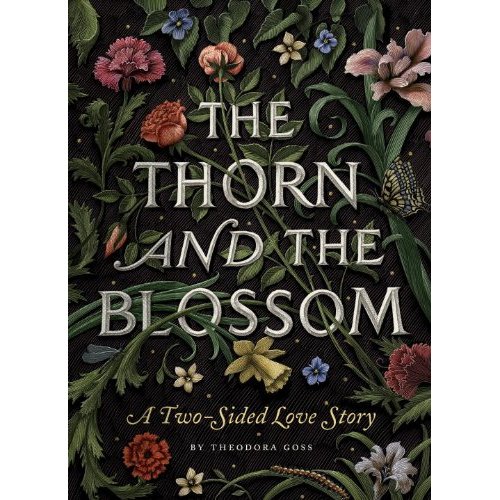
Did you know that Goodreads is running a giveaway for 30 free copies of The Thorn and the Blossom? The contest ends in a couple of days, on November 30th. If you’d like to enter, click on the link below:

Goodreads Giveaway

The contest is only for readers in the United States. I’m sorry about that, but I assume the shipping costs are too high for foreign readers. (I’m not the one running the contest, of course. I actually only found out about it by looking at Goodreads.)

Today I thought I would talk about the importance of reading, when you’re a writer.

One of the nicest aspects of being a writer is that all sorts of things that are entertainment for other people are work, for you. Watching a movie is work. Watching television is work. And of course reading is work. It’s work because when you’re a writer, you can’t help analyzing whatever it is you’re watching or reading. You can’t help paying attention to setting, characterization, style. Your brain is always taking those things in, and when you go to write, they come back to you. They help you think about story.

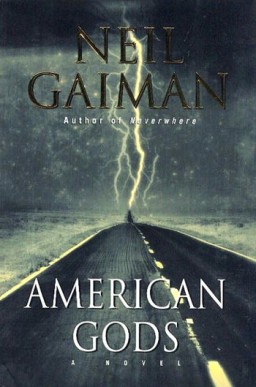
Right now, I’m reading American Gods, by Neil Gaiman – the author’s preferred version, which I was given for free at the World Fantasy Convention. (I came back with all sorts of books from the World Fantasy Convention.)

I’m fascinated by several things about the book. First, by how well Gaiman has created an American mythology, has captured a sort of American-ness, considering that he grew up in England. It makes me think that I may be able to capture something English in my book, despite having grown up here. It helps that the England I want to write about isn’t the real England, but literary England – the one created for us by Charles Dickens and Arthur Conan Doyle. Second, by how easy the book is to read, how you sink into it even though parts of it are unpleasant. The places it describes aren’t places I want to spend time in, and yet I’m enjoying spending time in the book itself. Third, by how he breaks rules that I know aren’t really rules, but that I had nevertheless internalized. For example, his story is digressive – it goes off into other stories. And that’s all right, because I always want to come back to the main story. And the digressions are interesting in themselves. That gives me a sense for how I could write my own novel.

Some writers say that since starting to write professionally, they no longer enjoy reading fiction. That hasn’t happened to me (and how awful if it did happen!). What has happened instead is that I read differently. It’s as though I read with two parts of my brain at the same time: one part is living in the story, and one part is analyzing it. That doesn’t lessen my enjoyment of it – but it changes that enjoyment. I’m like a dancer watching a dance, knowing the names of the steps. I’m glad to be in that position, of an insider as it were.

Being an artist means you get to – have to – live fully and consciously. You can’t be lazy in your approach to life. Everything around you is to be experienced, so you can keep the experience until later, when you write the story. That requirement changes the way you approach life. It means that rather than simply experiencing, you are always also observing the experience, mentally recording it. But I think it leads to a richer and more interesting way to live. It gives life a particular intensity.

So if you’re an artist, say to yourself, I have permission to experience everything, because it’s material. And in particular, make time to watch movies or television, to read. Because those are stories, and you need to experience how other people create stories so you can create stories yourself – so you can think about the art of story-making.  But reading is especially important, because you want to know what other writers are doing with words.  That gives you a sense for what you can do – for your own possibilities.

And if people accuse you of wasting time because you’re watching a police procedural on television, tell them it’s because you’re working. (Sometimes I watch those terrible true crime shows, because I want to write murder mysteries. It’s very useful, learning about different ways to murder someone. We can be somewhat macabre, we writers.)

(When I tweeted a thought about this yesterday, someone responded that using social media also counted as work, for a writer. And I agree with that. But that’s for another post. In the meantime, if you want to follow me on twitter? Click here.)

Posted in Uncategorized | 2 Comments

Being a Heroine

(If you’re male and reading this, substitute hero for heroine and vice versa. I’m writing about being a heroine because I’m female, and I’m thinking about this blog post in terms of myself. But really, what I’m going to write about is not particularly gender-specific.)

I don’t know where the phrase “Be the heroine of your own story” originated. It’s been knocking about the internet for a while, and Nora Ephron has said it, but I don’t know if she was the first.

I think it’s an important phrase because we understand the world by telling stories about it, and if we want to change our lives, we need to change our stories. And we can – we can change the stories we tell about our lives and ourselves. And those stories can have significant impact, because what you believe about yourself affects your life in many ways. It affects what you focus on, what you strive for. How you allocate your time.

So I want to try to understand it better. What does it actually mean to be the heroine of your own story?

The heroine has a journey.

In a story, the heroine is on a journey from somewhere to somewhere else. It can be an external or internal journey — of course, it is often both. But she is in progress, on the move. There may be periods of stasis, times she needs to spend up a tree or in the underworld. But those periods are part of the journey, not permanent stopping-places. And they are often times when internal progress happens, when she becomes something different than she was internally, and can then change her external circumstances.

And the heroine defines her journey. It is defined by the choices she makes along the way. She decides whether to climb the glass hill in iron shoes. (Yes, there are stories in which the heroine is passive, but we have been tricked into thinking that is the typical storyline by Disney. In the old fairy tales, the true stories, the heroine is almost always active. She decides whether to be nice to the witch in the woods, whether to weave her brothers shirts of thorns. Whether to marry the white bear.

The heroine has adventures.

This is different from having a journey. On that journey, things happen to the heroine that she cannot control. Those are the adventures. She has to respond to them by making choices, but sometimes there are no good choices. Sometimes it’s the glass hill in iron shoes. What that means, in practical terms, is that sometimes the heroine’s life sucks. Sometimes she has to serve the witch in the woods for seven years. Sometimes she’s stuck in the underworld, which is a boring place, let me tell you.

But if she understands that she’s the heroine in a story, she knows that the times that suck are her adventures, and she needs to make it through them with a combination of courage, determination, common sense, and whatever magical implements she can find.

Being the heroine of your own story means that when the bad times come, and they will come if you’re the heroine (only non-heroines get to live happy, uneventful lives), you get to tell yourself that they’re part of the story. And you get to show that courage, determination, common sense, etc. Which is a lot better, I think, than sitting around and saying, wow, life sucks.

The heroine has flaws.

The heroine always has character flaws. She is curious, opinionated. She does not follow the rules. If the hero says, you may never see my face at night, what is she going to do? Find a candle, of course. Those character flaws get her into trouble. But you know what? They are also the reason we love her. If she were genuinely perfect, we wouldn’t care about her, because perfect people are not interesting.

That means you get to have character flaws, and your character flaws are loveable. Even, perhaps especially, when they get you into trouble. (Remind yourself of that, when you get into trouble.)

The heroine is at the center of her story.

You get to be at the center of your story. No one else does. There are going to be people who call you selfish because you want to be at the center of your story. Because you want it to be about you, about your choices. That’s because they want to be at the center of your story. Parents do this more often than I think they realize — want to be at the center of their childrens’ stories. But your story is about you.

The heroine is not dependent on the hero.

The hero is there, for the heroine to fall in love with, form a partnership with. But he is not at the center of her story. He has his own story, his own journey to go on. While she is climbing the iron hill, he is resisting the advances of the ogress. She can’t simply wait around for him to show up — he is not her story. He may be a part of it, their stories may intersect. But she has to go on a journey as well. Otherwise, it’s not much of a story, is it? (They met, they married, they lived happily ever after. What’s the point?)

The heroine gets interesting clothes.

She may wear a cloak made from the fur of a hundred animals. She may wear a dress as bright as the stars. She may wear a suit of armor. But she gets the interesting clothes. She gets to look like a heroine. Unless she’s in disguise. (Are you in disguise? When I worked at the law firm, I was in disguise. Sometimes you have to disguise yourself, among people who don’t understand how these things work.)

(I mentioned that this was not particularly gender-specific, so I’ll just say here that the hero gets some smashing outfits as well, like magical suits of armor. Plus, he often gets to turn into an animal.)

These are all good things to remind yourself of, if you’re the heroine. You’re on a journey, and parts of it are going to suck because that’s just the way journeys are. But you’re going to overcome them — you’re going to grow as a person, and lop off the ogress’s head. And all your faults and flaws and inadequacies are signs of character – don’t let anyone convince you otherwise. You’re going to make mistakes because of them, but that’s part of the journey too. And don’t let anyone tell you that the story is not about you, because it is. Finally, and this is an important finally, you get to look the part, whatever you think looking the part is. Are you the sort of heroine with a gamine haircut who knows how to use a sword? Are you the sort of heroine with hair to your waist who charms animals? There are all sorts of heroines, and you get to decide which sort you are. Because (did I say this already?) it’s your story.

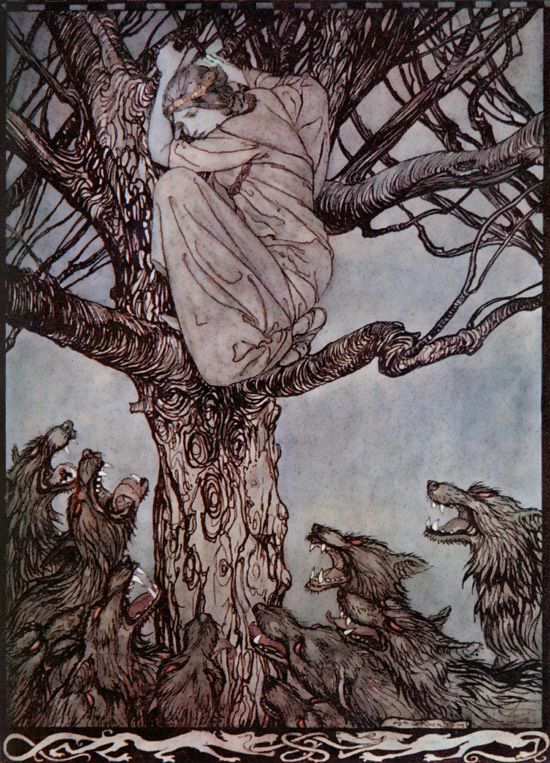
Arthur Rackham Illustration

(The illustration is by Arthur Rackham.)

Posted in Uncategorized | 8 Comments

Style as Story

The title of today’s post comes from a line in a blog post by Justine Musk called “How to Be a Genius (Or Just Look Like One)“:

“Style is the story you tell about yourself to the world.”

In it, she talks about the style of Coco Chanel, and I’ve written about Chanel before myself. She had extraordinary style. If you are a woman, look into your closet: you will find any number of items influenced by Chanel. As I type this, I am wearing a black knit cardigan over a black knit shirt. Chanel. (Also jeans and Keds, which I’m sure she would never have worn, but she did give us women who dressed like boys – and that’s how I’m dressed today, by late nineteenth-century standards. Like a boy ready for sports. A late nineteenth-century woman would never have worn what I’m wearing.  It was Chanel who gave us sportswear for women.)

Why did that line catch my attention so much? I suppose because I like to watch people, and so often I find that how they present themselves tells a story – the story of what they think of themselves. Where they see themselves in the world. People tend to place themselves, and style tells you about that place – where it is, what it’s like.

I think of style as having three components. First, there is how you look. Then, there is how your surroundings look. And finally, there is something more complicated – the style of your art.

I was thinking of the second today because I recently met a person who told me that he had installed a flat-screen television in his bedroom so he could watch sports. And in the same conversation he told me that his family used paper napkins at dinner. And I realized that was the opposite of how I had grown up – we had no television, because my mother was convinced that it would ruin us intellectually, but we ate with the family silver. And always had cloth napkins. Those are both choices, and the universe won’t end if you choose not to have a television (although if I didn’t have one now, I’d miss watching Once Upon a Time, or Being Human on DVDs – the BBC version, of course) or use paper napkins. But your choices do reveal your priorities.

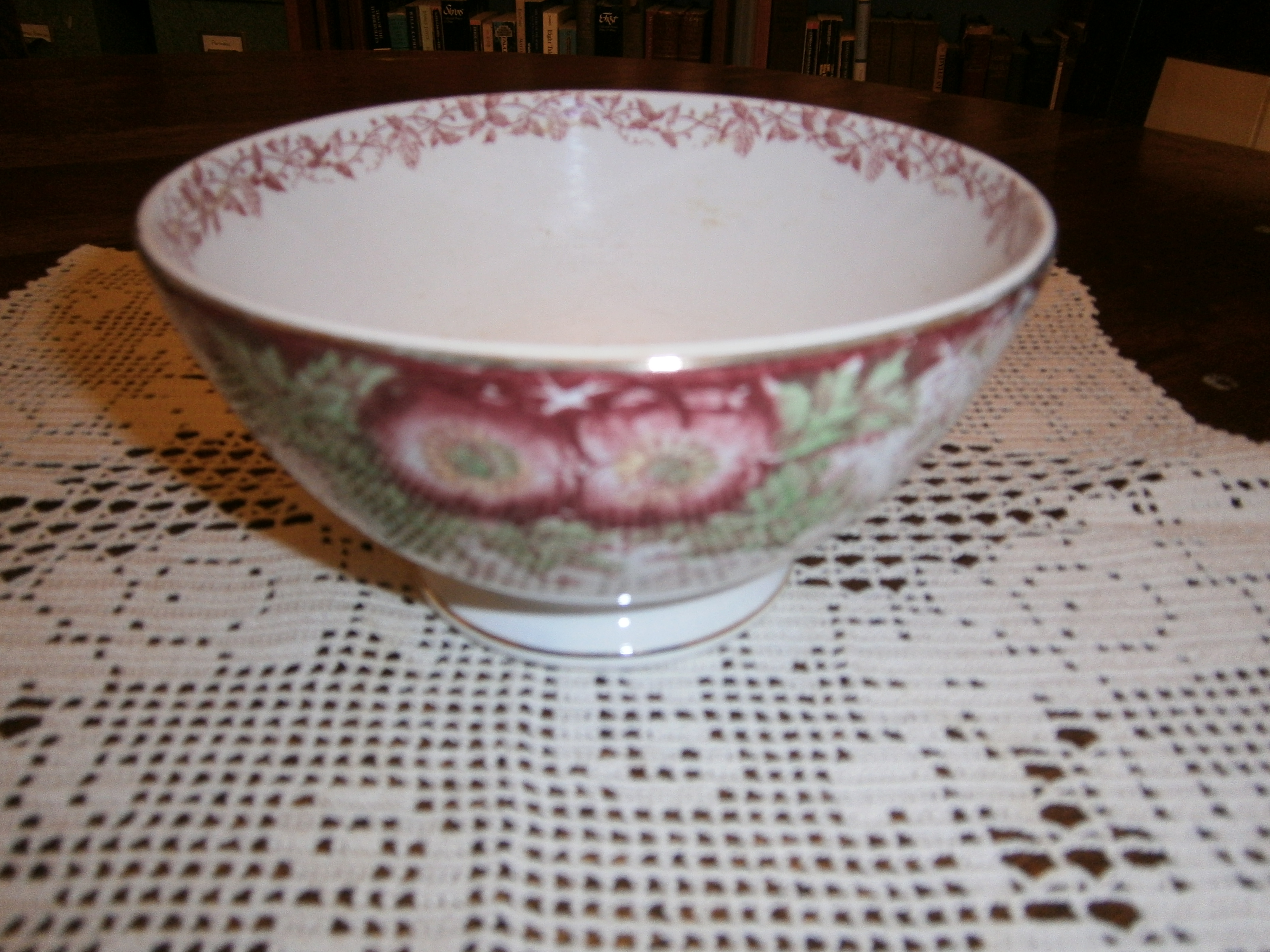
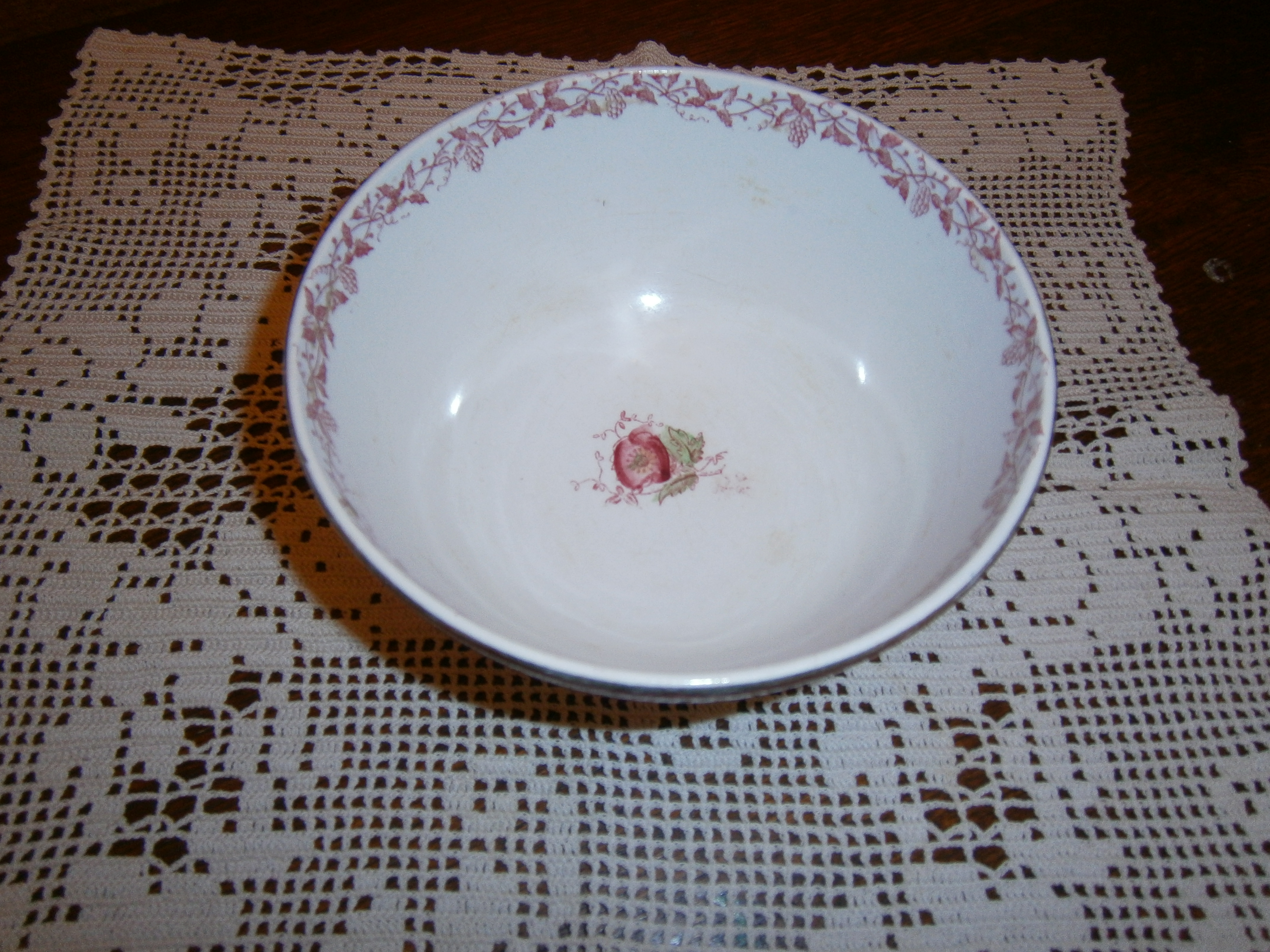
I bought two things recently that I thought were very much in my style. The first is an old bowl, probably late nineteenth or early twentieth century, with red transferware and hand- painted details.

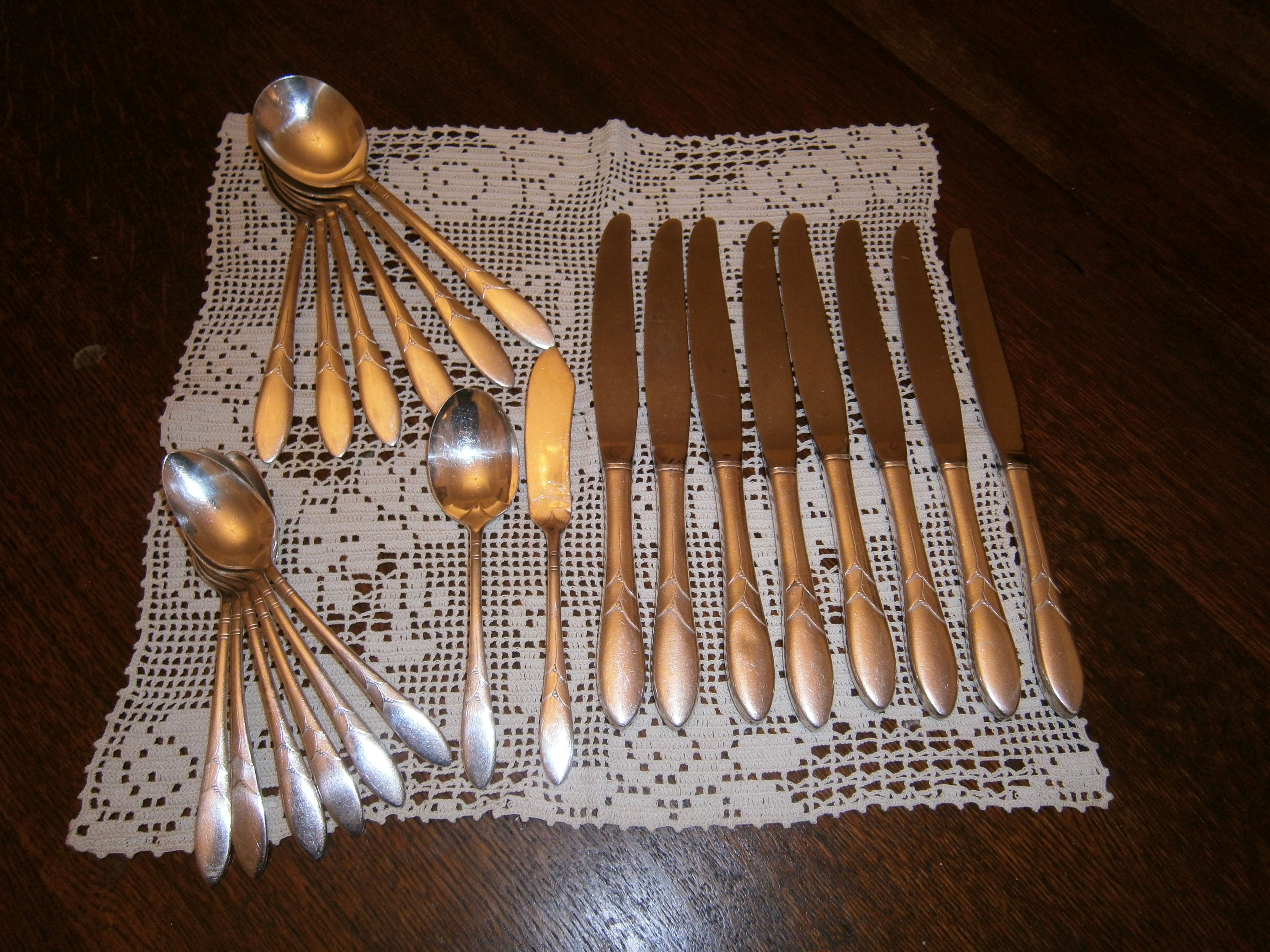
I think it’s rather pretty. The second is a set of silver plate with a flower pattern on the handle.

These are both things I saw and fell in love with, in one of the antiques stores in Concord. I think style is like that: it’s organic, made up of the things you love, the things that are important to you. But it’s also something you can think about and develop. Because style is a story we tell about ourselves to the world, and that story is always changing. In a way, if you change your style, you can change your story. So if you want to change that story, if you want the world to perceive you differently, or you simply want to feel differently about yourself, you can do it by changing the way you look, the way you put together your surroundings.

Style is something fun, individual. Or is should be. (Shouldn’t the story you tell about yourself to the world, and to yourself, be fun, individual?) And style is also a process of self-discovery.

What I’ve been thinking about recently is how I want the three aspects of my style to work together. To express who I am, or think I am. I spent a lot of time being confused about that, trying to be who I thought I should be – who people seemed to want me to be. But at some point in your life you have to discover, or perhaps decide, who you are. And that’s when you find your personal style. That’s when you realized the story you want to tell the world about yourself.

And I think that’s important – thinking about that story, because we do all have our stories, and we’re always telling them, whether we’re aware of it or not.

As for my personal style, well, you can see it all over this blog, can’t you? And strangely enough, you can see it all over my books as well. I’m not quite sure how, because I haven’t always had a say in how they looked, but they have that modern pre-Raphaelite look I love.

I know this isn’t a particularly coherent post: I’m trying to talk about something I’m just beginning to think about, and that makes for some incoherence. But the idea of style as story is a powerful one – and one I want to explore further, because I’m a storyteller, and because I think stories are how we come to know ourselves.

Posted in Uncategorized | 4 Comments

The Searchers

I found this quotation on Jonathan Carroll’s blog:

“I am one of the searchers. There are, I believe, millions of us. We are not unhappy, but neither are we really content. We continue to explore life, hoping to uncover its ultimate secret. We continue to explore ourselves, hoping to understand. We like to walk along the beach, we are drawn by the ocean, taken by its power, its unceasing motion, its mystery and unspeakable beauty. We like forests and mountains, deserts and hidden rivers, and the lonely cities as well. Our sadness is as much a part of our lives as is our laughter. To share our sadness with one we love is perhaps as great a joy as we can know – unless it be to share our laughter. We searchers are ambitious only for life itself, for everything beautiful it can provide. Most of all we love and want to be loved. We want to live in a relationship that will not impede our wandering, nor prevent our search, nor lock us in prison walls; that will take us for what little we have to give. We do not want to prove ourselves to another or compete for love.”

It comes from James Kavanaugh’s There Are Men Too Gentle to Live Among Wolves, I think perhaps from the introduction? Because the book itself is a book of poetry.

Every once in a while, you come across a quotation that perfectly expresses what you think, who you are. And this quotation does that for me. I feel as though I’m one of the searchers. There have been times this year when I’ve been deeply unhappy, but for most of my life I’ve been relatively happy – although not, as Kavanaugh points out, content. Because I’ve always wanted something more than what I’ve had. I’ve always wanted to experience the magic of the world, and I feel as though for most of my life, it’s eluded me. I’ve seen it only in glimpses.

I’ve seen it sometimes while walking by the ocean, which is magical for me. I’ve seen it in apple orchards, or on mountains when they are covered with mist. I’ve seen it walking through cities at night. And I think in the end, that’s what I’m ambitious for: life itself. To experience it fully. There is a way of going deeply into life. You can do it by sitting quietly in a garden. You can do it by creating something, a story or a work of art. You can do it by dancing. You can do it by seeing people at night, passing you on city streets. There are all sorts of ways.

And yes, in the end you want someone who can share that with you. Someone whose love will not be a prison, because love can be a prison. It can be the strongest prison, because it can convince you to lock yourself into a life in which you’re no longer searching, in which you’re not pursuing the life you imagined for yourself. In which you give up your art, your participation in the larger life of the world. If you’re one of the searchers, you need a love that is also freedom. (Because love can free you. Loving and being loved is one way to be free.)

I’m not sure why this picture reminds me of the quotation, but it does:

It’s called “Abysm of Time,” and it’s by Edmund Dulac, from his illustrations for The Tempest. I suppose it reminds me of the quotation because Miranda is a searcher herself, wanting to understand life, waiting for love. Sitting by the ocean.  And of course she has red hair, like me, and she’s wearing a dress I would love to wear myself.

Today I slept a lot, and I read and read, and then I did some work I needed to do. Dull, not particularly interesting work. But through it all I was thinking, and what I was thinking is that at this point in my life, I am more of a searcher than ever before. I want even more to find the secrets of life (because I believe that life has many secrets), to live as fully as I can.

This past year was for transformation. I emerged from it a different person than I was when it started. This next year is for starting to live as fully as possible, for learning how to do that. For searching.

Posted in Uncategorized | 1 Comment

Writing Poetry Again

I’ve started writing poetry again.

It’s a struggle. I’m not sure why it’s such a struggle for me now. I think it’s partly because I’ve been writing so many other things, and somehow I’ve lost the rhythm. There was a time when I could sit down with a pad of paper and something would come out. Not necessarily something good, but the rhythm of it would be there. But writing a dissertation, and then writing a lot of prose, put you into a different frame of mind. You tend to lose the rhythm. Or perhaps it’s just me, perhaps I’ve lost that sense for it lately.

What I do know is that I haven’t written poetry for a long time. And now I’m trying to put together a poetry collection, and thinking about what works and why. And I want to write more poetry, and I’m trying to figure out how.

So there it is.

Earlier this week I started two poems, both of which I finished today. I’m going to include one of them below. I think that what I want to write now is not something finished, polished, perfect. But something broken, almost fragmentary that nevertheless has some power. I don’t know if that makes any sense. I have a sort of instinct for where I want to go, but it’s difficult to explain.

Anyway, here it is.

Autumn’s Song

You are not alone.

If they could, the oaks would bend down to take your hands,
bowing and saying, Lady, come dance with us.
The elder bushes would offer their berries to hang
from your ears or around your neck.
The wild clematis known as Traveler’s Joy
would give you its star-shaped blossoms for your crown.
And the maples would offer their leaves,
russet and amber and gold,
for your ball gown.

The wild geese flying south would call to you, Lady,
we will tell your sister, Summer, that you are well.
You would reply, Yes, bring her this news –
the world is old, old, yet we have friends.
The squirrels gathering nuts, the garnet hips
of the wild roses, the birches with their white bark.

You would dress yourself in mist and early frost
to tread the autumn dances – the dance of fire
and fallen leaves, the expectation of snow.
And when your sister Winter pays a visit,
You would give her tea in a ceramic cup,
bread and honey on a wooden plate.

You would nod, as women do, and tell each other,
The world is more magical than we know.

You are not alone.

Listen: the pines are whispering their love,
and the sky herself, gray and low, bends down
to kiss you on both cheeks. Daughter, she says,
I am always with you. Listen: my winds are singing
autumn’s song.

It’s Thanksgiving day, and I’ve been spending a lot of time reading and resting, for which I am grateful. And I ate my share and more of turkey, mashed potatoes, candied yams, cranberry relish, bread stuffing, peas, and gravy. I’m thankful for all that, but also for the fact that I’m writing – and going back to some things I haven’t done for a long time. I think I’m still in the recovery process from this long, long year. Trying to find myself again. And writing poetry is part of that process.

Posted in Uncategorized | 3 Comments